Skip to content
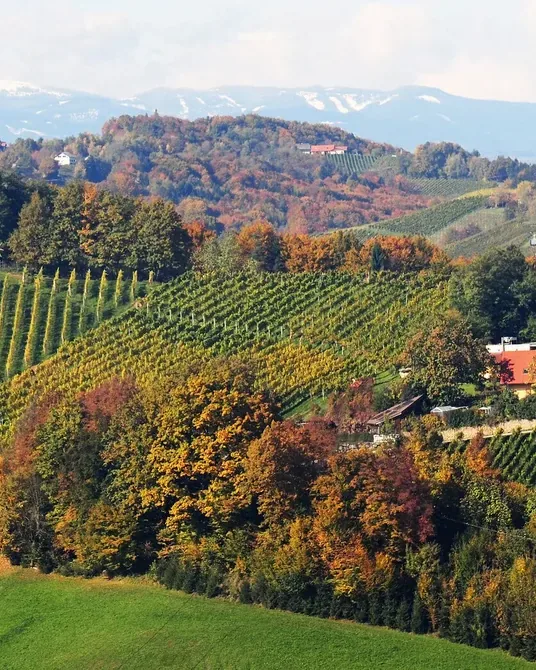
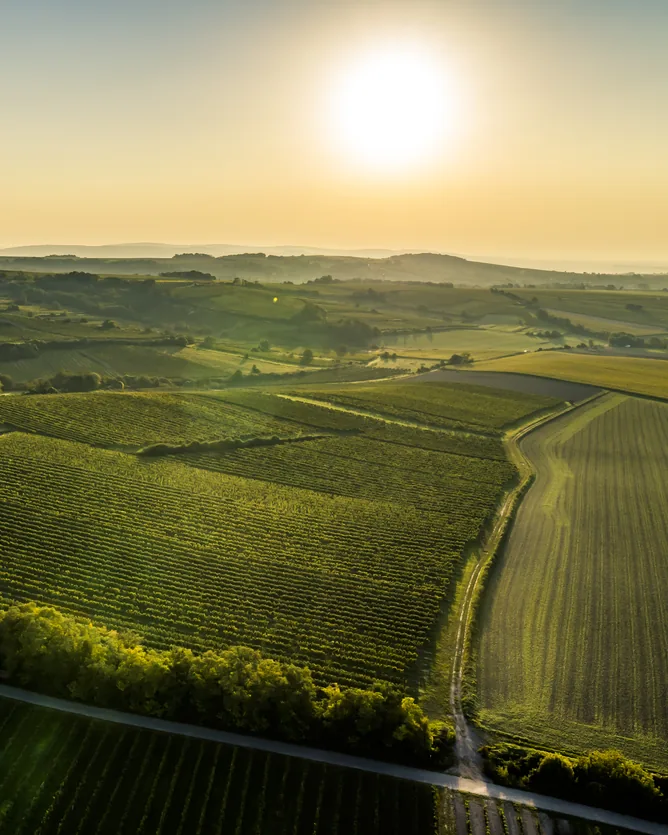
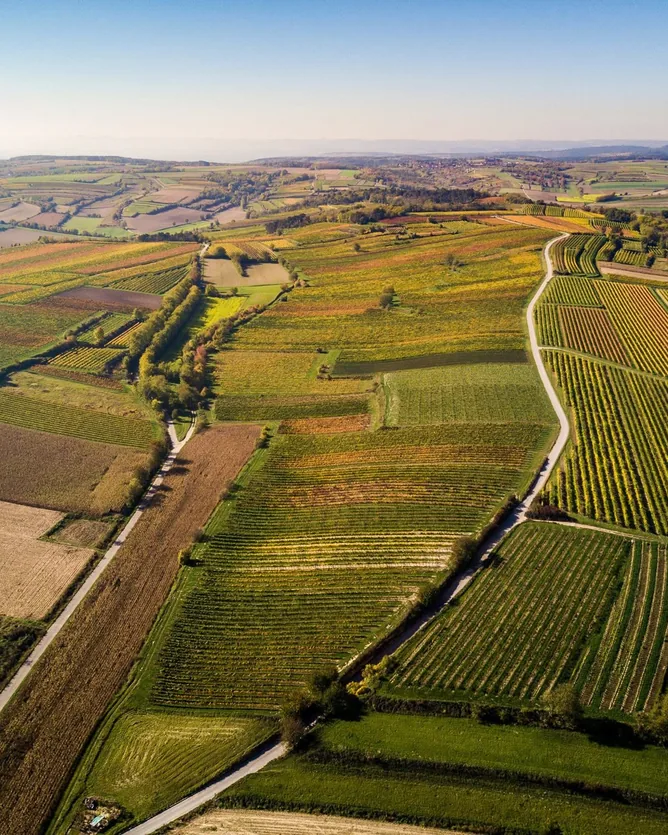
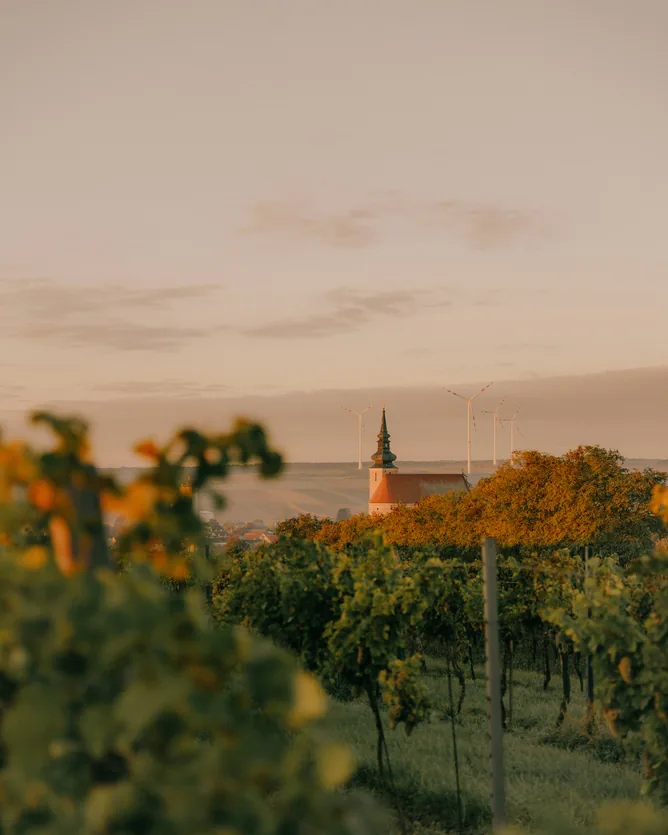
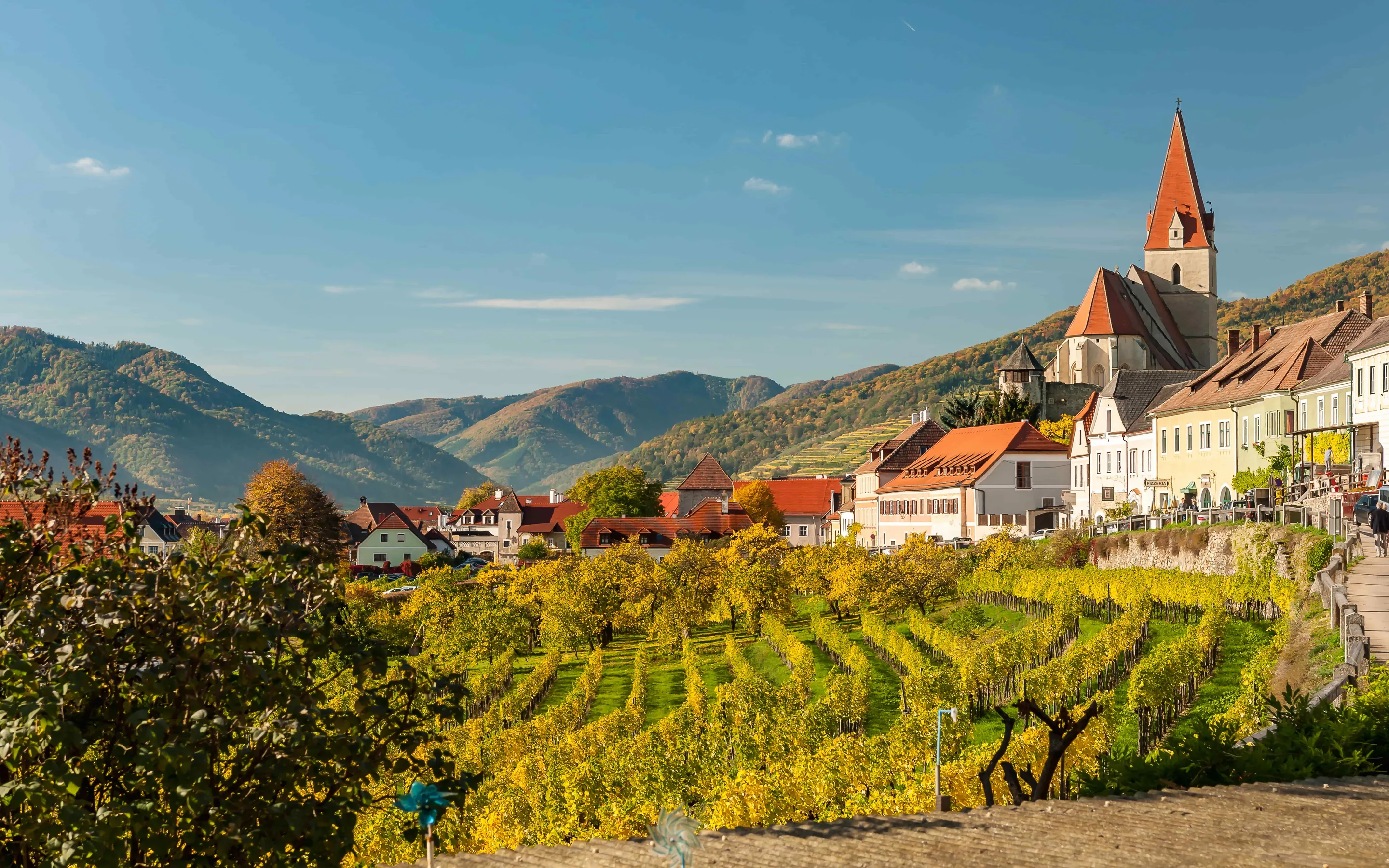
Autumn vineyards in gold and green running down to a village of red-tiled roofs and a fortified church with a tall spire, wooded hills behind

Free Bacchus Country Guide·Austria

Austria rebuilt its wine trade on proof.
A quarter of the vineyard is now certified organic

In 1985 an antifreeze additive destroyed Austrian wine exports almost overnight. What grew back is the most organically certified vineyard of any major wine country, a quarter of it, farmed by people long used to proving what is not in the bottle.

What this guide is for

A country at a time: the major wine regions of the world, what the ground and the weather do to what is grown in them, and which growers inside them we have verified. None of it is settled. Growing seasons are shifting, and the chemistry most vineyards reach for to hold steady against that is made from fossil fuels and takes energy to manufacture — while a warmer, wetter season brings more disease, and more disease brings more spraying. Every estate on these pages farms without synthetic pesticides. That is what their certification means, and it is the part we check.

The ground

The Alps take most of the country

Austria makes almost no wine in most of Austria. The west is Alps, too high and too cold and too steep for a vine, so the entire trade is pressed into a strip along the Danube and down the Hungarian and Slovenian borders. That is why every marker on the map below sits on one side of the country.

Where they are The Alps Germany Czechia Slovakia Hungary Slovenia Italy Switzerland Salzburg Linz Graz Innsbruck Niederösterreich Burgenland Steiermark Wien
Boundary from public-domain country data, simplified for the web and corrected for latitude so the shape is not stretched. The copper markers sit at the real coordinates of each of the four wine regions. The west of the country is Alps, which is why they all sit in the eastern third of it.

The year it stopped1985

In the summer of 1985 that trade was destroyed. Laboratories in West Germany found diethylene glycol, an ingredient of antifreeze, added to Austrian wine to counterfeit the weight of a sweet late harvest. Exports fell from around forty-five million litres a year to under four and a half. Parliament forced a new wine law through within two months, in time for that autumn’s pick, and put a numbered state seal on every bottle of Qualitätswein. Austria did not sell as much wine abroad again for fifteen years.

What grew back in its place is the most organically farmed vineyard in serious wine. In 2024, 10,717 hectares — a quarter of the national vineyard, worked by 1,316 wineries — were certified organic. That is the leading share among the world’s major wine countries, on Austrian Wine’s own count, though Italy at 22.6 per cent and France at 22 sit closer behind than a quarter sounds. A country ruined by something invisible in the bottle rebuilt itself around being able to prove what is not in there, which is the argument this guide makes, arrived at first by a whole country and the hard way.

The Standard on Top

respekt-BIODYN sits on top of that. Founded in 2007 across Austria, Germany and northern Italy, it requires EU organic certification of a grower before the biodynamic standard applies at all, and it publishes its register, which is what makes it useful to us. Membership here is checked rather than assumed.

Region by region

Four regions, and one is most of it

Niederösterreich, Austria

Niederösterreich NEE-der-ERS-ter-rykh

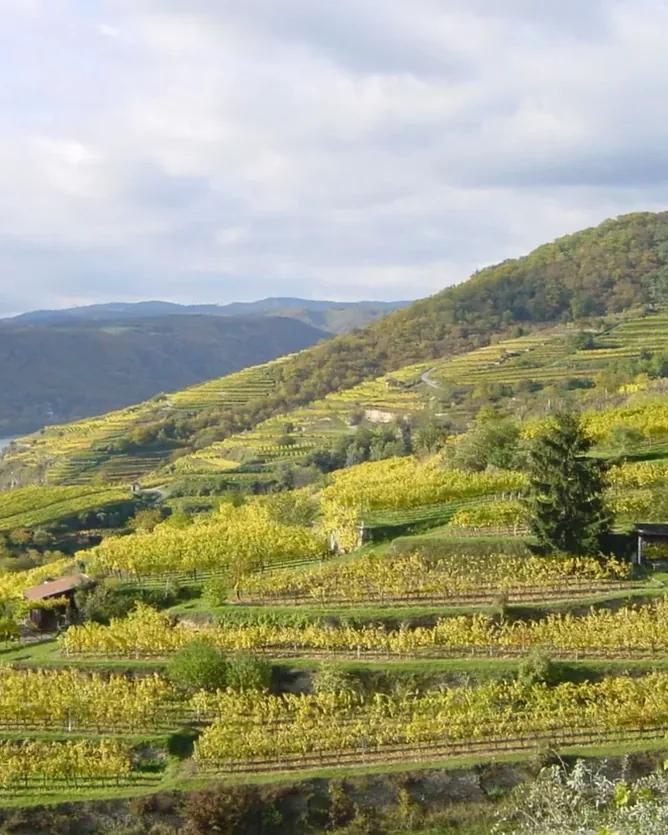
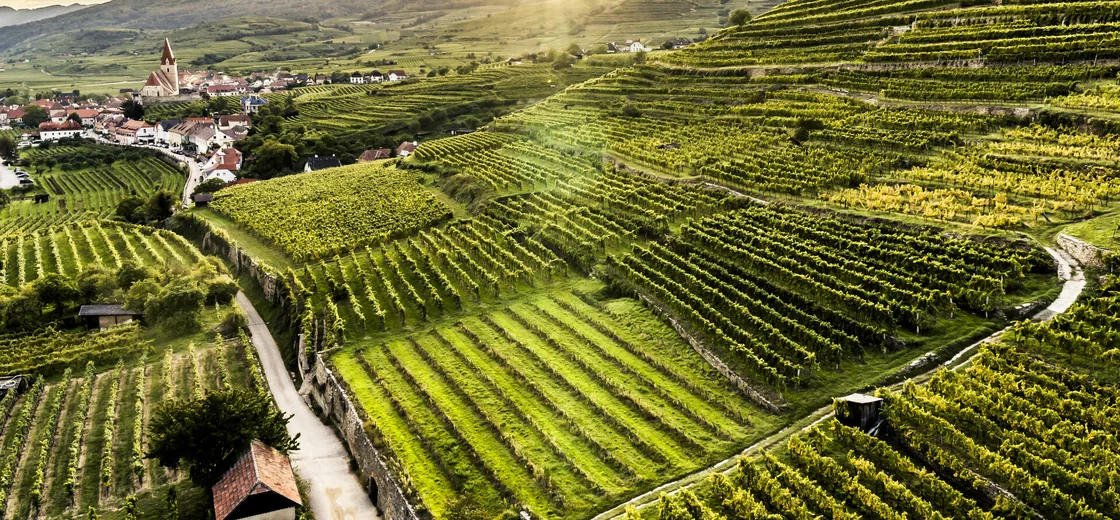
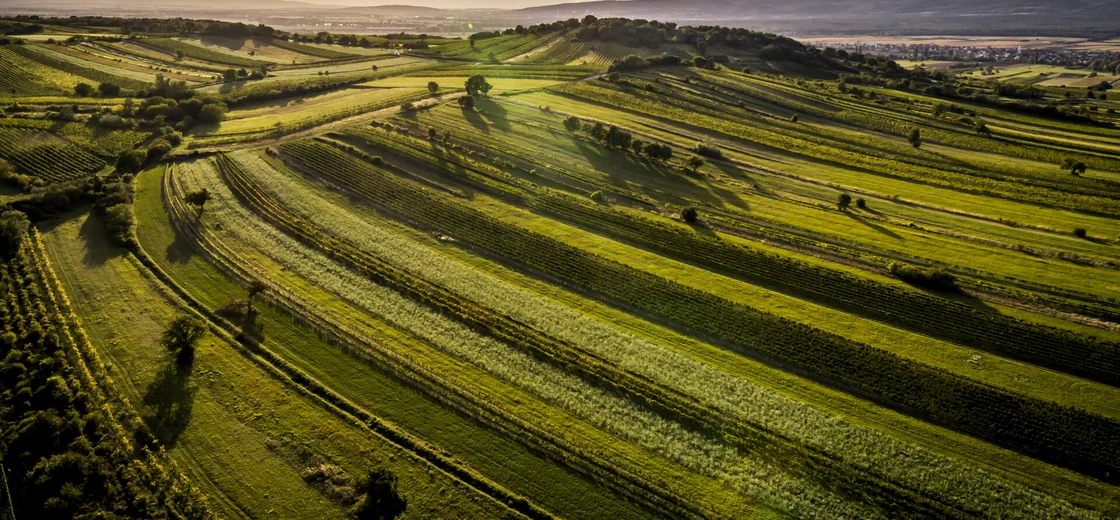
Lower Austria, and on its own it is sixty per cent of the country’s vineyard — nearly twenty-seven thousand hectares. Eight separate appellations sit inside it. Two of them are the Wachau, where the Danube cuts a gorge and the vines are held up on dry-stone terraces built over centuries, and the Kamptal just north of it, where the wind dropped loess deep enough to plough. Grüner Veltliner is what the region is built on: dry, peppery, and grown seriously almost nowhere else on earth.

10 verified producers here.
Burgenland, Austria

Burgenland BOOR-gen-lahnt

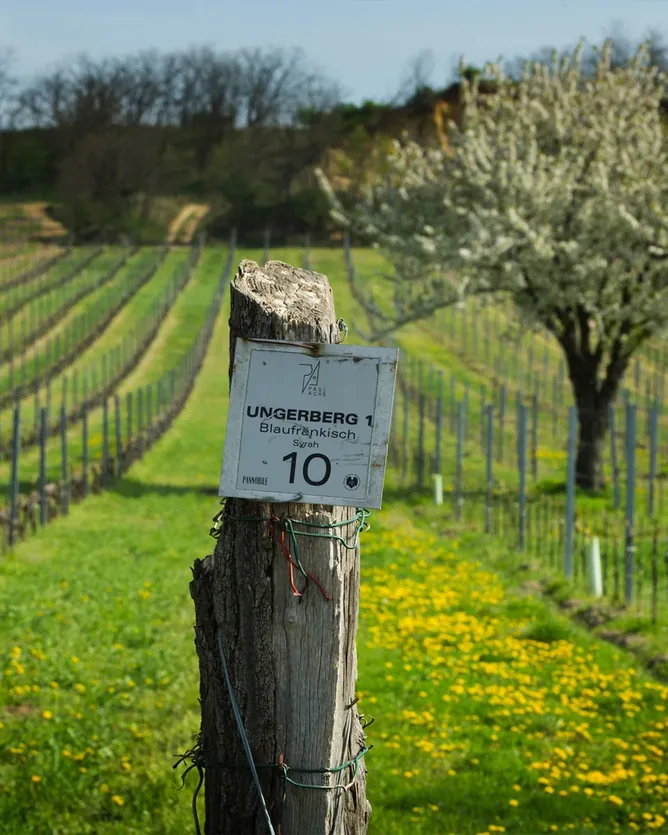
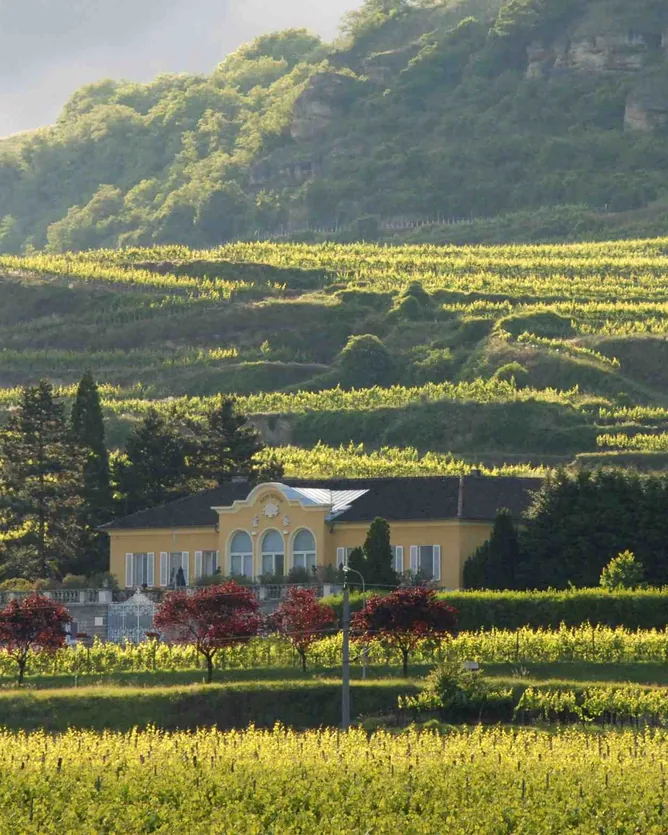
A long strip down the Hungarian border, and the warm half of Austrian wine. The Neusiedlersee is a steppe lake barely more than a metre deep, and it does two things: it holds summer heat late into the season, and the autumn mists coming off it bring the noble rot that the great sweet wines are made from. The rest of the time this is red country in a way the rest of Austria is not — Blaufränkisch above all, dark and firm and built to keep.

8 verified producers here.
Steiermark, Austria

Steiermark SHTY-er-mark

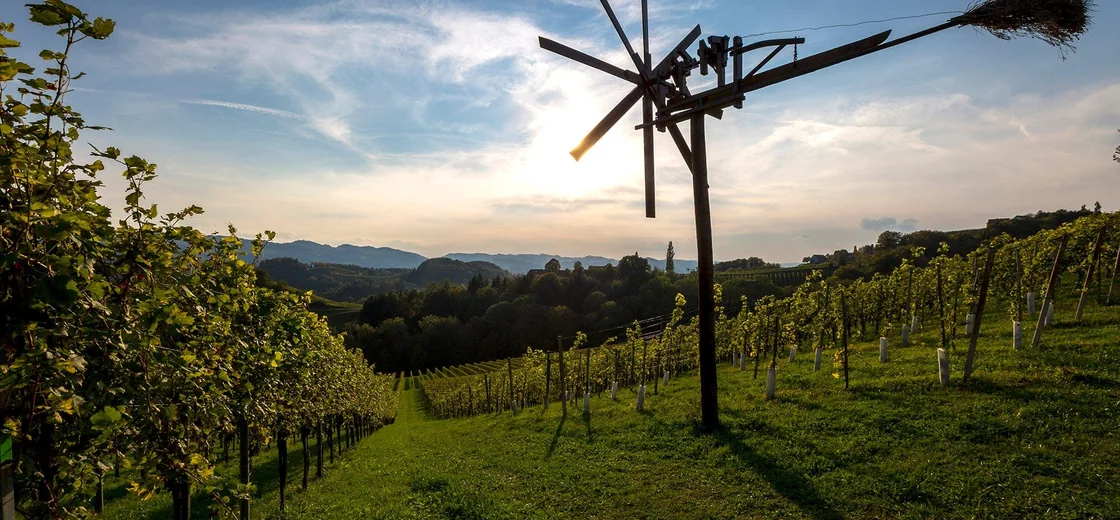
Styria, in the far south on the Slovenian border, and the coolest and steepest ground in Austrian wine. Five thousand hectares on hills sharp enough that the work is done by hand and the villages sit along the ridgelines. What comes off them is white and taut: Sauvignon Blanc closer to the Loire than to Marlborough, and Chardonnay under its local name, Morillon. These are wines built on acidity rather than on weight.

3 verified producers here.
Wien, Austria

Wien VEEN

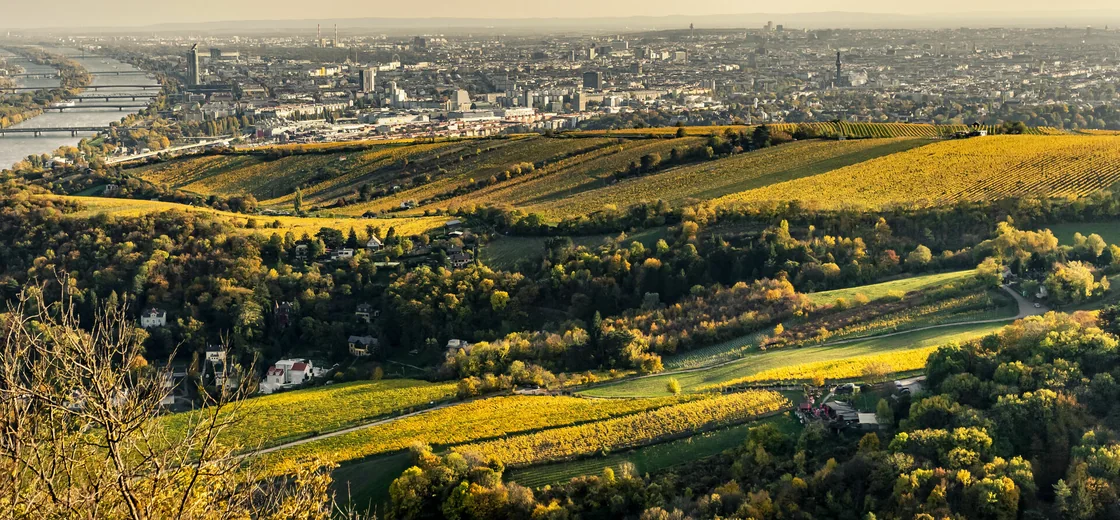
Vienna, and the only major capital anywhere that still has a commercial wine industry inside the city limits — about six hundred hectares, on slopes at the edge of the built-up area and legally part of the city. Its own tradition is the Gemischter Satz: several varieties sharing one vineyard, picked together and fermented together. That is how most of Europe once worked. Here it survived, and since 2013 it has had protected status of its own.

1 verified producer here.

Niederösterreich alone is more vineyard than the other three put together. Wien is a rounding error beside it, and makes wine no one else makes.

Verified in Austria

These estates work Danube terraces too steep for a tractor, loess the wind dropped north of the river, the warm shallow basin around the Neusiedlersee, and cold green hills on the Slovenian border. They hold no house style in common. What they hold in common is a certificate somebody went and looked up.

Weingut Nikolaihof — verified organic producer in Niederösterreich, AustriaGold

Weingut Nikolaihof

Mautern, Wachau, Austria
Demeter Biodynamic Certified
Weingut Veyder-Malberg — verified organic producer in Niederösterreich, AustriaGold

Weingut Veyder-Malberg

Woesendorf, Wachau
EU organic certificate, LACON · Track B listing under review
Weingut Hirsch — verified organic producer in Niederösterreich, AustriaGold

Weingut Hirsch

Kammern, Kamptal, Austria
respekt-BIODYN Biodynamic
Weingut Loimer — verified organic producer in Niederösterreich, AustriaGold

Weingut Loimer

Langenlois, Kamptal, Austria
EU Organic Certified · Respekt-Biodyn (founding member)
Weingut Paul Achs — verified organic producer in Burgenland, AustriaGold

Weingut Paul Achs

Gols, Burgenland, Austria
respekt-BIODYN Biodynamic
Weingut Sattlerhof — verified organic producer in Steiermark, AustriaGold

Weingut Sattlerhof

Gamlitz, Südsteiermark, Austria
respekt-BIODYN Biodynamic
Weingut Tement — verified organic producer in Steiermark, AustriaGold

Weingut Tement

Ehrenhausen, Südsteiermark, Austria
Demeter Certified Biodynamic · respekt-BIODYN
Weingut Wieninger — verified organic producer in Wien, AustriaGold

Weingut Wieninger

Vienna, Austria
respekt-BIODYN Biodynamic
Weingut Bernhard Ott — verified organic producer in Niederösterreich, AustriaGold

Weingut Bernhard Ott

Wagram, Lower Austria
respekt-BIODYN biodynamic
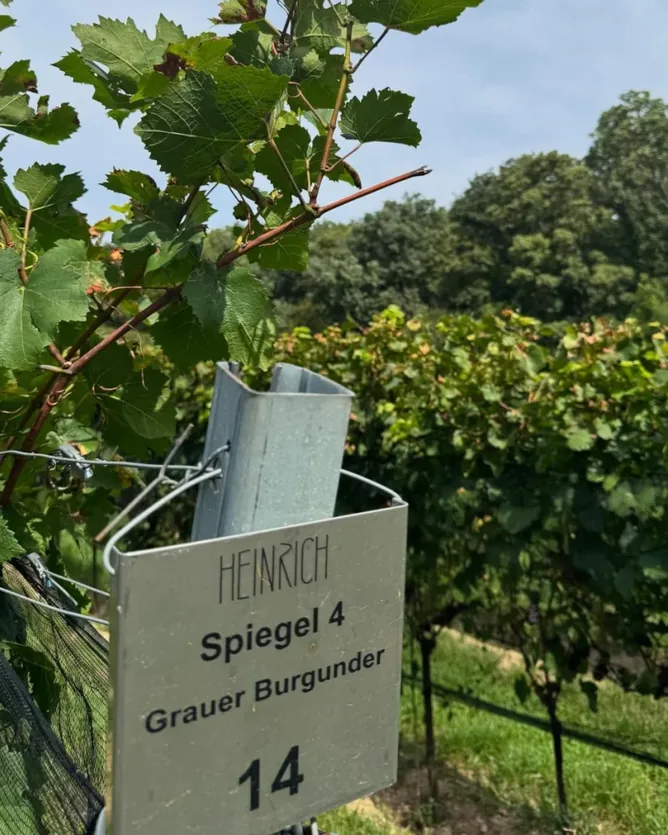
Weingut Gernot & Heike Heinrich — verified organic producer in Burgenland, AustriaGold

Weingut Gernot & Heike Heinrich

Gols, Burgenland
respekt-BIODYN biodynamic · EU organic
Weingut Karl Fritsch — verified organic producer in Niederösterreich, AustriaGold

Weingut Karl Fritsch

Oberstockstall, Wagram, Austria
respekt-BIODYN biodynamic · LACON EU organic
Weingut Sepp Moser — verified organic producer in Niederösterreich, AustriaGold

Weingut Sepp Moser

Rohrendorf, Kremstal, Niederösterreich, Austria
Demeter biodynamic · Austria Bio Garantie EU organic
Weingut Sepp Muster — verified organic producer in Steiermark, AustriaGold

Weingut Sepp Muster

Leutschach an der Weinstraße, Südsteiermark, Austria
Demeter Austria biodynamic · EU organic, Austria Bio Garantie
Weingut Hans & Anita Nittnaus — verified organic producer in Burgenland, AustriaSilver

Weingut Hans & Anita Nittnaus

Gols, Burgenland, Austria
LACON EU organic
Weingut Feiler-Artinger — verified organic producer in Burgenland, AustriaSilver

Weingut Feiler-Artinger

Rust, Neusiedlersee, Burgenland, Austria
respekt-BIODYN biodynamic · LACON EU organic
Weingut Diwald — verified organic producer in Niederösterreich, AustriaSilver

Weingut Diwald

Grossriedenthal, Wagram, Austria
respekt-BIODYN biodynamic · SGS EU organic, vineyards only
Weingut Pittnauer — verified organic producer in Burgenland, AustriaSilver

Weingut Pittnauer

Gols, Burgenland, Austria
SGS EU organic
Weingut Claus Preisinger — verified organic producer in Burgenland, AustriaSilver

Weingut Claus Preisinger

Gols, Burgenland, Austria
respekt-BIODYN biodynamic · LACON EU organic
Weingut Ebner-Ebenauer — verified organic producer in Niederösterreich, AustriaSilver

Weingut Ebner-Ebenauer

Poysdorf, Weinviertel, Austria
respekt-BIODYN biodynamic · LACON EU organic
Weingut Herbert Zillinger — verified organic producer in Niederösterreich, AustriaSilver

Weingut Herbert Zillinger

Ebenthal, Weinviertel, Niederösterreich, Austria
respekt-BIODYN biodynamic · LACON EU organic
Weingut Birgit Braunstein — verified organic producer in Burgenland, AustriaSilver

Weingut Birgit Braunstein

Purbach, Leithaberg, Burgenland, Austria
Demeter Austria · Austria Bio Garantie EU organic · some wine in conversion
Gut Oggau — verified organic producer in Burgenland, AustriaSilver

Gut Oggau

Oggau am Neusiedler See, Burgenland, Austria
Demeter Austria · LACON EU organic · some land and wine in conversion

Every certificate behind these estates was checked against the register that issued it, and re-checked rather than assumed to hold. Austria makes that unusually easy: respekt-BIODYN publishes its membership, and a quarter of the national vineyard is certified organic. The country that lost everything to something it could not see now leaves very little to trust.

Where the figures come from6
  • 1985 diethylene glycol scandal; exports ~45m litres/yr to ~4.4m in 1986; wine law passed 29 August 1985 before that harvest; numbered state seal on Qualitätswein; fifteen years to regain export volume

    en.wikipedia.org ↗
  • 10,717 ha certified organic in 2024 = 25% of area under vine, 1,316 wineries; described by Austrian Wine as "the leading position among the world's key wine-growing countries" as at February 2025 — a lead, not a gap: Italy stands at 22.6% and France at 22%

    austrianwine.com ↗
  • Austria's vineyard area is 44,210 hectares: Niederösterreich 26,732 (about 60 per cent of the national total), Burgenland 11,538, Steiermark 5,109 and Wien 588 (Austrian Wine, Statistics Report 2024)

    austrianwine.com ↗
  • Austria's four winegrowing regions and their characters: Niederösterreich's eight appellations and Grüner Veltliner, Burgenland's Pannonian warmth and noble-rot sweet wines, Steiermark's cool steep whites, and the Wiener Gemischter Satz field blend of Vienna

    austrianwine.com ↗
  • Pesticides are overwhelmingly derived from fossil fuels and their manufacture is energy-intensive, and a warming climate raises pest and disease pressure, which raises pesticide use in turn

    pan-uk.org ↗
  • The loop between the two: emissions from pesticide manufacture and use contribute to warming, and warming drives further pesticide use

    panna.org ↗
↑