Skip to content
Long timber-clad building below snow-dusted terraced hillsides, with footprints across the snow in the foreground
Wösendorf, Wachau, AustriaAustriaOrganic Wine

Weingut Veyder-Malberg

VY-der MAHL-berg · Wachau is vah-KOW
Gold TierTypically $45–90
Last verified · August 2026

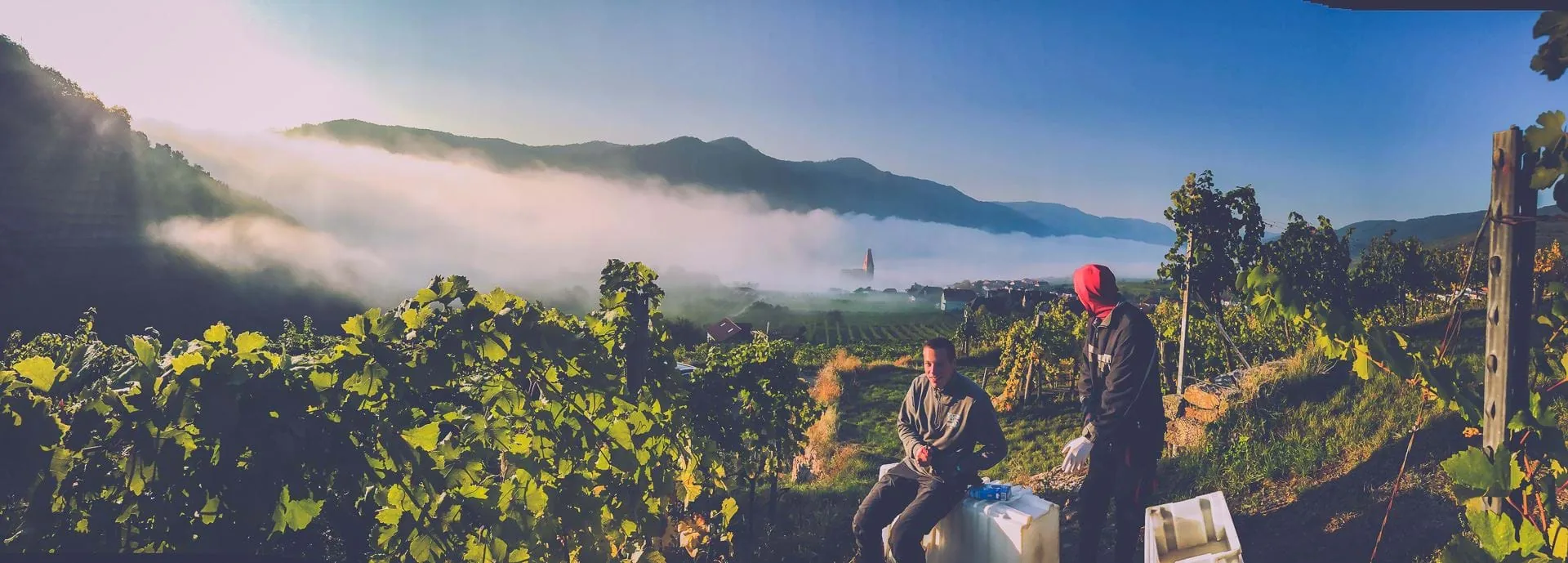
Peter Veyder-Malberg bought terraces in the Wachau that other growers had given up on. Steep, small, awkward to work, and in several cases abandoned outright because the labour could not be justified against what the fruit would fetch.

Every vineyard has been under organic inspection by the Austrian control body LACON since he founded the estate in 2008 — he says so on his own homepage, and the certificate is on the European Commission's register. His listing here is being reviewed to reflect that.
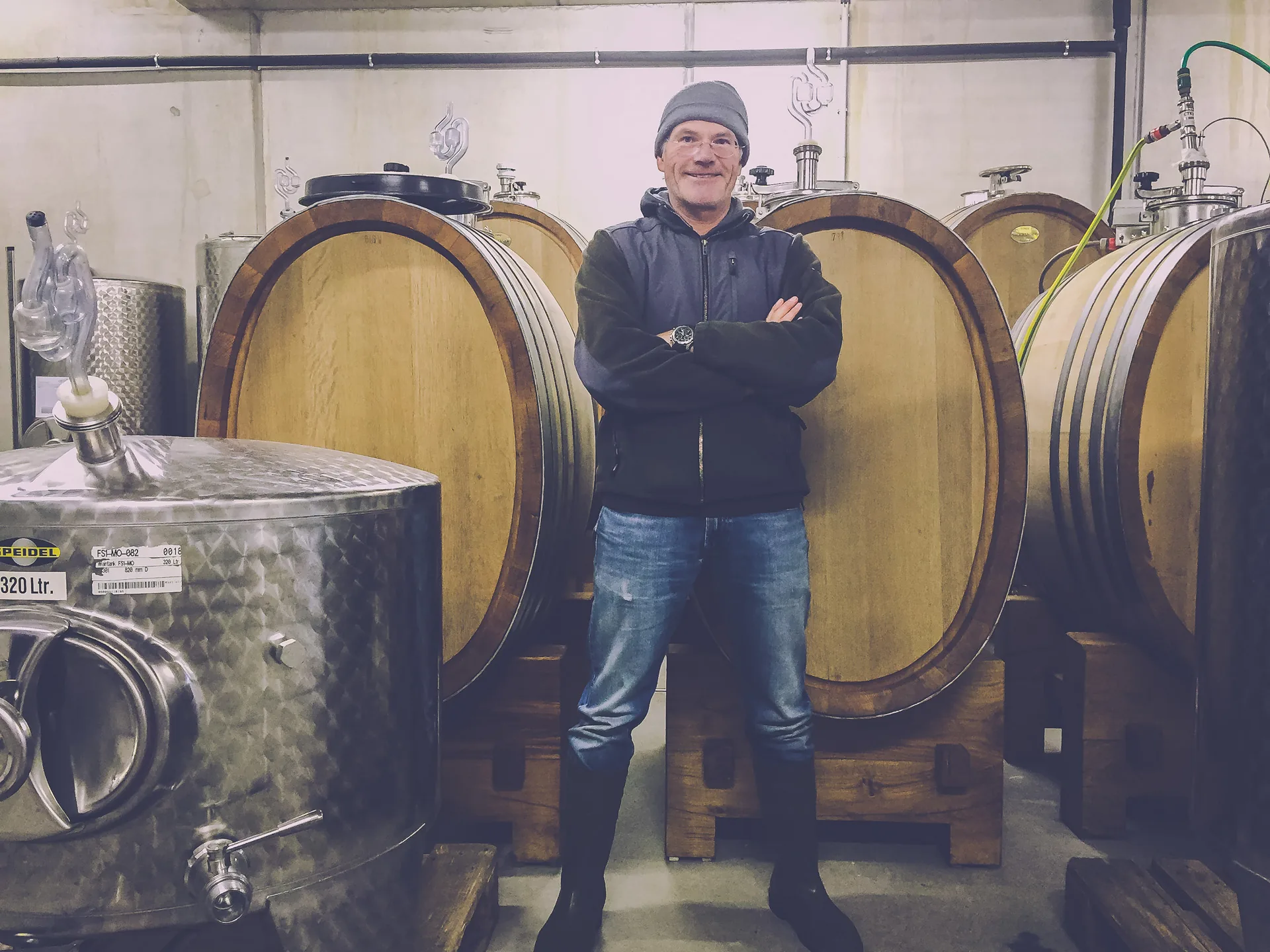
A smiling man in a knit cap and hooded jacket standing with arms crossed between large oval oak casks and a steel tank

In 2011 he started harvest on 15 September and for a fortnight nobody else in the region was picking. His argument for taking on ground everyone else abandoned is that no machine has ever compacted it.

The wines are Rieslings and Grüner Veltliners of unusual tension, made from very low yields on primary rock. Bruck is the bottling most often cited, and the style runs against the Wachau's reputation for weight — these are lean, mineral, and built to age.

The Wachau's reputation is for weight — big, ripe, powerful whites off the Danube terraces — and it is worth carrying that reputation into the glass here, because these are made to argue with it. Lean is the aim, which is not the same as thin: very low yields on hard primary rock, picked early, giving Riesling and Grüner Veltliner with the tension running down the middle of the wine instead of richness spread across it. If big whites have ever left you tired halfway down the glass, this is the corner of the region to look at.

“No one wants to farm these terraces anymore.”
Peter Veyder-MalbergOwner and winegrower, on the abandoned Wachau plots he bought, 2012 · Vinography

Why it’s remarkable

20 plots
of vines, scattered along roughly fifteen kilometres of the Wachau
By 2012 he had assembled about ten acres of vineyard, split across twenty separate terraced parcels strung down the valley. They were given up by other growers because the labour could not be justified against what the fruit would fetch. That is precisely why they were available.
Two weeks alone
he was the only grower picking in the entire Wachau
In 2011 he started harvest on 15 September and for a fortnight nobody else in the region was picking. He picks on physiological ripeness and the pH of the must rather than on sugar, which puts him out of step with everyone around him.
No tractor
on most of the terraces, which is the point
His argument for taking on ground everyone else abandoned is that no machine has compacted it — the estate says most of its terraces can only be worked by hand, and the Bruck has never seen a tractor. The labour is the price of a soil structure that cannot be bought back once it is lost.
LACON
certified organic since the first vintage, on the EU register
Every vineyard has been under organic inspection by LACON since the estate was founded in 2008; the current EU certificate runs to January 2027. He stays outside the Wachau’s growers’ association, whose Federspiel and Smaragd categories grade wine by must weight — which he does not accept as a measure of quality.
Verified on documented practice rather than a certificate. Not a compromise on quality — see how we verify.

Free Bacchus Verification

Track B
Verified chemical-free practice, corroborated independently where formal certification is not held.

EU organic certificate, LACON · Track B listing under review

Verified practice1
  • Organic: LACON (AT-BIO-402) — EU certificate AT-BIO-402.040-0015550.2025.001, valid to 31 January 2027
Also on record1
  • The Track B listing is under review, since a certificate is held
Re-confirmed annually against the three conditions for Track B listing. How re-verification works
The producer’s own siteveyder.malberg.at
Producers don’t pay to be here. There is no fee to be listed and no way to buy a higher tier. If the evidence doesn’t hold, the bottle isn’t here.
Flagship
Bruck Riesling

If you’re buying

Price
Around US$99 for the Bruck Riesling; the range runs about US$50–190. Approximate, and it moves with vintage and market.
Drinking now
Bruck Riesling rewards about five years and holds well beyond ten. Younger bottles want air and a bigger glass.
Serving
Serve at 10–12°C, not ice cold. No decanting, but open an hour ahead if it is young.
Availability
Generally obtainable through specialist retailers.
Tastes like
Riesling and Grüner Veltliner that are lean and mineral rather than rich — citrus, stone and real tension. Built to age.
Pairs with
Trout, roast pork, or a plate of cured ham.
Price bands are approximate and move with vintage, market and region. They are a guide, not a quotation.

Cheat sheet

Save it to your phone. Everything you need to recognise this producer, and three things worth saying about it, at a glance in a shop or across a table.

22 verified producers in Austria →

From the Journal

← Rhum J.MThe Verification StandardCopalli →

More Verified Houses · Austria

Where to go next

Three more from the cellar, chosen by what is in the glass rather than where it is from.

Weingut Ökonomierat RebholzWhite · Germany Weingut SattlerhofWhite · Austria Domaine Marcel DeissWhite · France
↑