Free Bacchus Journal
The True Cost of the sprayed harvest
There’s a cost attached to conventional farming that never appears on a label, is paid by someone the drinker will never meet, and is — according to the agency that studies it most closely — almost certainly larger than the numbers we have.
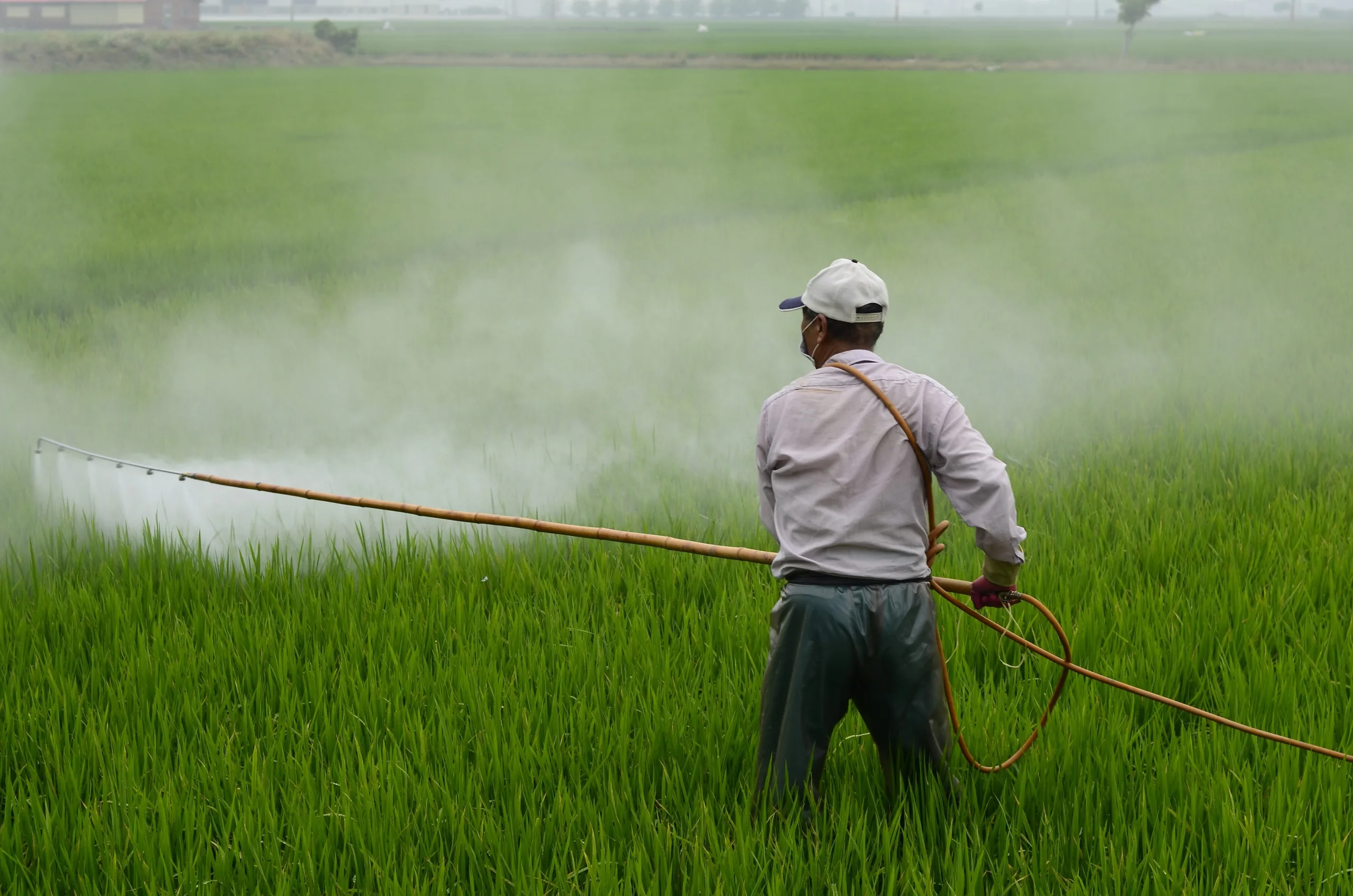
Consider a job most of us never picture. A crop is sprayed in the morning; later that day, or the next, someone walks back in among it to work by hand. Vines, barley, cane, rice — every bottle starts on farmland, and all of it is somebody’s workplace.
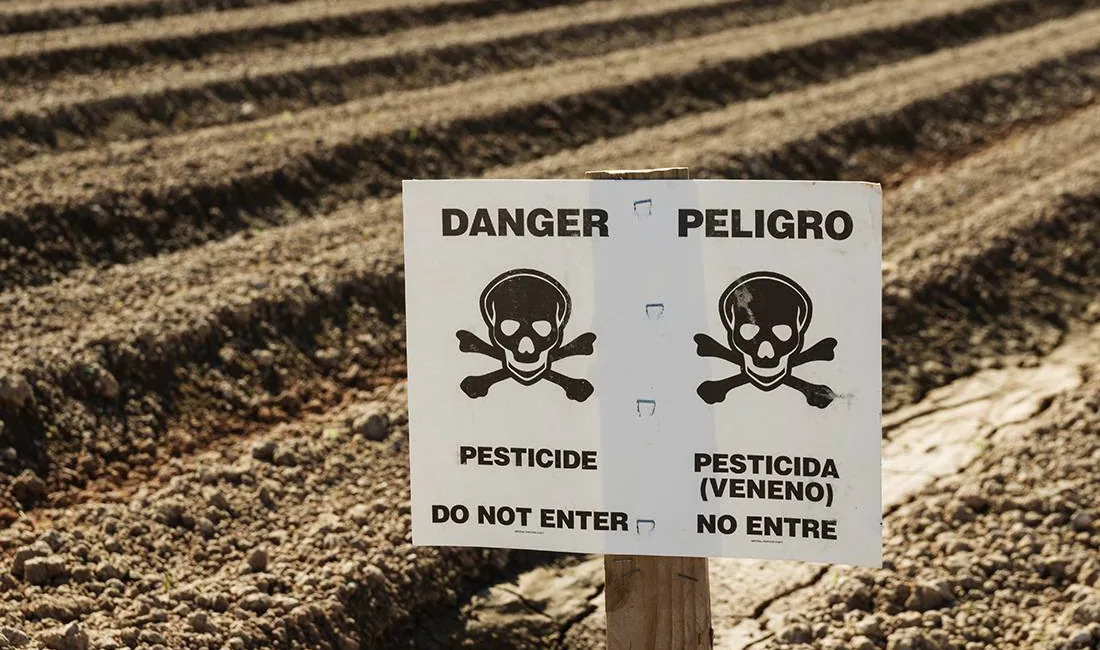
In many growing regions that person lives nearby, often with their family, sometimes in housing at the edge of the field itself. Their children play in the space between the crop and the road. Nothing about that is unusual or hidden — it’s how a great deal of agriculture works. It’s also entirely absent from the way we talk about what we drink.
The romantic history of a bottle gets told constantly. The chemical history is equally real and almost never mentioned.
What the numbers say, and what they miss
In May 2026 UNICEF put a figure to part of this. It estimated that as many as 490 million children and adolescents may face potential exposure to agricultural pesticides, and found pesticide use more than doubled between 1990 and 2022 — outpacing the protections meant to keep people out of its path. Even in high-income countries, it noted, the large majority of children now carry detectable residues.
Children are more vulnerable for physiological reasons. Exposure can begin before birth. Developing bodies process chemicals differently. Small children put their hands in their mouths, and take in more food, water and air relative to their body size. And some of them are working: UNICEF counts 83.4 million children in agricultural labour, many in direct contact with what's being applied.
The central finding runs against the usual direction of these debates: UNICEF’s argument is not that the harm has been exaggerated but that the scale is underestimated — that poisonings and deaths are significantly under-reported in the systems meant to record them.
By the numbers
pesticide exposure (UNICEF)
among farm workers
agricultural work
A contested number, surfaced honestly
The most-cited attempt to quantify the adult toll has itself faced the opposite argument, and we would rather set that out than quietly use the convenient figure.
A systematic review by researchers affiliated with the Pesticide Action Network estimated 385 million acute pesticide poisonings among farmers and farmworkers annually — roughly 44 percent of the global agricultural workforce — alongside around 11,000 deaths a year. It's the field’s clearest single estimate, and it is contested: the 2020 study behind it was later retracted over a methodological dispute, a decision all four authors rejected, and which followed a challenge raised in part by employees of an agrochemical manufacturer.
We surface that plainly, because the standard we hold producers to is the standard we should hold ourselves to. Read alongside UNICEF’s finding that recorded numbers are too low, the argument about whether 385 million is too high looks rather different.
One body argues the headline figure is too high. Another finds the recorded numbers are too low. Both agree the count is wrong.
Why nobody in this story is behaving badly
It would be easy to write this as an indictment of conventional growers, and it would be both unfair and inaccurate.
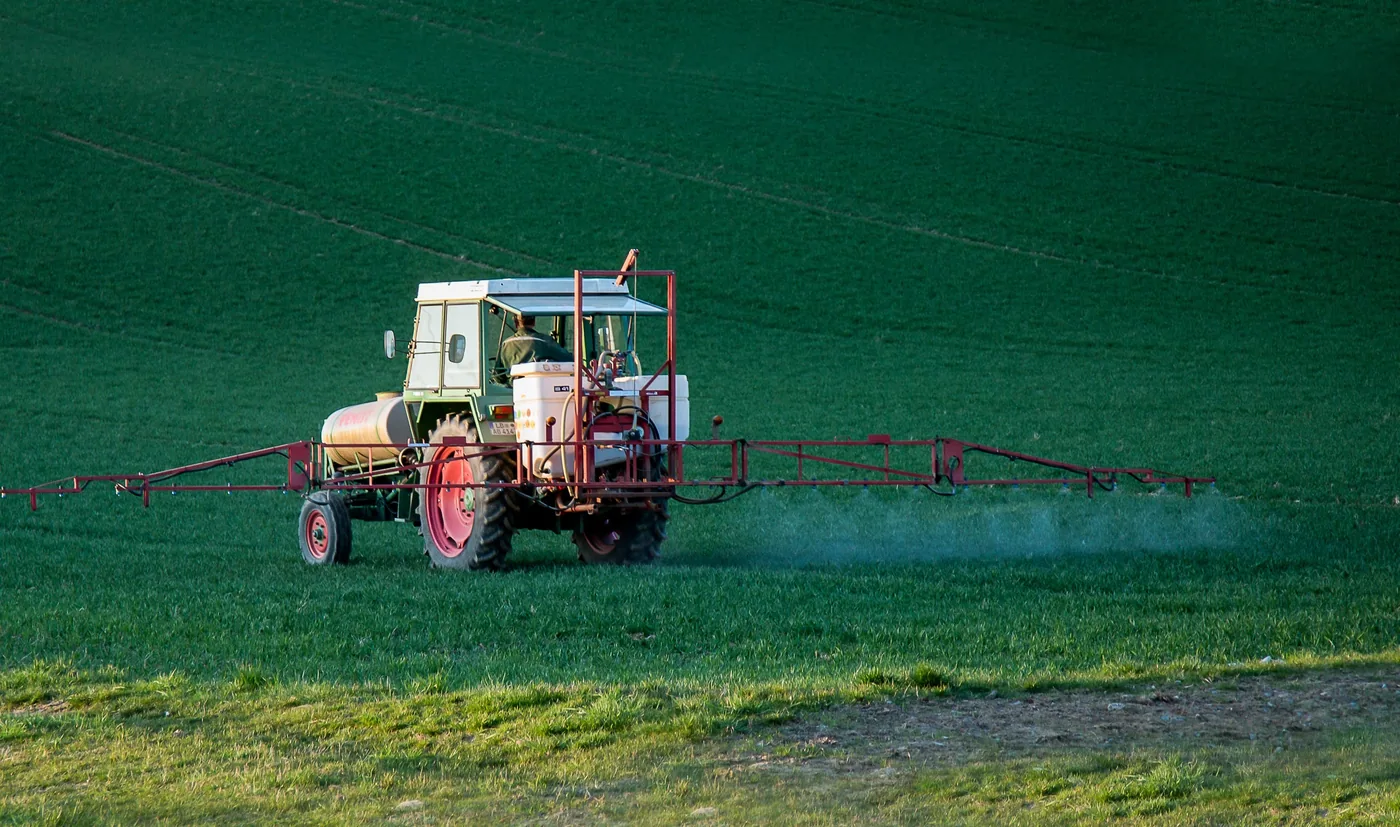
Synthetic treatments exist because they work. A grower facing mildew in a wet July has a crop, a mortgage and a contract to fulfil, and a spray programme is the reliable answer to a problem that can otherwise take the whole harvest. Most conventional farmers follow the label, respect re-entry intervals, and are more careful than the debate usually allows. The regulations are real and have tightened over decades.
The difficulty is structural rather than moral. The cost of the spray programme is borne where the farming happens — by the person in the rows, by the watershed, by the family at the field’s edge — and the benefit is collected somewhere else entirely, by everyone downstream who gets a slightly cheaper and more consistent bottle. Nobody designed that. It emerged, decade by decade, because nothing in the chain ever made the cost visible to the person paying least of it.
The cost is paid where the farming happens. The benefit is collected everywhere else. Nobody designed that — it simply accumulated.
The producers who took the cost themselves
Which is what makes the alternative interesting rather than merely virtuous.
A producer who farms without synthetic pesticides hasn't found a clever way to avoid the cost. They've absorbed it — in lower yields, in more labour, in the real risk of losing a crop to a disease they could have sprayed away. They took onto their own balance sheet an expense the conventional system distributes to people who never agreed to carry it.
Their reasons vary and are usually unsentimental. Some hold the position for what it does in the glass, which is frequently the honest answer. Some hold it for the land, having watched soil go dead under repeated application. Some hold it for the people working the rows, who in a sprayed system are first in line for the cost that never reaches the label.
None of them call it heroism. Most call it the way they prefer to farm.

What we do about it, and what you can
Our part is narrow and practical. Every producer on this platform has been independently verified to farm without synthetic pesticides — either through formal organic or biodynamic certification confirmed against the issuing body, or, in documented cases, through corroborated chemical-free practice. We publish the methodology so the working can be checked rather than trusted.
We're not in the business of asking anyone to feel guilty about what is in their glass. Guilt is a poor motivator and an unpleasant thing to attach to something people drink for pleasure. The useful goal is simpler: make the clean option easy to find, so choosing it requires no research, no ideology and no particular virtue.
And the habit that helps most is unglamorous. When you find a certified producer whose bottles you like, buy them again. Repeat custom turns careful farming from an expensive conviction into a viable business — and a viable business is what lets the next grower make the same choice without it costing them everything.
Nobody needs to feel guilty about what they drink. It only needs to be easy to find the bottle farmed carefully.
The receipt
What to take from this
- UNICEF (May 2026) estimates up to 490 million children and adolescents may face potential pesticide exposure; use more than doubled between 1990 and 2022.
- 83.4 million children work in agriculture, many in direct contact with what's applied.
- UNICEF’s central finding is that poisonings and deaths are under-reported — the count is too low, not too high.
- The widely cited 385 million annual poisonings figure is contested and was retracted over a methodological dispute the authors rejected. We surface that rather than use it quietly.
- Conventional growers aren't behaving badly — the costs simply fall where the farming happens and the benefits collect everywhere else.
- Certified producers absorb that cost themselves, in lower yields and higher labour. Buying their bottles twice is what makes it viable.
Where the claims come from5
-
UNICEF (May 2026) — Underestimated and Overlooked: The Silent Impact of Pesticides on Children
unicef.org ↗ -
Pesticide Action Network — global poisonings study
panna.org ↗ -
BMC Public Health (2020), Boedeker et al.
link.springer.com ↗ -
Retraction Watch — context on the contested figure
retractionwatch.com ↗ -
Free Bacchus — The Verification Standard
↗