Free Bacchus Journal
The Vineyard that gave itself away
Most wineries guard their vine material like a trade secret. This one propagated more than five million cuttings and gave nearly all of them away — which is how a former alfalfa farm ended up shaping a meaningful share of American wine.
Here's a fact that explains most of what follows. Over the last thirty years, Tablas Creek has propagated more than five million grapevine cuttings, and given the vast majority of them away — to growers in California, Washington, Oregon, Texas and Virginia. To see how odd that is, you need to know what vine material is worth. Getting authenticated, disease-free cuttings of a specific variety is slow, expensive and, historically, a competitive advantage worth protecting.
Most estates treat their plant stock accordingly. Tablas Creek treated theirs as a public good, with the result that a meaningful share of the Rhône-variety wine made in America today can trace its genetics to a single limestone hill twelve miles from the Pacific.
Build something good, then hand out the blueprint. That instinct runs through the whole story.
Two families and a four-year search
The origin reads like a wine fable, except it happened. On one side the Perrin family of Château de Beaucastel, proprietors since 1909 of one of Châteauneuf-du-Pape’s great estates and pioneers of organic farming in France decades before it was fashionable. On the other Robert Haas, an American importer who had spent a career in French cellars and become the Perrins’ man in the United States.
Travelling the country together over twenty years, the two families became convinced of a then-heretical idea: that the native grapes of the southern Rhône — Mourvèdre, Grenache, Roussanne — might find a second home in California.
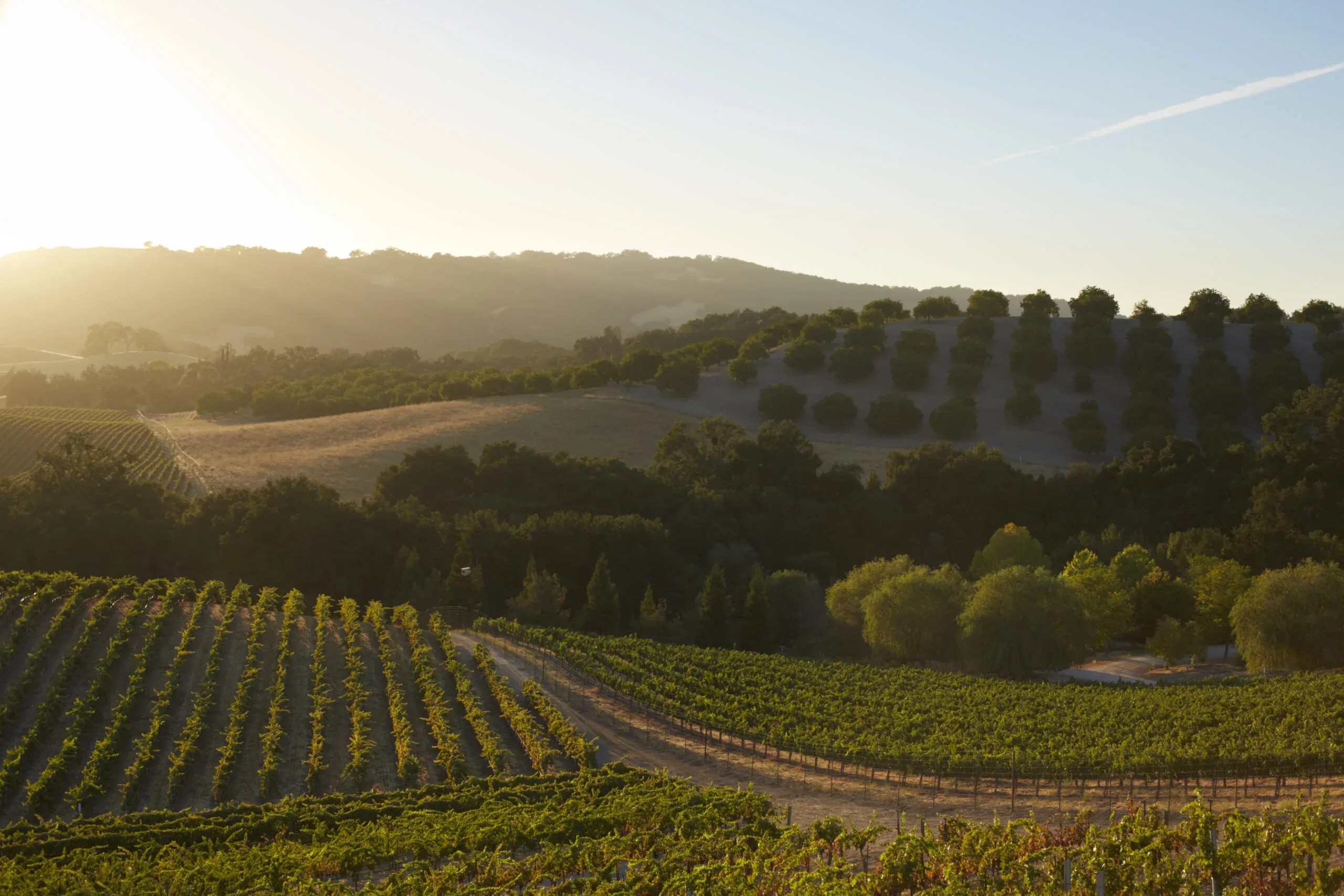
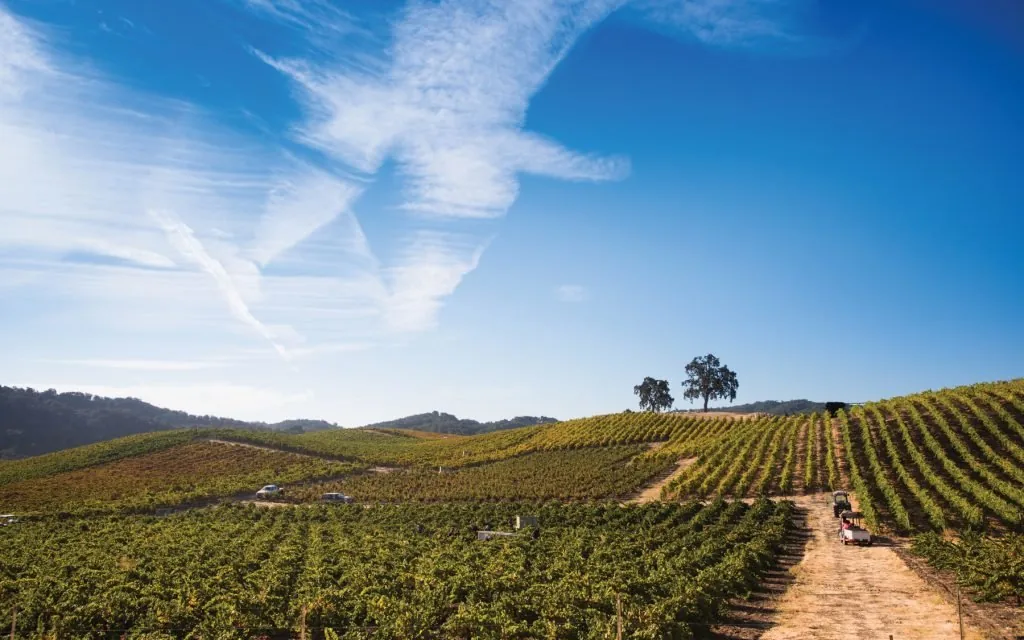
They spent four years looking, from the Sierra foothills to coastal Ventura County, for a place matching the Mediterranean climate and high-pH limestone soils of Beaucastel. In 1989 they found a former alfalfa farm in the Adelaida hills west of Paso Robles, sitting on an ancient Late Cretaceous seabed — shallow, rocky, calcareous, geologically related to the soils of home.
Then they did the slow thing. Rather than plant available nursery stock, they imported cuttings from Beaucastel and shepherded them through a three-year USDA quarantine. That looked eccentric until 1998, when the California wine world discovered much of the state’s supposed Roussanne was in fact Viognier — and Tablas Creek’s vines were what they claimed to be. Pierre Perrin has described it as probably one of the most expensive vineyards in the world to develop. They were building for a century rather than a vintage.
Three years in quarantine to be certain the vines were what they said they were. In 1998 that patience turned out to matter.
By the numbers
— and mostly given away
bought in the Adelaida hills
Certified vineyard on earth
Farmed as though the land had to last
Tablas Creek has been organic since inception, certified in 2003, and biodynamic since 2010, certified in 2017. The milestone that draws most attention came in 2020, when it became the first Regenerative Organic Certified vineyard in the world — the wine industry’s debut under a standard built on three pillars: soil health, animal welfare and farmworker fairness.
The distinction is worth stating plainly. Organic tells you what a farm refuses to use. Regenerative organic asks a harder question: is the land leaving each season in better condition than it arrived?
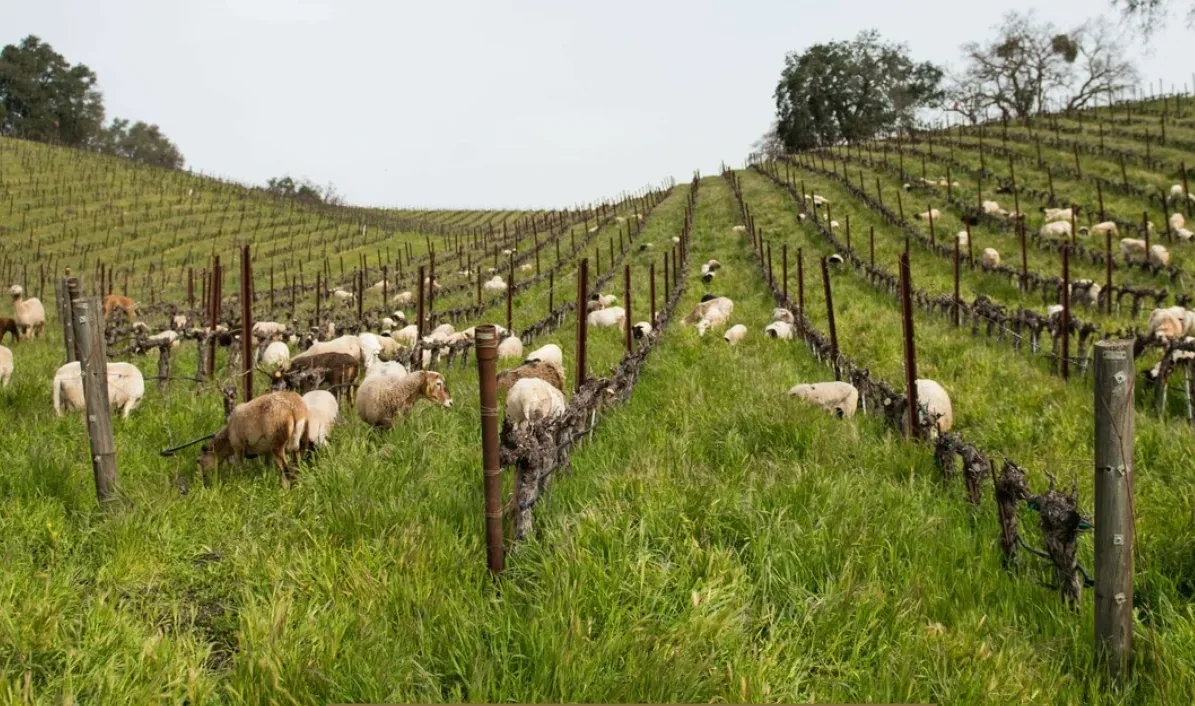
At Tablas Creek the answer largely walks on four legs. A mobile flock of sheep, a herd of alpacas and a few guard donkeys move through the rows from harvest to bud break, mowing weeds and fertilising as they go, and the animals are certified too — not only organic but Animal Welfare Approved. Cover crops and compost do the rest. The team also plants daikon radish between vines: as the root swells and then decomposes underground it fractures compacted soil and leaves air pockets behind. A plough made of vegetable rather than steel.
Much of the estate is also dry-farmed, with no irrigation, which forces the vines to root deep, limits yields and concentrates character. In a state with a drought problem, a vineyard that captures and holds winter moisture in living soil is less a marketing position than a survival strategy that happens to make better wine.
Sheep, alpacas and donkeys do the mowing. A radish does the ploughing.
The Haas and Perrin families buy a former alfalfa farm on limestone west of Paso Robles.
Cuttings imported from Beaucastel are shepherded through a three-year USDA quarantine to guarantee authenticity.
California discovers much of its supposed Roussanne is Viognier. Tablas Creek’s vines are the real thing.
Certified organic, having farmed that way since inception.
Biodynamic farming begins across the estate; certification follows in 2017.
Becomes the first Regenerative Organic Certified vineyard in the world.
What the certification does and does not settle
One caution, and it is about certificates rather than about this estate.
Regenerative Organic Certification is demanding and independently audited, and being first to hold it in an entire industry is the sort of thing that only looks obvious afterwards. The standard was young in 2020 and is young still, held so far by a small number of farms — which is precisely what made going first a risk rather than a credential. How much it comes to mean depends on how widely it is adopted and how rigorously it is maintained, and neither is settled yet.
Two things follow that we should say plainly. The three certifications attach to the estate vineyard; the Patelin range is blended from bought fruit, which the estate says has come from organic vineyards only since 2024 — organic sourcing rather than a certified bottling, and Tablas Creek has never described it as anything else. And our own rubric has no band above organic-plus-biodynamic, so the first Regenerative Organic Certification in wine earns nothing in the farming score we give it: a gap in our standard, not in their farming.
And no certification, however strict, tells you whether a wine is worth drinking. That remains a separate question requiring separate evidence, which is why we keep the two tests apart in our own standard rather than letting a farming credential vouch for quality.
Why drinkers actually fell for it
Which is just as well, because the wine stands on its own.
The flagship bottlings are the two Esprit de Tablas wines — a Mourvèdre-led red and a Roussanne-led white, both rich, balanced and built to age a decade or more. The Wine Advocate has scored the red 96 points, and Wine Enthusiast has given the estate a Best American Rhône trophy; it stands as the benchmark for the category.
But the reason the estate became genuinely liked rather than merely respected is that it never pulled up the ladder behind itself. Alongside the Esprit sit the Côtes de Tablas wines, lusher and more immediate, and the Patelin de Tablas range — the name is French slang for neighbourhood — blended from a dozen nearby vineyards mostly planted with Tablas Creek’s own nursery cuttings. The Patelin wines deliver the house character at everyday prices.
That structure is unusually useful if you're curious: start at the neighbourhood level for the price of an ordinary bottle, decide whether the style is for you, and climb over years toward the flagship — which is not true of most producers with this level of ambition.
The people helped too. Jason Haas, Robert’s son, took over in the mid-2000s and became one of the more generous public voices in American wine — writing openly about regenerative farming, walking visitors through the vineyard root by root, and earning a Food & Wine Drinks Innovator of the Year nod in 2022. Where many estates sell mystique, this one sells understanding.
You can start at the neighbourhood level for the price of an ordinary bottle. The whole philosophy is available at every rung of the ladder.
Why this belongs on Free Bacchus
Tablas Creek holds our Gold tier, and the record behind it is unusually complete. Its organic certification is confirmed in the USDA’s public INTEGRITY register rather than on its own label, its biodynamic certification in the Demeter USA register, and its Regenerative Organic Certification was the first the wine world issued. Its quality is corroborated by outside critics rather than asserted by the estate. The two promises we insist on keeping separate — clean farming and good wine — happen here to be the same act.
What we find most instructive, though, is the giving away. Five million cuttings, a published blog, a vineyard walked with anyone who asks. It would have been entirely rational to keep the head start. Instead the estate spent thirty years making it easier for other people to do the same thing — an unusual and admirable way to run a business, and the reason its influence far exceeds its size.
If you want one thing to take from this, take the Patelin — neighbourhood fruit, from vineyards largely planted with Tablas Creek’s own cuttings. It is the cheapest way to find out whether you like what this producer is doing, and if it lands, the certified estate bottlings are waiting above it.
Start at the bottom of a serious producer’s range. The growers confident enough to sell their philosophy cheaply are usually right to be.
The receipt
What to take from this
- Tablas Creek propagated more than five million vine cuttings and gave the vast majority away.
- The site was chosen over four years for limestone soils geologically related to Châteauneuf-du-Pape.
- Cuttings from Beaucastel went through three years of USDA quarantine — which mattered when California found much of its "Roussanne" was Viognier in 1998.
- Organic since inception (certified 2003), biodynamic since 2010 (certified 2017), first Regenerative Organic Certified vineyard on earth in 2020.
- Sheep, alpacas and guard donkeys graze the rows; daikon radish is planted as a plough made of vegetable rather than steel.
- The Patelin range puts the house style at an everyday price — neighbourhood fruit, with the three certifications attaching to the estate bottlings above it.
- Free Bacchus Gold. Organic confirmed in the USDA INTEGRITY register (NOP ID 5561005565, certifier CCOF), biodynamic in the Demeter USA register.
Where the claims come from9
-
Tablas Creek — Our Story and History
tablascreek.com ↗ -
Tablas Creek — Regenerative Organic Certified estate vineyard
tablascreek.com ↗ -
Tablas Creek — Vineyard and winemaking (dry-farming, nursery, five million cuttings)
tablascreek.com ↗ -
Decanter — Tablas Creek: bringing the Rhône to California
decanter.com ↗ -
USDA Organic INTEGRITY Database — Tablas Creek Vineyard, NOP ID 5561005565, certifier CCOF Certification Services
organic.ams.usda.gov ↗ -
Demeter USA — Vineyards & Wineries register
demeter-usa.org ↗ -
Regenerative Organic Alliance — Regenerative Organic Certified
regenorganic.org ↗ -
Paso Robles Wine Country Alliance — Tablas Creek Vineyard
pasowine.com ↗ -
Free Bacchus — Tablas Creek producer profile
↗