Free Bacchus Journal
The Whisky Island that forgot how to grow barley
Islay whisky is described almost entirely in the language of place — peat, brine, sea air, the island itself. Which makes it strange that for generations, the one ingredient that actually grew somewhere arrived by boat.
Read the back of any bottle of Islay single malt and you find the same vocabulary. Peat smoke. Iodine. Brine and seaweed. Wet stone, sea spray, a bonfire on a beach. Every word reaches for the island, for the idea that what you are drinking is a liquid version of one windswept place off the west coast of Scotland.
It is one of the most evocative traditions in drink, and most of it is true. The peat is local. The sea air really does get into the maturing casks.
But consider what is in the glass. Whisky is made from water, yeast and barley, and of those three only the barley grew in a field: the only agricultural ingredient, the only thing a farmer planted and harvested and worried about. It is what the whisky is made of, and it is the one thing nobody asks about.
For most of the last century, on the island whose identity rests on tasting like where it comes from, that barley arrived on a ferry. When one distillery persuaded a local farmer to plant a malting crop in 2004, he was the first to do so on Islay in living memory.
Why the barley left
That is not an indictment. Islay is a genuinely difficult place to grow grain, and the reasons are written into the ground.
The island is wet, wind-battered and blanketed in peat bog, which is what makes its whisky taste the way it does and what makes cereal farming hard. Peatland soils are acidic and hold water. The growing season is short and interrupted by Atlantic weather. The scarce workable ground settled long ago into pasture, because livestock is what that land reliably supports. Modern malting barley has been bred for the dry arable east. Asking it to ripen on a rain-lashed Hebridean shore is asking a great deal.
So the barley did not leave because anyone was cutting corners. It left because capable people looked at the agronomy and concluded, sensibly, that this was not a problem worth solving, particularly when the whisky was excellent anyway. That judgement held for the better part of a century.
What makes Bruichladdich interesting is not that it caught anyone out. It is that it decided to test whether the judgement was still correct.
By the numbers
2004 → today
now grown on Islay
fuel in year one — published
One field, and then twenty farms
The distillery had itself only recently come back from the dead. Mothballed in 1994, bought at the end of 2000 by private investors led by Mark Reynier, a London wine merchant, and restarted the following year on a shoestring: the Victorian equipment coaxed back into service, no computers in production, the whole thing run by hand and by eye. Jim McEwan came across the island after nearly four decades at Bowmore to make the spirit.
Reynier’s background is the key to what happened next. Wine merchants take it as read that where and how a crop was grown changes what ends up in the bottle; it is the organising principle of their trade. Applied to whisky it was close to heresy. The industry’s settled position was that distillation erases agricultural difference, that barley is barley, and that anyone claiming otherwise was selling a story.
Testing that meant growing some. In 2004 the distillery persuaded one Islay farmer to plant one field of malting barley. It worked well enough to try again, and then to ask a neighbour. Two decades on, roughly twenty farming families across the island grow barley for the stills, supplying close to half of everything the distillery uses. A practice that had effectively disappeared from Islay exists again, field by field, because someone was curious enough to find out whether it had to.
Bruichladdich is mothballed.
Bought by private investors led by Mark Reynier, a London wine merchant.
Restarted on a shoestring with Jim McEwan, the Victorian machinery coaxed back to life.
An on-site bottling hall opens — the only commercially scaled one on Islay.
One farmer plants the first Islay malting barley in living memory.
Rémy Cointreau buys the distillery. Reynier votes against, is outvoted, and leaves.
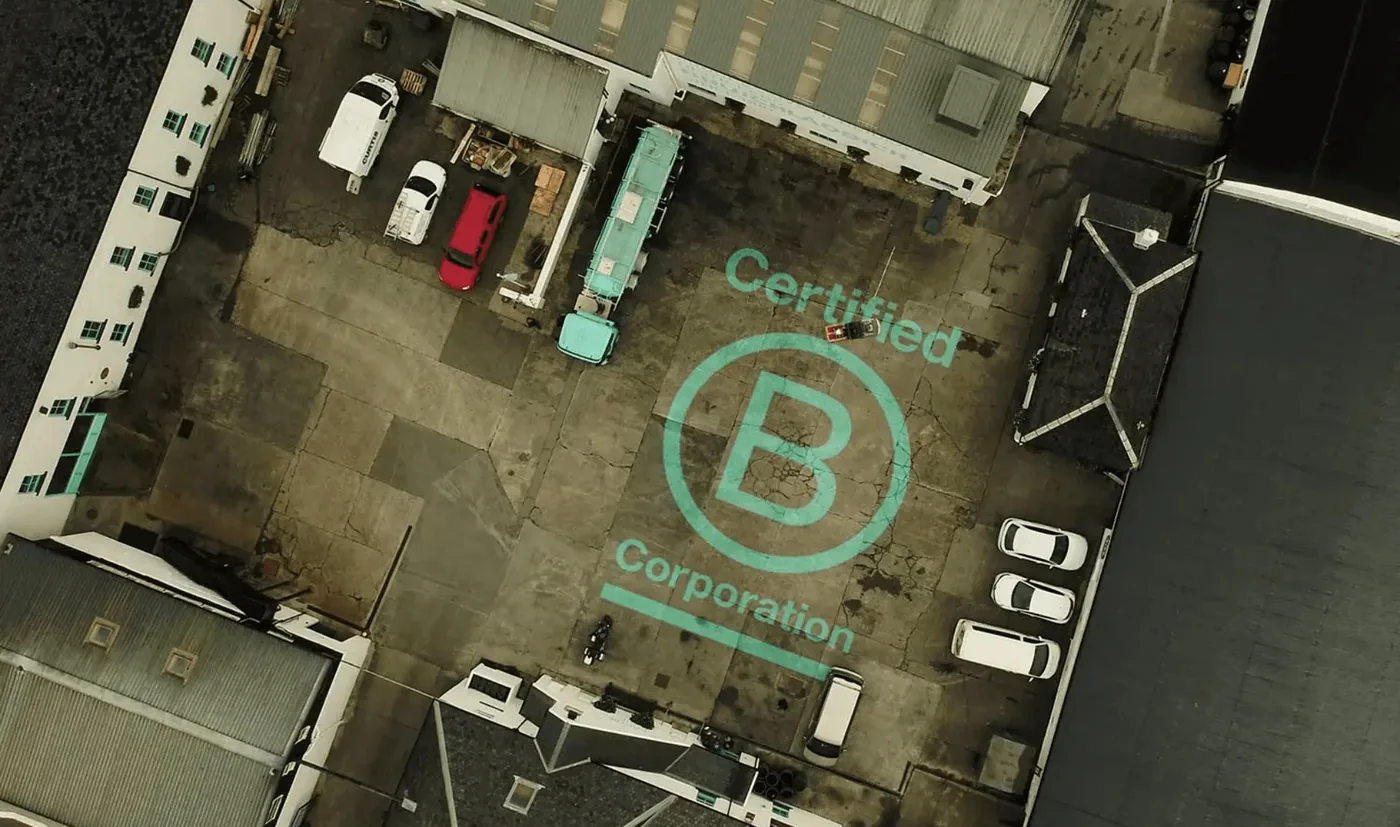
The first B Corp certification earned by a Scotch whisky distillery.
Where the ground says no
The distillery has been notably clear about what it has not managed.
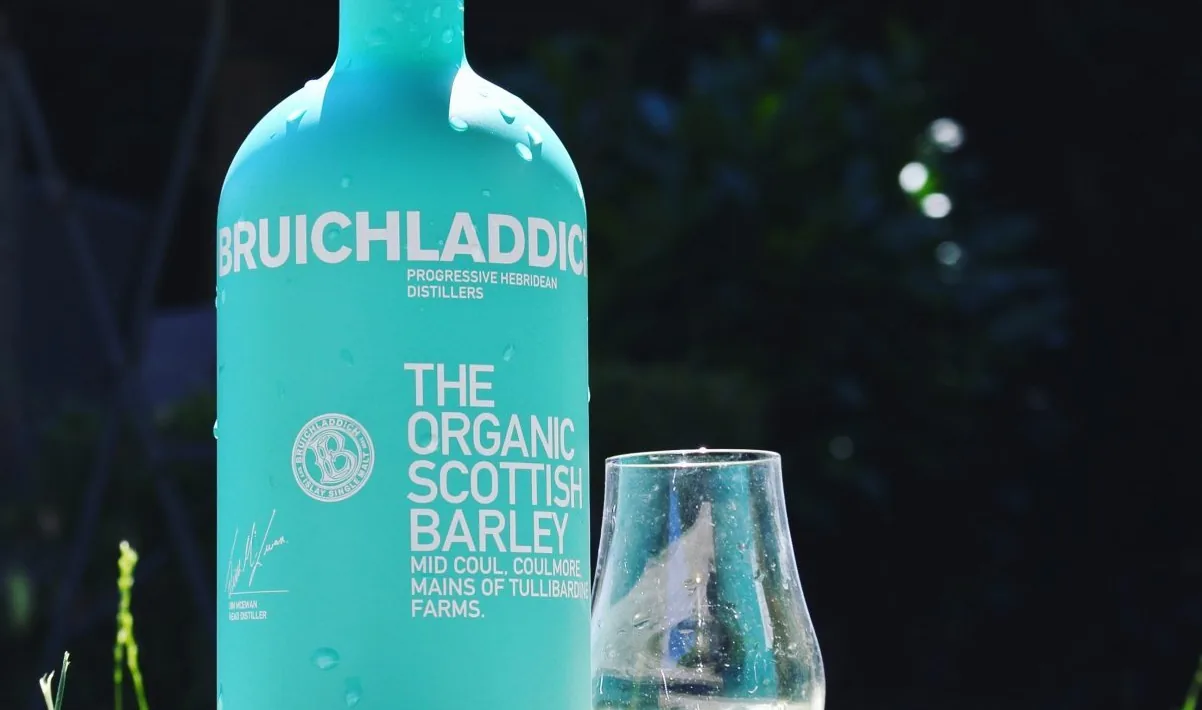
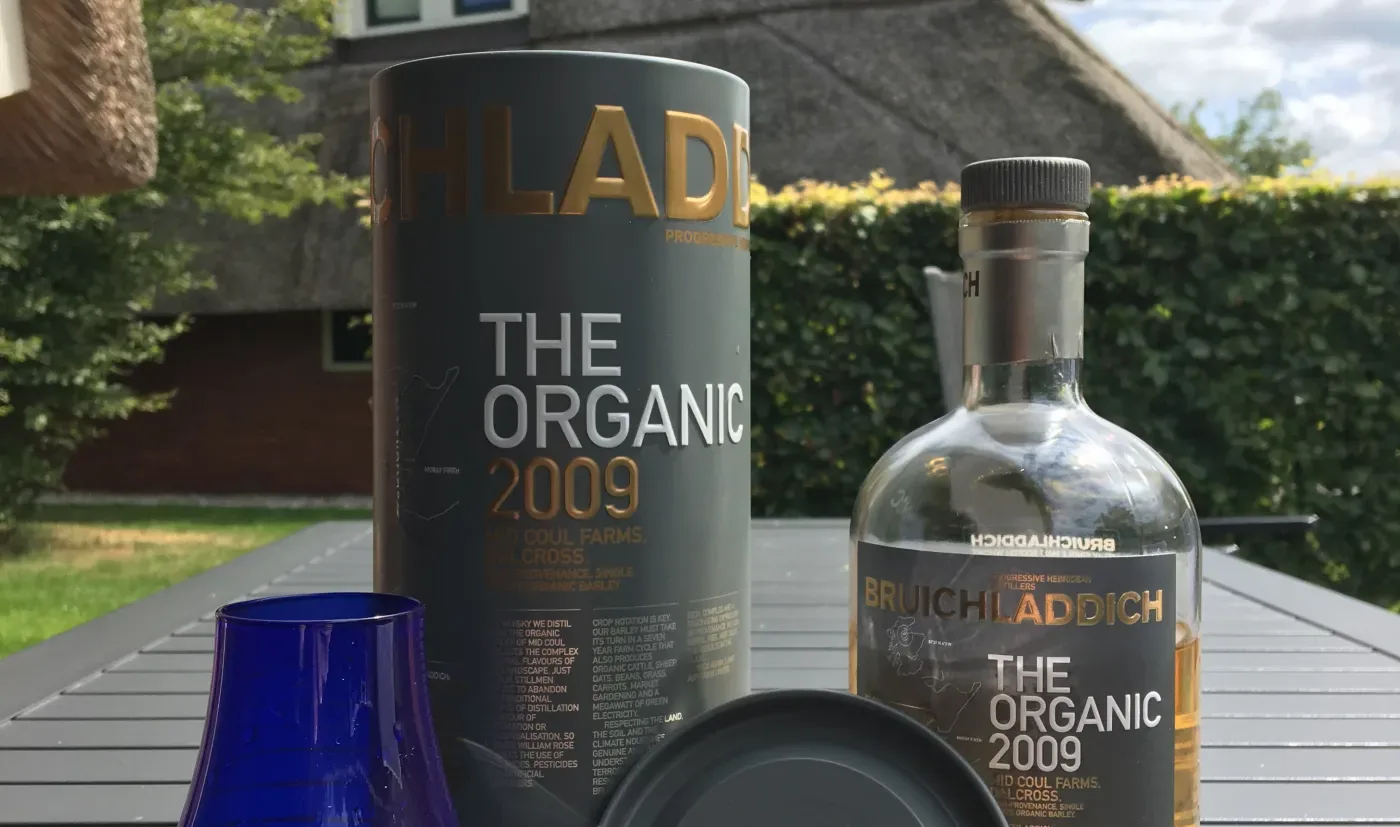
Bruichladdich has made certified organic whisky since 2003. That barley does not come from Islay. It is grown at Mid Coul, near Inverness on the mainland, where the climate allows what the certification requires, and the whisky is certified at every step from field to bottle. The barley grown on Islay is a separate project: conventional and regenerative farming, improved season by season with the island’s farmers, on land where getting a malting crop to harvest at all is an achievement.
The limits showed most clearly when the distillery went looking for biodynamic barley, the strictest farming standard there is. No farm in Scotland grew malting barley to it. The certifying body had to find them a partner, and found one not in the Hebrides but on the chalk downs of Wiltshire: Richard Gantlett of Yatesbury House Farm, whose land by a recent audit draws down roughly ten times more carbon than it emits. His 2010 harvest was distilled the following year, matured for a decade, and released as the first whisky in the world to carry the Demeter mark. A landmark made from English barley, which the label says plainly.
None of that needed disclosing. It would have been simple to let the organic bottlings, the biodynamic landmark and the Islay-grown range settle into a single green impression. Instead the labels distinguish them, the farms are named and the trade-offs stated. On its own croft beside the distillery the work continues: heritage and hybrid varieties suited to a wet west coast, the ancient Bere barley, the island’s first rye, aimed at closing the gap over decades rather than announcing it closed.
A sustainability report that reads like a lab notebook
The same instinct runs through how it reports on its energy problem.
Most corporate sustainability material is a slideshow of things that worked. Bruichladdich’s published record includes an anaerobic digester trialled to power production that did not succeed, recorded on their own timeline as a failure alongside the intention to keep trying. It includes a government-backed feasibility study into running the stills on green hydrogen, described openly as unresolved. And when a renewable heating fuel was phased in, the reported figure was nine percent of production in its first year. Nine percent, published rather than rounded.
Even the headline commitment has moved in public. Earlier statements aimed at decarbonising production by 2025; the current target is distilling operations by 2030, still roughly fifteen years ahead of Scotland’s national timetable, and revised where anyone can see it rather than quietly deleted. Alongside that sit the things that worked: the first B Corp certification earned by any Scotch whisky company, in 2020, the score rising about a fifth at reassessment three years later; a flagship bottle redesigned in recycled glass that cut packaging emissions by close to two-thirds; and the removal of the presentation tin the industry had long treated as compulsory.
On an island where every input arrives by ferry and every bottle leaves the same way, none of this is cheap. Publishing the failures alongside the wins makes the wins considerably easier to believe.
What it costs to hold the line
There is a coda readers of our Waterford piece will recognise.
In 2012 Rémy Cointreau offered to buy Bruichladdich. Reynier opposed the sale, was outvoted by his fellow shareholders, and left. He took the proceeds to Ireland, bought a former Guinness brewery in Waterford, and ran the same experiment again at greater intensity: barley traced field by field, ninety-seven farms kept separate. That distillery went into receivership in 2024.
The tempting reading is that one path was wise and the other foolish. We do not think that is what happened. The same person, with the same convictions, ran two versions of one idea; one ended up underwritten by a large company with patient capital and the other did not, and that difference, rather than any difference in rigour, largely determined which survived. Bruichladdich’s barley programme, energy experiments and island employment have all continued under corporate ownership, funded by it.
At present this kind of farming does not reliably pay for itself. It usually needs something underwriting it: a patient owner, a committed audience, a business model built to carry it. That is a structural fact about how the market is arranged, not a verdict on anybody’s choices. Structures can be changed, which is most of why we do what we do.
The question worth carrying
Bruichladdich holds a Gold-tier listing with us, verified through the Organic Food Federation certification behind its organic expressions, the Biodynamic Association’s Demeter mark on The Biodynamic Project, and B Corp accreditation across the operation. Our listing carries a caveat we insist on printing: those certifications apply to particular expressions, not the whole range. The Classic Laddie is very good whisky. It is not organic whisky, and we would rather say so than let a tier badge imply otherwise.
The thing to take from this is smaller, and it costs nothing to carry into a shop: where did the grain come from?
Most distilleries cannot answer it, not because they are concealing anything but because the malt was bought as a commodity and nobody in the chain ever needed to know. A few can answer precisely, and they tend to be the ones who found the question interesting before anyone was asking. Whisky is an agricultural product, as much as wine is. It only stopped feeling like one because the farming happened a long way from the bottle and nobody thought to look.
The receipt
What to take from this
- Whisky is water, yeast and barley — and barley is the only ingredient that grew in a field.
- Islay stopped growing malting barley for good agronomic reasons: acidic waterlogged peat soils, a short battered season, varieties bred for the dry east.
- In 2004 one Islay farmer planted the first malting crop in living memory. Twenty farms now supply roughly half the distillery’s barley.
- The certified organic barley comes from the mainland; the biodynamic barley came from Wiltshire, because no Scottish farm grew it to that standard.
- Their published record includes a failed digester, an unresolved hydrogen study, a fuel at 9% of production, and a target moved from 2025 to 2030 in public.
- Gold tier, scope-weighted: the certifications cover particular expressions, not the whole range.
Where the claims come from8
-
Bruichladdich Distillery — Sustainability timeline
bruichladdich.com ↗ -
Rémy Cointreau — Bruichladdich annual Impact Report (B Corp scores, GreenFlame, 2030 target)
news.remy-cointreau.com ↗ -
Rémy Cointreau — The Classic Laddie redesign and packaging emissions reduction
news.remy-cointreau.com ↗ -
Rémy Cointreau — HyLaddie green hydrogen feasibility study
remy-cointreau.com ↗ -
Bruichladdich — The Biodynamic Project (Yatesbury House Farm)
bruichladdich.com ↗ -
Bruichladdich — Living the Organic Dream (Demeter UK, Richard Gantlett)
uk.bruichladdich.com ↗ -
Whisky Advocate — How Bruichladdich’s and Ardbeg’s revivals changed Islay
whiskyadvocate.com ↗ -
Free Bacchus — Bruichladdich Distillery, Gold Tier producer profile
↗