Free Bacchus Journal
The Word that means nothing
In Europe, close to half of all new food products now carry a sustainability claim. Almost none of them are enforceable — and the one organisation that has to stand behind its own shelf labels knows exactly which ones it can defend.
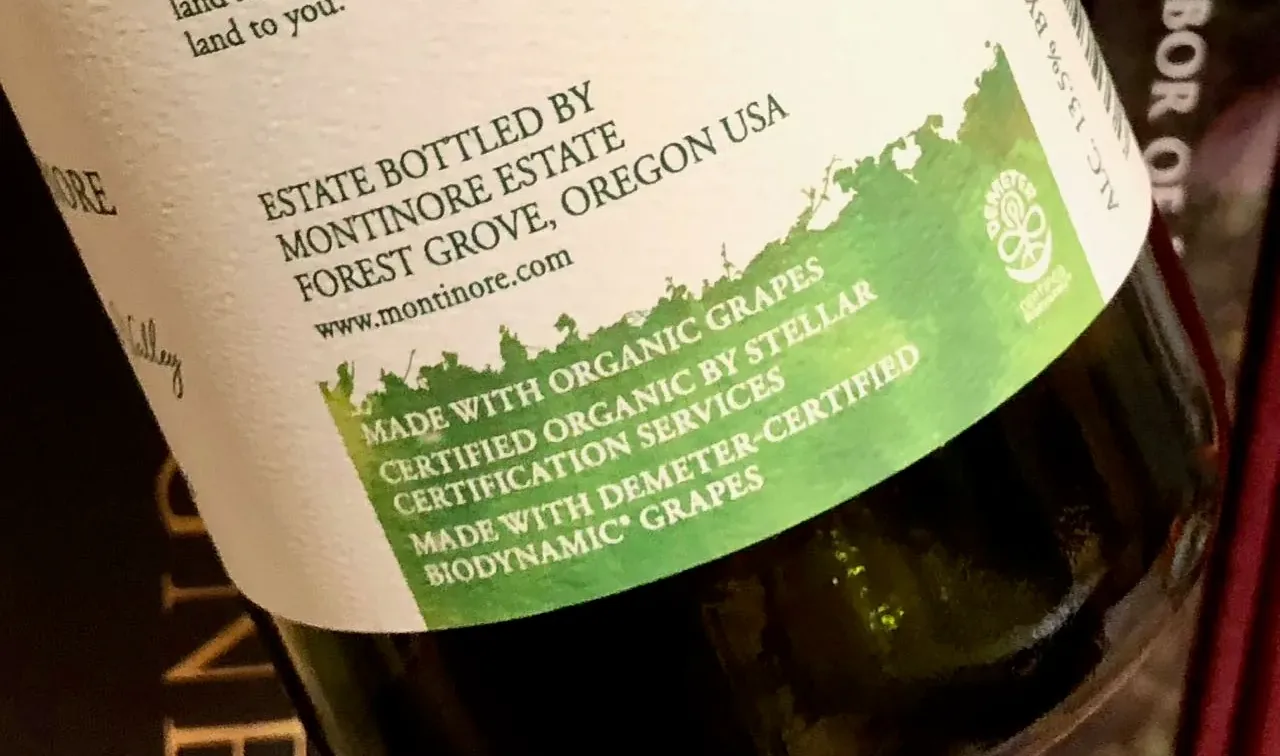
There’s a word on a wine label near you right now, and it’s almost certainly doing no work at all. It might be sustainable. It might be eco-conscious, or farmed with respect for the land, or practising organic, or that most weightless of constructions, natural.
It sits on the back label in a modest serif, near a line drawing of a leaf, and it is designed to leave you feeling the bottle in your hand is the better choice without making a claim anyone could hold the producer to. Across nineteen European countries, the share of new food products launched with a sustainability claim climbed every year from 2005 to 2021, on aggregate by 2.83 percentage points annually. Farming did not transform over those sixteen years. The language did.
The label isn't lying to you. It's doing something more sophisticated — it's saying nothing, beautifully.
The four moves
Vague green language in wine and spirits is rarely a bald falsehood. It's a set of techniques, and once you can name them you cannot unsee them.
The first is the unenforceable adjective. Words like sustainable, eco-friendly, green, conscious and mindful have no legally binding definition in wine or spirits. No body certifies them, no auditor checks them. A producer using synthetic herbicides across every hectare may lawfully describe their operation as sustainable, and many do. The word is unregulated because nobody ever required it to be — not because anyone conspired to keep it loose.
The second is the invented seal. A small circular badge, a stylised leaf or globe, a phrase like "Certified Sustainable Producer." Look closely and the certifying body is sometimes a trade association the producer helped found, or an internal programme with no external audit. It resembles a real certification mark because it was designed to. The genuine marks — USDA Organic, Demeter, Soil Association, Ecocert, CCOF — belong to independent bodies that inspect farms and can revoke certification, and what each of those words actually promises is worth knowing.
The third is the single green fact. A vineyard installs solar panels, or switches to lighter bottles, or plants a hedgerow, and builds a brand identity around it while the farming itself stays conventional. The initiative is real and worth having. It's also, frequently, the only one. Lighter glass does not remove herbicide from soil.
The fourth, and the most quietly effective, is the borrowed halo. The label speaks of family, of generations, of terroir, of respect for the land, and shows a weathered hand in soil. Nothing untrue is stated and nothing verifiable is claimed — but the shopper leaves with an impression of chemical-free farming that the producer never actually asserted, and couldn't have defended if they had.
By the numbers
carrying a sustainability claim, 2005–2021
the BC retailer’s label decisions
“sustainable” in BC Liquor Stores
The tell: what a state retailer will and will not print
If you want to know which green claims can genuinely be stood behind, don't ask a producer. Ask the organisation that would be liable if the claim turned out to be false.
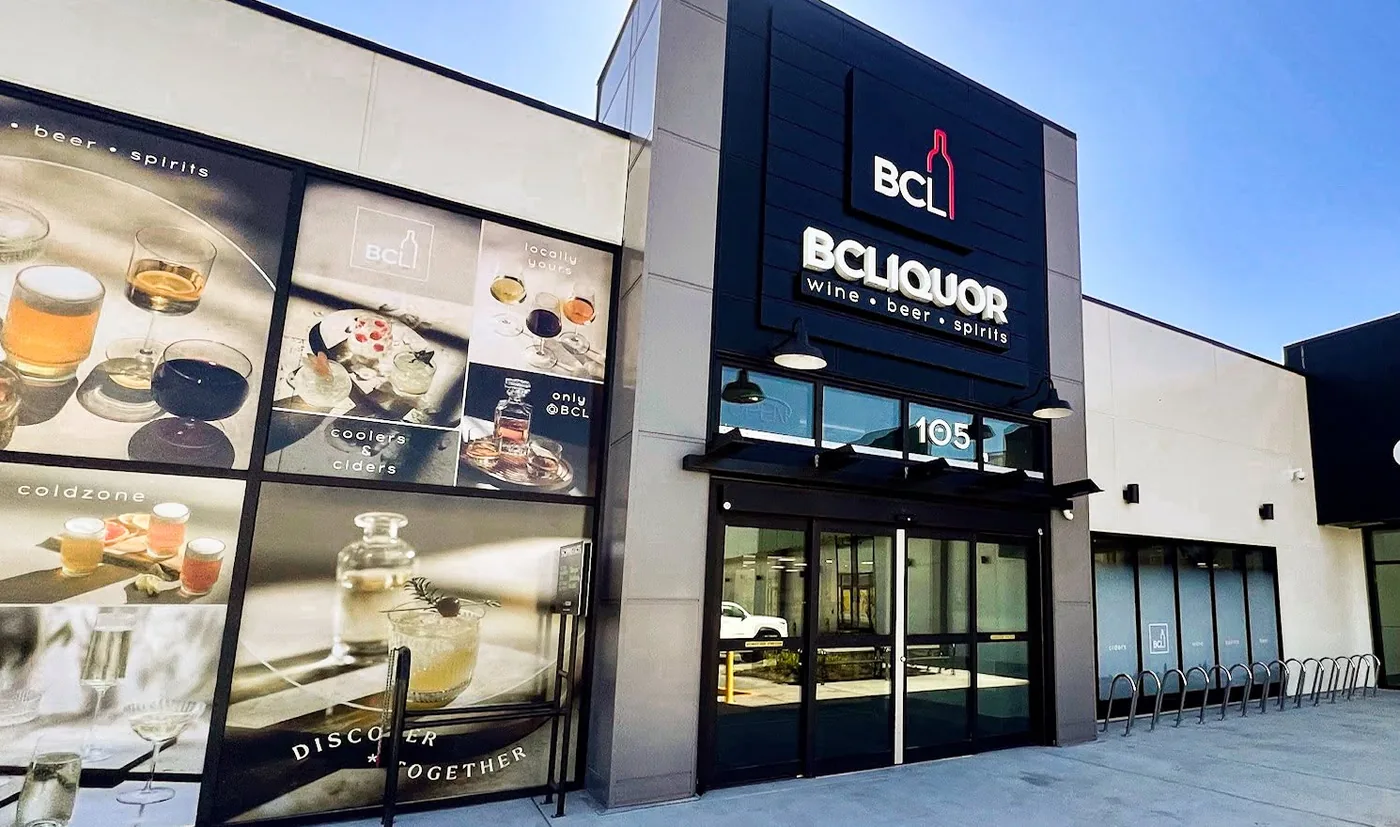
British Columbia is an unusually clean natural experiment, because the province’s liquor retail and wholesale system is run by a crown corporation — the BC Liquor Distribution Branch. Not a private retailer chasing a marketing angle but a government body contributing over a billion dollars a year to the province and answerable to the public.
And here's what it does. There's an organic symbol on shelf labels in BC Liquor Stores, organic status appears in product descriptions online, and shoppers can filter for organic by category. The designation exists, it's public, and the LDB stands behind it.
There's no equivalent shelf designation for sustainable.
That asymmetry isn't an oversight. It is the difference between the two words, stated by the one party with something to lose. Organic is a credential a third party audits and can withdraw — so a retailer can point at it, print it, and defend it if challenged. Sustainable isn't, so no organisation carrying real liability can safely tell you which bottle on its shelf deserves the word.
One of these words a crown corporation will print on a shelf label. The other, it won't.
Even the good programmes certify something narrower
It would be easy to read that as cynicism about sustainability programmes. It's not, and the distinction matters.
British Columbia has such a programme, Sustainable Winegrowing BC, and it is a serious, good-faith effort. It grew out of a self-assessment scheme begun in 2011, was rebuilt around measurable outcomes, incorporates the UN Sustainable Development Goals, and, unlike a great many sustainability claims, requires an actual third-party audit. Auditors visit the vineyard and walk through each criterion.
But read carefully what it certifies. A certified wine may be described as made from grapes grown in a certified sustainable vineyard. And the programme’s own account of what its logo means to a shopper is admirably honest: it assures the public that the winery is on a path of continuous improvement.
A path of continuous improvement is a worthy thing. It's also not the same claim as "no synthetic pesticide touched this fruit." The vineyard criteria cover watershed management, soil, irrigation, integrated pest management and social equity. Integrated pest management is a strategy for using pesticides judiciously — a meaningful improvement on spraying by the calendar, and not the same as abstinence.
So a shopper sees a green leaf, reasonably infers "no chemicals," and has in fact been told something rather more modest. Nobody lied. The shopper has simply been handed a word that carries more weight in their head than it does in the standard.
Why the careful producer loses out
None of which is really a story about consumers being fooled. The deeper cost falls elsewhere.
Consider a family estate that has farmed organically for twenty years. They've paid for annual certification, absorbed lower yields and higher labour costs, and accepted the risk of losing a crop to disease pressure they could have sprayed away. Their audited, expensive credential now sits on a shelf beside a conventional wine wearing a green leaf and the word sustainable — a word that cost its producer nothing.
To the shopper the two bottles look alike. So the market delivers its verdict: the careful producer receives no advantage for their care, and the conventional one receives the full commercial benefit of a virtue they never practised.
Every unenforceable claim on a shelf makes the enforceable ones worth a little less.
Economists call this a market for lemons — when buyers can't distinguish quality, quality exits the market. It is what the World Economic Forum found when it asked why people who say they want sustainable products so rarely buy them: without confidence in sustainability claims, consumers revert to familiar products. The scepticism is entirely rational. It's also, in aggregate, hardest on the producers who deserve trust most.
How to read a label in ten seconds
The test is simpler than the industry would suggest. Ask one question of any green claim: who checked, and can they take it away?
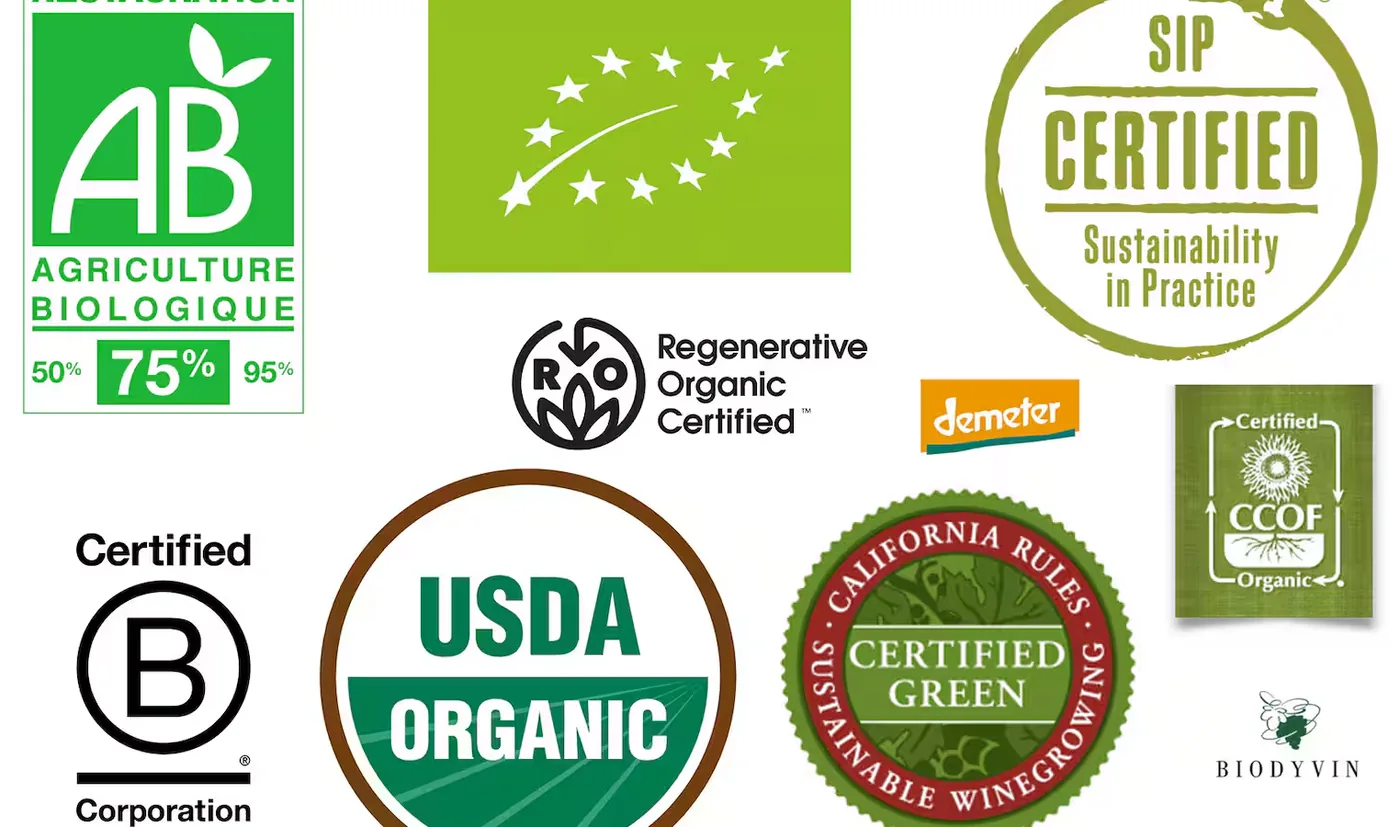
If a bottle carries an independent certification mark — USDA Organic, Demeter, Soil Association, Ecocert, CCOF, Regenerative Organic Certified — someone external inspected that farm and can revoke the mark. That's a claim with consequences behind it. If it carries an adjective — sustainable, natural, eco-conscious, artisanal — nobody can revoke it, and it means precisely as much as the producer wishes.
And if it carries a genuine sustainability certification, audited and real, ask the second question: what exactly does this certify? Sometimes the answer is a farm that has eliminated synthetic inputs. Sometimes it's a farm thoughtfully on its way somewhere better. Both deserve respect. They are not the same bottle.
That’s the whole habit, and it takes about ten seconds. Even among the marks, it pays to know what you’ve actually been promised.
Marks are audited. Adjectives are free. Ask who checked — and whether they can take it away.
The receipt
What to take from this
- Across nineteen European countries, new food products carrying a sustainability claim rose 2.83 percentage points a year from 2005 to 2021, reaching roughly half of all launches (Nes, Antonioli & Ciaian, Agribusiness, 2024). The language changed, not the farming.
- Four moves to recognise: the unenforceable adjective, the invented seal, the single green fact, the borrowed halo.
- BC’s crown liquor retailer prints organic on shelf labels. It won't print sustainable — that asymmetry is the tell.
- Good programmes exist and audit properly — but "on a path of continuous improvement" is a narrower promise than "no pesticide".
- Unenforceable claims are hardest on the certified producer, who paid for a credential that now looks identical to a free adjective.
- One question settles most labels: who checked, and can they take it away?
Where the claims come from7
-
Nes, Antonioli & Ciaian (2024), Agribusiness — sustainability claims on new food products, 19 European countries, 2005–2021 (Mintel GNPD)
doi.org ↗ -
BC Liquor Distribution Branch — Retail sustainability (organic shelf designation and filtering)
bcldb.com ↗ -
Sustainable Winegrowing BC — Certification and what the logo assures
sustainablewinegrowingbc.ca ↗ -
Sustainable Winegrowing BC — Programme history, standards, UN SDG alignment
sustainablewinegrowingbc.ca ↗ -
Country Life in BC — Growers, wineries welcome sustainability launch (audit process, IPM criteria)
countrylifeinbc.com ↗ -
World Economic Forum — Why consumers still struggle to buy sustainable products
weforum.org ↗ -
Free Bacchus — The Verification Standard
↗