Weingut Sepp Moser
The Free Bacchus Story
In the winter of 1998–99 Niki Moser heard Marc Kreydenweiss, a biodynamic pioneer from Alsace, lecture in Eisenstadt, and came away almost a little shocked. The next May he and his wife, Andrea, went to Alsace to see for themselves. Kreydenweiss and Jean-Pierre Frick, a Demeter veteran, gave them hours in the vineyards and over the wines, and somewhere among those Alsace vines the couple decided, on instinct, that this was their way. At the turn of 2000 Niki’s father, Sepp, handed him the family estate at Rohrendorf in the Kremstal, and the conversion began that year.
Sepp, born in 1929, was a man of the old school. He had watched fertiliser, weedkillers, synthetic sprays and cultured yeast make a winegrower’s life far easier and the yields higher and more even, and the estate says he was not happy to see his son throw all of it overboard. Niki started with 2.5 hectares in the Wolfsgraben vineyard. In 2001 he converted more parcels in the Kremstal and two hectares near the Neusiedlersee, and the biodynamic land grew to 17 hectares before he felt ready to take on all 50. The Demeter and organic control contracts were signed in late summer 2005, and the estate dates its Demeter certificate from the 2009 vintage.
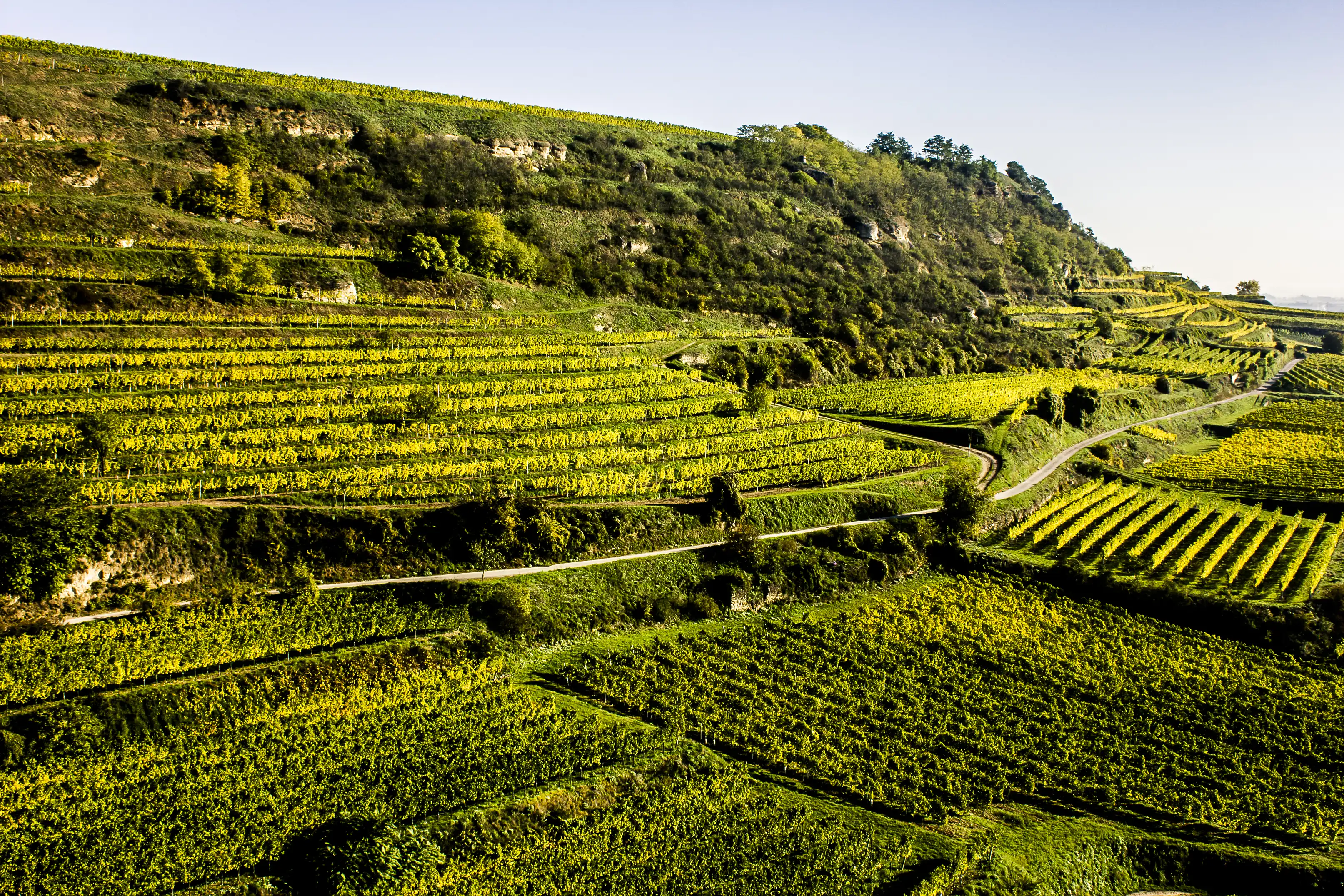
The family farms two very different places. Rohrendorf, 70 kilometres west of Vienna, is white-wine country: steep, south-facing terraces of loess, the soft wind-blown silt of the Danube valley, and weathered conglomerate, and Grüner Veltliner is more than 60 per cent of the 24 hectares. Grüner Veltliner is Austria’s own white grape, and on loess it comes out rounder and broader, with the white pepper the variety is known for right at the front. Riesling, the other great white of the Danube, is made dry here and runs leaner, closer to citrus and stone; Wine Enthusiast’s Anne Krebiehl MW gave the 2019 Ried Gebling Reserve Riesling 97 points and gave it until 2050. The other place is Apetlon, near the Hungarian border, where Sepp bought fallow land and planted it in the early 1960s, in the middle of the Neusiedlersee-Seewinkel nature reserve. More than 60 per cent of its 27 hectares is Zweigelt, which the estate calls Austria’s number one red grape, a red that usually comes out softer and fruitier than Blaufränkisch. The shallow lake holds the summer heat and sends autumn mists over the vines, so Apetlon gives the estate its structured reds and its sweet wines of noble rot.
Niki had also fallen for Slovenia’s orange wines. In 2005, the first year of the Demeter conversion, he made a Grüner Veltliner with as little intervention as he could manage, fermented with its own yeasts in a used barrique and given only a little sulphur, and called it MINIMAL. It caused outrage then, the estate says, and is a classic among natural wines now. Two Noriker horses plough part of the vineyards, 30 hens live in a mobile coop among the vines, and a small flock of sheep grazes the banks. Kathi Moser runs the cellar with her husband, Jan Moser-Vavricka, who left a job at the Prague finance ministry to make wine in South Africa, California, Australia and New Zealand, and who helped found Demeter in the Czech Republic and Slovakia.
The company that farms the vines and makes the wine, Vitikultur MOSER GmbH & Co KG, is on the EU organic register for its grapes and its wine, with no land in conversion, and Demeter Austria’s grower list of June 2026 names it too. The certificate lists no vineyards, so for the Burgenland wines the evidence is the label, which carries the company’s name and the EU organic and Demeter marks. Older reviews call the estate Sepp Moser; it trades as Vitikultur Moser now.
“I am a declared tree sympathizer”
Why it’s remarkable
Free Bacchus Verification
Demeter biodynamic · Austria Bio Garantie EU organic
Certified3
- EU organic, Austria Bio Garantie – Landwirtschaft GmbH (AT-BIO-302): Vitikultur MOSER GmbH & Co KG, Rohrendorf bei Krems (AT-BIO-302.040-0013651.2026.005), grapes, processed products and wine, valid 19 August 2026 to 31 December 2027
- Demeter, Demeter Austria: BFDI AT-1364090, and Demeter Austria’s grower list of 1 June 2026
- A second company at the same address, Vitikultur MOSER GmbH, holds a preparation-only EU organic certificate, Austria Bio Garantie GmbH (AT-BIO-301.040-0031708.2025.001), for wine and fruit juices, valid to 31 January 2027
Also on record4
- No land in conversion and no non-organic production on the certificate
- The certificate lists no land or products; the Burgenland wines from Apetlon carry the company’s name and the EU organic and Demeter logos on their labels
- The estate dates its organic and Demeter control contracts to late summer 2005 and its Demeter certificate to the 2009 vintage, the estate’s own account, which no register dates
- BFDI shows no validity date for Demeter Austria’s records
If you’re buying
Cheat sheet
Save it to your phone. Everything you need to recognise this producer, and three things worth saying about it, at a glance in a shop or across a table.
From the Journal
More Verified Houses · Austria
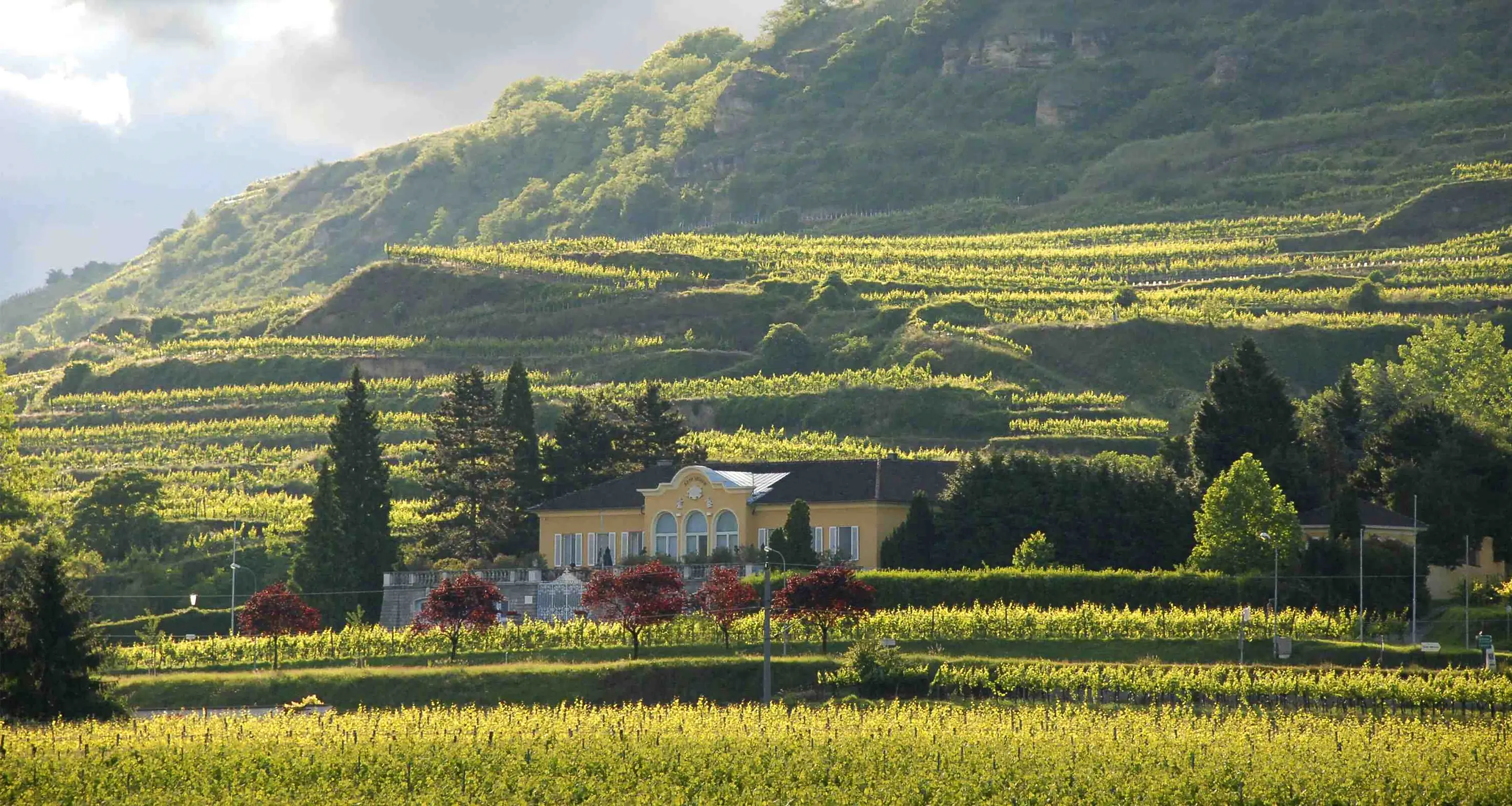
Photograph at the top of this page: Vitikultur Moser, the estate house among the vineyards by Christian Teske, © Christian Teske, via Vitikultur Moser. Resized and sharpened for this page.
Photograph across the middle of this page: The Rohrendorfer Gebling terraces by Erwin Polanc & Yola Moschitz, © Vitikultur Moser, via Vitikultur Moser. Resized and sharpened for this page.

