Skip to content
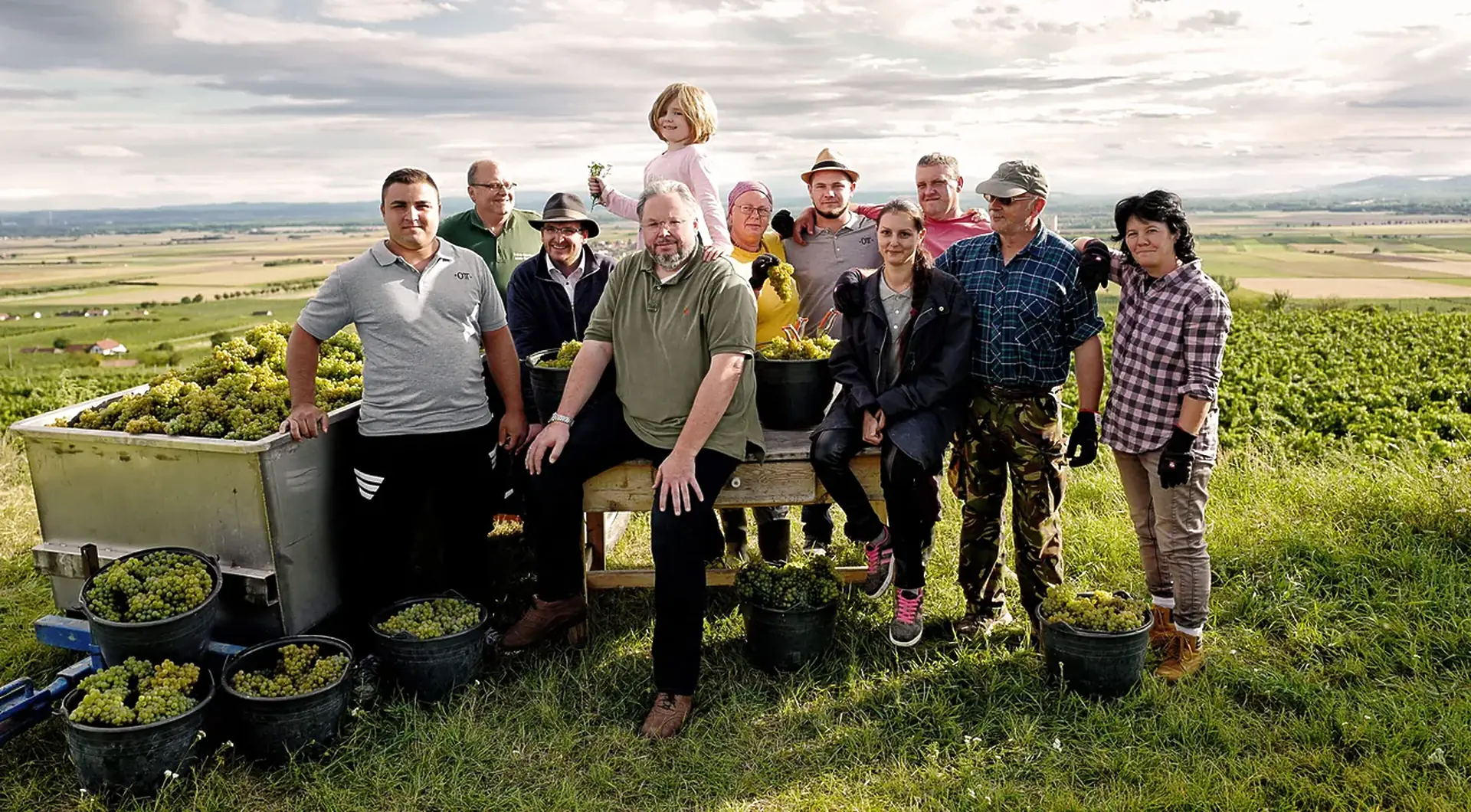
A group of people posed with buckets and a trailer bin of pale green grapes on a grassy slope above flat farmland
Wagram, Lower AustriaAustriaBiodynamic Wine

Weingut Bernhard Ott

VINE-goot BERN-hart OTT · Wagram is VAH-grahm
Gold TierTypically Under $45
Last verified · September 2026

The Wagram is a wall of dust. Loess — fine calcareous silt blown across central Europe during the ice ages — lies many metres deep here, and it is the whole reason this is Grüner Veltliner country rather than anything else. Loess holds water without waterlogging and stays open to air, which lets a vine ripen slowly and gives Grüner what it needs to be more than refreshing: volume in the mouth, a savoury depth underneath, and drive to carry it.

Bernhard Ott is the fourth generation, in charge since 1993, on about forty hectares that are around ninety per cent Grüner Veltliner. He converted the estate to biodynamics in 2006 and the following year helped found respekt-BIODYN, the association of central European growers that certifies biodynamic farming on this side of the Alps. He was one of thirteen founders, and five of the others are already in this cellar — Hirsch, Loimer, Paul Achs, Nittnaus and Heinrich.
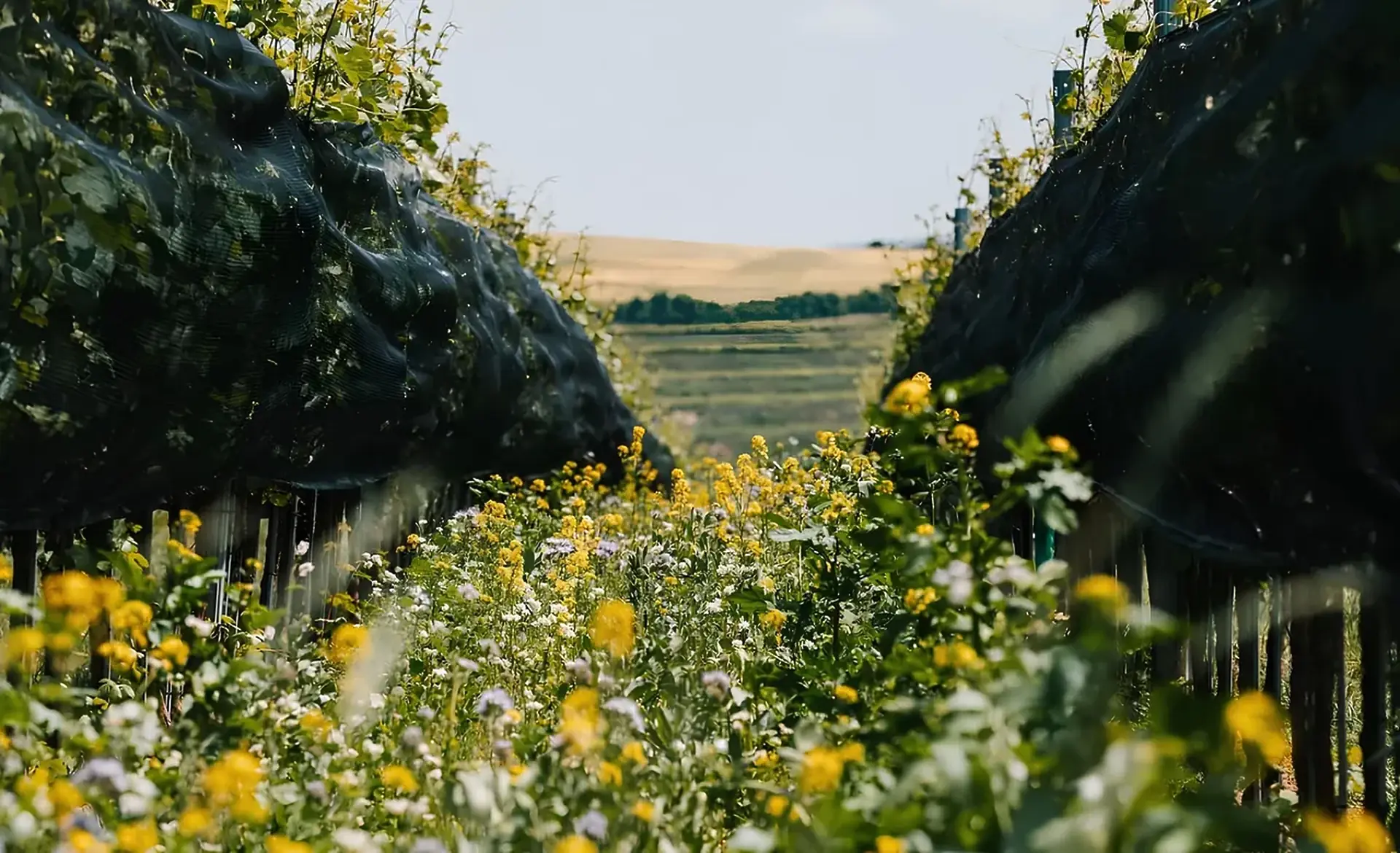
Yellow and white wildflowers growing between two vine rows covered in dark netting, with a dry golden hillside beyond

Grüner Veltliner is a grape most people meet as something cheap and cheerful in a litre bottle, which does it no favours. Grown properly it is closer to a serious white Burgundy in shape than to Pinot Grigio: dry, textured, with a peppery savouriness the Austrians call Pfefferl and enough acid to age for a decade. Ott's argument, made over thirty vintages, is that loess is what makes the difference between the cheerful version and the long one.

Der Ott is the cuvée drawn from young vines in the first-growth sites — Spiegel, Stein and Rosenberg — and it shows the house style concentrated into one bottle. Part of the estate's Veltliner also ferments in Georgian qvevri, buried clay, which produces something with more grip and less polish.

Why it’s remarkable

Metres of dust
loess is the whole reason this is Grüner country
Loess is fine calcareous silt blown across central Europe during the ice ages, and on the Wagram it lies many metres deep. It holds water without waterlogging and stays open to air, which lets a vine ripen slowly. What that gives Grüner Veltliner is volume in the mouth and a savoury depth underneath — the difference between the cheerful version of the grape and the one that ages.
One of thirteen
a founding member of respekt-BIODYN in 2007
Ott converted the estate to biodynamics in 2006 and helped found the association the year after. It is the body that certifies biodynamic farming for central European growers, and it publishes its members. Five of the other twelve founders are already in this cellar — Hirsch, Loimer, Paul Achs, Nittnaus and Heinrich — which says something about who was in the room.
Ninety per cent one grape
forty hectares, almost all of it Grüner Veltliner
Fourth generation, in charge since 1993. An estate that plants nine rows in ten to a single variety has no second act if the argument about that variety turns out to be wrong — and the argument here is a narrow one: that loess, specifically, is what lets Grüner make long wines rather than merely refreshing ones.
Buried clay
part of the Veltliner ferments in Georgian qvevri
Qvevri are egg-shaped clay vessels set into the ground, the oldest winemaking technology still in continuous use. Fermenting in one gives a wine more grip and less polish than steel or oak would. It is a deliberate roughening of a grape usually sold on its smoothness.
Independently certified, and checked against the issuing body’s own register. Not a compromise on quality — see how we verify.

Free Bacchus Verification

Track A
Formal third-party certification, confirmed against the issuing body’s own register.

respekt-BIODYN biodynamic

Certified2
  • respekt-BIODYN biodynamic — a founding member of the association since 2007, listed on its own register of members
  • The estate has farmed biodynamically since 2006
Re-verified annually against the issuing body’s register. How re-verification works
The producer’s own siteott.at
Producers don’t pay to be here. There is no fee to be listed and no way to buy a higher tier. If the evidence doesn’t hold, the bottle isn’t here.
Flagship
Grüner Veltliner “Der Ott”

If you’re buying

Price
Around US$40 for Der Ott. Approximate.
Drinking now
Drinks well on release and will hold for a decade. Grüner of this kind gains a honeyed, peppery depth with age that surprises people.
Serving
10–12°C, and not straight from the fridge door — too cold and the texture that is the point of it disappears.
Availability
Widely available through Austrian specialists in the US and Europe. Der Ott is made in quantity; the single-vineyard bottlings are scarcer.
Tastes like
Dry and textured with a peppery savouriness, closer to a serious white Burgundy in shape than to Pinot Grigio.
Pairs with
Schnitzel, roast pork, or anything with dill and sour cream.
Price bands are approximate and move with vintage, market and region. They are a guide, not a quotation.

Cheat sheet

Save it to your phone. Everything you need to recognise this producer, and three things worth saying about it, at a glance in a shop or across a table.

22 verified producers in Austria →

From the Journal

← FèlsinaThe Verification StandardTenuta di Valgiano →

More Verified Houses · Austria

Where to go next

Three more from the cellar, chosen by what is in the glass rather than where it is from.

Little Farm WineryWhite · Canada Ossian Vides y VinosWhite · Spain Domaine Marc KreydenweissWhite · France
↑