Skip to content
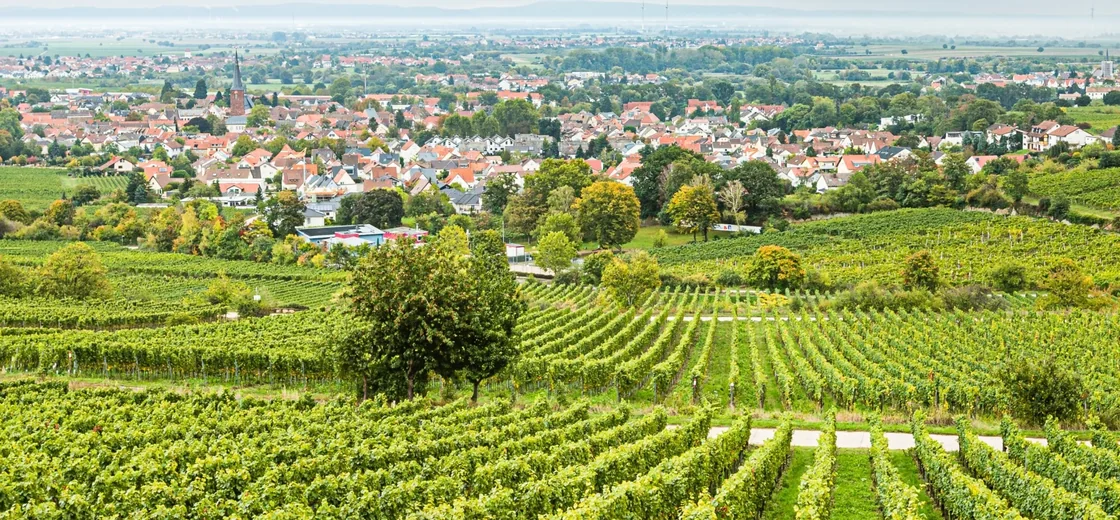
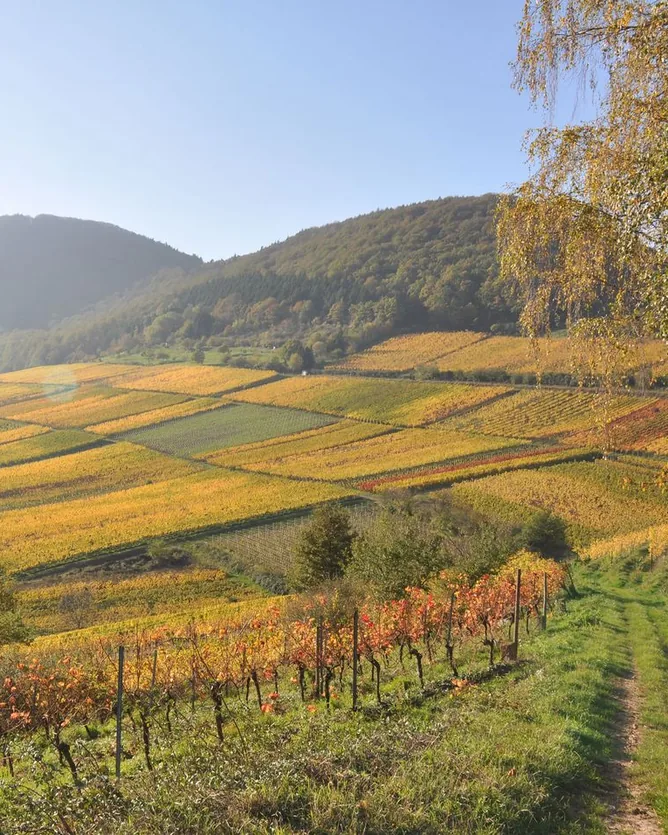
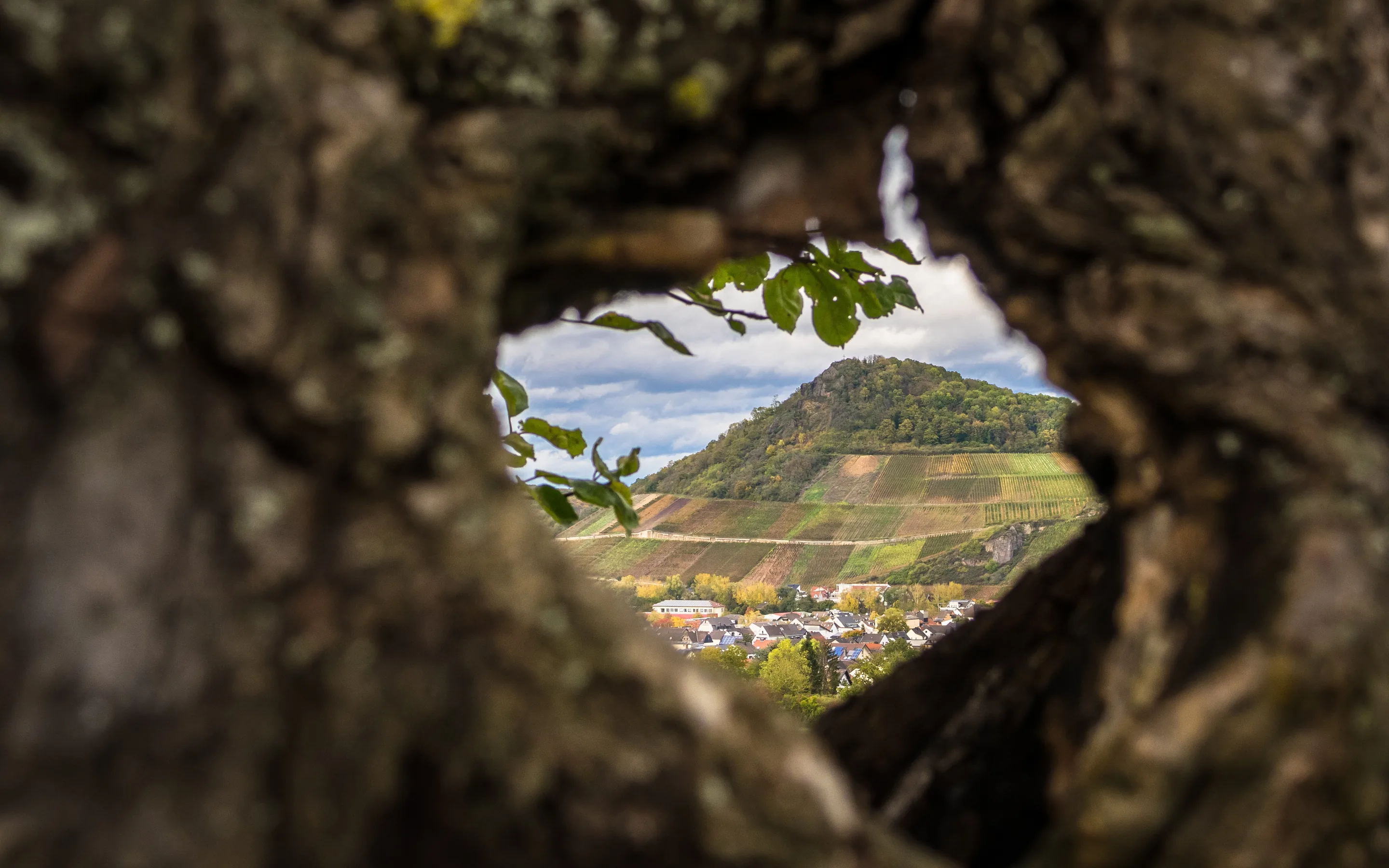
A gap in the trunk of an old tree framing terraced vineyard slopes below a wooded crag, with a village of red roofs at the foot of them

Free Bacchus Country Guide·Germany

The hardest climate in wine
to farm without spray. Fifteen per cent of it is farmed that way

German vines grow further north than almost any others that matter, on rivers, on slate, at angles no tractor can climb. It is the hardest climate organic farming faces, because what you give up is exactly what stops rot. Fifteen per cent of the vineyard is farmed that way regardless.

What this guide is for

A country at a time: the major wine regions of the world, what the ground and the weather do to what is grown in them, and which growers inside them we have verified. None of it is settled. Growing seasons are shifting, and the chemistry most vineyards reach for to hold steady against that is made from fossil fuels and takes energy to manufacture — while a warmer, wetter season brings more disease, and more disease brings more spraying. Every estate on these pages farms without synthetic pesticides. That is what their certification means, and it is the part we check.

The ground

Grown at the cold edge of ripeness

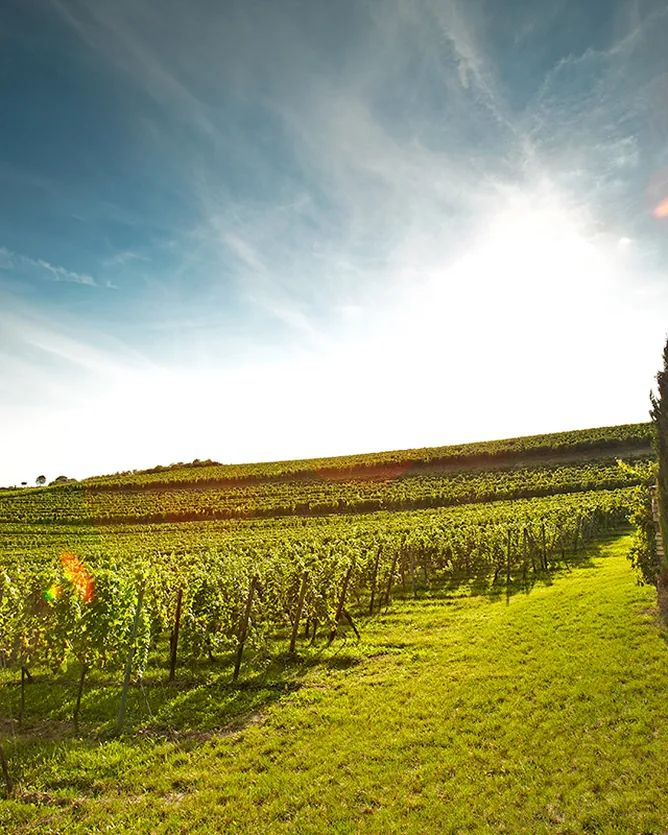
Everything here follows from the weather. German wine is grown at the cold northern limit of where grapes will ripen at all, which is why the vineyards cling to river valleys: the Mosel, the Rhine and their tributaries. Water reflects light onto the slope and holds warmth into the night, and slate holds the day’s heat after dark. Without that trick the grapes would not ripen. The trade is that river valleys are humid, and the growing season is wet.

Where they are NORTH SEA BALTIC FRANCE POLAND AUSTRIA Hamburg Berlin Cologne Frankfurt Munich Mosel Rheinhessen Pfalz Franken Württemberg Rheingau Baden
Boundary from public-domain country data, simplified for the web and corrected for latitude so the shape is not stretched. All of them sit in the south and west, on the Rhine or a river that runs into it. A hollow marker is a region this guide covers where nothing has been verified yet.

The reason this should not workRain

The main thing a vineyard sprays against is fungus — downy mildew, powdery mildew, rot — and fungus wants exactly what a German summer provides. Conventional farming answers with systemic fungicides, which travel inside the plant and keep working after rain. Organic certification takes those away and leaves you with contact treatments that wash off, which means going back out again after every downpour, on slopes too steep for a machine.

So the reasonable prediction is that Germany would have the lowest organic share of any serious wine country. It does not. About fifteen thousand three hundred hectares are farmed organically, roughly fifteen per cent of the national vineyard, and that figure rose by fifteen hundred hectares in one year on the German Wine Institute’s own accounting. Growth that fast is the mainstream moving, not a few idealists.

Of German vineyard, farmed organically15%

Most of the estates here went further than the minimum. Beyond EU organic certification they hold Demeter, Naturland and respekt-BIODYN, biodynamic marks that add work rather than remove it, in the country where the work is hardest. One of them stopped using herbicide in 1976 and certified in 1984, roughly a generation before anyone was asking.

Region by region

Seven regions, one river

Mosel, Germany

Mosel MOH-zul

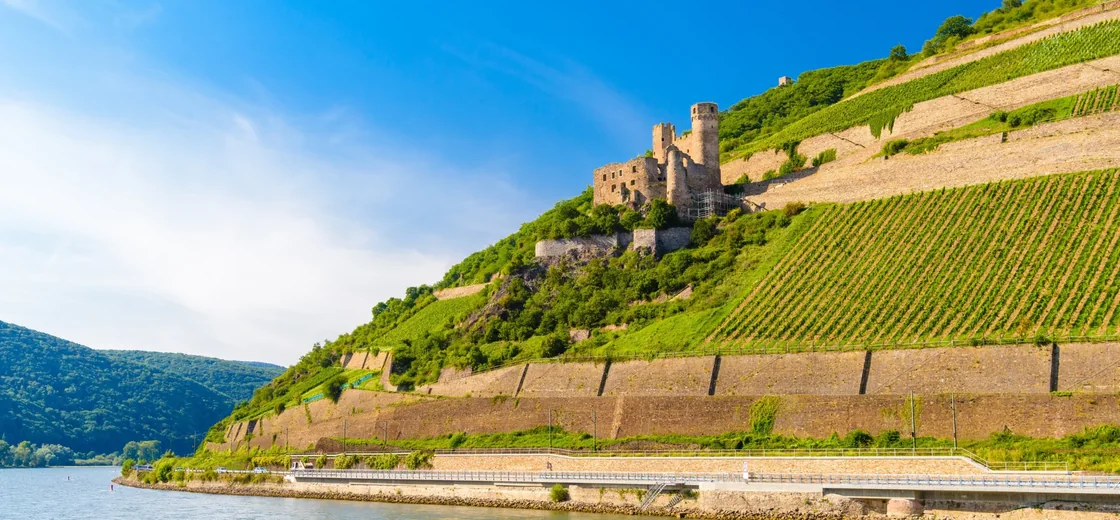
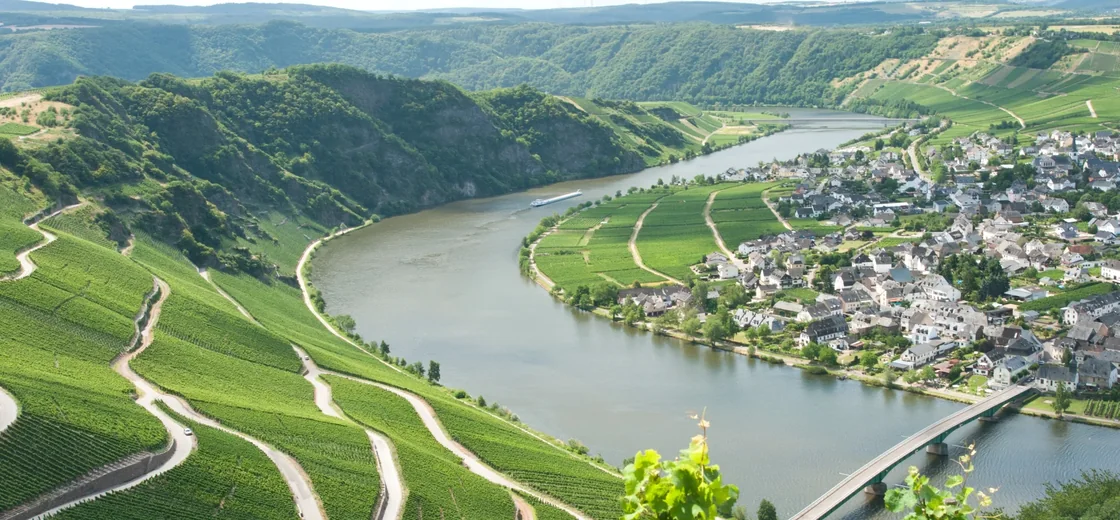
Germany’s fifth largest region and comfortably its most dramatic. The river loops back on itself again and again, and each loop exposes a south-facing wall of blue and red Devonian slate that catches low northern sun at an angle flat ground never would. A few bends downstream from the estate on this page the Calmont reaches sixty-five degrees, the steepest vineyard in Europe, and no machine goes up any of it — the work is done on the hill, on ropes. What comes off it is Riesling that is light in alcohol and very long in flavour, which is a combination almost nowhere else manages.

1 verified producer here.
Rheinhessen, Germany

Rheinhessen ryne-HESS-un

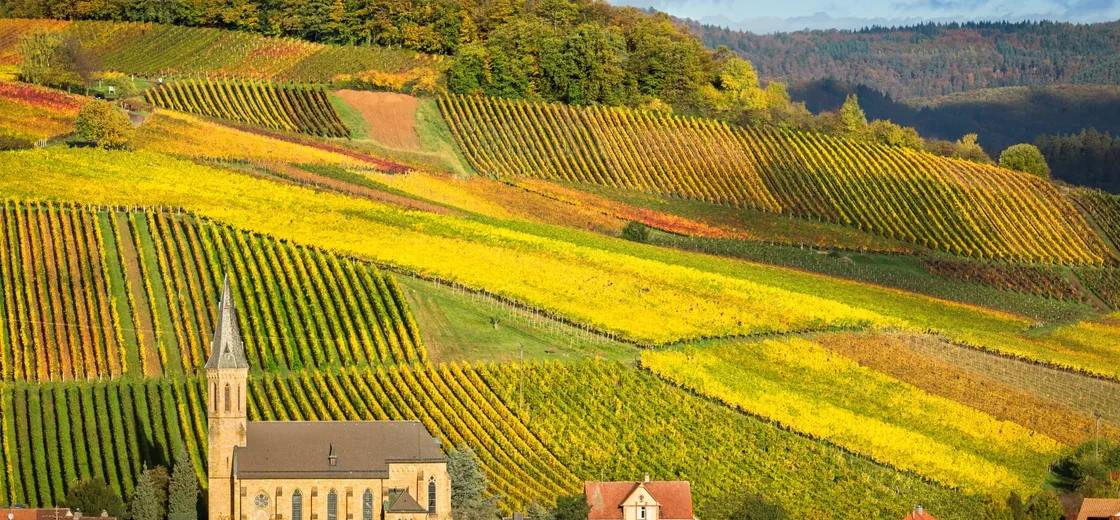
Germany’s largest wine region — about a quarter of the national vineyard on its own — and for a long time its least respected: this is where the cheap sweet exports of the 1970s and 1980s came from. That reputation is now badly out of date, undone by a generation of young growers who cut yields hard and went looking for the best ground. Most of Rheinhessen is gentle rolling country rather than the steep Rhine terrace people picture, and the estate here is inland in the Wonnegau, on limestone and clay, making dry Riesling and Pinot with real weight.

1 verified producer here.

Pfalz, Germany

Pfalz PFALTS

The warm one, and the big one: Germany’s second largest region at around 23,000 hectares, with more Riesling planted than anywhere else in the country. A long strip running north to south with the Haardt hills shading it from the west, and among the sunniest and driest ground in German wine — dry enough that figs and almonds grow along the roads. Warmth changes what is possible: alongside Riesling the Pfalz makes serious Pinot Noir, especially at the southern end, the Südpfalz, where two of these estates sit.

4 verified producers here.

Franken FRAHNG-kun

Franconia, in the north of Bavaria, and most of it follows the Main as the river winds round Würzburg. The climate is continental: hard winters, and frost in spring often enough that a grower plans for it. Around Würzburg the vines grow on Muschelkalk, a shell limestone, and about a quarter of the vineyard is Silvaner, a grape most of the country treats as a sideline. Its typical bottle is the Bocksbeutel, round and flattened, first kept for the best Franconian wine.

1 verified producer here.

Württemberg VIRT-um-bairk

The wine country of the Neckar and the rivers that run into it, the Rems, Enz, Kocher and Jagst. It is red country: about seven vines in ten are red, and the grape it is known for is Trollinger, with Lemberger, which Austria calls Blaufränkisch, and Schwarzriesling, which is Pinot Meunier, alongside. One of its best-known vineyards, the Cannstatter Zuckerle, is a flight of steep terraces above the Neckar inside Stuttgart itself.

2 verified producers here.

Rheingau, Germany

Rheingau RYNE-gow

Small — about three thousand hectares, a fraction of Rheinhessen next door — and for two centuries the region every other one measured itself against. Above Wiesbaden the Rhine gives up running north and turns west for thirty kilometres, which leaves a whole bank of vineyard tilted due south. Riesling is four fifths of what is planted here and Spätburgunder most of the rest. The habit of picking late, and of grading a wine by how ripe the fruit was when it came in, started on these slopes with the monasteries and the noble estates and became the system the whole country still uses.

No verified producer here yet.

Baden, Germany

Baden BAH-dun

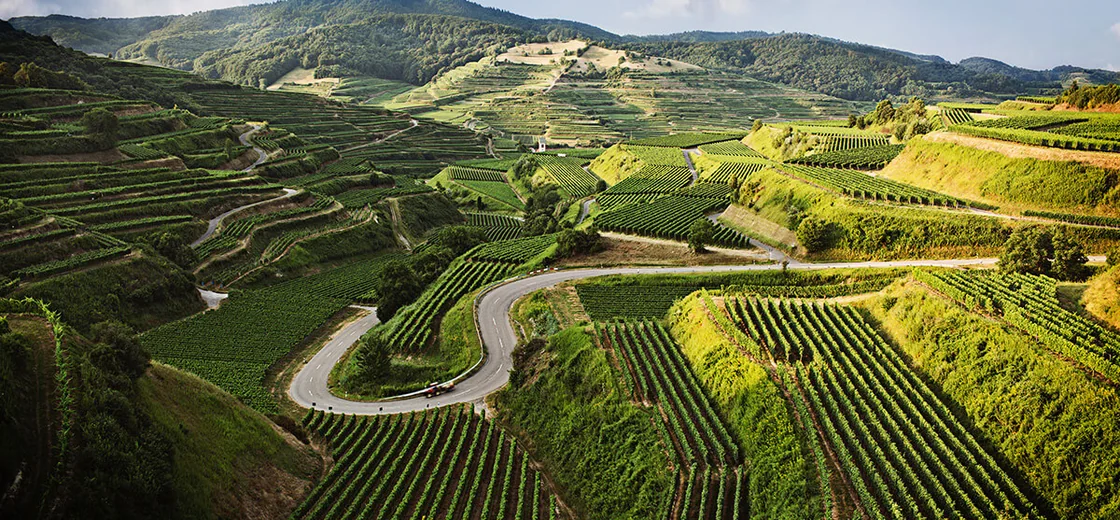
The southernmost region and the third largest, and it does not behave like the rest of the country. Baden runs four hundred kilometres down the Rhine from Heidelberg to Lake Constance with the Black Forest at its back and France across the water, and it is warm enough that the wines are built on Pinot rather than Riesling — Spätburgunder and the white Burgundies, dry and made to be drunk with food. The best of it grows on the Kaiserstuhl, an extinct volcano standing out in the Rhine plain, which is about as hot as German viticulture gets.

1 verified producer here.
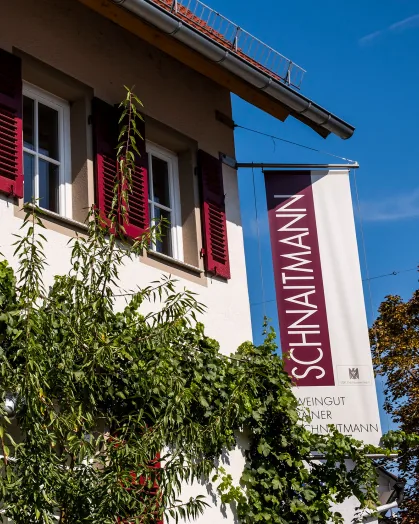
From Pünderich to the Kaiserstuhl is about two hundred and twenty kilometres as the crow flies, and every one of these sits on the Rhine or on a river that feeds it.

Verified in Germany

Ten estates, six of the ten at Gold. Ten are Track A, certified. Seven hold respekt-BIODYN and three hold Demeter, both on top of organic certification rather than instead of it.

In a dry country an organic certificate tells you the climate was cooperative; in a wet one it tells you somebody chose the harder version of the job and kept choosing it every time it rained. That difficulty is what this page is about. Every mark listed here was checked against the body that issued it, and the estates hold them in the place they cost the most.

Where the figures come from10
  • German organic vineyard reached about 15,300 hectares in 2023, roughly 15 per cent of the national vineyard area, after growing by some 1,500 hectares in a single year (Deutsches Weininstitut)

    vinoandbeyond.com ↗
  • Weingut Clemens Busch: certified organic since 1984, herbicide stopped in 1976, respekt-BIODYN member confirmed against the association's published register

    freebacchus.com
  • German regions by vineyard area: Rheinhessen largest at about 27,500 ha (roughly a quarter of the national vineyard), Pfalz second at about 23,700 ha, Baden third at about 15,000 ha, Württemberg fourth at about 11,000 ha and Mosel fifth at about 8,440 ha; Rheinhessen is mostly gentle rolling hills with steep sites confined to a strip near Bingen and south of Mainz (Deutsches Weininstitut)

    winesofgermany.co.uk ↗
  • The Bremmer Calmont, on the Mosel between Bremm and Ediger-Eller, reaches 65 degrees and is the steepest vineyard in Europe; its Devonian slate makes mechanised work impossible

    winesofgermany.com ↗
  • Rheingau: 3,117 hectares (2025), Riesling 80 per cent and Spätburgunder 12 per cent of plantings, and the origin of the Prädikat system of grading by ripeness (Deutsches Weininstitut)

    winesofgermany.co.uk ↗
  • Baden: 15,142 hectares and Germany's third largest region, the southernmost, running about 400km along the Rhine from Lake Constance to Heidelberg, with the volcanic Kaiserstuhl and a specialisation in the Burgunder (Pinot) family (Deutsches Weininstitut)

    winesofgermany.co.uk ↗
  • The greater part of the Franconian wine region lies in Lower Franconia around Würzburg along the Main; the soil there is mainly Muschelkalk; the climate is continental, often with strong winters and sub-zero temperatures in spring; Silvaner covered 1,560 hectares, 24.9 per cent of the vineyard, in 2022; the rounded, flattened Bocksbeutel is the typical bottle, originally used only for the best Franconian wines

    en.wikipedia.org ↗
  • Most of the Württemberg wine region lies around the Neckar and its tributaries the Rems, Enz, Kocher and Jagst; 71 per cent of its vines are red varieties; its signature grape is Trollinger, with Schwarzriesling (Pinot Meunier) and Lemberger (Austria's Blaufränkisch); the Cannstatter Zuckerle in Bad Cannstatt, part of Stuttgart, is a steep terraced vineyard above the Neckar

    en.wikipedia.org ↗
  • Pesticides are overwhelmingly derived from fossil fuels and their manufacture is energy-intensive, and a warming climate raises pest and disease pressure, which raises pesticide use in turn

    pan-uk.org ↗
  • The loop between the two: emissions from pesticide manufacture and use contribute to warming, and warming drives further pesticide use

    panna.org ↗
↑