Weingut Beurer
The Free Bacchus Story
Jochen Beurer’s father took him to a BMX track somewhere every weekend, so it was clear, Jochen says, that the weekdays would be spent with him in the vineyard. The family winery at Stetten, in the Rems valley in Württemberg, made its first wines in 1997, late enough, he told the VDP, that he is not bound to too many traditions. Today he works hand in hand with his son Adrian.
Württemberg is red-wine country. About seven vines in ten there are red, and the grape it is known for is Trollinger, with Lemberger, the grape Austria calls Blaufränkisch, alongside. At Beurer, Riesling is 65 per cent of the vines, and the style Jochen says he aims for is dry Riesling. Riesling is Germany’s signature grape, and the dry style is the one serious growers build their names on: high acid, low alcohol, closer to citrus and wet stone than to oak or weight. Beurer names its village Rieslings after their soils, gypsum keuper and three kinds of sandstone laid down about 200 million years ago, and its best vineyards sit at 280 to 400 metres. The one Jochen suggests as a first bottle is the Schilfsandstein, in the range since 2004. At the top are three Grosses Gewächs wines, the VDP’s mark for a dry wine from one of its top-ranked vineyards, all from vines planted between 1968 and 1995. The Riesling among them, Berge, carries the estate’s own name for its parcel in the Pulvermächer vineyard at Stetten. One of the reds, the 2021 Mönchberg Schalksberg, a Lemberger, scored 95 points from Falstaff’s Ulrich Sautter in 2024.
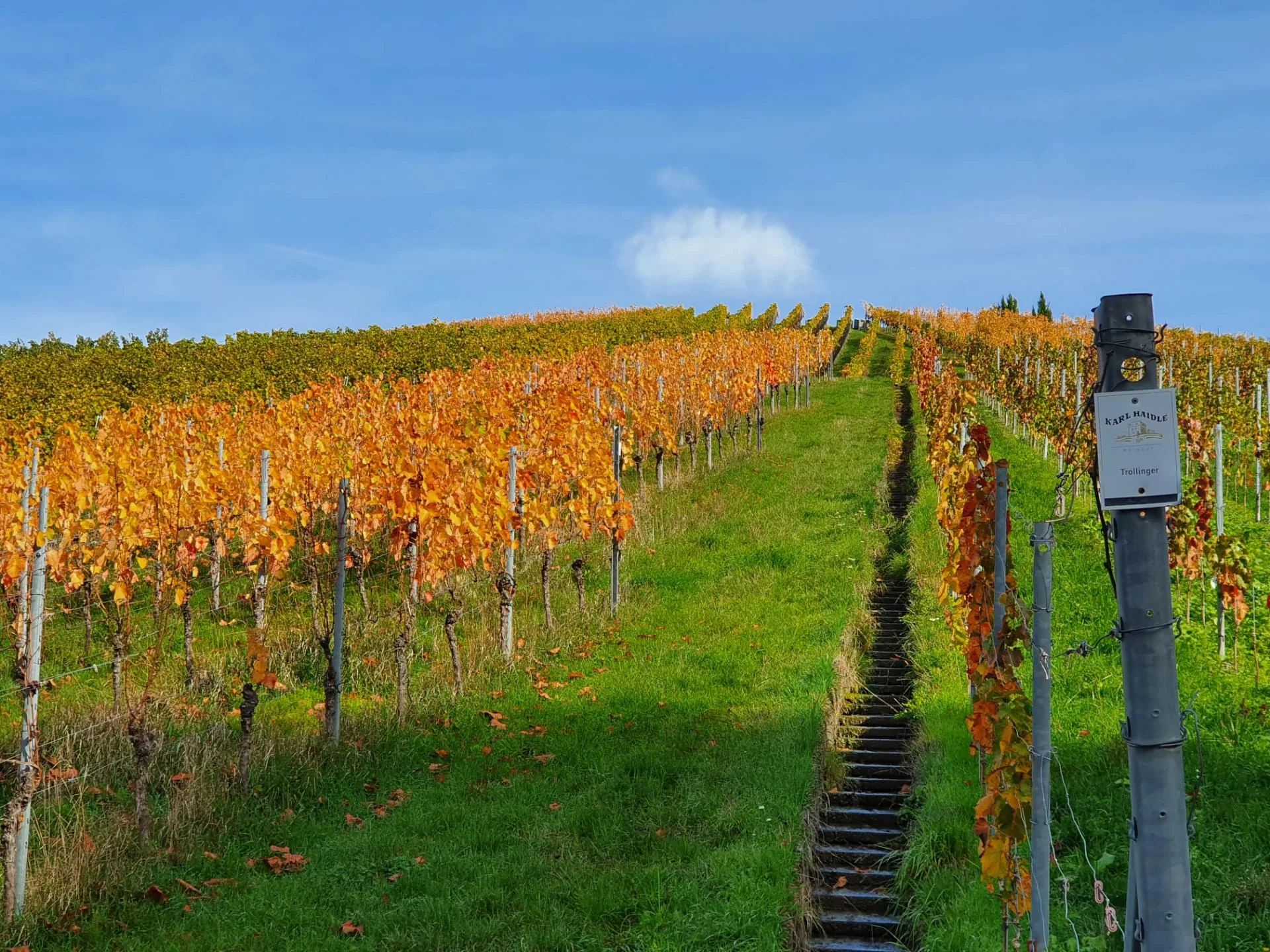
Below the Y-Burg in Stetten, a small parcel lay abandoned until the Beurers planted it with medieval grape varieties long gone from Württemberg, more than 25 of them, Heunisch and Putzscheer among them, on dry-stone terraces worked only by hand. They bottle it as a field blend called Rettet die Reben, save the vines. In 2019 the Slovenian city of Maribor gave the estate a cutting of the Stara Trta, which the estate calls the oldest vine in the world, and by its account Stetten is only the third place in Germany to grow one, after Berlin and Munich.
Asked by the VDP about mentors, Jochen named Elisabetta Foradori, the Trentino grower who propagated new vines from the best of her estate’s oldest ones. The estate’s English brochure says Beurer has spent fifteen years doing the same with Riesling, grafting new vineyards from winter cuttings of its own vines. In the cellar the rule is what the estate calls controlled idleness. Every wine ferments on the yeasts that come in from the vineyard, and one Riesling, Nothing, is bottled with no sulphur and no filtering after two and a half years in wood with its berries. It is named after a BMX trick jump.
Beurer has farmed organically since 2004 and biodynamically since 2008, and joined Demeter in 2012, all by the estate’s own account; no register shows a certificate that old. Today Demeter’s international register lists Weingut Beurer as certified by Demeter Germany to 31 January 2027, and the control body ABCERT certifies it organic, for its grapes and its wine, to 31 January 2028. All the wine is certified organic, with no non-organic wine made alongside, but the same certificate records some vineyard land still in conversion. A second company at the same address, Riesling Werk GbR, holds its own organic certificate to prepare and export wine, Sekt and an alcohol-free grape-juice secco. In 2025 Jochen and Adrian joined respekt-BIODYN, the association of central European growers that certifies biodynamic farming, and no respekt-certified vintage has been released yet.
“Because my two older sisters already had something better in mind”
Why it’s remarkable
Free Bacchus Verification
Demeter · EU organic (ABCERT) · some vineyard land in conversion
Certified4
- Demeter, certified by Demeter Germany: Weingut Beurer, Kernen (BFDI DE-10749), valid to 31 January 2027
- A Demeter member since 2012 by the estate’s own account
- EU organic, ABCERT AG (DE-ÖKO-006): Weingut Beurer, Kernen im Remstal (DE-ÖKO-006.276-0014926.2026.001), grapes and wine, valid 19 March 2026 to 31 January 2028
- Certified organic since 2004 by the estate’s own account
This page covers
The wine: all the wine is certified organic, with no non-organic wine made alongside
Not covered1
- Some vineyard land, which is in conversion
Also on record2
- Riesling Werk GbR, a second operator at the same address, holds its own EU organic certificate from ABCERT (DE-ÖKO-006.276-0015932.2026.001) for preparation and export only, of wine, Sekt and an alcohol-free grape-juice secco
- respekt-BIODYN member since 2025; no respekt-certified vintage released yet
If you’re buying
Cheat sheet
Save it to your phone. Everything you need to recognise this producer, and three things worth saying about it, at a glance in a shop or across a table.
From the Journal
More Verified Houses · Germany
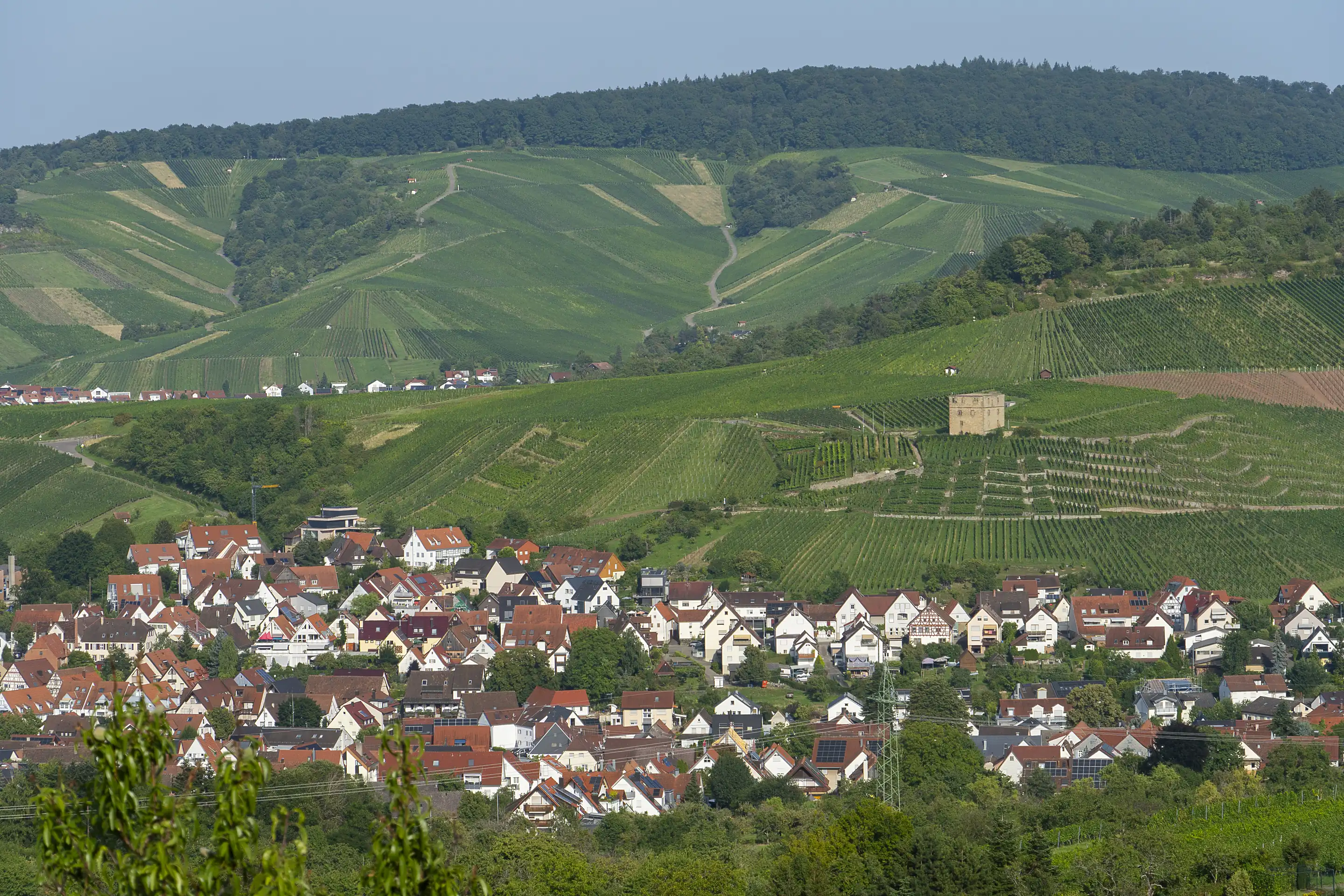
Photograph at the top of this page: Stetten mit Yburg von den Weinbergen gesehen by Laserlicht, CC BY-SA 4.0, via Wikimedia Commons. Resized and sharpened for this page.
