Weingut Clemens Busch
The Free Bacchus Story
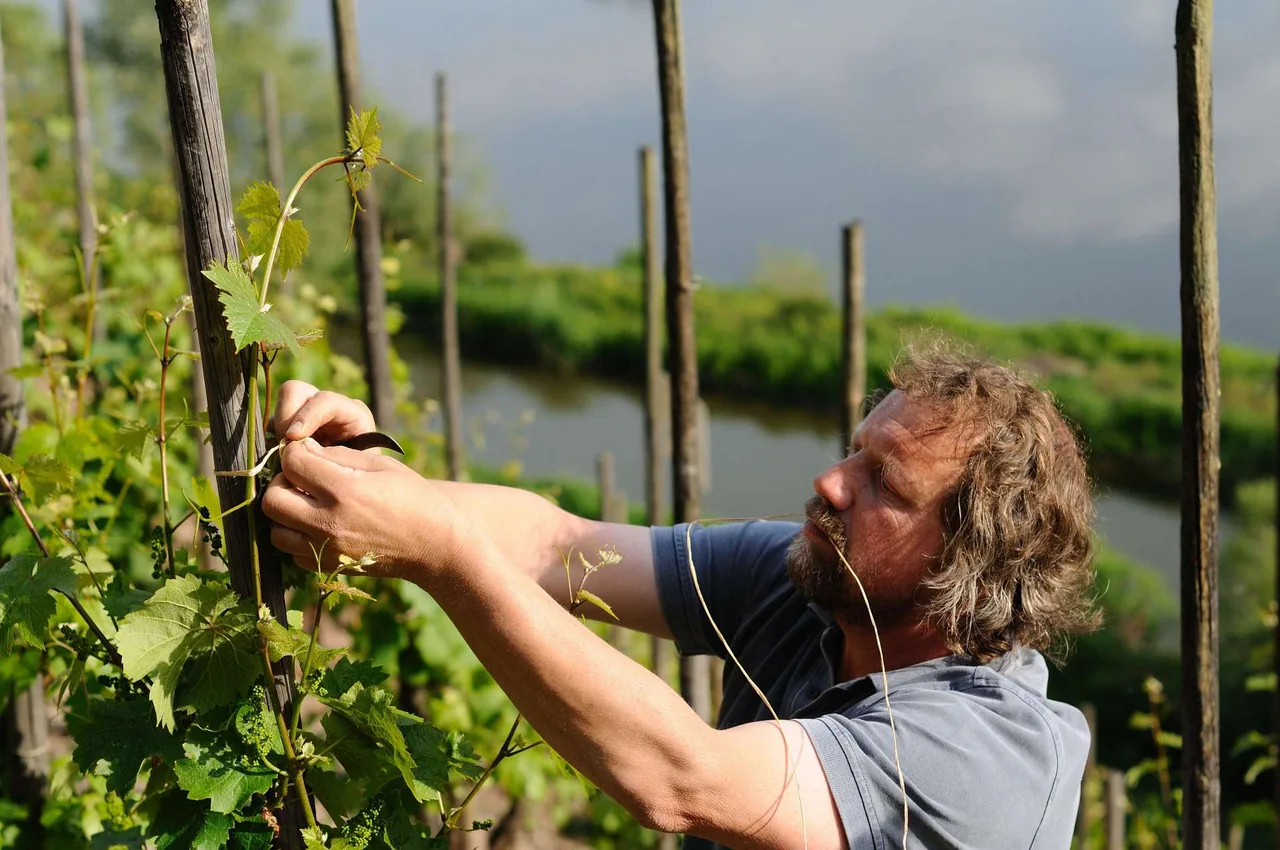
The Devonian slate terraces of the Terrassenmosel are worked almost entirely by hand. Nearly every operation needs a person standing on a gradient that would be treated as a climb anywhere other than a vineyard, and there is no version of this farming that is not physically punishing.
Clemens Busch has farmed it organically since 1984, and biodynamically since 2005, certified through respekt-BIODYN since 2015 — well before the modern organic wine movement had language for celebrating it, and at a point when the extra labour bought no commercial advantage at all.
He stopped spraying herbicide in 1976, aged nineteen, after asking himself why he could not simply live with the weeds. The oldest vines are said to root up to eight metres down, into ground that has not been sprayed since.
The holdings concentrate on the Marienburg, a single south-facing hillside in Pünderich whose varying exposures, slate types and altitudes let Busch produce a series of site-specific Rieslings that function as a geological survey of one mountain. The Fahrlay, Rothenpfad and Felsterrasse bottlings each come from their own part of the hill. James Suckling gave the 2020 Fahrlay-Terrassen GG 98 points, and Wine Advocate gave the 2017 Raffes 98.
The Mosel is the name that comes up whenever German wine gets called featherweight, and it is worth knowing what that lightness is actually made of. Slate is most of the answer: it holds the day's heat, drains hard, and pushes the wine toward citrus, wet stone and a faint salt right at the end. The acidity runs high but arrives clean rather than sour, which is how a bottle can taste almost weightless young and still age for many years. Serve them cool rather than cold — ice flattens the detail the hillside spent a whole season putting there.
The estate has been a member of the VDP, the Verband Deutscher Prädikatsweingüter, since 2007. In the US the wines turn up at specialist merchants.
“Why can’t we live with the herbs?”
Why it’s remarkable
Free Bacchus Verification
GfRS EU organic · respekt-BIODYN biodynamic
Certified2
- Organic — GfRS (DE-ÖKO-039), EU certificate held by Johannes Busch, grapes and wine; organic farming since 1984
- respekt-BIODYN biodynamic — member since 2015; biodynamic farming since 2005
Also on record1
- Some parcels in conversion
If you’re buying
Cheat sheet
Save it to your phone. Everything you need to recognise this producer, and three things worth saying about it, at a glance in a shop or across a table.