Coulée de Serrant / Nicolas Joly
The Free Bacchus Story
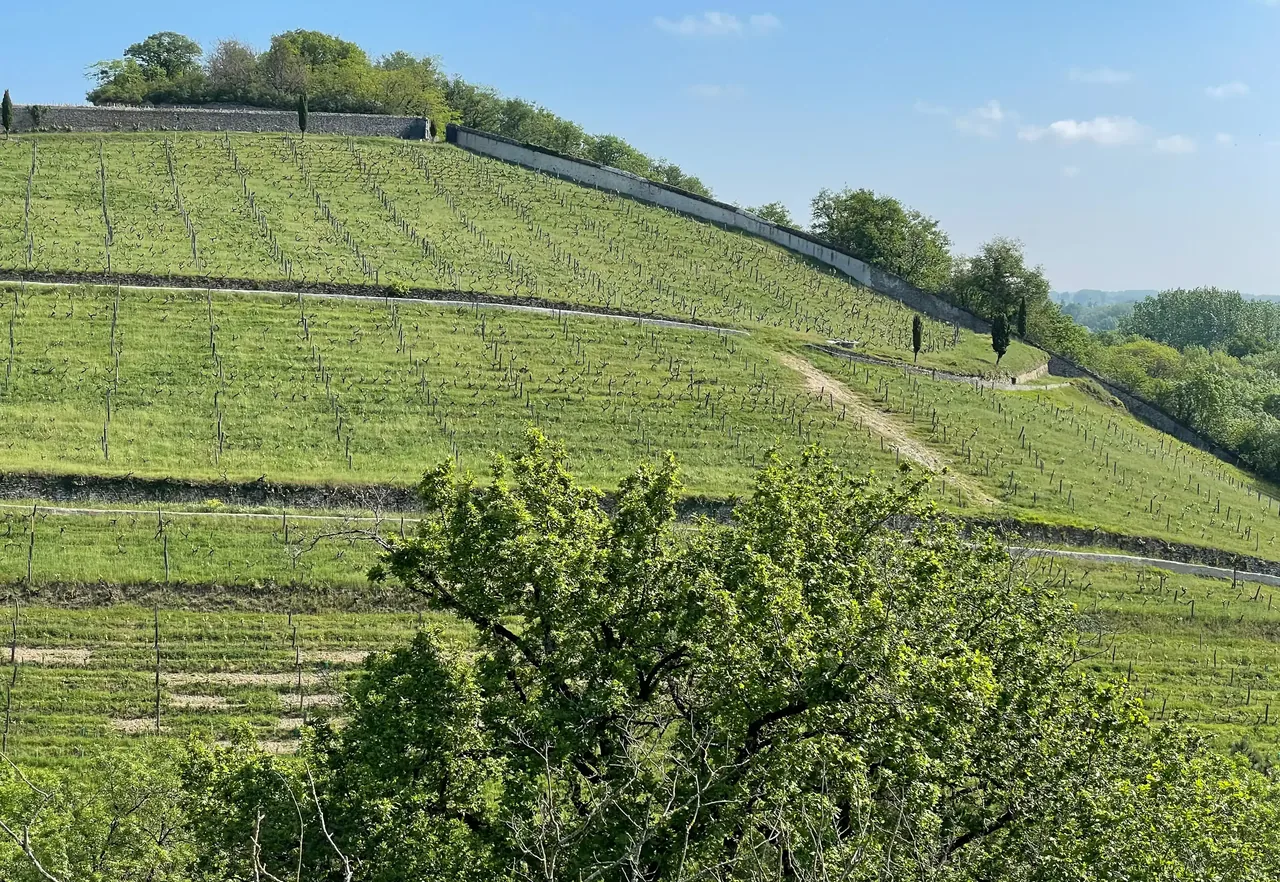
Seven hectares of Chenin Blanc on a south-facing schist slope above the Loire, first planted by Cistercian monks in the twelfth century, and holding something almost no other vineyard in France has: an appellation of its own, owned outright by one family.
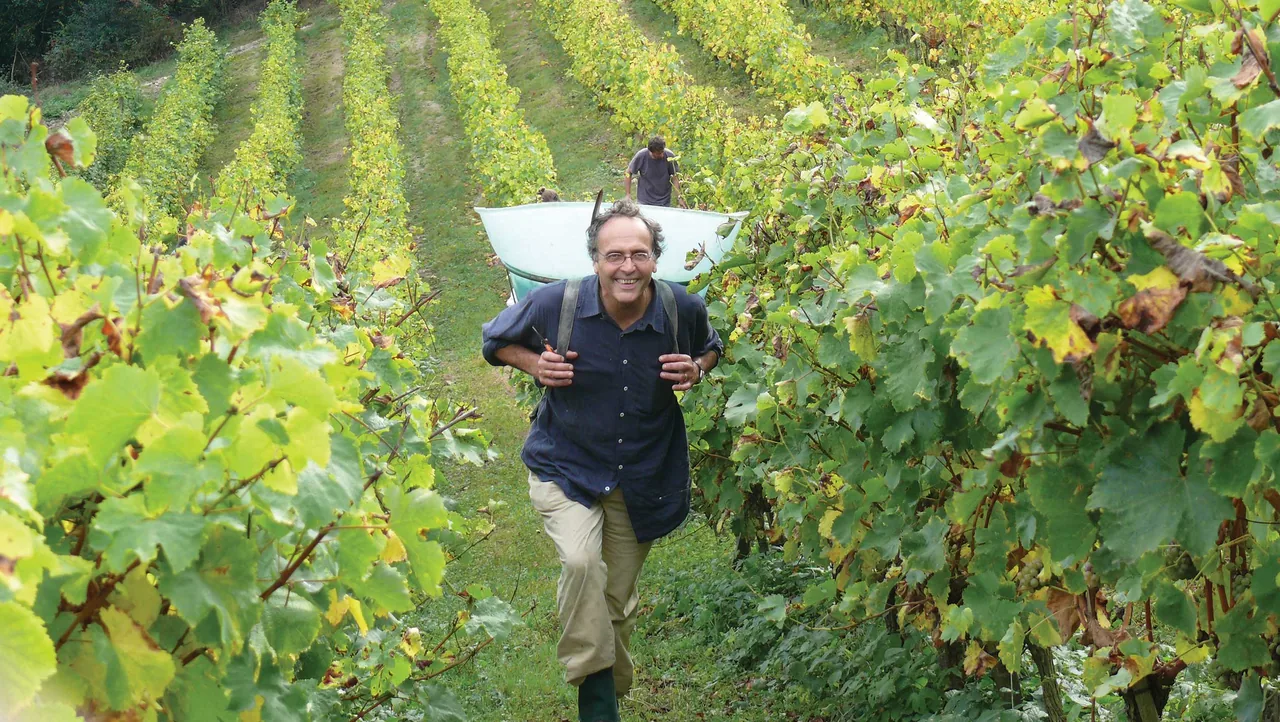
Nicolas Joly took the estate on and, in the 1980s, began farming it biodynamically — well before anyone was doing so for commercial advantage, because there was none to be had. His argument, which he has spent forty years making, starts in the soil: weedkillers destroy the microbes a vine's roots need in order to feed. From there it heads for the cosmos, and he makes no apology for that. He writes that life is a frequency, which is why a few grams of a preparation can matter.
You are permitted to find that unconvincing and still take the wines seriously, which is rather the point. They are among the most polarising in France: oxidative, honey-textured, deeply mineral, built to age for decades rather than to charm on opening. The 2019 Coulée de Serrant earned 98 points from Wine Advocate, a mark that validates the quality without requiring anyone to agree about the moon.
The estate withdrew from Interloire, its own regional trade body, in 2015, over disagreements about how the region promoted itself.
Joly's larger contribution may be organisational rather than agricultural. He founded Renaissance des Appellations, an international association of growers, nearly all of them biodynamic, whose collective effect on how the trade discusses farming and terroir has considerably outrun what any single seven-hectare estate could manage alone.
“I left my high-paying job for the vineyard.”
Why it’s remarkable
Free Bacchus Verification
Demeter biodynamic and Certipaq organic, grapes and wine
Certified2
- Demeter biodynamic, Demeter France: SAS Famille Joly, operator FR-FR-BIO-09-58522, producer and processor, valid to 30 June 2027
- Certipaq Bio organic (FR-BIO-09): certificate FR-BIO-09.250-0084025.2025.002, grapes and wine (growing and winemaking), Coulée de Serrant named; first engaged 1995
If you’re buying
Cheat sheet
Save it to your phone. Everything you need to recognise this producer, and three things worth saying about it, at a glance in a shop or across a table.