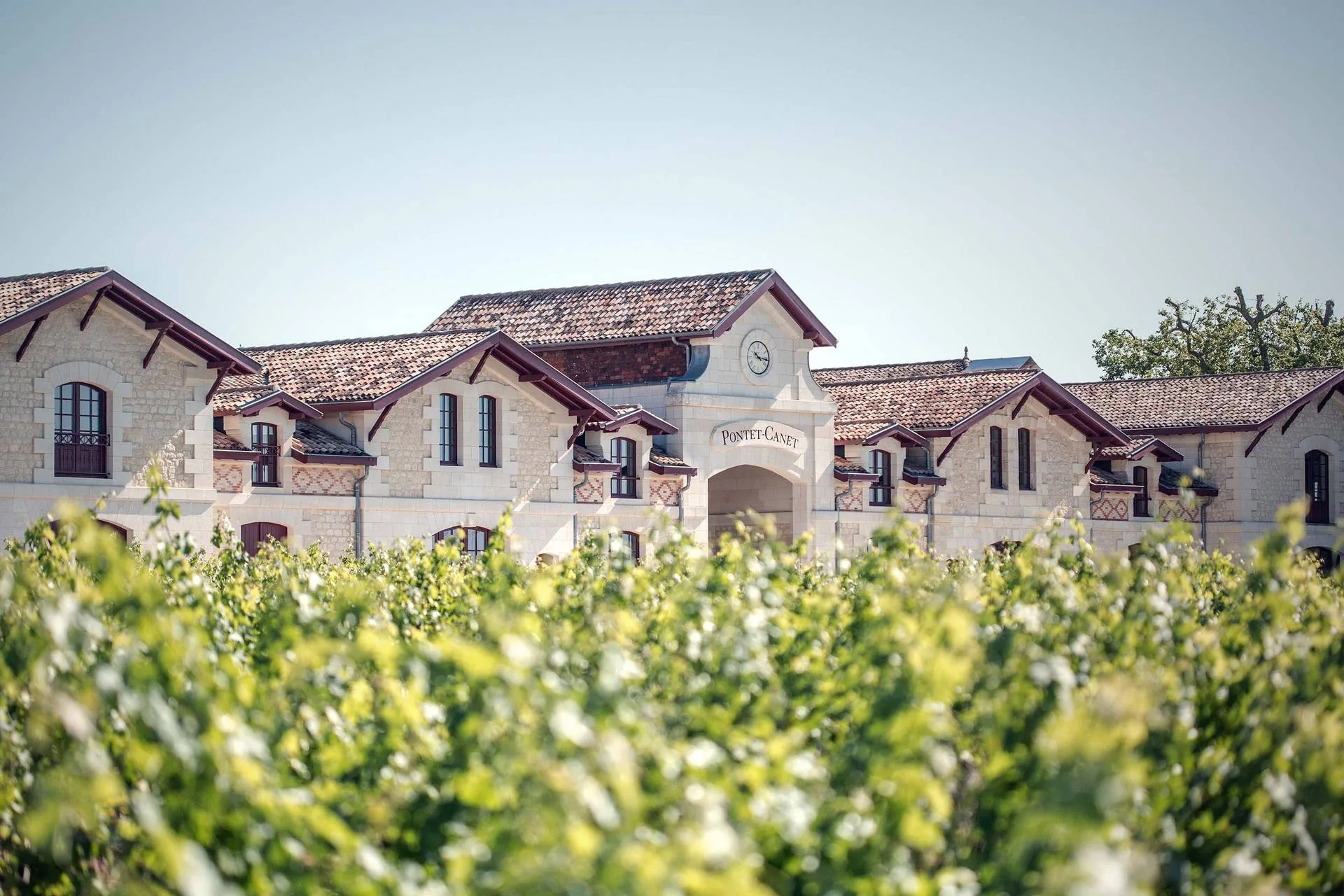
Château Pontet-Canet
The Free Bacchus Story
There are about ten horses at Pontet-Canet, Percherons, and they plough half of the eighty-one hectares. They are not there for photographs. A horse does not compact soil the way a tractor does, and on this plateau of Garonne gravel over limestone that is the thing that matters. The estate brought them in from 2008 to keep heavy over-the-row tractors off the ground and to spare vines averaging fifty years old from the machinery that works under the wire. The horses carry the plant preparations round as well.
The estate is a Fifth Growth in Pauillac, the bottom rank of a classification drawn up in 1855 on the basis of what the wines were fetching at the time, and for most of the following century and a half it made wine that did not deserve its gravel. Guy Tesseron, a cognac grower and merchant, bought it in 1975 and handed it to his son Alfred in 1994. Alfred had studied oenology and gone into sales in America, and by his own account arrived thinking he knew everything and in fact knowing nothing.
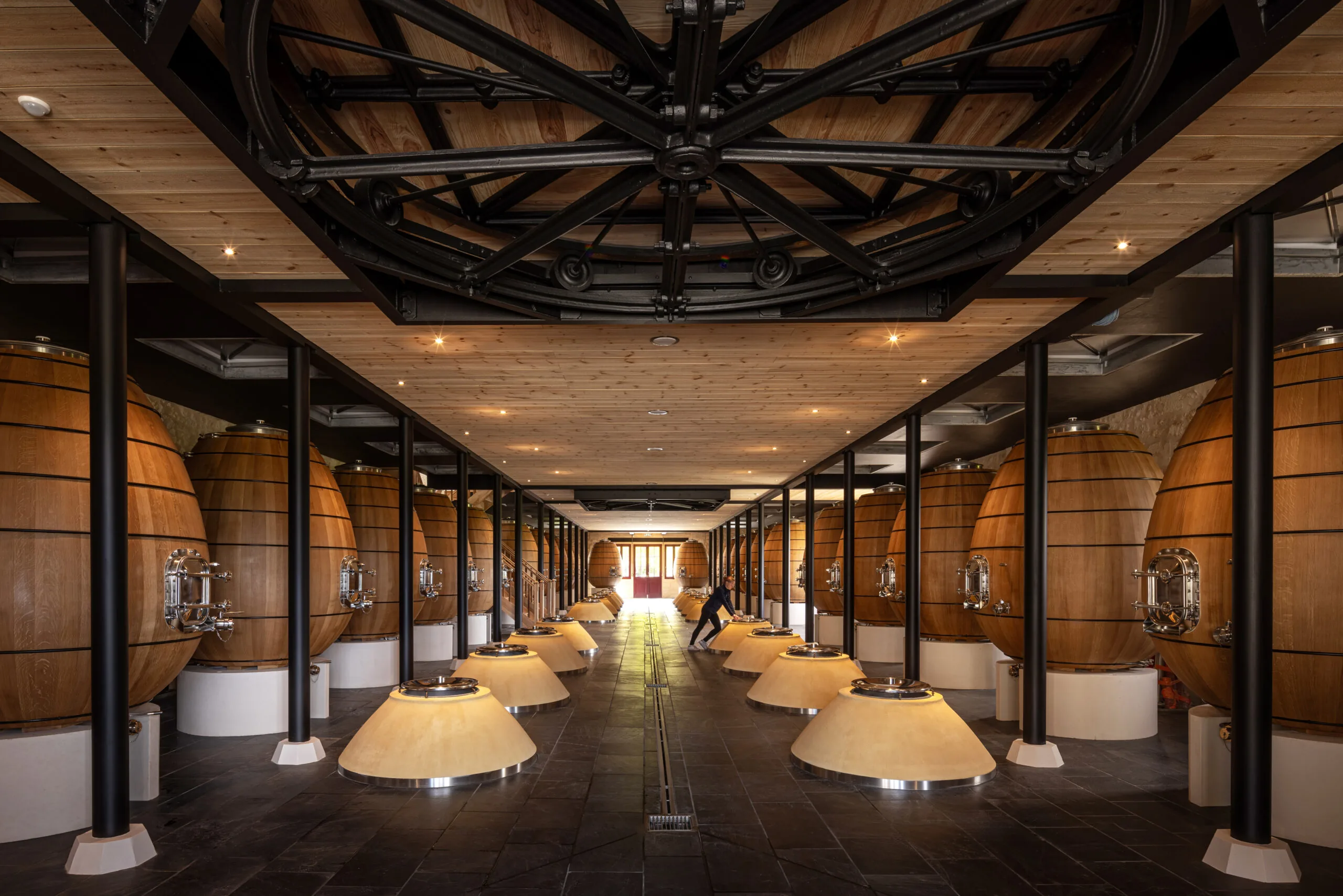
The idea was not his. Jean-Michel Comme ran the vineyards from 1989 to 2019, and Tesseron gives him the credit for it outright. Comme farms his own small estate at Sainte-Foy biodynamically, on far harder ground than Pauillac, and Tesseron says that tasting that wine is how he got into any of this. The trial at home began in 2004 on fourteen hectares of Merlot, Tesseron having had two hectares in mind and Comme wanting more. When the Merlot off those rows came in tasting different from everything around it, the whole estate went over the following year.
Then 2007. Mildew came through the vineyard and Tesseron, in his own words, got scared and thought he was losing the crop, so they sprayed for a week and a half. Asked years later whether it had been the right decision, Comme said it was not. Three years of conversion went with it. The family had no cushion underneath them either, because Alfred’s father had died and the inheritance tax was settled by handing the French state half of the property outright; Tesseron has said that if the biodynamics had failed they would have lost Pontet-Canet. They began the conversion again from the start.
Certification came in 2010. The estate says that made it the first Médoc classified growth to hold organic and biodynamic certification across its whole vineyard, which is its own claim and widely repeated, and we record it as a description in circulation rather than a first we have checked. What can be checked is the present. The French state organic register carries Château Pontet-Canet under Ecocert France, engaged on 2 November 2005, covering the growing and the winemaking alike; Demeter France lists the estate as producer and processor to 30 June 2027; Biodyvin has carried it since 2005. The organic certificate runs wider than the wine, taking in permanent grassland, suckler cows, working donkeys and mules, and the fallow strips between.
The 2009 was made two years after they started again, and Robert Parker gave it a hundred points. He gave the 2010 a hundred as well. The 1855 list still ranks the estate fifth.
“I tried to read Steiner. I couldn’t. It sends me to sleep.”
Why it’s remarkable
Free Bacchus Verification
Ecocert France organic · Demeter France biodynamic · Biodyvin
Certified4
- Organic: Ecocert France (FR-BIO-01) on the French state register, engaged 2 November 2005, growing and winemaking alike
- Biodynamic: Demeter France, operator FR-FR-BIO-01-61377, producer and processor, valid to 30 June 2027
- Biodyvin member since 2005
- The certificates cover the whole 81-hectare vineyard rather than a cuvée
Also on record1
- The organic certificate also covers the grassland, cattle and working equids farmed alongside the vines
If you’re buying
Start here instead
Cheat sheet
Save it to your phone. Everything you need to recognise this producer, and three things worth saying about it, at a glance in a shop or across a table.