Querciabella
The Free Bacchus Story
Most biodynamic vineyards use animal-derived preparations — manure, horn, bone. Querciabella uses none, anywhere on the estate: it farms by what it calls plant-based biodynamics, an unusual choice when the standard preparations are built on animal inputs.
The estate sits in Ruffoli, above Greve in Chianti. It has been farmed organically since 1988, certified since 2000, and biodynamically since 2000. For its first decade of biodynamics it used the standard preparations; then the animal inputs went, and the preparation regime was rebuilt from plant material and compost alone — a genuinely difficult agronomic problem, since the animal inputs exist in the standard for reasons that are not merely traditional.
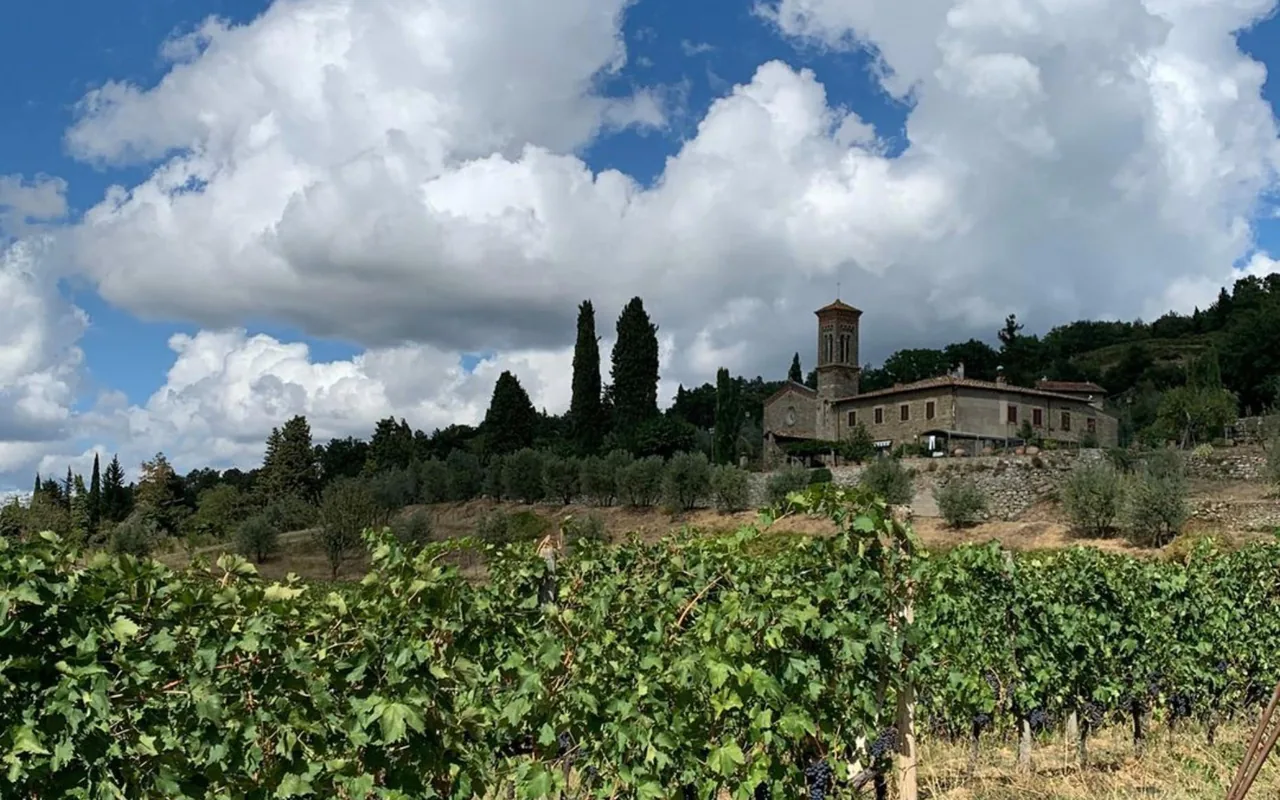
It appears to work. Camartina, the estate's Cabernet-Sangiovese flagship, and Batàr, a Chardonnay-Pinot Blanc white, draw critics' scores in the mid to high nineties: Antonio Galloni gave the 2021 Camartina 97 at Vinous, and Wine Advocate has the pair at 94 and 93 in recent vintages. The Chianti Classico itself is the more accessible entry and carries the same farming.
The vegan turn was Sebastiano Cossia Castiglioni's; he ran the estate from the mid-1990s until 2024, and it is now in the hands of Pepito Castiglioni's eldest daughter, Mita, and her children. His account is that twenty years ago nobody understood what veganism meant, and that the scepticism about the estate's approach lasted until the wines held up.
We include the detail about preparations because it illustrates something about certification generally: a standard sets a floor, and some producers spend real money and effort going somewhere the standard never asked them to go. Here it even costs a certificate — Demeter's standard requires the animal preparations, so the estate is certified organic and vegan, and not biodynamic. Those decisions rarely appear on a label, and are usually discoverable only by asking.
“We eliminated the cow horn and animal manure.”
Why it’s remarkable
Free Bacchus Verification
Valoritalia EU organic
Certified1
- Organic: Valoritalia Srl (IT-BIO-015), EU certificate IT-BIO-015.380-0021298.2026.002 on the TRACES register — production, preparation and wine
Also on record3
- Biodynamic in practice since 2000, and plant-based, without animal preparations, since around 2010 — on the estate’s own account
- No biodynamic certificate: the Demeter International and Demeter Italia registers return nothing, checked 24 September 2026 against controls that did return. Demeter’s standard requires the animal preparations the estate gave up
- Certified vegan, per the estate’s own technical sheets
If you’re buying
Cheat sheet
Save it to your phone. Everything you need to recognise this producer, and three things worth saying about it, at a glance in a shop or across a table.