
Antiyal
The Free Bacchus Story
Five hectares is not very much land. You could walk the whole of Antiyal in twenty minutes, and if you did, you would be walking past roughly one four-hundredth of what a large Chilean export winery farms in a season.
Alvaro Espinoza knew that arithmetic better than most people alive, because he had spent years as a consulting winemaker moving between wine regions in Chile and Spain, working at exactly the scale he later declined. He had run organic trials at Viña Carmen in the early 1990s and shown them to the owner, whose answer was that if he wanted to experiment he could do it at his own expense. He did. When he established Antiyal in 1996, it was not the decision of someone who had never seen the alternative. It was the decision of someone who had seen it closely and wanted to find out what happened if you did the opposite.
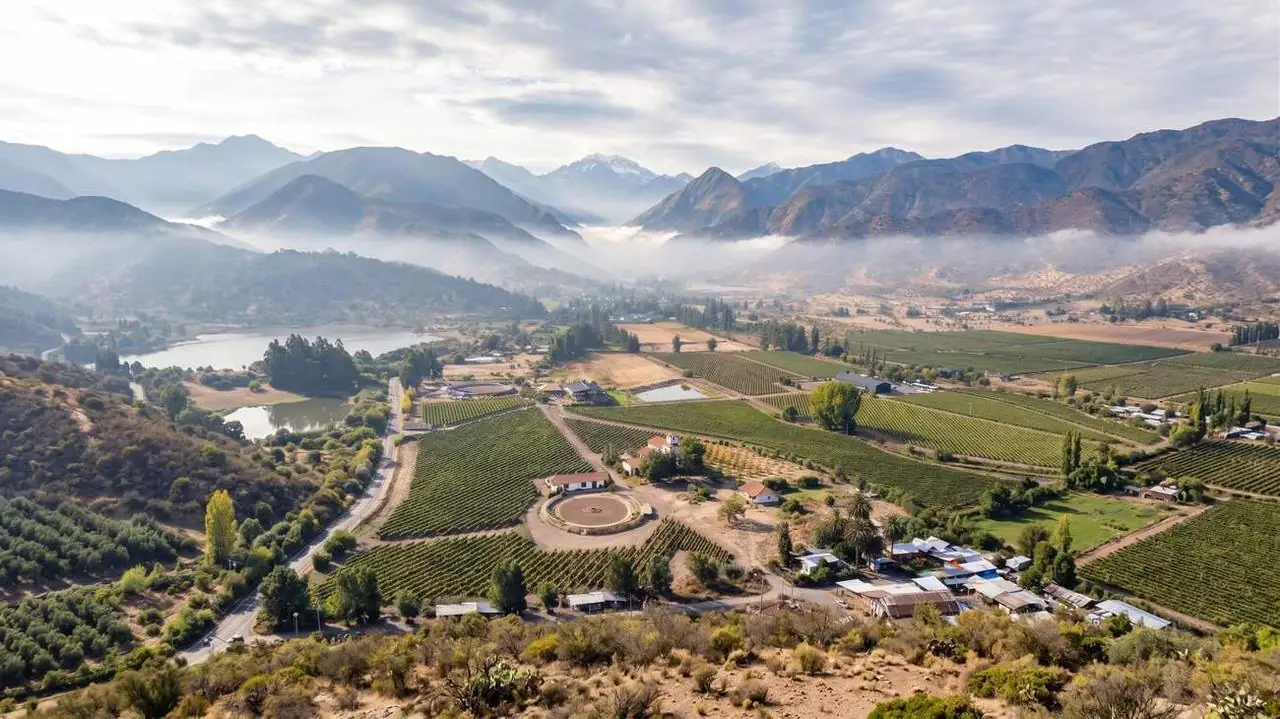
The vineyard sits in the Maipo Valley, one of Chile's warmest and most historically significant red zones, planted to Cabernet Sauvignon, Carmenère and Syrah, and the farming is on the registers rather than merely described: Ecocert certifies the fruit to the US organic standard, and Demeter registers the two fincas as a biodynamic producer and processor, which covers the cellar as well as the vineyard. The small scale is the argument, not a limitation of it: Espinoza's position, held consistently for more than two decades, is that the attention individual vines and living soil require is simply not available at industrial volume. It is not a criticism of the big producers, who are solving a different problem. It is a statement about what a person can actually keep an eye on.
The results have been unusually clear. Antiyal took Best in Show at the Decanter World Wine Awards 2025 for its Viñedo Escorial Carmenère 2020, and the flagship blend has drawn 96 points from Wine Advocate — recognition earned without conceding to the softer international style that dominated Chilean export wine through the 1990s and 2000s. The wines are structured, earthier and more specific to their site than the category average, which is what you would expect from fruit somebody actually walked past every week.
“Organic vegetables always tasted better.”
Why it’s remarkable
Free Bacchus Verification
USDA NOP organic (Ecocert SAS) · Demeter biodynamic
Certified2
- USDA NOP organic, Ecocert SAS (NOP 7880700016): the wine grapes, almonds, olives and grassland, certified since 21 December 2018 over 27 acres
- Demeter biodynamic, operator DI-25210: Finca Escorial and Finca Los Olivos, registered as producer and processor to 31 March 2027, so the winemaking is certified and not only the fruit
Also on record1
- The same operation’s NOP handling entries cover the eight wines as “made with organic” only, which is a grape standard rather than a wine one: the bottles do not carry the USDA organic seal
If you’re buying
Cheat sheet
Save it to your phone. Everything you need to recognise this producer, and three things worth saying about it, at a glance in a shop or across a table.