-
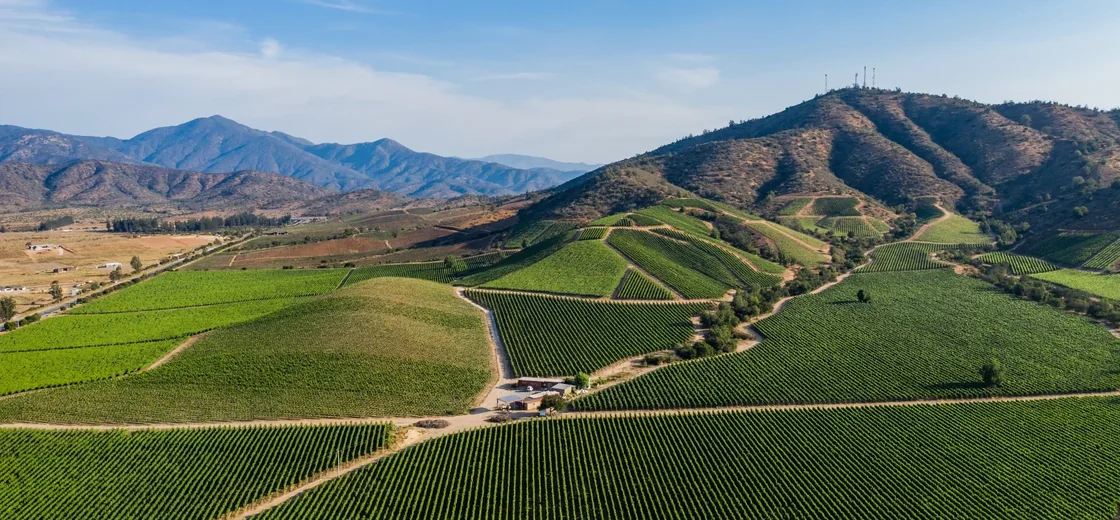
Chile's total planted vineyard in 2024 was 126,249.6 hectares of wine and pisco grapes (116,962.2 wine varieties, 9,287.4 pisco), about 7,418 hectares or 5.5 per cent less than in 2023, continuing a gradual decline from 2015; O'Higgins and Maule hold 67.0 per cent of the national area, and Maule 48,565 hectares, about 41.5 per cent of wine varieties; Cabernet Sauvignon is 32,089.2 hectares, 27 per cent of wine varieties, and Cabernet Sauvignon, Sauvignon Blanc, País and Carménère together cover 56 per cent; the Valle Central wine region holds 82.1 per cent of the area with a denomination of origin. Version 2.0 of the report, which corrects the Metropolitana figure to 8,897.8 hectares (Servicio Agrícola y Ganadero, Catastro Vitícola Nacional 2024, informe ejecutivo v2.0)
sag.gob.cl ↗
-
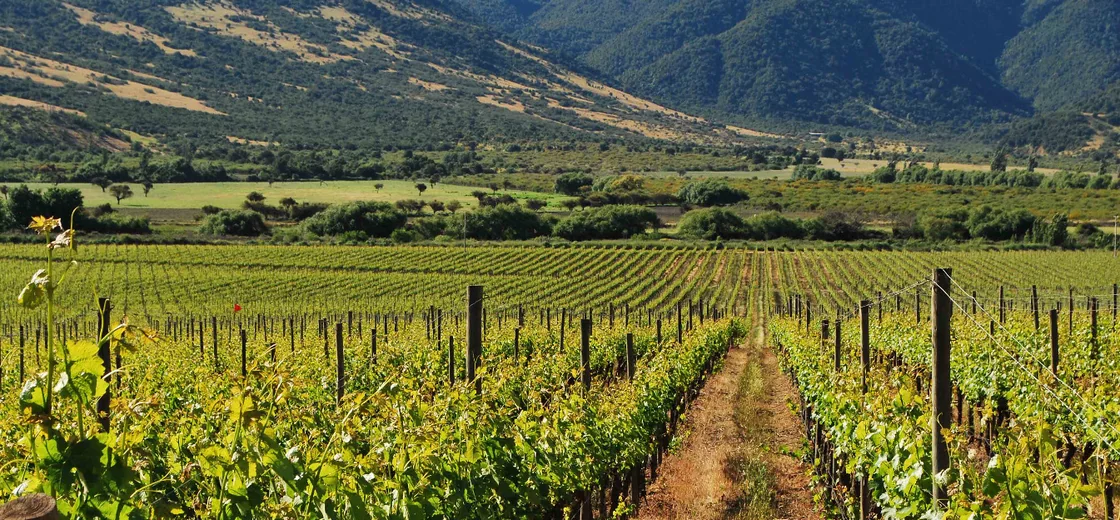
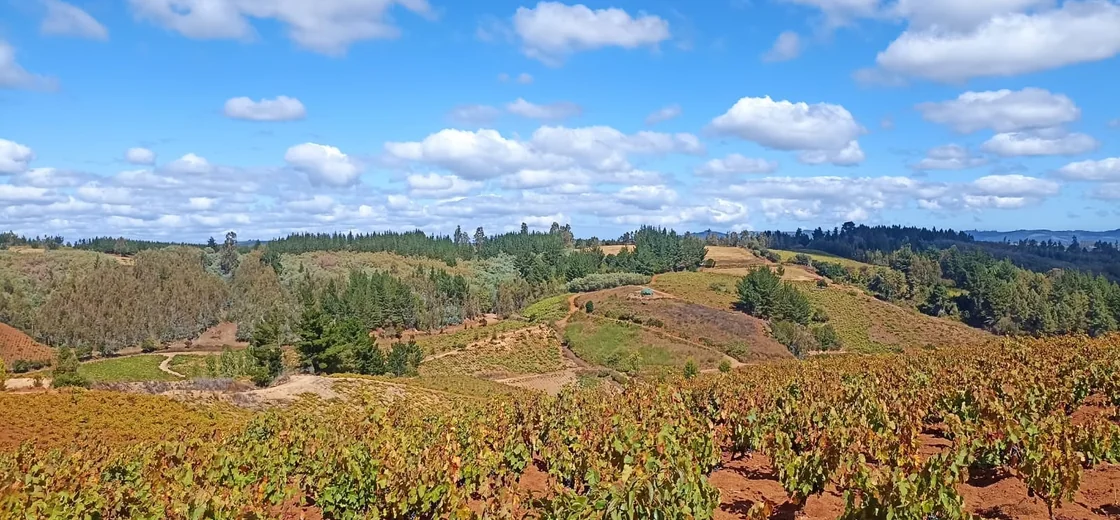
Valley and zone areas in 2024, Decreto 464 varieties only: Colchagua zone 24,344.1 ha, Cachapoal 8,643.9, Maipo 8,535.1 (led by Isla de Maipo, Buin, Paine, Melipilla and Pirque), Casablanca 4,385.7, San Antonio 2,024.8 (Leyda zone 1,855.8), Aconcagua 1,233.1 (Quillota, Hijuelas, Panquehue, San Felipe). By administrative region: Carménère 9,516.7 ha nationally; País 10,346.6 ha, of which Maule 5,909.9, Ñuble 3,698.5 and Biobío 590.9; 7,954.1 ha of País are both dry-farmed (secano) and head-trained (cabeza); Ñuble has 8,625.9 ha dry-farmed and 7,921.0 ha head-trained of 10,322.7 ha; Cabernet Sauvignon is 4,803.9 ha of the Metropolitana's 8,897.8 and 12,963.0 ha in Maule (Servicio Agrícola y Ganadero and ODEPA, Catastro Vitícola 2024 viewer, tabs Por Valle - Variedad and Por Tipo de riego - Conducción)
apps.odepa.gob.cl ↗
-
Certified organic wine grapes (uva vinífera) in Chile: 3,360 ha in 2018, 3,507 in 2019, 4,408 in 2020, 6,534 in 2022 and 5,776 in 2023, a fall of 12 per cent on 2022 that ODEPA attributes mainly to lower wine consumption worldwide; compiled by ODEPA from Servicio Agrícola y Ganadero data. The tables do not say whether area in conversion is included. 5,776 ha is about 4.6 per cent of the 124,436.2 ha of wine varieties in the 2023 catastro, our arithmetic (ODEPA, Agricultura orgánica: actualización del sector, December 2024)
odepa.gob.cl ↗
-
The 2023 catastro recorded 124,436.2 hectares of wine-grape varieties, the denominator for the organic share above (Servicio Agrícola y Ganadero, Catastro Vitícola Nacional 2023, informe ejecutivo)
sag.gob.cl ↗
-
Viteus (=Daktulosphaira) vitifoliae, phylloxera, on Vitis spp. is listed among the quarantine pests absent from Chile's national territory, island and mainland (Servicio Agrícola y Ganadero, Resolución Exenta 7787/2025)
sag.gob.cl ↗
-
"A key factor that distinguishes Chile from most other wine-producing countries is its phylloxera-free status. This condition has allowed the country to maintain vineyards planted on their own roots" (Peña-Neira et al., Plants 15(3):359, 2026, CC BY 4.0)
ebi.ac.uk ↗
-
Carmenère is a red wine cultivar that spread, unrecorded, from France to other countries; it probably arrived in Chile before the phylloxera crisis in Europe, and there remained confused with Merlot and other red cultivars until the mid 1990s (Moncada and Hinrichsen, Vitis 46(4):174-180, 2007)
ojs.openagrar.de ↗
-
Jean-Michel Boursiquot recounts identifying Carmenère in November 1994, in a plot shown to him at Viña Carmen as new Merlot (Julien Boulard MW, Decanter China, 21 June 2016)
decanterchina.com ↗
-
DNA typing of 93 vines from five Chilean vineyards planted as Merlot matched each to either Merlot or Carmenère (Hinrichsen et al., American Journal of Enology and Viticulture 52:396-399, 2001)
ajevonline.org ↗
-
Carménère first appears in Chile's planted-area register in 1997, at 330 hectares, blank in 1994 to 1996 (Servicio Agrícola y Ganadero, Catastro Vitícola 2022, cuadro 56)
bibliotecadigital.odepa.gob.cl ↗
-
País is the old Spanish cultivar Listán Prieto, grown across the Americas as País, Criolla Chica, Misión and Mission (Milla-Tapia et al., American Journal of Enology and Viticulture 58(2):242-251, 2007)
ajevonline.org ↗
-
The uva negra, later called uva país, was brought by the Spanish who settled in the Kingdom of Chile in the middle of the sixteenth century (Lacoste et al., Mundo Agrario 10(20), 2010)
mundoagrario.unlp.edu.ar ↗
-
Decreto 464 of 1994 sets Chile's wine zoning: the Aconcagua wine region takes in the Aconcagua, Casablanca and San Antonio valleys, San Antonio containing the Leyda zone; Rapel contains the Cachapoal and Colchagua zones, and Colchagua the areas of Apalta and Los Lingues; Itata is in the Región del Sur; Art. 3 bis creates the Secano Interior denomination for País and Cinsault from named dry-farmed areas; Art. 5 bis allows Andes, Entre Cordilleras and Costa on the label, and names Casablanca for Costa (Biblioteca del Congreso Nacional, Ley Chile)
bcn.cl ↗
-
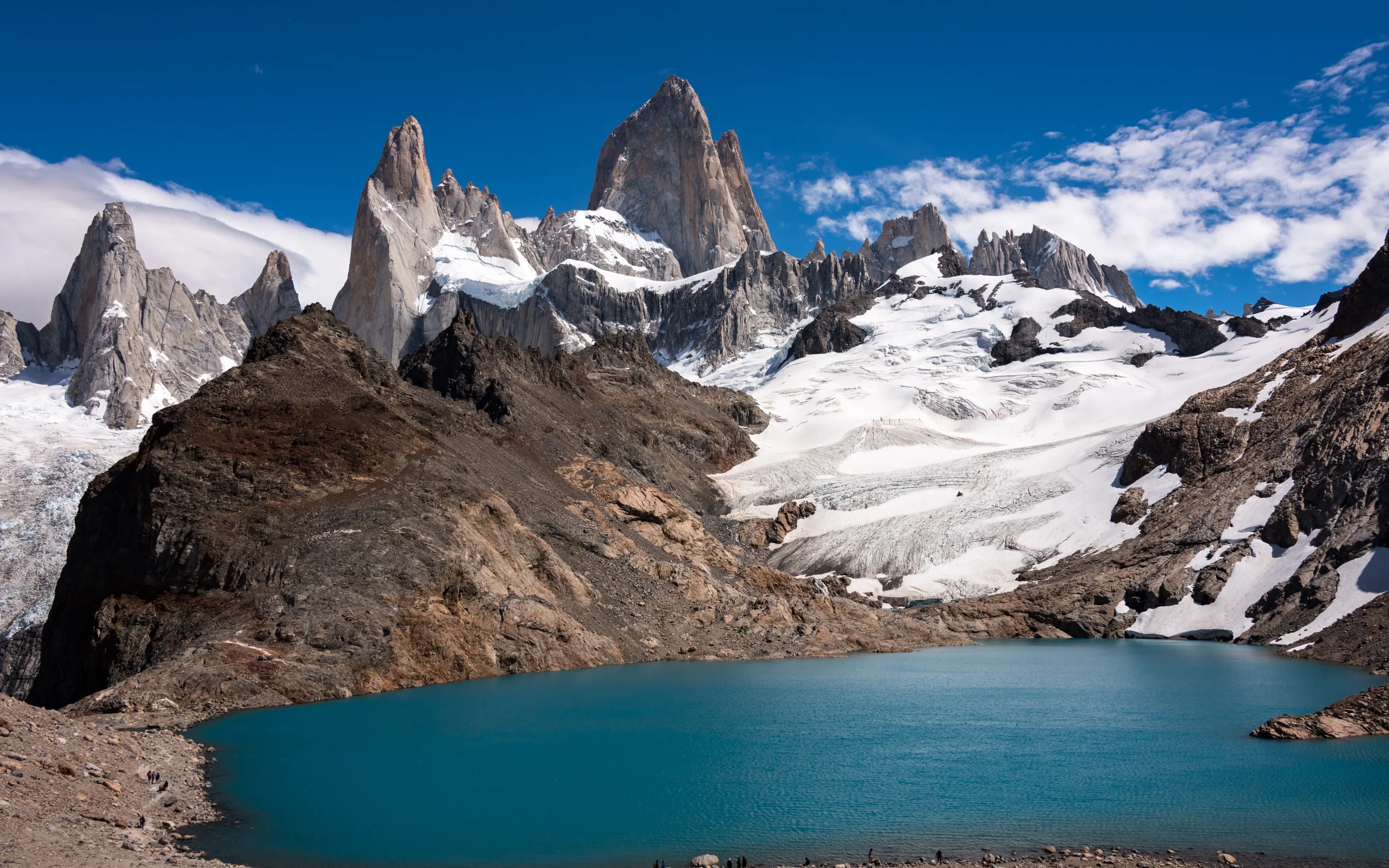
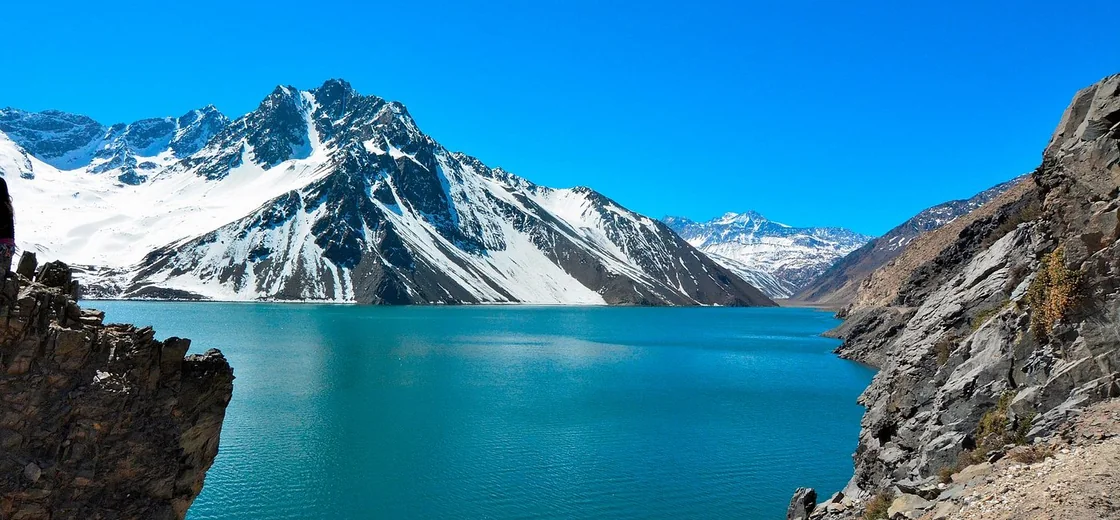
Chile's relief has four units: coastal plains, the Coastal Range, the Intermediate Depression between the Coastal Range and the Andes, and the Andes (Biblioteca del Congreso Nacional, Chile Nuestro País: Relieve)
bcn.cl ↗
-
Chile's climate is shaped by the Coastal and Andean ranges, the cold Humboldt Current and the Pacific Anticyclone; central Chile has temperate climates with rain concentrated in winter (Biblioteca del Congreso Nacional, Chile Nuestro País: Clima y vegetación)
bcn.cl ↗
-
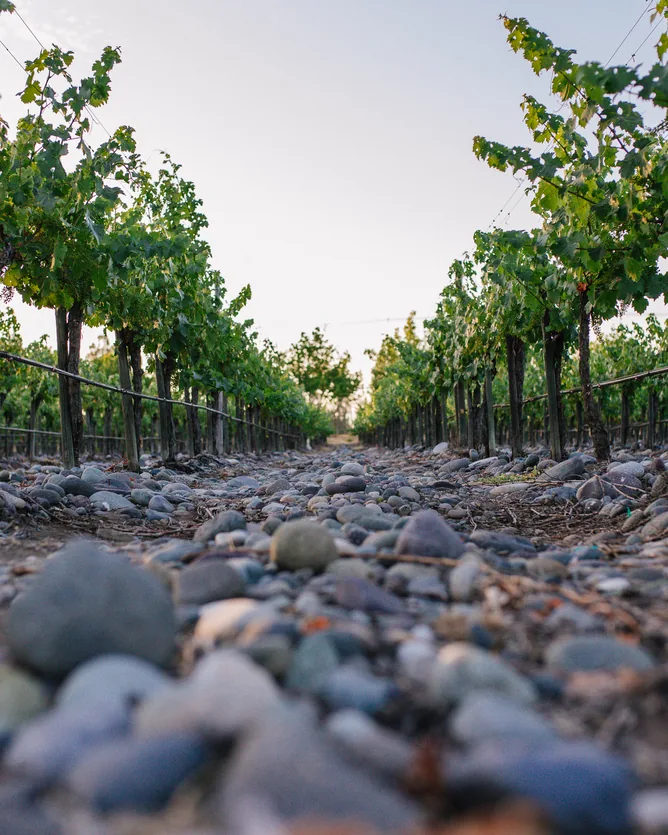
Casablanca is Chile's pioneering cool-climate region, with Pacific maritime influence and cool morning fog, and one of its leading white-wine producers; San Antonio has three sectors, Leyda, Lo Abarca and Rosario, with thin, rocky soils from its closeness to the Pacific (Wines of Chile, Winegrowing regions)
winesofchile.org ↗
-
Pesticides are overwhelmingly derived from fossil fuels and their manufacture is energy-intensive, and a warming climate raises pest and disease pressure, which raises pesticide use in turn
pan-uk.org ↗
-
The loop between the two: emissions from pesticide manufacture and use contribute to warming, and warming drives further pesticide use
panna.org ↗