Garage Wine Co
The Free Bacchus Story
One of Garage Wine Co’s growers answers the phone only when he comes down from his isolated hillside of Carignan to Sunday Mass and picks up a signal. That is where the team was introduced to him. Ignacio Muller, the commercial manager, tells the story to show how the company finds its fruit: by word of mouth, in vineyards of a hectare or less, far from paved roads and planted before tractors existed. Pilar Miranda and Derek Mossman Knapp, a Canadian who came to Chile as a ski coach, started it in their garage in 2001.
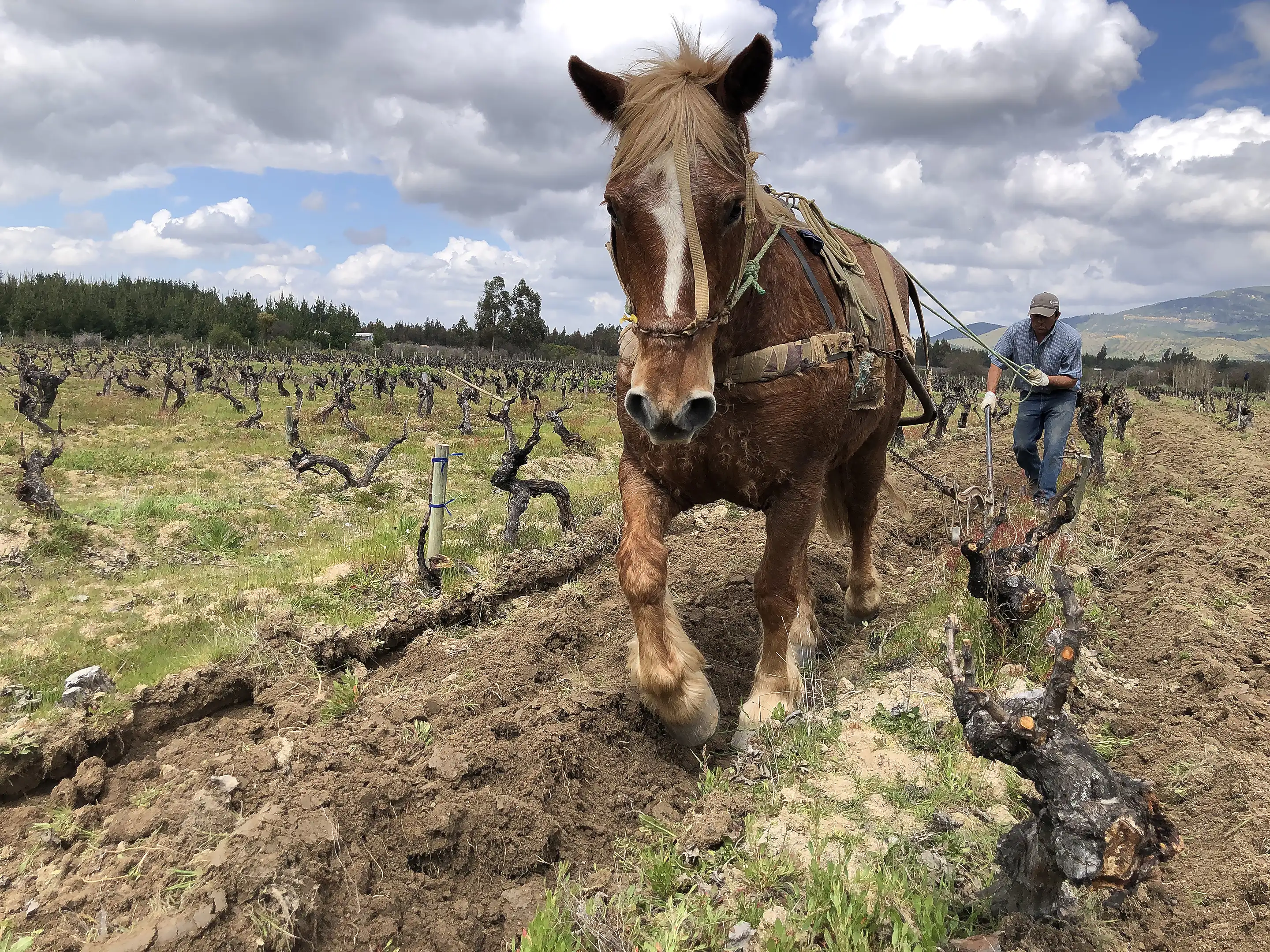
Early on, a good review cost them their fruit, because the grower used the critics’ praise to sell it to someone bigger. So the couple went south to the dry-farmed hills of the Maule and Itata, to farmers the mainstream had passed over, and paid what the company calls “bonafide prices”, enough for the old field work to carry on. Some parcels are rented long-term where the next generation has left for the city, and at Sauzal the team works two hectares with the grower, Nivaldo Morales, a medias, a sharecropping arrangement. When bigger wineries kept taking first call on the harvest crews, Derek told Skurnik’s podcast, Garage built a team of its own and bought a van, so that no one paying more could take the people elsewhere. Garage helped found MOVI, Chile’s movement of independent vintners, and Vigno, a Carignan denomination defined by style rather than place, and Pilar sits on both boards.
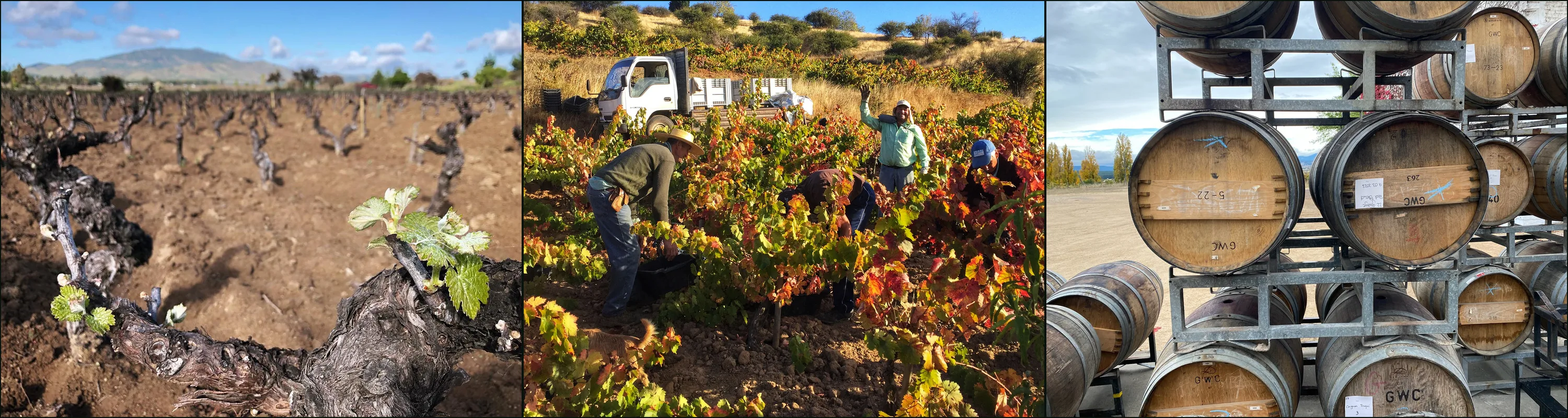
Pilar, Derek says, calls it being tested by the elements: first earth, then fire, then air. After the 2010 earthquake, the ethical trading arm of Bibendum, Garage’s importer in Britain, bought wine en primeur so the company could invest in the growers’ community. In the 2017 wildfires the tractor that sprays sulphur on the vines was rigged to carry water, and Derek saw that vineyards still cultivated the old way had fared far better than those left uncultivated. That year’s Phoenix Ferment, a white made from País and Cariñena, kept growers’ grapes paid for. In the pandemic, importers in Sweden and Britain paid in advance for an old-vine País called Revival, which, Derek told La Cav, let the team work two winters in peace with those families.
Cariñena is the grape France calls Carignan, long planted in Europe for quantity. On old, unirrigated bush vines in Chile’s coastal hills it gives very little, about 1.2 kilos a plant at Sauzal by Garage’s own count. Pilar Miranda ferments with native yeasts and ages the reds over two winters in barrels used at least twice before, so expect fresh acidity and firm tannin rather than weight or new oak, a different red from the Cabernet Sauvignon the Maipo is known for. The flagship, Cru Truquilemu, comes from a small triangular block of the Truquilemu vineyard and has been bottled on its own since 2018. Wine Spectator gave the Isidore Vineyard F5 Sémillon 2022 92 points, and Decanter gave the same score to the Old Vine Pale Rosé Lot 103 2020.
Garage Wine Co is not certified organic, and it says why. Its own technical sheets call Truquilemu, which it found in 2008 and partly rents long-term, farming it with its own team, and Sauzal “uncertified organic”, and Derek told Wine Advocate the same of the Renacido and Isidore vineyards. For other parcels the record speaks of regenerative or traditional farming, and for the Maipo Cabernets we found no farming claim at all. Ignacio Muller gave the reason in 2026: “la certificación orgánica en nuestro rango de precio no se justifica.” None of the vineyards is the company’s own, he added, and the team cannot watch every grower all the time. In 2021 Derek told WIP.cl, in the reporter’s paraphrase, that seventeen parcels could not all be certified the way certifiers require, though he counts himself in favour of certification. The vines are sprayed with sulphur, which organic rules allow. We list Garage under Track B on that record.
“Sustainability for us was never about seals and certifications.”
Why it’s remarkable
Free Bacchus Verification
Uncertified; organic practice on the producer’s own record
Verified practice3
- “Uncertified organic”, in the producer’s own technical sheets for the Truquilemu vineyard, partly rented long-term and farmed by its own team, and for Sauzal, worked with the grower
- “Uncertified organic for 75+ years” (Renacido) and “for 60+ years” (Isidore), Derek Mossman Knapp to Wine Advocate
- “Worked organically but not certified”, Wine Advocate on the Phoenix Ferment farms
Also on record9
- Uncertified: Garage Wine Co is not certified organic and is not certified biodynamic
- No certificate on the registers searched with controls: USDA organic (October 2026 list, also under the legal entity Vitivinícola Two Winters SpA), Chile’s SAG list 2025.3, Demeter and Ecocert
- It is not on the Regenerative Organic Certified farm directory either
- The reason, in the commercial manager’s words: “la certificación orgánica en nuestro rango de precio no se justifica” (Ignacio Muller, Guía Comino, 24 April 2026)
- None of the vineyards is the company’s own, says its commercial manager, who adds that the team cannot watch every grower all the time
- Elsewhere the record speaks of regenerative farming, some of it in transition (Las Higueras, Passageiro), or only of traditional farming by hand and horse (Pereira, the Itata Cinsault)
- No farming claim was found for the Maipo Cabernets, Reelegido and Pirque
- Sulphur is sprayed, as organic farming allows
- Track B is capped at Gold
From the Journal
If you’re buying
Cheat sheet
Save it to your phone. Everything you need to recognise this producer, and three things worth saying about it, at a glance in a shop or across a table.