Domaine Oak Hill
The Free Bacchus Story
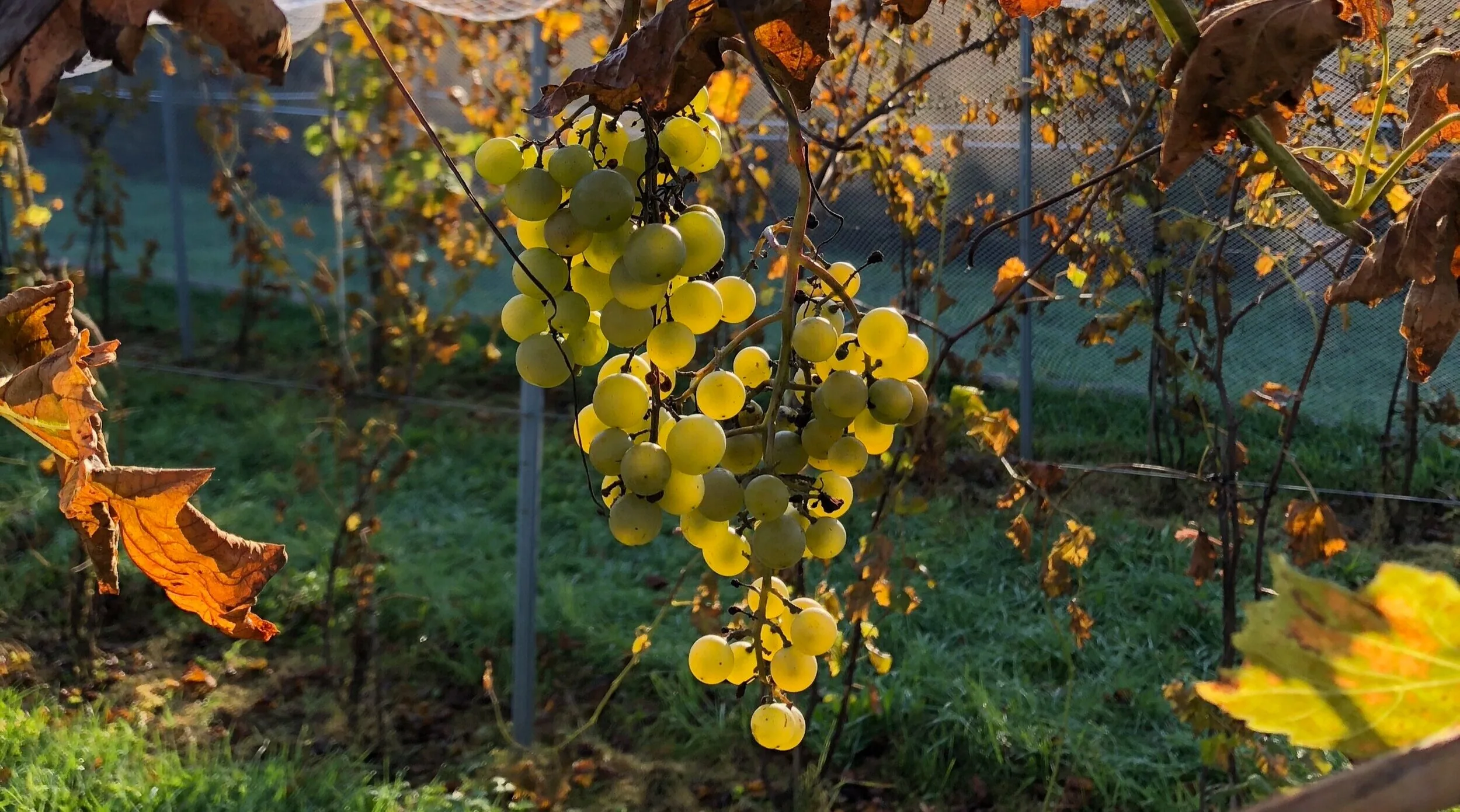
Louise Macdonald and Sylvain Lalonde built careers in leadership and finance, and on a trip to Italy, tasting natural wine, Louise won Sylvain over. In 2008 they bought a house built in 1857 at Melbourne, in Quebec’s Estrie, on 50 hectares that were mostly hay. Opposite lay a fallow hectare, and there they planted 3,000 vines of four northern hybrid grapes: La Crescent, St-Pépin, Marquette and Petite Perle.
The first harvest came in 2019 and made six wines. After a bad summer, downy mildew got into the La Crescent and three quarters of it was lost; the pickers saved some by sorting the bunches by hand. One wine smelled of nail varnish, a whiff of what winemakers call volatile acidity, until it settled, and they bottled it without embarrassment. They likened the second St-Pépin to sucking half a lemon. Their own page for the vintage owns up to their incompetence as beginners.
Winter decides what grows in Quebec. The hardiest vines take minus thirty under a blanket of snow, while the classic European wine grapes suffer below minus twenty-two, so growers here also plant hybrids, grapes crossbred to stand the cold. Some, St-Pépin among them, ripen with very high acidity, as that half lemon suggests. Marquette, the flagship red, is gentler on that score. The University of Minnesota, which introduced it in 2006, describes it as a cold-hardy grandson of Pinot Noir, ruby in colour, with moderate acidity, pronounced tannins (the grip that dries your gums) and notes of cherry, berry, black pepper and spice. That is the grape, not this bottle. The owners would rather not tell you what you will smell or taste, and say as much on their pages for 2019 and 2020. They do say how the 2024 was made: fermented by its own yeasts, aged ten months in neutral barrels, and bottled at 12% alcohol without fining, filtering or added sulphites.
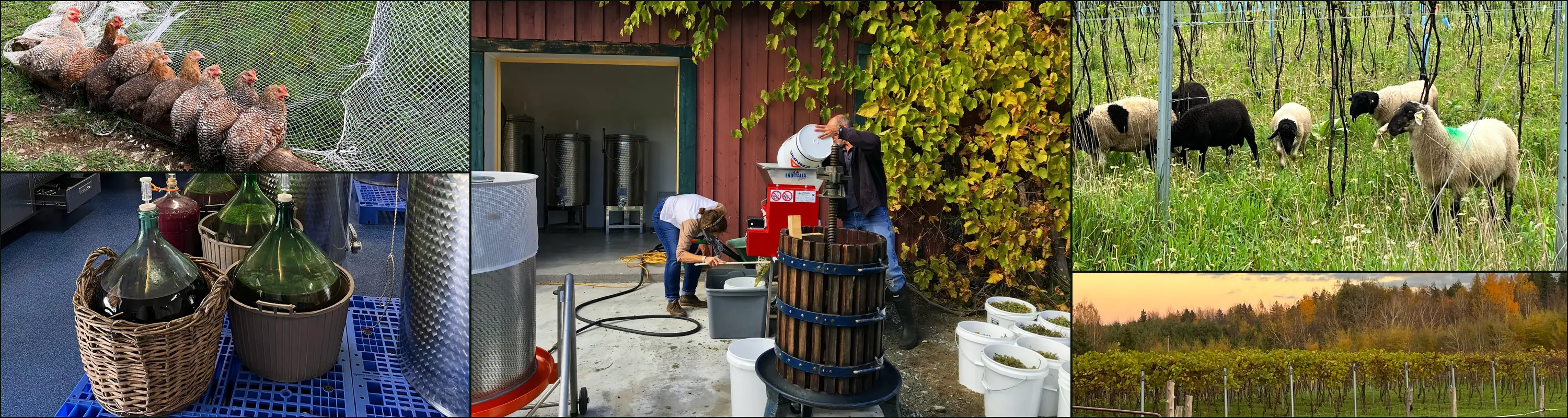
The vineyard sits in a windy hollow 230 metres up, on sandy loam left by glaciers over schist, in slate country. Weeding is by hand, and poultry and sheep roam the rows. By the owners’ account the vines were farmed organically and biodynamically from planting to that first harvest. They chose to be organic, and more than organic, and to have it recognised so their customers could see it, though they know certification is controversial in the trade. Ecocert Canada has certified Domaine Oak Hill’s wines and wine grapes since 15 December 2020, after the first two harvests, and Demeter Canada lists the farm as certified biodynamic, one of five farms on its Quebec list.
They are as open about the rest. Several 2024 and 2025 cuvées are made with bought grapes, from growers the owners say are certified organic, and their technical sheets mark those wines ‘vin de négoce’ or name the fruit outright. Those cuvées sit outside the estate and biodynamic claim, and so does Le Blouge 2025, which the SAQ, Quebec’s liquor board, sells. The sheet for the 2024 Marquette reads ‘100% Marquette’ and names no bought fruit. And they will tell you that natural wine is not always good. What they want is one that stays upright as long as the bottle lasts — and ideally for months, or a few years, after.
“tristes victimes de notre incompétence de débutants”
Why it’s remarkable
Free Bacchus Verification
Ecocert Canada organic · Demeter biodynamic · bought-grape cuvées not covered
Certified2
- Organic, Ecocert Canada (COR and Québec): Domaine Oak Hill SENC, 455 chemin Crack, Melbourne, CARTV record 6862, wines and wine grapes, initial certification 15 December 2020
- Biodynamic, Demeter Canada: the farm listed as certified, no certification date published
This page covers
The estate wines, made from the domaine’s own grapes, as the register names no individual cuvée.
Not covered4
- Outside the estate and biodynamic claim, the bought-grape cuvées: Vidal 2024, Petite Perle 2024, Le Blouge 2024 and Perle Rose 2025, marked ‘vin de négoce’ on the producer’s technical sheets
- Perle Rose 2024, Frizzante 2024, Frizzante 2025 (30% bought Vidal), Pétillant Naturel 2024 and Pétillant Naturel 2025, whose sheets name bought grapes
- Le Blouge 2025, as sold at the SAQ, which has no sheet
- The 2019 and 2020 vintages, harvested before the initial certification date
Also on record1
- The producer says the bought grapes come from certified-organic growers, whose certificates were not checked
From the Journal
If you’re buying
Cheat sheet
Save it to your phone. Everything you need to recognise this producer, and three things worth saying about it, at a glance in a shop or across a table.