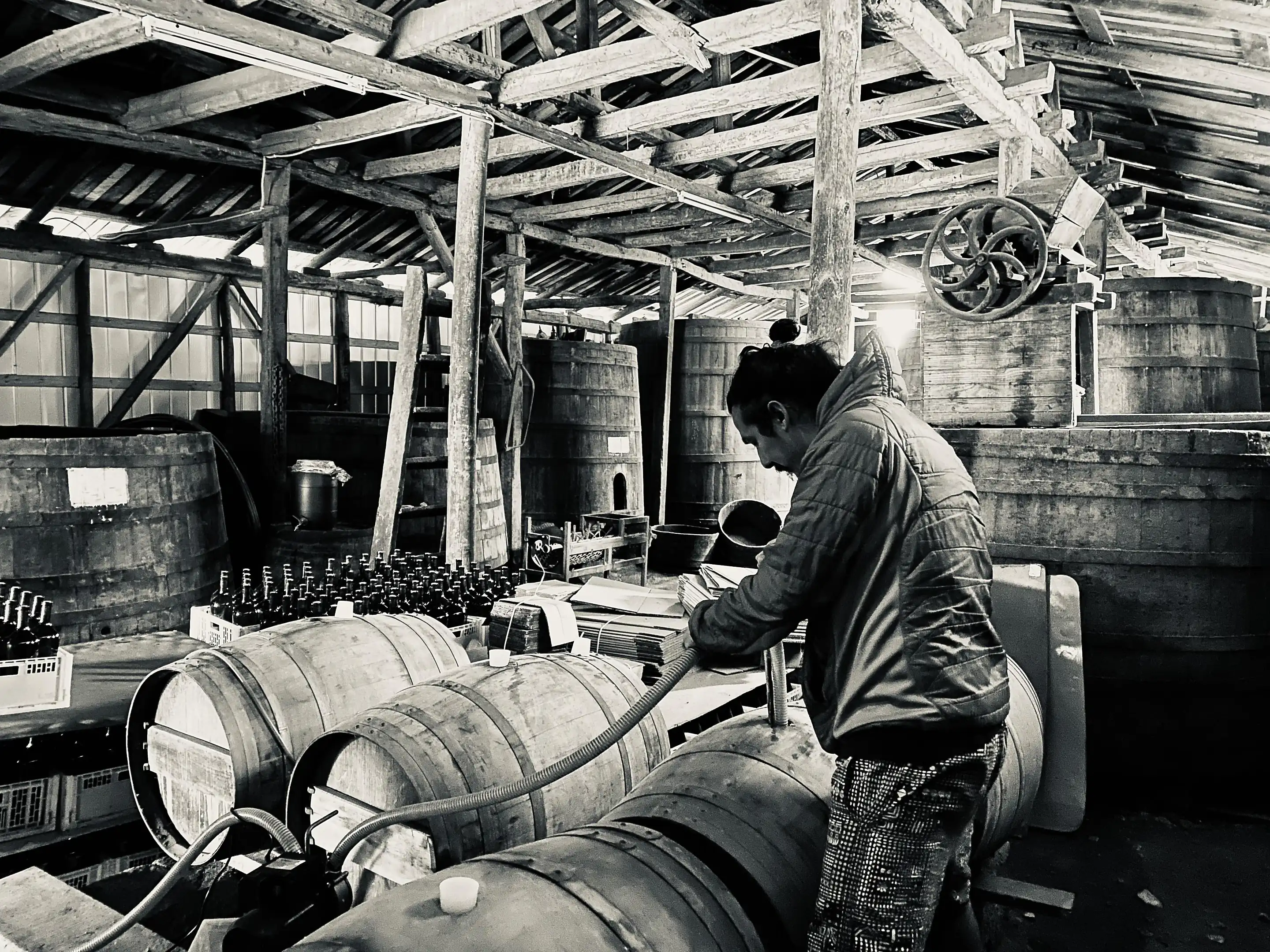
Roberto Henríquez
The Free Bacchus Story
Roberto Henríquez was 29 when he came home to the Biobío, in Chile’s cool south, to learn pipeño, a simple farmers’ wine, from the growers there. He was born in Concepción in 1984 and trained as an agronomist and winemaker at its university. Then came the big Chilean wineries, vintages in Canada and South Africa, and the Loire, where Punch says he worked with the Mosse family in Anjou. His label began in 2015 with 400 bottles, and his own biography now puts it at 60,000.
País is the grape at the heart of that tradition. The Spanish brought it in the sixteenth century, and Chile still has more than ten thousand hectares of it, almost all in Maule, Ñuble and Biobío and most of it unirrigated bush vines. Next to the Cabernet Sauvignon most people know Chile by, it makes a light red, fruity and fresh, with moderate alcohol, light enough to take a little chill. Henríquez has made a house style of that lightness. Patricio Tapia, who writes the Descorchados guide, singles out his Biobío whites and reds for coming in well under 12 per cent alcohol, and the guide’s 2026 report put Tierra de Pumas País 2024, at 11.5 per cent, at the head of its list of the best wines under 12 degrees, with 95 points.
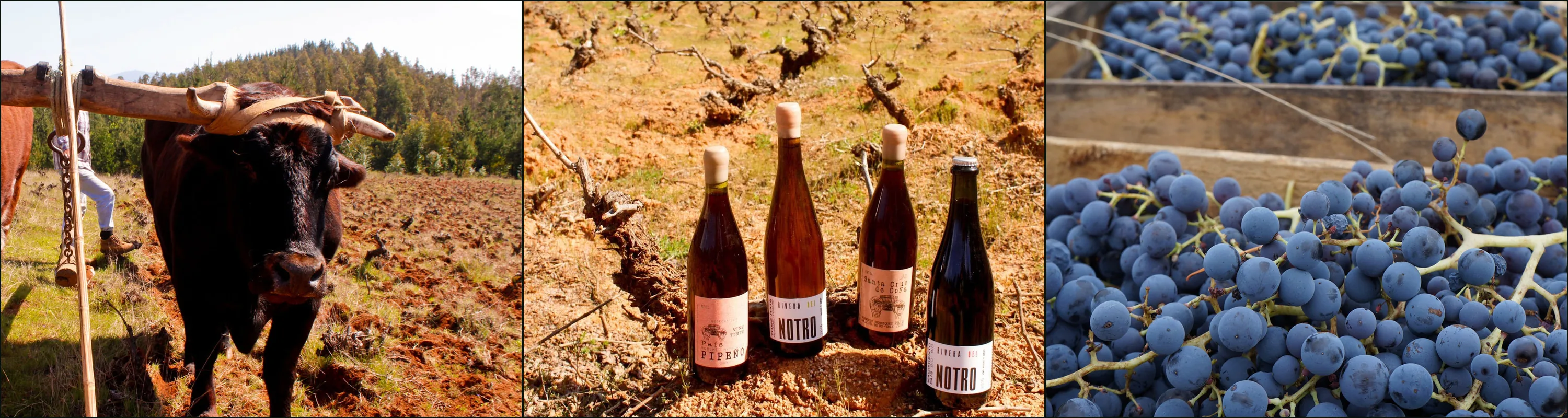
His UK importer calls the work a rescue of old vineyards that would otherwise be torn up and planted with pines. His wines grow in the shelter of the Nahuelbuta range, older than the Andes, and his site says more than 70 per cent of its native plant cover has been lost to the forestry industry. Viña 77 at Santa Juana, which his own page calls a hidden treasure amid the forestry, gives Tierra de Pumas from 250-year-old vines. His other vineyards, Millapoa and Carrizal, are near Nacimiento, and a fourth, Palmilla, is being brought back from abandonment. Not every wine is from his own vines. He buys grapes for the Itata whites from growers, and his own pages disagree about Santa Cruz de Coya, the País his site says Descorchados chose as Chile’s best five years running, calling its vineyard his on one page and a nearby grower’s on another.
He holds no organic certificate, so what can be checked is his own account, backed by the people who import and write about his wine. His old website described the vines as “managed traditionally without addition of chemical fertilizers nor herbicides”, with “one sulphur application during the season”. In a bad year, he told the Washington merchant Grand Cata in 2019, you may need to “add a little copper to save the wines”. His importers in the US and the UK, and guides in Chile, describe the same farming. He is on none of the registers we searched, the US and Chilean organic lists, Ecocert’s directory and Demeter’s, and the certified Henríquez growers on them are other people. We found no public statement of why he doesn’t certify, and would rather say so than supply a reason. He is on Track B provisionally, until we have asked him directly.
Tim Atkin MW named him Young Winemaker of the Year in his 2021 Chile report, Harpers reported, and the same year he was one of the founders of Sur Chileno, an association of winemakers from Maule southwards. With a group of young agronomists who answer to no boss, he also started Agrícola Sin Patrones, which rescues old farm fruit trees to make cider, spirits and beer.
“I have been influenced by the traditional viticulture from the farmers from Chile.”
Why it’s remarkable
Free Bacchus Verification
Farmed without chemical fertilisers or herbicides, by his own account
Verified practice2
- Farmed without chemical fertilisers or herbicides, by his own account on his former website, corroborated by importers and guides
- One sulphur application a season, in his own words, and a little copper in a bad year
Also on record7
- No organic certificate: absent from the USDA organic register, Chile’s SAG national register, Ecocert’s directory and Demeter’s international register, each searched with controls
- The certified Henríquez growers on those registers are other people
- No public statement of a reason for not certifying was found
- The Track B listing is provisional, pending direct contact with the producer
- His own vineyards are at Santa Juana and Nacimiento; the Itata whites are made from growers’ grapes, and his own pages disagree on whether Santa Cruz de Coya’s vineyard is his
- Roberto Henríquez is not certified biodynamic
- Track B is capped at Gold
From the Journal
If you’re buying
Cheat sheet
Save it to your phone. Everything you need to recognise this producer, and three things worth saying about it, at a glance in a shop or across a table.