De Martino
The Free Bacchus Story
In 2011 De Martino’s winemaker, Marcelo Retamal, disowned one of his own wines. It was the 2002 Alto de Piedras Carménère. He poured it for a room of wine writers in London. It had 14.6 per cent alcohol, seventeen months in French oak and acid added, and at the time, he said, they had been very happy with it. With the De Martino family behind him he had already changed course, picking earlier, adjusting no acid, using natural yeasts and ageing in big oak casks. The room agreed that his 2011 was the best of the eight vintages poured. He still called it a risk, because the over-ripe style is simpler to make.
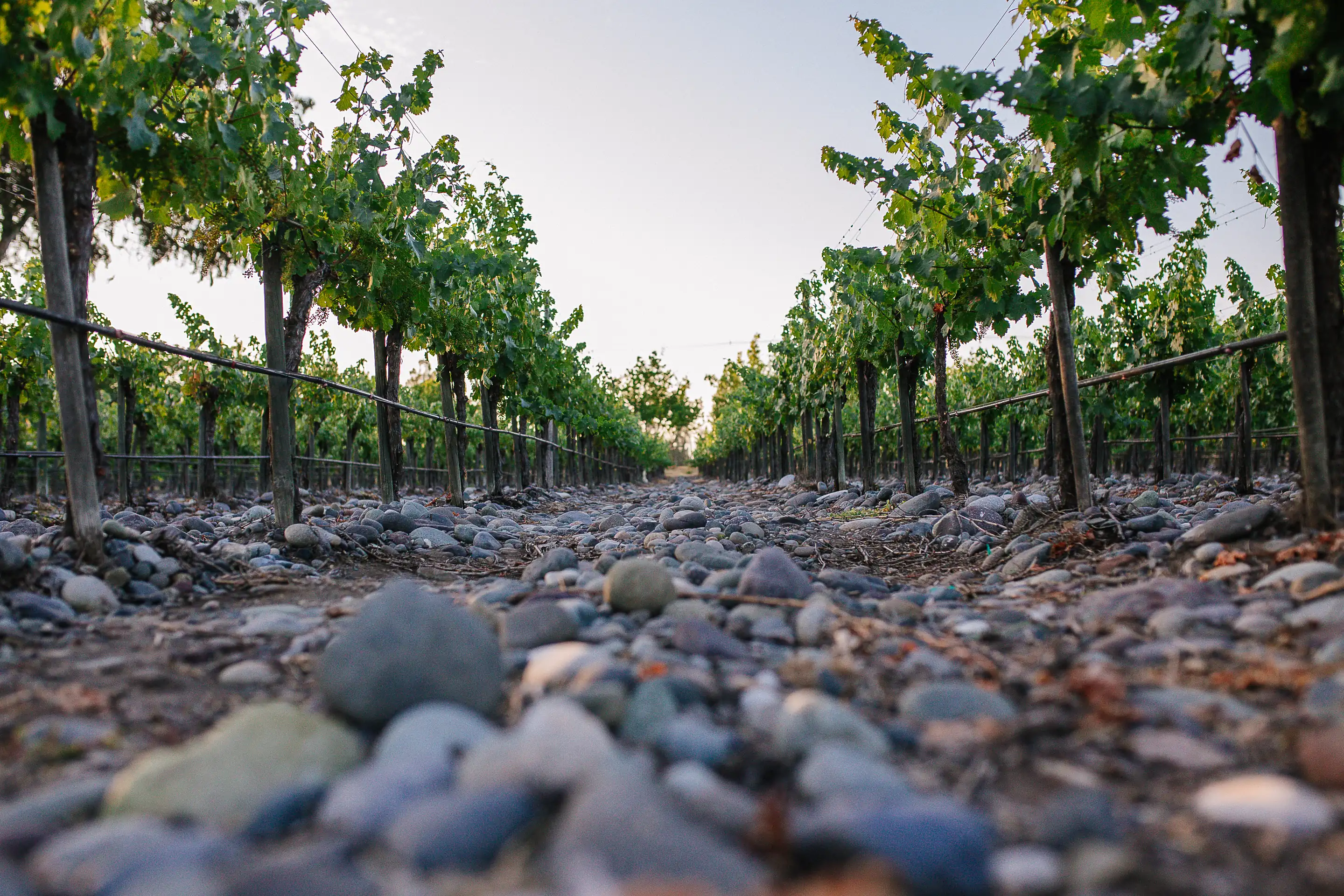
The vineyard behind that wine is at Isla de Maipo, in the Maipo Valley just south of Santiago. Pietro De Martino arrived from Italy in 1934, and the family says the Santa Inés vineyard has been in its hands ever since. The name comes from the arms of the Maipo river that once ran around the area, and the family’s vines there grow on an old riverbed, in gravel. In 2024 more than half the wine grapes in the Santiago Metropolitan Region were Cabernet Sauvignon, the grape of Bordeaux. Carménère, the other red the family grows here, is a French grape that Chile took for Merlot until 1994, and the house says it labelled and exported the country’s first Carménère in 1996, from the same ground as Alto de Piedras. In the glass, the change means earlier-picked reds, lighter and lower in alcohol than the oaky, over-ripe style that Tim Atkin, writing about that London tasting, found in thousands of New World reds. Gran Vino Cuvée, the top wine, is mostly Cabernet with a little Malbec. The 2022 has 13 per cent alcohol and spent eighteen months in casks of 2,500 litres, more than ten times the size of a standard barrel. La Blanca, a white Sémillon, comes from the same vineyard, and Patricio Tapia’s Descorchados guide gave 96 points to the Single Vineyard La Blanca Semillón 2024 in its 2026 report, listing it among the best whites of the year.
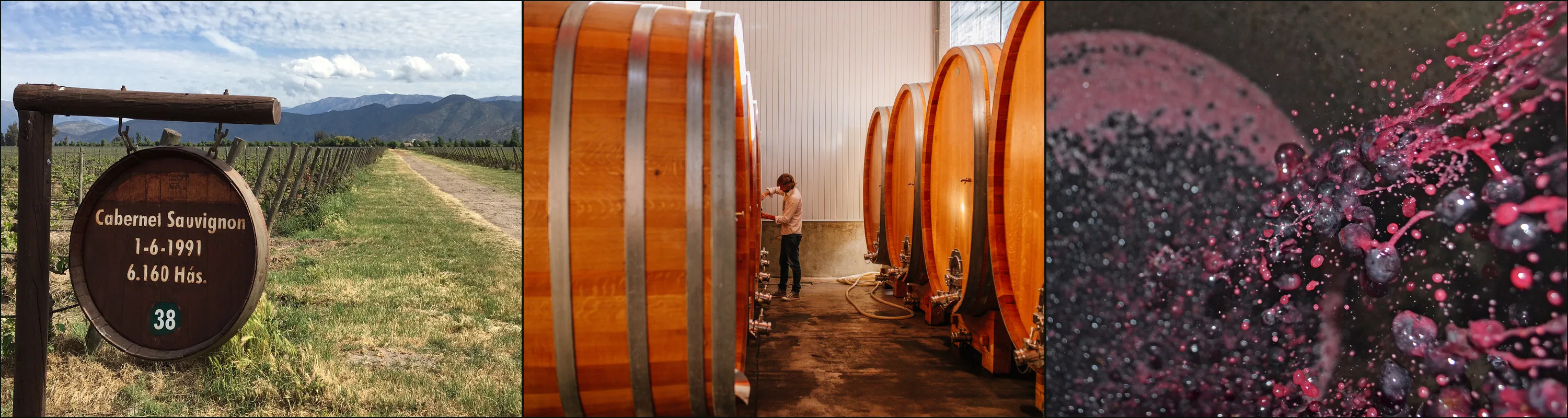
Only that estate is certified organic, and two family companies hold the certificates. Santa Inés S.A. farms the vineyard, and Mayacert has certified its land to the US organic standard since August 2024, 95.33 acres in all. Santa Teresa S.A. is the winery, whose sustainability policy is signed by the chief executive, Pietro De Martino Cáceres; Mayacert has certified it to handle organic wine since October 2024. Chile’s national register lists both. The winery’s certificate names its wines by grape alone, from Cabernet Sauvignon and Carménère to Sémillon and Viognier, never by bottle or vintage. The house’s own Code of Ethics dates its organic farming to 1997, a date no register we read can confirm, and the Cuvée vintages on sale now, 2020 to 2022, were all made before the present certificates began.
The house calls itself a pioneer of Itata’s century-old vineyards, far to the south, and those wines are not on the certificate. In 2013 the family found an old dry-farmed vineyard at Guarilihue, in the Itata Valley, and has since bought it; the vines are worked by hand and the soil ploughed by horse. Viejas Tinajas, a Cinsault fermented in century-old clay amphorae, comes from Guarilihue, as do Gallardía and Las Olvidadas, whose vines the house dates at 100 to 300 years old. VIGNO and Limávida come from old vineyards in Maule, and Las Cruces from one planted in 1957 at Pichidegua. The fourth generation, Marco Antonio and Sebastián De Martino, lead the house’s projects with the winemaker Nicolás Pérez. In 2023 fires in Itata meant no Viejas Tinajas was made at all.
“It’s one of the worst wines I’ve ever made.”
Why it’s remarkable
Free Bacchus Verification
Mayacert USDA organic · Santa Inés estate at Isla de Maipo only
Certified3
- USDA organic, Mayacert S.A.: Santa Inés S.A., the De Martino family’s vineyard company at Isla de Maipo (NOP 3532878645), grapes, 95.33 acres, certified since 26 August 2024
- USDA organic, Mayacert S.A.: Santa Teresa S.A., the family’s winery company at Isla de Maipo (NOP 3537149537), handling, certified since 17 October 2024
- Both companies are listed on SAG’s national organic register (Ley 20.089) under Mayacert SpA
This page covers
The Santa Inés estate at Isla de Maipo, and the organic wine its winery makes, which the certificate names by grape variety only: Cabernet Sauvignon, Carmenere, Malbec, Petit Verdot, Sauvignon Blanc, Semillon and Viognier
Not covered2
- Wine from grapes grown outside the Santa Inés vineyard, among them Viejas Tinajas, Gallardía and Las Olvidadas from Guarilihue in the Itata Valley, where the family also owns a vineyard
- VIGNO and Limávida from old vineyards in Maule, and Las Cruces from Pichidegua in Cachapoal
Also on record5
- The certificates name grape varieties, not bottles or vintages; the register does not say which bottlings are made from the certified grapes
- The Gran Vino Cuvée vintages on sale, 2020 to 2022, were made before the present certificates
- Earlier certificates are history, not current certification: IMOcert for both companies until 7 August 2024, and NCO for the winery until 26 July 2023
- The house dates its organic farming to 1997 in its Code of Ethics, its own account, which no register dates
- De Martino is not certified biodynamic
From the Journal
If you’re buying
Cheat sheet
Save it to your phone. Everything you need to recognise this producer, and three things worth saying about it, at a glance in a shop or across a table.