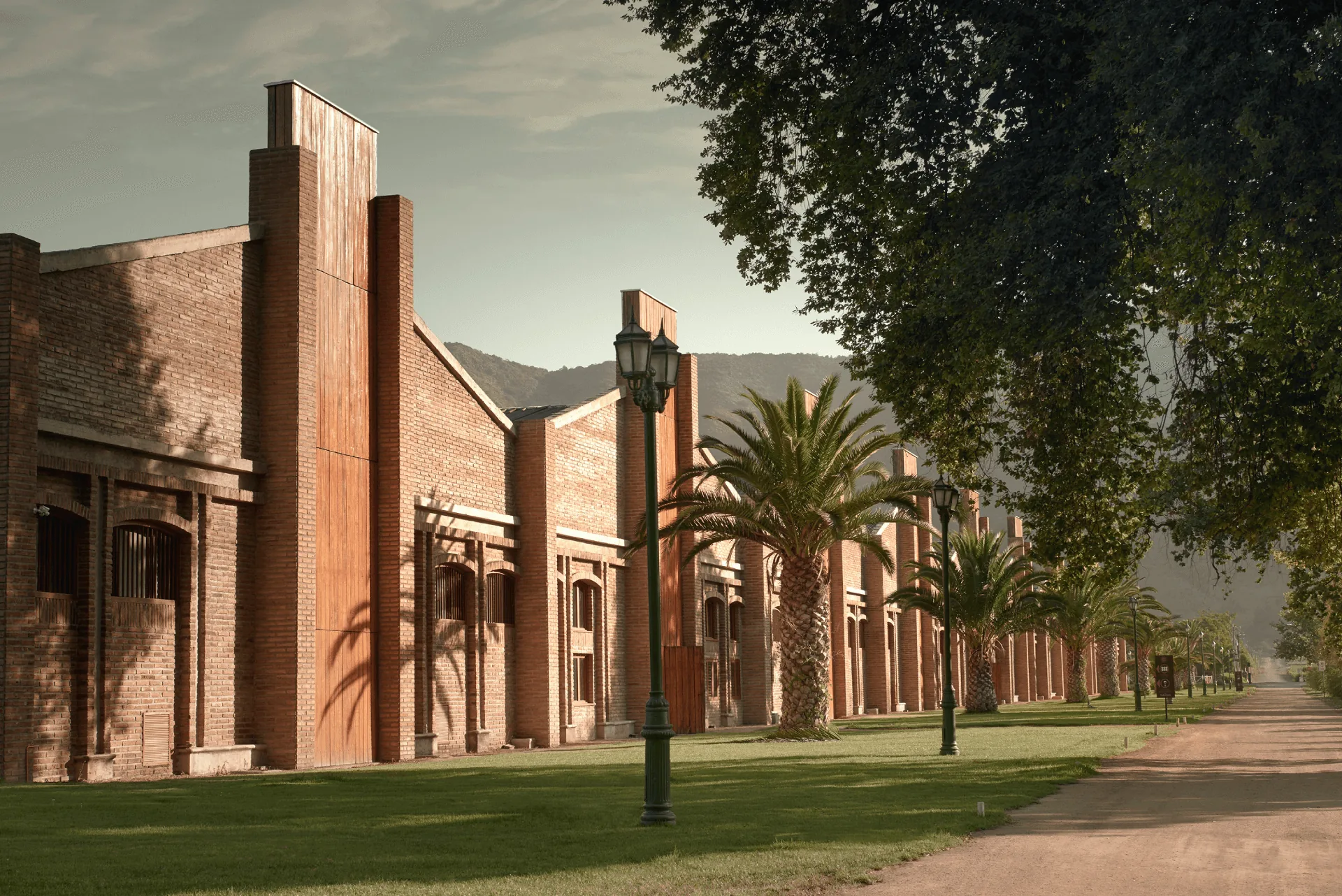
Viña Tarapacá
The Free Bacchus Story
The name on this bottle comes from a divorce. The owner’s former wife renamed the vineyard for the lawyer in the split, Arturo Alessandri. He was known as the Lion of Tarapacá, and he also served as president of Chile. The name she chose, Viña Tarapacá Ex Zavala, kept her former husband in it too. Francisco de Rojas had founded the vineyard at the foot of the Andes in 1874, as Viña de Rojas, and a Zavala bought it in 1892. Its Tuscan-style mansion, built in 1927, is the emblem on the labels.
Maipo, the valley just south of Santiago, is Chile’s Cabernet country, but this wine leads with another grape. When the winery relaunched it in 2022 it was 71 per cent Carmenère, with Syrah and Cabernet Sauvignon. Carmenère is a French variety that Chilean growers took for Merlot until 1994, and it makes a red that is rounder and softer than Cabernet Sauvignon, with dark fruit and a herbal, peppery edge. The winery’s own note on the organic red finds cherry, fresh strawberry and pepper, with a little vanilla from the barrel, in a juicy, medium-bodied wine. Wine Enthusiast gave the 2023 vintage 90 points and marked it a Best Buy at $20.
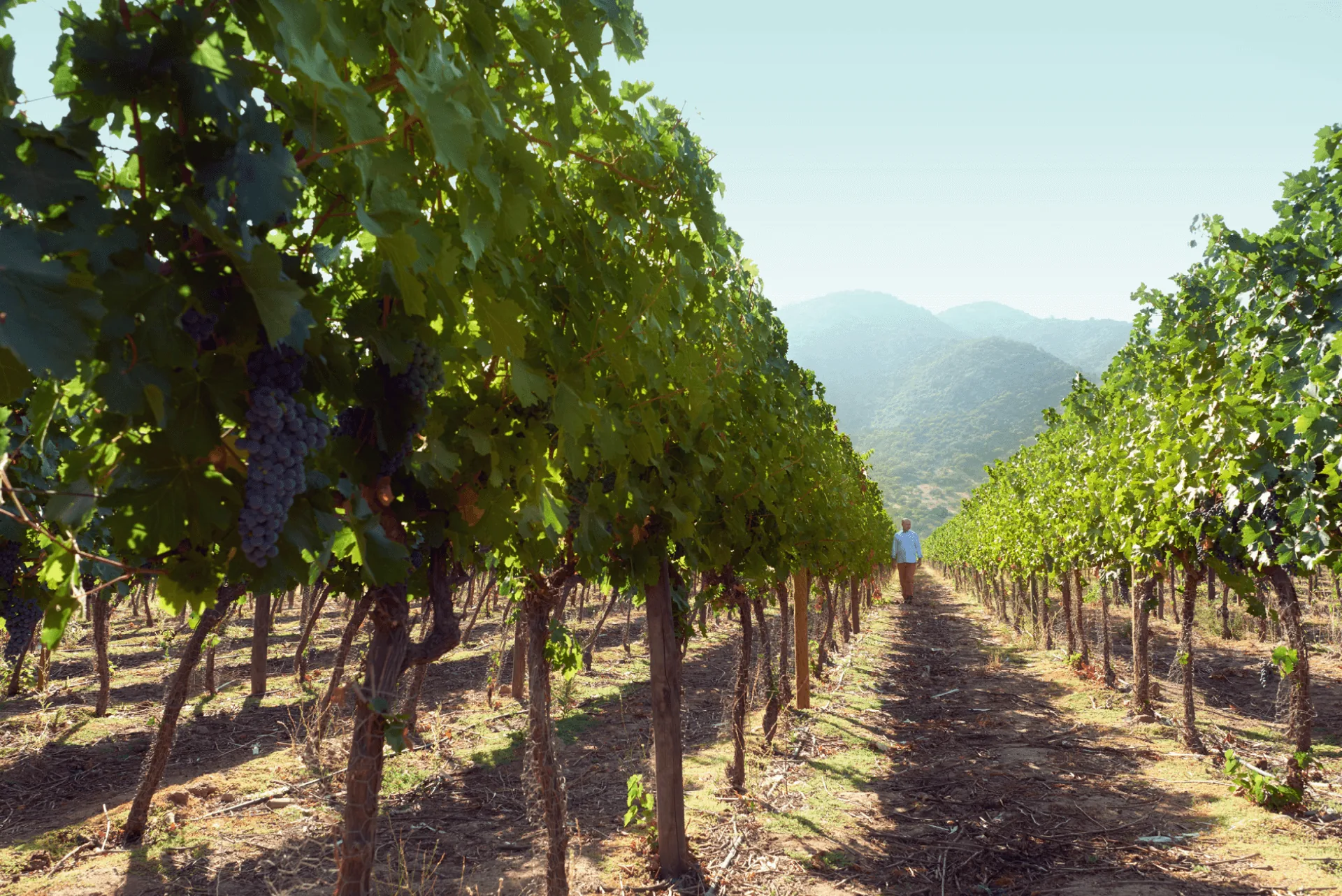
Tarapacá’s home since 1992 has been El Rosario de Naltahua, at Isla de Maipo, a 2,600-hectare estate closed in by the Cantillana range and the Maipo River. The organic red has been grown there before; the winery’s sheet for the 2017 vintage traces the blend to two of the estate’s soils. No organic register lists the estate today. The group farms the certified vineyards of a sister company, Viña Altair, at María Pinto, also in the Maipo Valley, and buys their organic grapes. Carmenère, Cabernet Sauvignon and Syrah are among the certified vines.
In 2022 the winery moved the wine into a lighter bottle, 420 grams of glass instead of 695, with a natural cork, a capsule free of PVC and labels of recycled paper. Sebastián Ruiz, the winemaker, presented it as one step in the house’s work on sustainable viticulture and its biodiversity plan.
The certificate belongs to the bottle, not the estate. Ecocert certifies the group company, Viña San Pedro Tarapacá S.A., which trades as Viña Tarapacá among other names, and its certificate names the Gran Reserva red vintage by vintage, 2021 to 2025. All of it sits in the US category made with organic, which means at least 70 per cent organic ingredients and no USDA seal on the label. Etiqueta Azul and Etiqueta Negra, the top of the house’s range, are not on it. On the house’s own 2024 list, three wines out of fifty made up the organic line.
“el rol de la biodiversidad es clave para el desarrollo de la enología”
Why it’s remarkable
Free Bacchus Verification
Ecocert organic · Gran Reserva Organic wines by vintage · estate not certified
Certified3
- USDA NOP organic, Ecocert SAS: Viña San Pedro Tarapacá S.A., the group company that trades as Viña Tarapacá (NOP 7880007444), handling and processing, certified since 17 May 2018; document of 4 August 2026
- Grapes: Viña Altair SpA, a sister company whose vineyards the group farms and whose organic grapes it buys, Ecocert SAS (NOP 7880096500), crops certified since 23 May 2019
- Viña Altair SpA under Chile’s Law 20.089, Ecocert Chile (001-13-96500-005245), valid to 18 April 2027, for vineyard blocks at María Pinto and Casablanca
This page covers
The Gran Reserva Organic Wine Red Blend 2021 to 2025 and the Gran Reserva Biodiversidad 2020, named on the certificate as ‘Wine Red Blend (Gran Reserva)’ and ‘Wine Red Blend (Gran Reserva Biodiversidad)’, all in the US ‘Made with organic’ category
Not covered3
- Tarapacá’s estate, El Rosario de Naltahua at Isla de Maipo, which is on no organic register
- Etiqueta Azul and Etiqueta Negra, the top of the house’s range, which the certificate does not name
- Vintages of the organic red before 2021, which are on no certificate that can be retrieved
Also on record4
- ‘Made with organic’ requires at least 70 per cent organic ingredients, and the label may not carry the USDA organic seal
- The certificate also lists Cabernet Sauvignon, Rosé, Sauvignon Blanc, Red Blend and Syrah wines with no brand named; this page does not tie them to Tarapacá
- One of Altair’s María Pinto blocks, 27.24 hectares of Carmenère, is listed as in conversion
- Not certified biodynamic
From the Journal
If you’re buying
Cheat sheet
Save it to your phone. Everything you need to recognise this producer, and three things worth saying about it, at a glance in a shop or across a table.