Miguel Torres Chile
The Free Bacchus Story
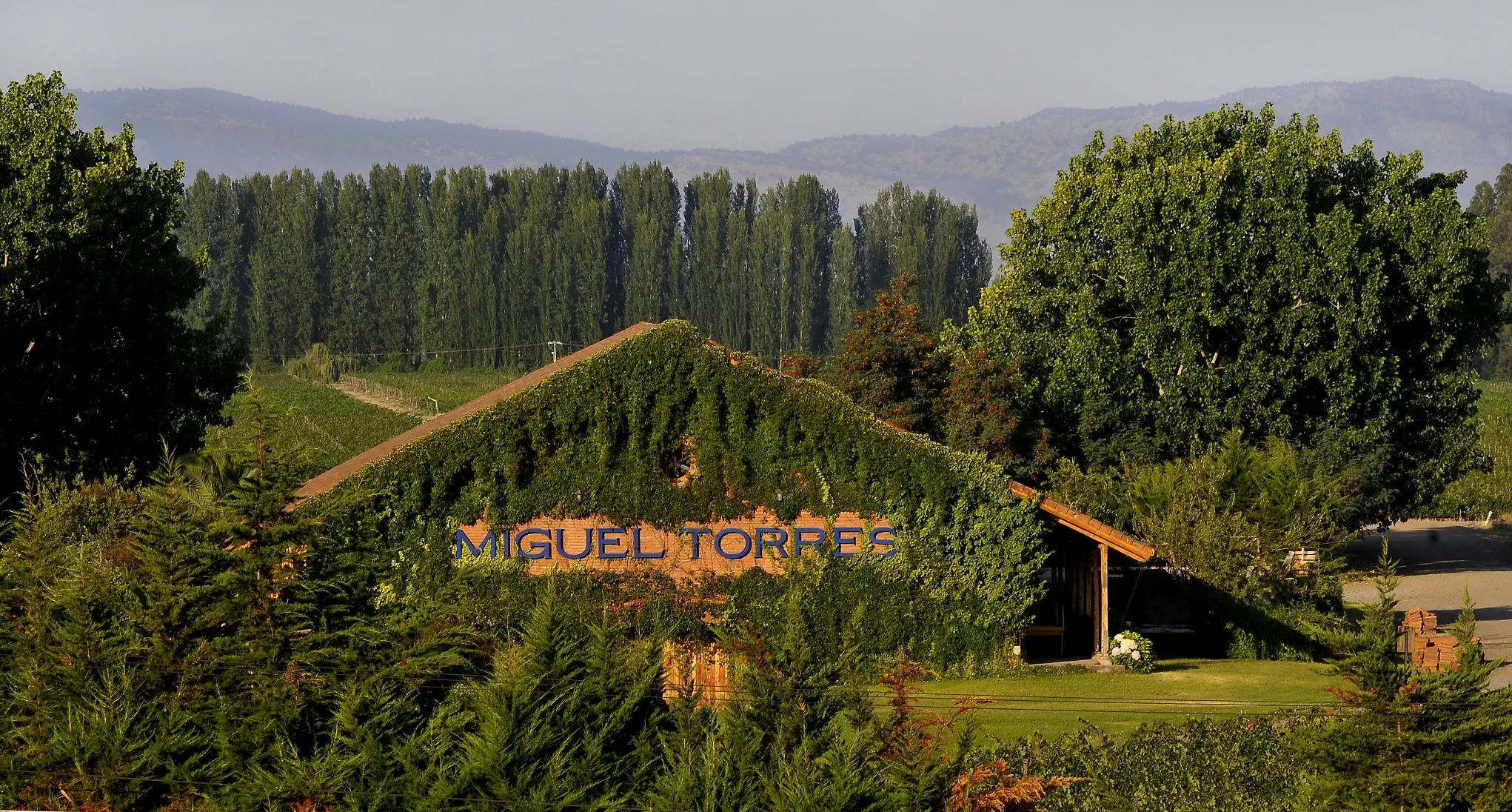
In 1979 the Torres family planted its first vineyards in Chile, in the Curicó Valley. That year, in Paris, its Mas La Plana finished ahead of Château Latour. The family had been making wine in Spain since 1870, and in a country where most wine was still rustic and traditional it brought stainless-steel tanks, temperature control during fermentation and French oak. Miguel Torres Maczassek, the fifth generation, took over as president of the Chilean company in 2010.
The project the family calls its most laborious lies near the coast of Maule. In 1995 Miguel A. Torres, the fourth generation, began searching Chile for slate like the ground of Priorat in Catalonia, and found it near Empedrado, 26 kilometres from the sea. The family built terraces on the slate, something never done before in Chile, and planted Priorat varieties that would not ripen in the cold, so it turned to Pinot Noir. Frosts kept coming back and birds virtually destroyed three harvests, so in the end each vine was covered with its own net. The first vintage of Escaleras de Empedrado, the 2012, came ten years later than planned and ran to 2,400 bottles.
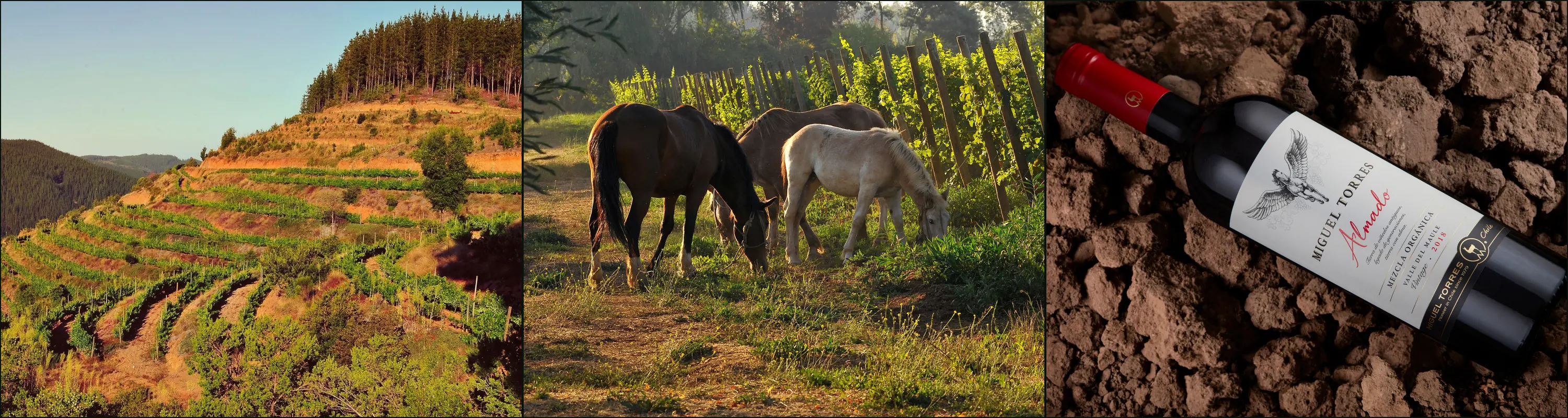
Almado is the bottle to start with. Most Chilean wine grows in the long trough between the Andes and the coastal range, and more than a quarter of its wine grapes are Cabernet Sauvignon. Almado comes from an old dry-farmed vineyard at Huerta de Maule, which means the vines get no irrigation and have to find their own water. The 2020 is mostly Malbec, the grape France calls Côt and Argentina built its soft, plummy reds on. Carignan and Touriga Nacional, two Iberian grapes, go in for freshness and a certain rusticity, in the house’s words, with a little Carménère. Descorchados, a guide first published in Chile in 1999, gave the 2020 vintage 95 points in its 2024 edition.
The organic certificate names the wines one by one. Ecocert Chile’s certificate, valid to May 2027, lists 85 parcels, about 234 hectares of them vines, every one 100 per cent organic, and then about 140 wines by brand and vintage, among them Almado in 2018, 2020, 2022 and 2023, Las Mulas in every vintage from 2018 to 2026, Ándica from 2019 and Escaleras de Empedrado in 2019, 2021 and 2023. The house sells Las Mulas, Ándica and Almado as organic wines. Manso de Velasco, Los Inquietos, Millapoa, La Causa, the Gran Reserva range and most of Santa Digna are not on it. Ecocert has also certified the company to the US organic rules since May 2018, and under them every wine is made with organic grapes, a category that allows added sulphites and cannot be labelled organic in the United States.
The wine the house calls its most recognised and awarded is the one the certificate leaves out. Manso de Velasco has been made since the 1985 vintage from Cabernet Sauvignon planted at Curicó around 1902, on its own roots, and no vintage of it is on either certificate.
“Our oldest vines are Chile’s greatest treasure”
Why it’s remarkable
Free Bacchus Verification
Ecocert organic (Law 20.089, USDA NOP) · named wines only
Certified2
- Organic under Chile’s Law 20.089, Ecocert Chile S.A.: Sociedad Vinícola Miguel Torres S.A., Curicó (certificate 001-07-153787-005262), growing of grapes and manufacture of wine, valid to 16 May 2027
- USDA organic, Ecocert SAS: Sociedad Vinícola Miguel Torres S.A. (NOP 7880001294), crops and handling, first certified 14 May 2018
This page covers
The 85 parcels on the Chilean certificate, about 234 hectares of them vines, all 100% organic, and about 140 wines it names by brand and vintage, among them Almado 2018, 2020, 2022 and 2023, Las Mulas 2018 to 2026, Ándica 2019 to 2026 and Escaleras de Empedrado 2019, 2021 and 2023
Not covered4
- Manso de Velasco, never named on the certificate in any vintage
- Los Inquietos, Millapoa, La Causa, the Gran Reserva range and most of Santa Digna, never named either
- Escaleras de Empedrado vintages other than 2019, 2021 and 2023
- Ándica Carmenere 2023, not named
Also on record4
- Every wine on the US certificate is ‘Made With Organic’, a grape standard rather than a wine one, so the bottles may not carry the USDA organic seal; the Chilean certificate lists its wines as Ecológico (organic)
- Cordillera de los Andes is named only inside two shared recipes, Cabernet Sauvignon 2018 and Carmenere 2022
- Estelado is named once, in a 2018 sparkling País shared with Las Mulas
- Not certified biodynamic
From the Journal
If you’re buying
Cheat sheet
Save it to your phone. Everything you need to recognise this producer, and three things worth saying about it, at a glance in a shop or across a table.
More Verified Houses · Chile
Photograph across the middle of this page: Horses grazing beside the vines at San Luis de Alico by JMR, © JMR, via Familia Torres (torres.es). Cropped, resized and converted to sRGB as one panel of a three-photograph strip for this page.
