Zind-Humbrecht
The Free Bacchus Story
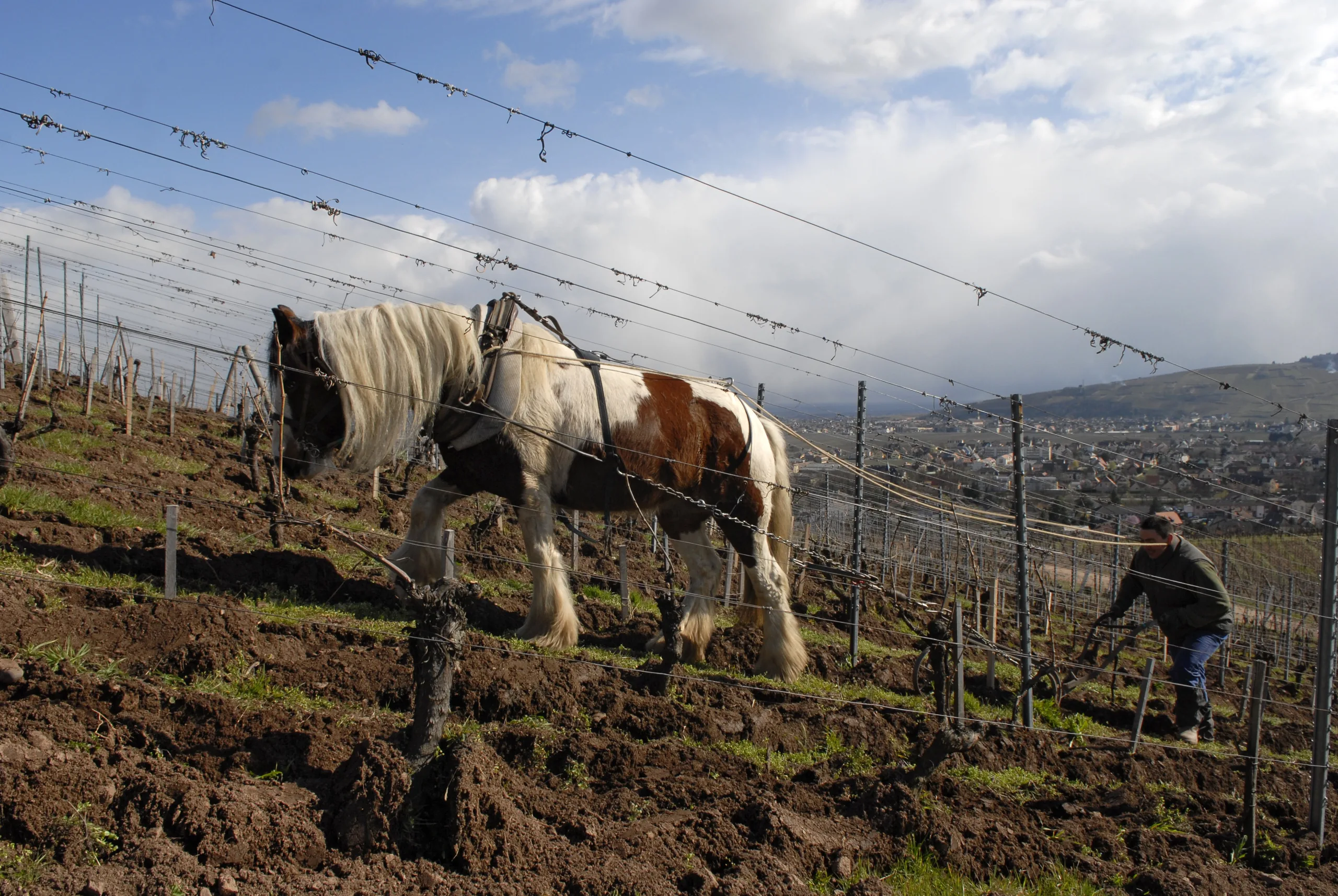
Olivier Humbrecht’s route into biodynamics ran through a heap of manure. He was buying it from conventional farms nearby, and after a year in the yard it still had not broken down; by his own account it smelt like a septic tank. The laboratory found eight different antibiotics in it, which is why nothing in the heap was alive enough to rot it. Compost from a biodynamically farmed source behaved completely differently — more microorganisms in it, and more worms. The farming changed because the muck did.
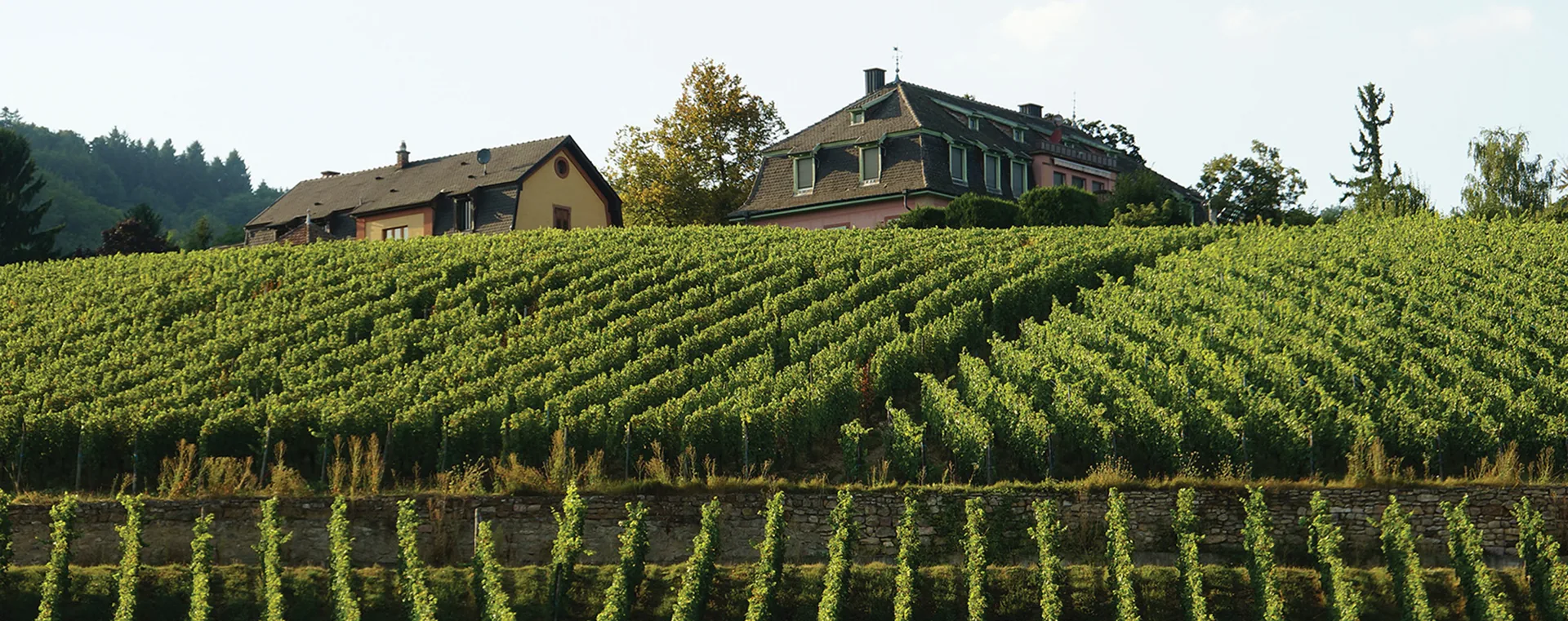
He is a Master of Wine, one of 427 in the world across 31 countries when we last checked, and he has been responsible for the wines and the vineyard at Turckheim since March 1989, the year he qualified. That is an unusual pair of qualifications to bring to forty hectares of Alsace hillside, and you can see it in how the estate is run: more than a hundred separate parcels, picked, pressed and fermented apart rather than blended towards a house style.
What is worth knowing about Alsace, if you have never bought a bottle of it, is that its reputation for sweetness is mostly a misunderstanding of ripeness. These wines are frequently dry or close to it, and the weight in them comes from concentration rather than sugar, which is what low yields and old vines buy you. The estate publishes the analysis of every cuvée so that a buyer is not guessing, and that remains rarer than it should be.
The hardest ground they farm is the Rangen de Thann, at the southern end of the region: volcanic rock, steep enough that the work is done by hand because nothing else can get up there. Their parcel in it is the Clos Saint Urbain, and the Riesling off it is the wine the Wine Advocate has scored 99 points.
The certification needs stating precisely, because this page named the wrong body until today. The French state organic register carries EARL Domaine Zind-Humbrecht at Turckheim under Ecocert France, engaged on 1 January 1999, covering the growing and the winemaking alike. The biodynamic certificate is Biodyvin’s, and the association has listed the domaine since 1998. Demeter, which we had named, does not certify it: the Demeter operator register returns nothing for Zind-Humbrecht or for Turckheim, while listing two other Alsace Humbrechts and three other Alsace estates. Both certificates are real and both are current; we simply had the wrong one of the two biodynamic bodies on the page.
The certificates cover the whole domaine rather than a flagship cuvée, which is the useful part if you are buying. The farming behind the least expensive bottle in the range is the farming behind the Rangen.
“I am not sure what a winemaking champion is.”
Why it’s remarkable
Free Bacchus Verification
Ecocert organic · Biodyvin biodynamic
Certified3
- Organic: Ecocert France (FR-BIO-01) on the French state register, engaged 1 January 1999 — growing and winemaking alike
- Biodynamic: Biodyvin, which has listed the domaine since 1998
- Both certificates cover the whole domaine, not a single cuvée
Also on record1
- Not Demeter: its operator register returns nothing for Zind-Humbrecht or Turckheim while listing two other Alsace Humbrechts and three other Alsace estates, checked 16 September 2026
If you’re buying
Cheat sheet
Save it to your phone. Everything you need to recognise this producer, and three things worth saying about it, at a glance in a shop or across a table.