Skip to content
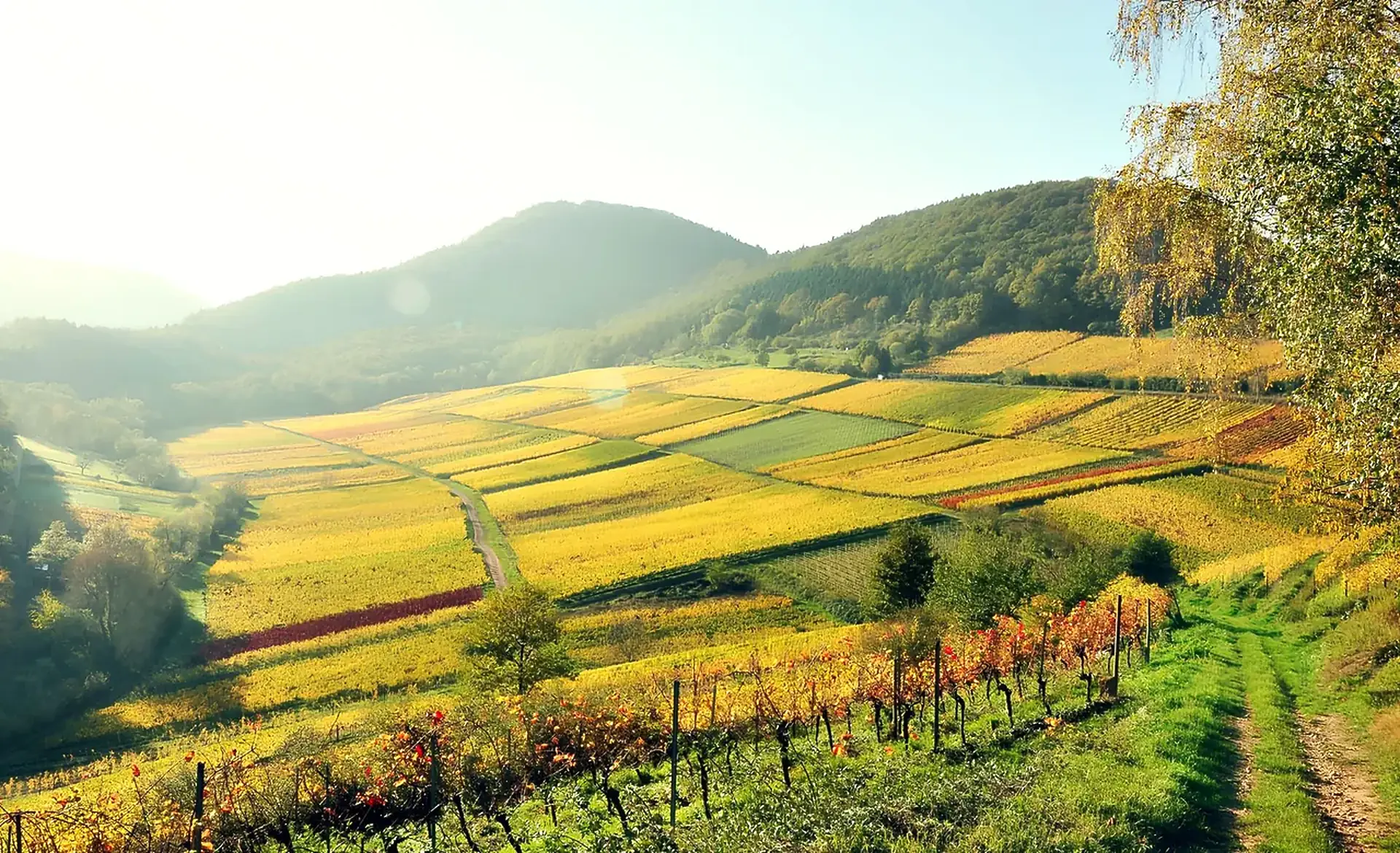
Vineyard blocks in yellow and red autumn leaf on a hillside, with wooded hills behind and a grass track at right
Birkweiler, PfalzGermanyBiodynamic Wine

Weingut Dr. Wehrheim

VAIR-hime · Kastanienbusch is kas-TAH-nee-en-boosh
Gold TierTypically $45–90
Last verified · September 2026

Almost nothing else in the Pfalz grows on Rotliegendes, a red stone laid down in the Permian, long before the limestone and sandstone the rest of the region sits on. Birkweiler Kastanienbusch does, and it is the reason a small family estate in the quiet southern end of the Pfalz gets spoken of alongside names from far grander addresses.

Karl Wehrheim started the place after the First World War and bottled his own wine when a good many of his neighbours were still selling theirs off in bulk. His son expanded it. Karl-Heinz Wehrheim has run it since 1992 and now runs it with his son Franz. Twenty hectares, a third of them steep enough that no machine will go up, which settles how the pruning and the picking get done: by hand, every year, because there is no other way.
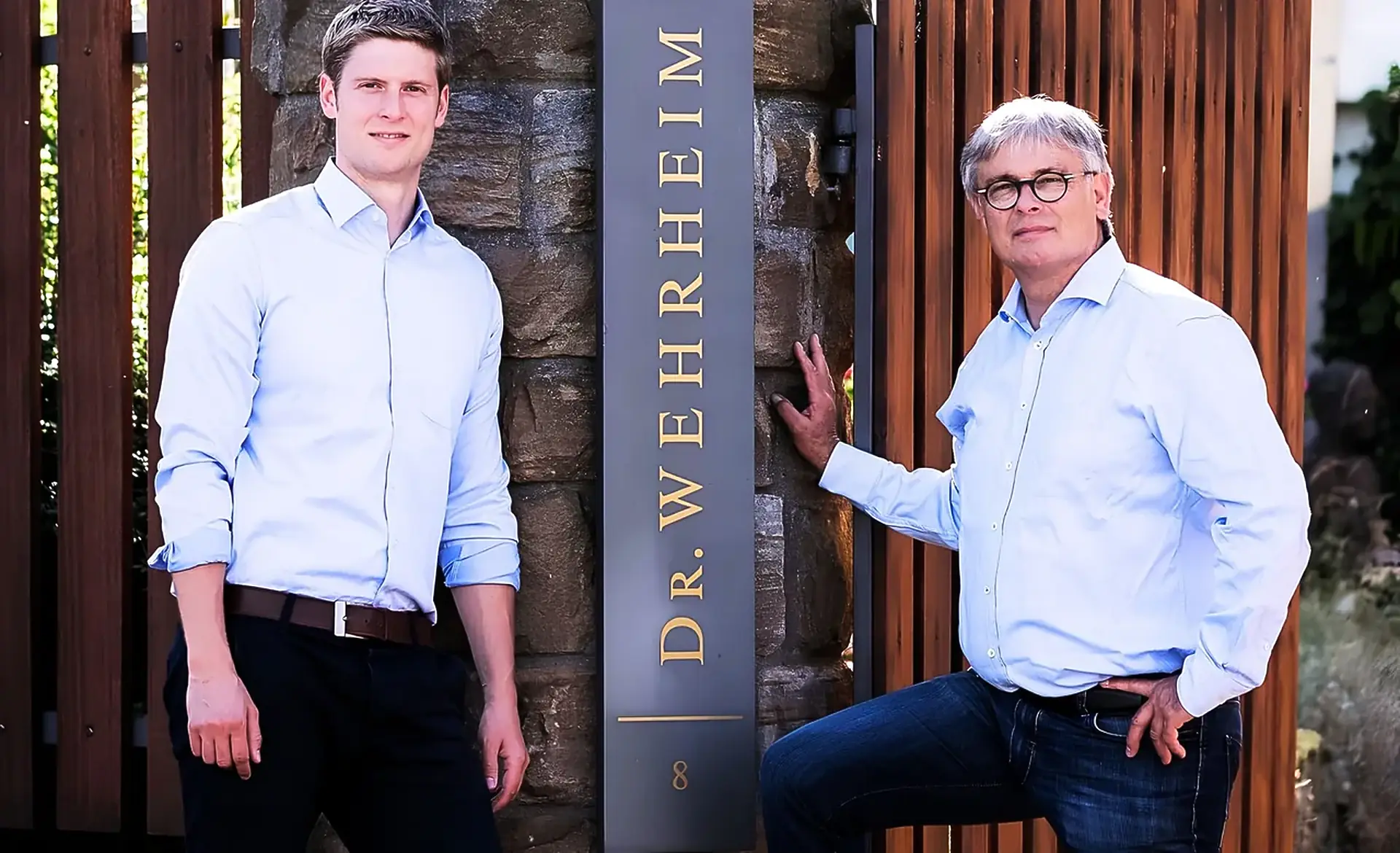
Two men in light blue shirts beside a stone gatepost and a slim sign reading Dr. Wehrheim, with timber slat fencing behind

Dry German Riesling is worth understanding before you buy your first bottle, because it is not what the country's reputation abroad prepares you for — high acid, alcohol usually under thirteen per cent, citrus and orchard fruit and stone rather than oak or sweetness. The top rung is the Grosses Gewächs, usually shortened to GG, the VDP's mark for a dry wine off a classified site. About a third of Wehrheim's twenty hectares is Riesling. Much of the rest is Weißburgunder and the other Pinots, which ripen well this far south and which the house has been known for nearly as long.

The estate farms biodynamically and sits on respekt-BIODYN's register, which will not have a grower who is not certified organic first, so the one certificate carries the other inside it. What that buys you in the glass is a Kastanienbusch Riesling with grapefruit and hard stone in it and a grip at the end that takes a few years to unwind. It does not flatter anyone on opening, and the family who make it seem entirely at peace with that.

Why it’s remarkable

Rotliegendes
a red Permian stone almost nothing else in the Pfalz grows on
Birkweiler Kastanienbusch is planted on Rotliegendes, rock laid down long before the chalk and limestone that most German vineyards sit on. Soil is the one variable a grower cannot change, buy or improve, and it is the reason a small estate in the quiet south of the region is discussed alongside the famous names of the Mittelhaardt.
A third of it steep
the slope decides how the work is done
About a third of the twenty hectares is steep slope. No machine goes up it, so the pruning, the canopy work and the picking are done by hand and on foot. That is a permanent cost the estate absorbs every year, before any question of certification arises.
Three generations
founded after the First World War, still the same family
Karl Wehrheim started the estate after the First World War and was bottling his own wine early, which was not the norm. His son Dr Heinz Wehrheim expanded it. Karl-Heinz Wehrheim took it on in 1992 and now runs it with his son Franz, whose name is the one on the respekt-BIODYN register.
Independently certified, and checked against the issuing body’s own register. Not a compromise on quality — see how we verify.

Free Bacchus Verification

Track A
Formal third-party certification, confirmed against the issuing body’s own register.

respekt-BIODYN Biodynamic

Certified2
  • respekt-BIODYN Biodynamic, on the association's own member register (Franz Wehrheim, Weingut Dr. Wehrheim, Birkweiler/Pfalz)
  • EU organic certification, which the association requires of its members
Re-verified annually against the issuing body’s register. How re-verification works
The producer’s own siteweingut-wehrheim.de
Producers don’t pay to be here. There is no fee to be listed and no way to buy a higher tier. If the evidence doesn’t hold, the bottle isn’t here.
Flagship
Wehrheim Kastanienbusch Riesling GG

If you’re buying

Price
Around US$55 for the Kastanienbusch Grosses Gewächs. Approximate.
Drinking now
The Kastanienbusch GG wants three or four years before it opens out, and holds for a good deal longer.
Serving
10–12°C, and give it room in the glass rather than a narrow flute.
Availability
Our row records no United States distributor for the estate. It reaches the market through merchants who carry VDP estates.
Tastes like
Grapefruit and stone, with a firm grip at the end. Dry, and more savoury than fruity.
Pairs with
Pork belly, smoked fish, or a plate of Alsatian charcuterie.
Price bands are approximate and move with vintage, market and region. They are a guide, not a quotation.

Cheat sheet

Save it to your phone. Everything you need to recognise this producer, and three things worth saying about it, at a glance in a shop or across a table.

10 verified producers in Germany →

From the Journal

← Weingut A. ChristmannThe Verification StandardComando G →

More Verified Houses · Germany

Where to go next

Three more from the cellar, chosen by what is in the glass rather than where it is from.

Coulée de Serrant / Nicolas JolyWhite · France Weingut Clemens BuschWhite · Germany Domaine JosmeyerWhite · France
↑