Skip to content
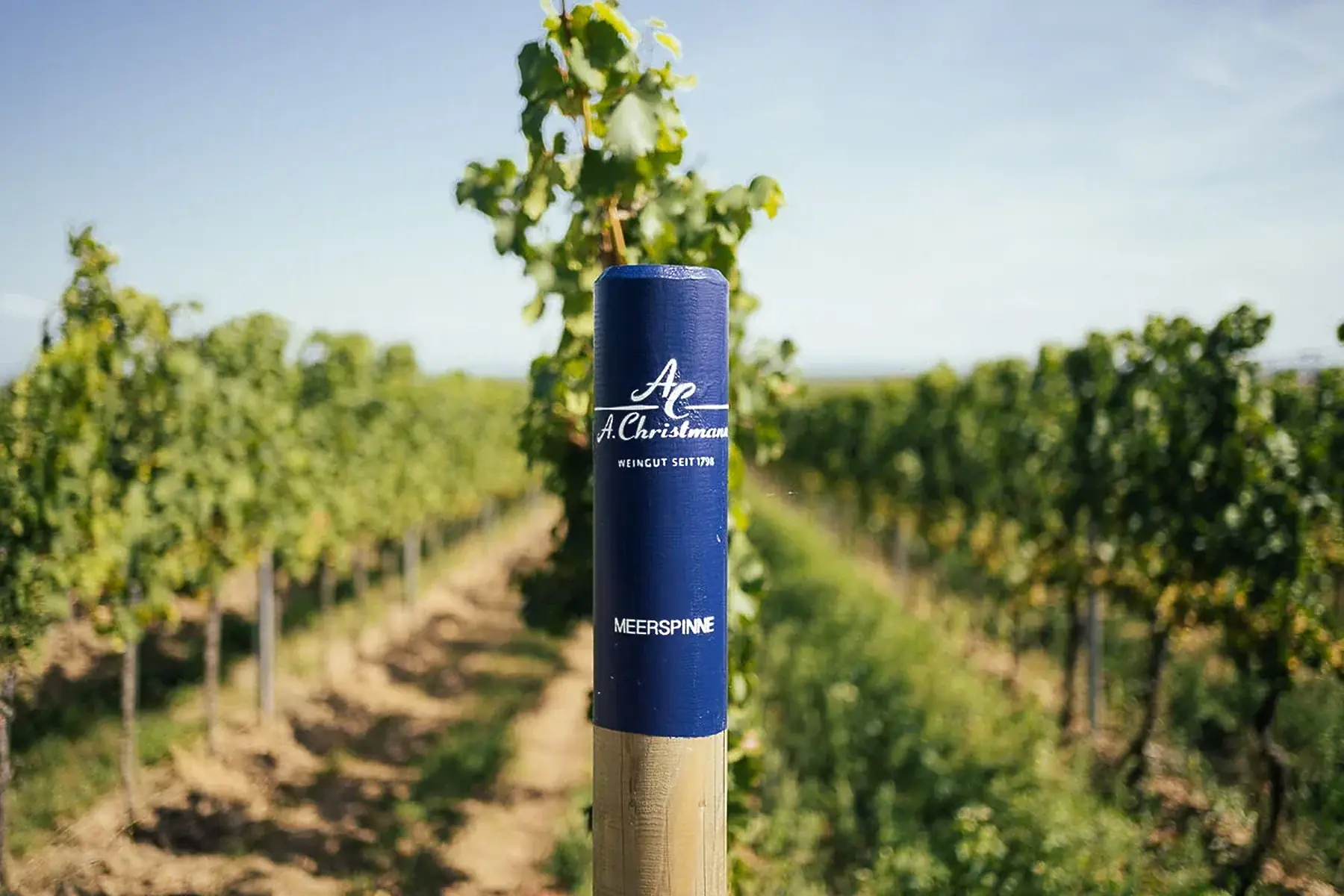
Blue marker post labelled A. Christmann and Meerspinne in a vineyard, with vine rows receding on either side
Gimmeldingen, PfalzGermanyBiodynamic Wine

Weingut A. Christmann

KRIST-mahn · Idig is EE-dikh
Gold TierTypically $45–90
Last verified · September 2026

Steffen Christmann spent years as president of the VDP, the body that decides which German estates count among the country's best. He had already turned his own vineyards biodynamic in 2003, four years before respekt-BIODYN existed to certify anyone for doing it. He was setting the rules with one hand and going out ahead of them with the other.

If your idea of German wine is something sweet in a tall blue bottle, the last thirty years have happened without you. What serious growers here stake their names on is bone dry: high acid, alcohol usually under thirteen per cent, and a flavour nearer to lime and wet stone than to oak. The Pfalz sits on the warm side of that, along the eastern flank of the Haardt hills, far enough south that its Rieslings carry a little flesh the featherweights of the Mosel never do. Christmann farms seventeen hectares of it in the Mittelhaardt, the stretch that has always been the best address in the region — three-quarters Riesling, and most of the rest given to the Pinot family, which Germany grows far better than it gets credit for.
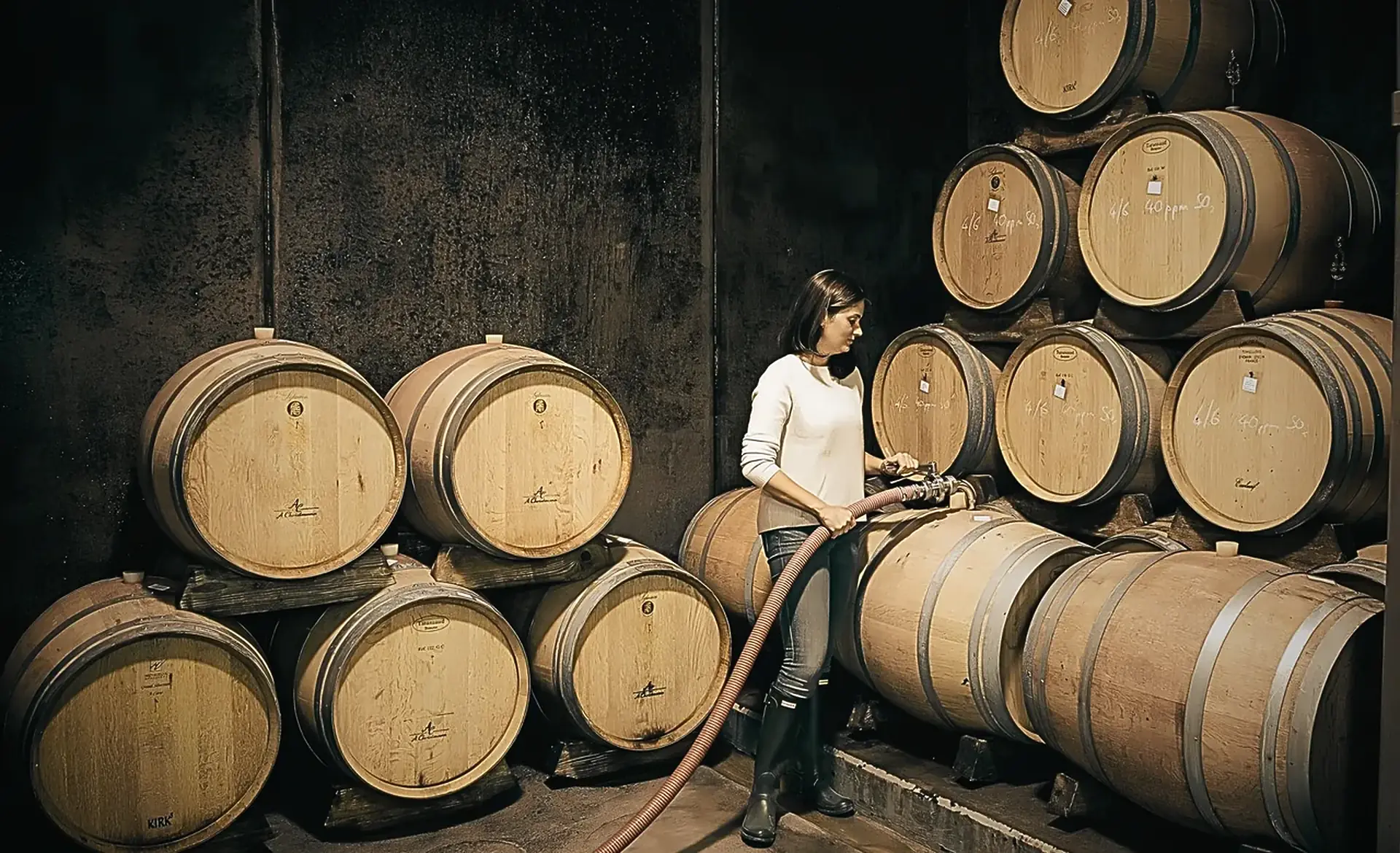
Woman in a white jumper filling an oak barrel through a hose among stacked, chalk-marked barrels in the cellar at A. Christmann

Idig, at Königsbach, is the vineyard the house is known for, and its wine goes out as a Grosses Gewächs: the VDP's mark for a dry wine off a classified site, grand cru in everything but the word. Christmann helped write that classification. He also has to put his own bottles through it, which is a less comfortable arrangement than it sounds.

Down in the cellar the sulphur addition is chalked on the head of every cask, forty parts per million, where anyone walking past can read it. Nobody made him do that. The organic certificate underneath it is registry-verified in the EU's own TRACES system, and respekt-BIODYN will not take a grower who does not already hold one — but the chalk is the better tell. It is what a house looks like when it has stopped treating the standard as something to clear and started treating it as how the work is done.

Why it’s remarkable

2003
biodynamic four years before the association that certifies it was founded
respekt-BIODYN's own member page dates the estate's biodynamic farming to 2003. The association itself was formed in 2007, with Bernhard Ott among its founding members. Christmann was doing the work for four years before there was a body in the German-speaking world organised to recognise it.
Both sides of the table
he helped write the classification his own wines are judged by
The VDP is the association of Germany's top estates, and its Grosses Gewächs mark is the closest thing German wine has to a grand cru system. Steffen Christmann was its president. Idig, the estate's own flagship site, is submitted to that classification like anyone else's.
17 hectares
three-quarters of it Riesling, and none of it large
Seventeen hectares is a small holding for an estate of this standing — roughly the size at which one family can still know every parcel. Most of the remainder is planted to the Pinot family, which the Pfalz ripens well and which is largely unknown outside Germany.
Independently certified, and checked against the issuing body’s own register. Not a compromise on quality — see how we verify.

Free Bacchus Verification

Track A
Formal third-party certification, confirmed against the issuing body’s own register.

respekt-BIODYN Biodynamic · EU organic

Certified3
  • respekt-BIODYN Biodynamic, on the association's own member register
  • EU organic certification, registry-verified in TRACES (DE-ÖKO-003.276-0053644.2026.001)
  • Biodynamic since 2003
Re-verified annually against the issuing body’s register. How re-verification works
The producer’s own siteweingut-christmann.de
Producers don’t pay to be here. There is no fee to be listed and no way to buy a higher tier. If the evidence doesn’t hold, the bottle isn’t here.
Flagship
Christmann Idig Riesling GG

If you’re buying

Price
Around US$80 for the Idig Grosses Gewächs. Approximate.
Drinking now
The Grosses Gewächs is built to age and is often tight in its first two or three years. A bottle with five years on it shows what the site does.
Serving
10–12°C. Too cold and the wine closes up entirely.
Availability
Our row records no United States distributor for the estate. Merchants who specialise in German estates are the place to look.
Tastes like
Lime, white peach and a hard mineral edge. Dry and tense, built to last rather than to charm.
Pairs with
Trout, roast chicken, or a young hard cheese.
Price bands are approximate and move with vintage, market and region. They are a guide, not a quotation.

Cheat sheet

Save it to your phone. Everything you need to recognise this producer, and three things worth saying about it, at a glance in a shop or across a table.

10 verified producers in Germany →

From the Journal

← Tenuta di ValgianoThe Verification StandardWeingut Dr. Wehrheim →

More Verified Houses · Germany

Where to go next

Three more from the cellar, chosen by what is in the glass rather than where it is from.

Domaine François ChidaineWhite · France SorrenbergWhite · Australia Leclerc BriantSparkling · France
↑