Leclerc Briant
The Free Bacchus Story
Champagne's economics run on blending, volume and consistency — producing a bottle that tastes the same every year regardless of what the season did. Biodynamic farming runs on the opposite instinct entirely, which is why the two so rarely appear together.
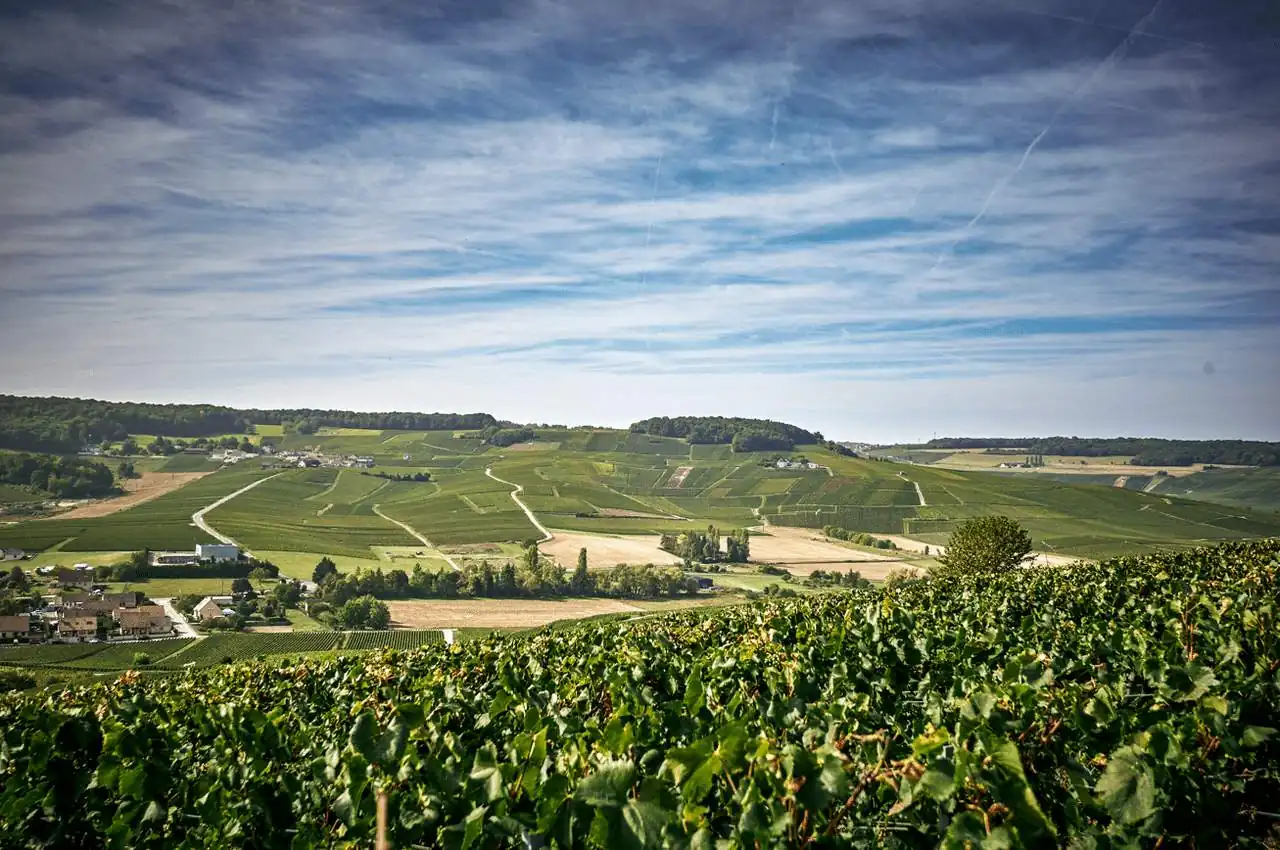
Leclerc Briant has been making the counter-argument since René Leclerc began moving away from conventional chemistry in the 1960s, a process Frédéric Zeimett completed with full Demeter biodynamic certification. The vineyards are farmed without synthetic chemistry across Cumières and Hautvillers on the Vallée de la Marne, and on chalk and clay in the Grand Cru village of Aÿ, with composting, cover cropping and preparations applied on a lunar calendar. The yields are measurably lower and the mineral tension is the return on that.
The Abyss is bottled with zero dosage: no sugar at the end, so nothing is covering anything. Dosage is the standard last adjustment in Champagne and the easiest place to correct a wine; leaving it out removes the safety net entirely. Disgorged in pressure-sealed tanks fifty metres underwater off Brittany, it has drawn 95 points from Wine Advocate and the collector attention that arrives when a genuinely good wine also has a story people want to repeat. The Blanc de Blancs and Extra Brut carry the same farming at considerably more accessible prices.
Around eight percent of Champagne's vineyards are certified organic. In that context, a fully biodynamic house is not a stylistic preference but a structural outlier, and it is worth knowing they exist before the next occasion that calls for a cork.
“What is important for me is not the reason why. It is the results.”
Why it’s remarkable
Free Bacchus Verification
Demeter Biodynamic Certified
Certified1
- Demeter Biodynamic Certified
If you’re buying
Cheat sheet
Save it to your phone. Everything you need to recognise this producer, and three things worth saying about it, at a glance in a shop or across a table.