Skip to content
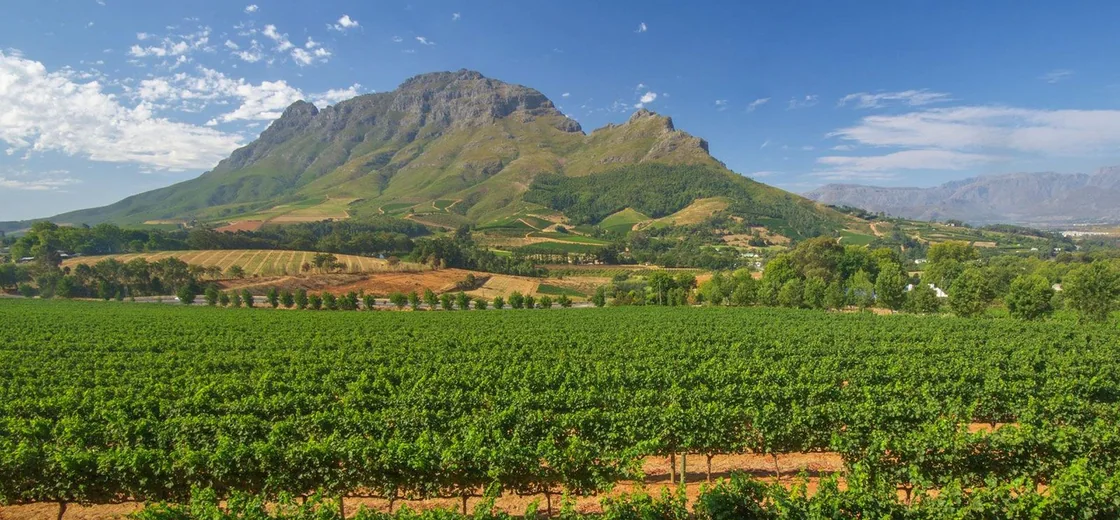
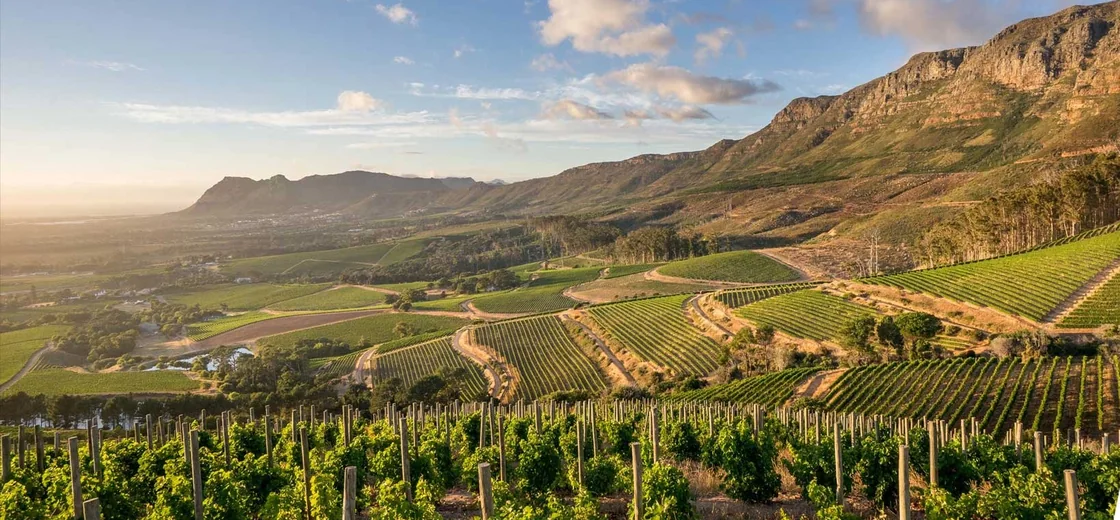
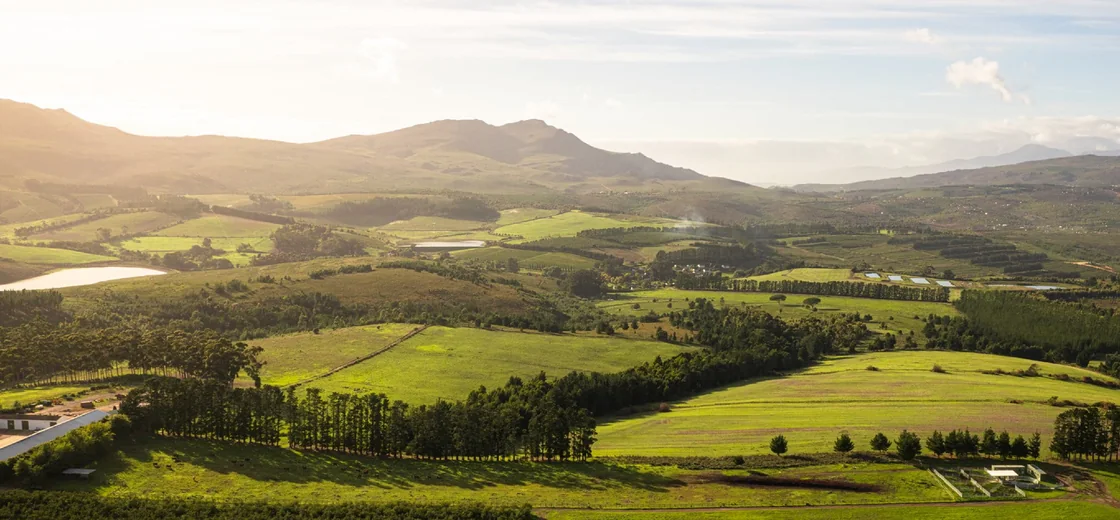
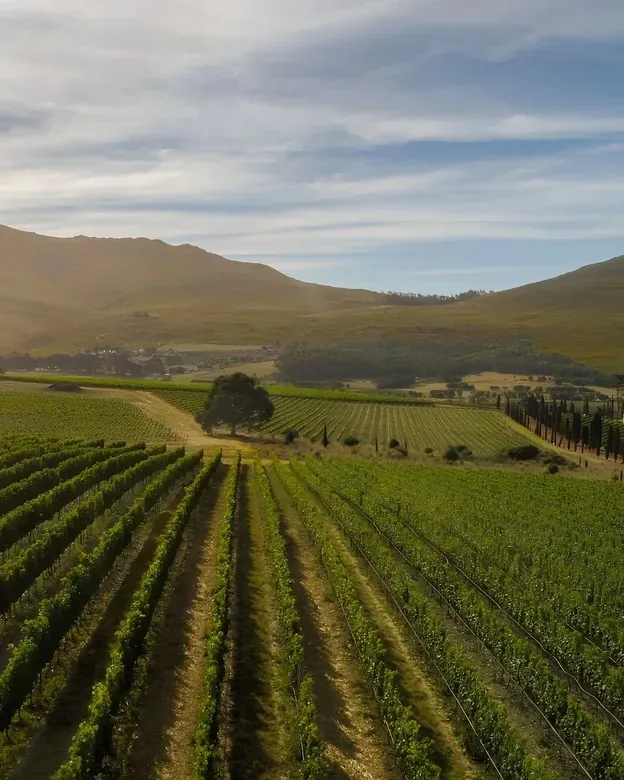
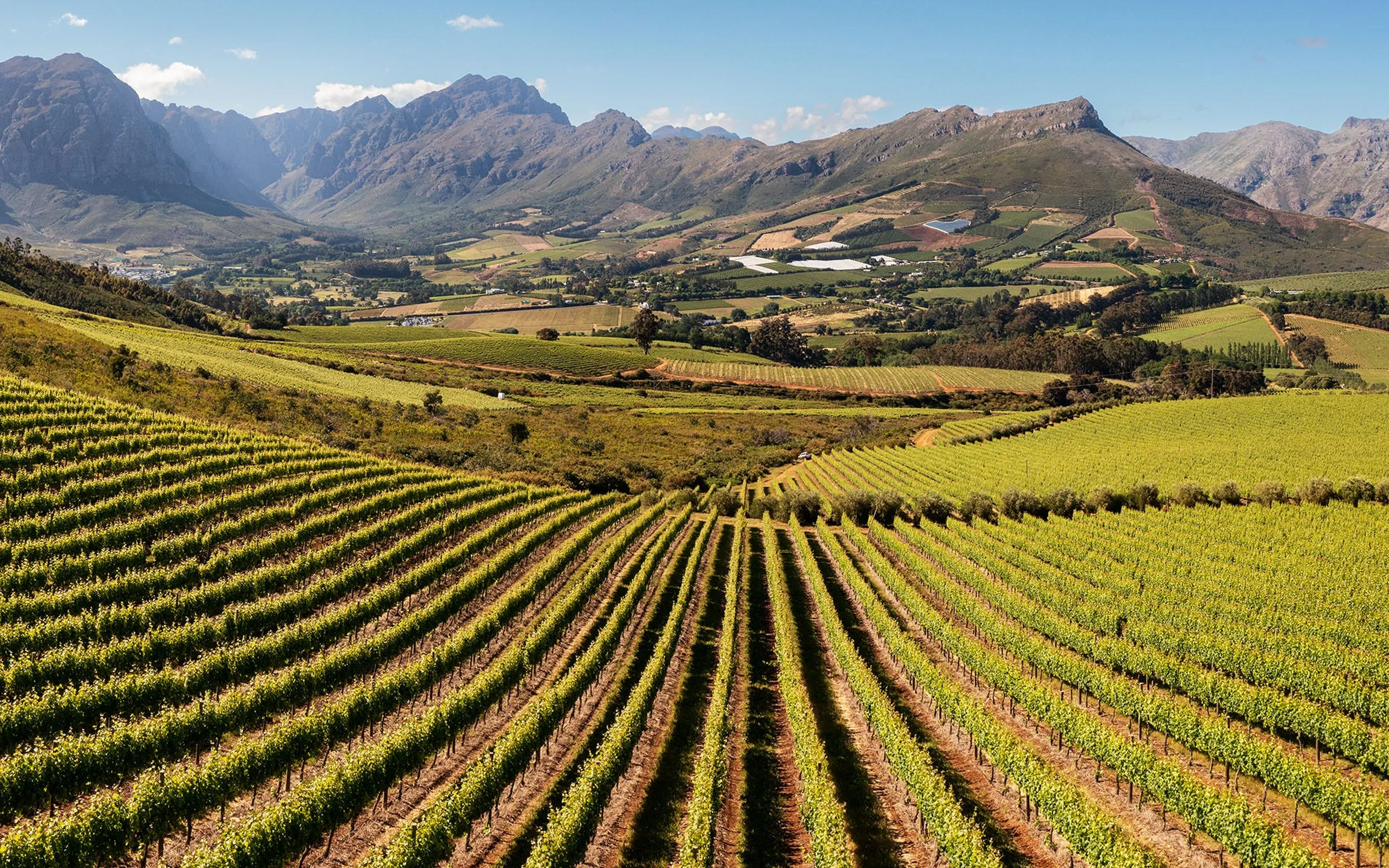
Vineyard rows running downhill in the Cape winelands, a valley of small farms and dams beyond them, and the bare rock of the Drakenstein mountains closing the horizon under a clear sky.

Free Bacchus Country Guide·South Africa

Almost every South African vineyard
is certified sustainable. Under one per cent is certified organic

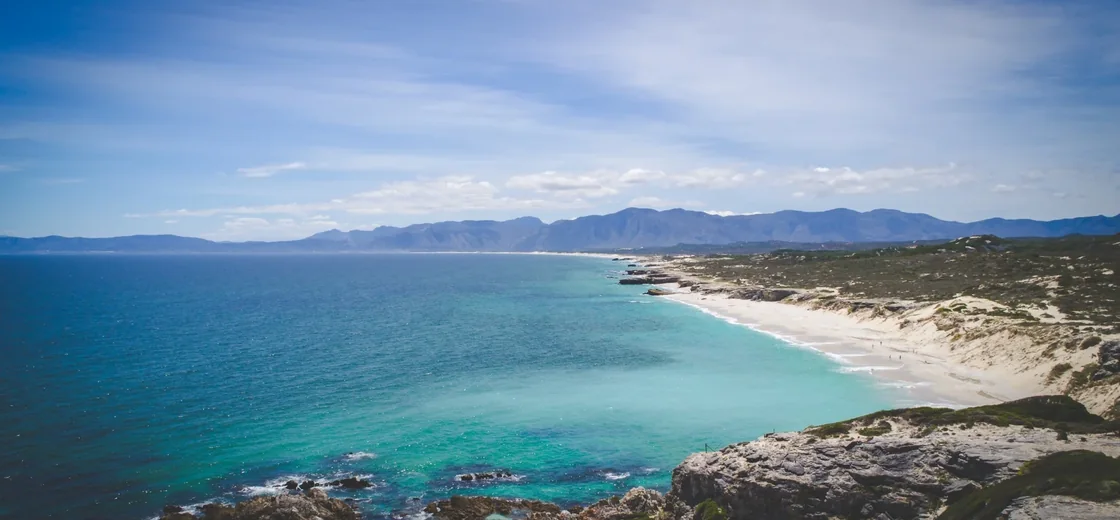
Cape wine grows in the far south-west of South Africa, where the rain comes in winter and the summers are dry. That corner is also the Cape Floral Region, the smallest of the world’s six plant kingdoms, where most plants grow nowhere else; every vineyard here was once that ground, and every farm still decides how much of it to keep.

What this guide is for

A country at a time: the major wine regions of the world, what the ground and the weather do to what is grown in them, and which growers inside them we have verified. None of it is settled. Growing seasons are shifting, and the chemistry most vineyards reach for to hold steady against that is made from fossil fuels and takes energy to manufacture — while a warmer, wetter season brings more disease, and more disease brings more spraying. Every estate on these pages farms without synthetic pesticides. That is what their certification means, and it is the part we check.

The ground

The best of it is the land they left alone

South African wine grows in one corner of a large country. Everything on the map below is within about two hours of Cape Town, in the strip of Mediterranean climate where the winter rains fall and the summers are dry. The rest of South Africa is too hot, too wet in summer or too high. The map below is the south-western Cape, not the country.

Where they are Atlantic Ocean Indian Ocean Cape Town Worcester Stellenbosch Swartland Paarl Constantia Franschhoek Robertson Walker Bay Elgin
Boundary assembled from public-domain district data for the four Western Cape districts that hold the wine, unioned and simplified for the web, corrected for latitude so the shape is not stretched, and cut off north of the Swartland. A hollow marker is a region this guide covers where nothing has been verified yet.

That corner is also one of the six floral kingdoms of the world. The Cape Floral Region is the smallest of the six and the only one inside a single country: about nine thousand plant species, close to seventy per cent of them growing nowhere else. A vineyard here is carved out of fynbos.

Sustainability certification here is close to universal. The Integrated Production of Wine scheme, published in 1998 and first certifying the 2000 vintage, covers more than 95 per cent of South African growers and cellars, and the seal on the bottle neck carries a number that traces the wine back to the vineyard. That traceability is unusual. It does nothing to tell one producer from another, because almost everybody has it.

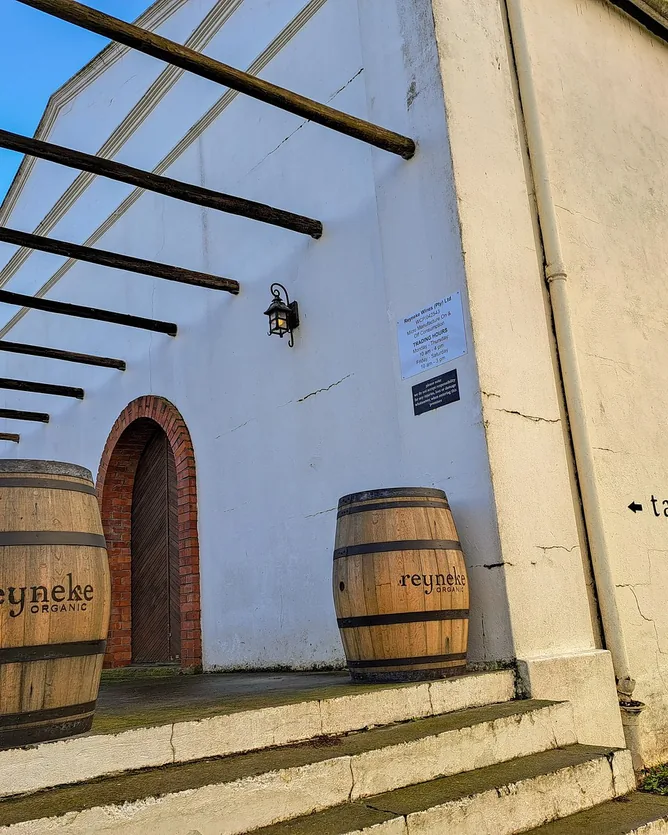
Organic certification is where the line falls, and it falls a long way down. Between twenty-four and thirty-six wineries hold it, under one per cent of production, against 8.4 per cent of the world’s vineyard in 2022. The eleven estates that founded Organic Wines South Africa in September 2024, Reyneke among them, were the first to organise as a group at all.

Region by region

Eight regions, two hours from one city

Stellenbosch, South Africa

Stellenbosch STEL-uhn-boss

The centre of South African wine and the one name a drinker outside the country is sure to know. Granite off the Simonsberg and Helderberg on one side, sandstone and decomposed shale lower down, and enough variation between the slopes that the ward names on the labels are doing real work. Cabernet Sauvignon and Bordeaux blends are what the district is judged on. Reyneke and Waterkloof are certified biodynamic as well as organic.

6 verified producers here.
Swartland, South Africa

Swartland SVART-lunt

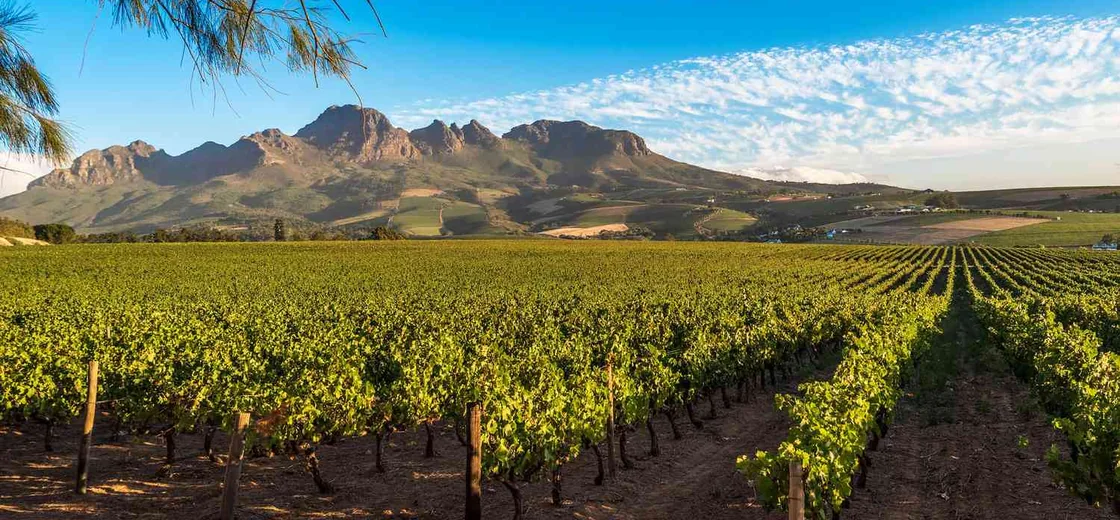
The black land, named for the rhinoceros bush that turns dark after rain. Wheat country that grew grapes on the side until a generation of winemakers arrived in the 2000s and built their wines on the old bush vines nobody had irrigated. Dry-farmed, unirrigated, granite and shale, and hot. In the Riebeek Valley the vines climb the eastern slopes of the Kasteelberg between the two Riebeek towns, from about sixty metres up to three hundred, on iron-rich Malmesbury shale. The wines are Shiraz and Chenin Blanc and they do not taste like Stellenbosch.

1 verified producer here.

Paarl, South Africa

Paarl PARL

Named for the granite dome above the town, which the first Dutch party thought looked like a pearl after rain. Warmer than Stellenbosch next door and larger, and for most of the last century the industrial heart of the trade, headquarters of the KWV co-operative that controlled South African wine for seventy years. The newer plantings are on the higher, cooler slopes.

2 verified producers here.
Constantia, South Africa

Constantia

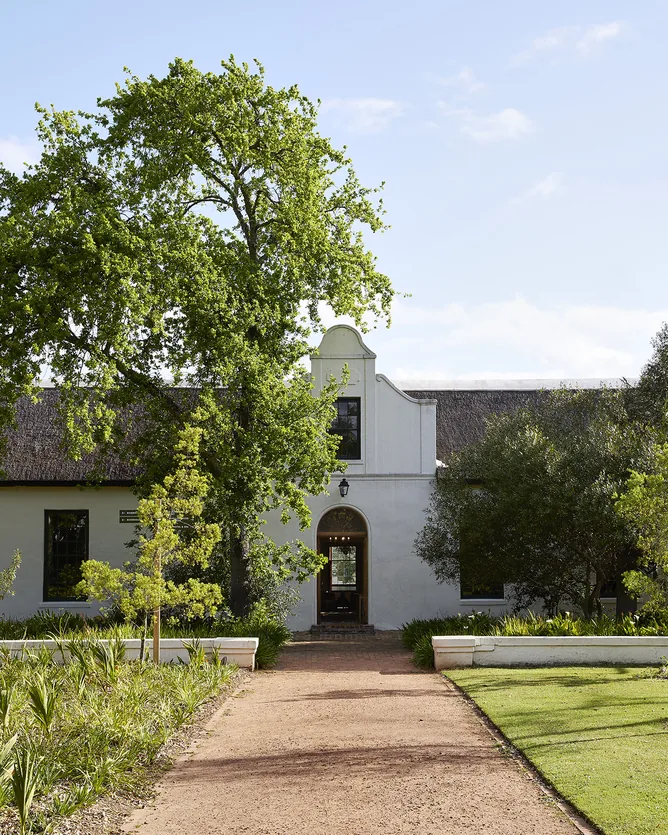
The oldest of them by a century and a half: planted in 1685 on the eastern slopes of the Cape Peninsula, inside what is now the city of Cape Town. The sweet wine it made was drunk by Napoleon, Frederick the Great and Louis Philippe, and named in novels by Jane Austen and Dickens. Cool, wet by Cape standards, and Sauvignon Blanc is what it is known for now.

No verified producer here yet.

Franschhoek, South Africa

Franschhoek FRAHNS-hook

The French corner, settled by Huguenots from 1688 and still carrying their farm names — La Motte, Cabrière, La Provence. A narrow valley closed at one end by mountains, which makes it hot in the middle and much cooler on the slopes. It is as much a restaurant destination as a wine one now.

1 verified producer here.

Robertson, South Africa

Robertson

Inland and dry, on lime-rich soils that are unusual in South Africa and useful: free lime shows as white nodules in the topsoil and a chalky layer under it. Irrigated off the Breede River, hot in the day and cold at night, and known for Chardonnay and for a great deal of volume. Organic farming is easier here than on the coast for the same reason it is easier in Spain — the disease pressure is lower when it does not rain.

No verified producer here yet.

Walker Bay, South Africa

Walker Bay

The cool end of South African wine, on the Atlantic at Hermanus where the whales come in. Hemel-en-Aarde, the valley behind the town, is three wards climbing away from the sea on clay and shale, and it is the country’s most convincing Pinot Noir and Chardonnay ground. The first vines were planted in 1975.

2 verified producers here.
Elgin, South Africa

Elgin

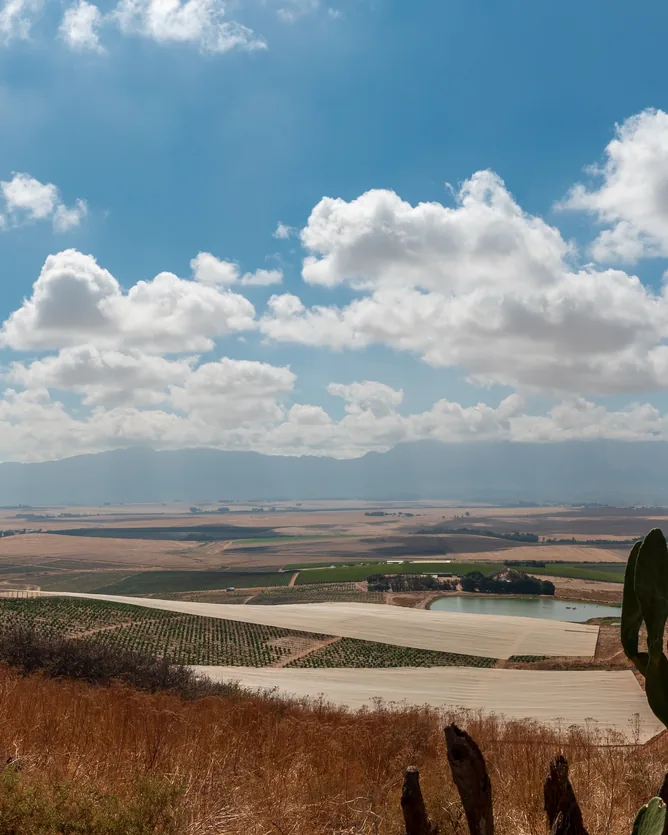
An apple valley that planted its first commercial vines in 1986, high enough and close enough to the sea to be one of the coolest districts in the country. Frost is a real risk and the harvest runs weeks behind Stellenbosch an hour away. Sauvignon Blanc, Chardonnay, Pinot Noir and Riesling.

1 verified producer here.

Constantia to the Swartland is about seventy kilometres and Robertson is a hundred and forty inland. All of it is fynbos country, and every farm here decides how much of that it keeps.

Verified in South Africa

Thirteen estates, four of the thirteen at Gold. Each card says what the certificate covers, or, for an estate on Track B, why there is none.

Reyneke Wines — verified organic producer in Stellenbosch, South AfricaGold

Reyneke Wines

Stellenbosch, South Africa
Demeter biodynamic · Ecocert organic, EU and USDA NOP
Waterkloof Wines — verified organic producer in Stellenbosch, South AfricaGold

Waterkloof Wines

Stellenbosch, Western Cape, South Africa
Demeter Biodynamic · Ecocert Certified Organic
Stark-Condé — verified organic producer in Stellenbosch, South AfricaGold

Stark-Condé

Jonkershoek Valley, Stellenbosch, South Africa
Ecocert EU organic · estate wines from the 2022 vintage
Longridge Wine Estate — verified organic producer in Stellenbosch, South AfricaGold

Longridge Wine Estate

Helderberg, Stellenbosch, Western Cape, South Africa
Ecocert EU organic · Longridge Estate and Ultra-Premium wines
Hamilton Russell Vineyards — verified organic producer in Walker Bay, South AfricaSilver

Hamilton Russell Vineyards

Hemel-en-Aarde Valley
organic practice since 2015, uncertified
Avondale Wine — verified organic producer in Paarl, South AfricaSilver

Avondale Wine

Paarl, Western Cape, South Africa
USDA NOP organic grapes (Control Union) · wines made with organic grapes
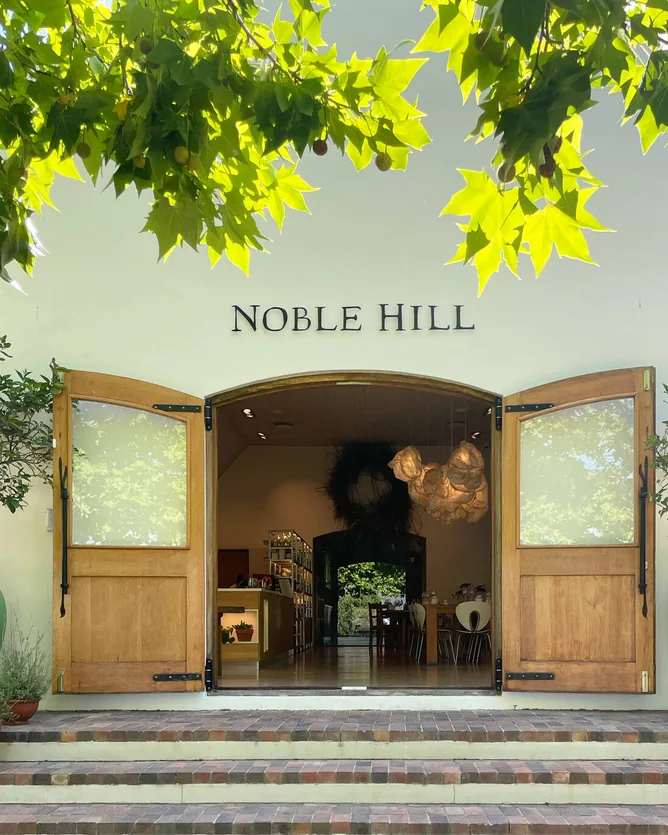
Noble Hill Wine Estate — verified organic producer in Paarl, South AfricaSilver

Noble Hill Wine Estate

Simondium, Simonsberg-Paarl, Western Cape, South Africa
Ecocert EU organic · grapes and wines from the 2023 vintage
Spier — verified organic producer in Stellenbosch, South AfricaSilver

Spier

Stellenbosch, Western Cape, South Africa
Ecocert EU organic · the Farmer Angus wines
Porseleinberg — verified organic producer in Swartland, South AfricaSilver

Porseleinberg

Riebeek-Kasteel, Swartland, Western Cape, South Africa
Ecocert EU organic · from the 2023 vintage
Boekenhoutskloof — verified organic producer in Franschhoek, South AfricaSilver

Boekenhoutskloof

Franschhoek, Western Cape, South Africa
Ecocert EU organic · named wines and vintages only
Radford Dale — verified organic producer in Elgin, South AfricaSilver

Radford Dale

Elgin, Western Cape, South Africa
Ecocert EU organic · Elgin estate wines only
Springfontein Wine Estate — verified organic producer in Walker Bay, South AfricaSilver

Springfontein Wine Estate

Springfontein Rim, Stanford, Walker Bay, Western Cape, South Africa
Ecocert EU organic · estate grapes and 41 wine lots, 2019–2024
De Toren — verified organic producer in Stellenbosch, South AfricaSilver

De Toren

Polkadraai Hills, Stellenbosch, South Africa
Ecocert EU organic grapes · estate wines 2021–2024

The seal tells you a South African wine can be traced. It does not tell you how the vines were farmed, and it was never built to. What the industry does have is a conservation record measured in land it chose not to plant. The sixty farms in the WWF Conservation Champions programme own 48,156 hectares between them and keep 25,626 of those under conservation, more than half. Each estate on this page was read against the register that issued its certificate, and where there is no certificate, its card says why.

Where the figures come from14
  • The Integrated Production of Wine scheme has put more than 95 per cent of South African growers and cellars under a single certification framework; the Sustainability Seal carries a number traceable back to the vineyard (Wines of South Africa)

    wosa.co.za ↗
  • Organic Wines South Africa was announced on 4 September 2024 with eleven founding estates — Avondale, Joostenberg, Lazanou, Longridge, Noble Hill, Org de Rac, Stark-Condé, Reyneke, Radford Dale Organic, Sophie Germanier and Spier; it is estimated there are between 24 and 36 organic wineries in South Africa, below 1 per cent of total production, against 8.4 per cent of the global vineyard organic in 2022

    winemag.co.za ↗
  • The 60 WWF Conservation Champions own 48,156 hectares of land, of which 25,626 hectares are conserved as part of the Cape Floral Kingdom; the programme began as the Biodiversity and Wine Initiative in 2004

    news.wine.co.za ↗
  • Riebeekberg is a Wine of Origin ward within the Swartland district, taking in the twin towns of Riebeek Kasteel and Riebeek West; its vineyards run along the eastern slopes of the Kasteelberg from about 60 to 300 metres, on iron-rich Malmesbury shale, and the ward is known for Shiraz and Chenin Blanc

    wine-searcher.com ↗
  • The Integrated Production of Wine scheme was published on 6 November 1998 and the 2000 vintage was the first certified under it (IPW)

    ipw.co.za ↗
  • The Cape Floristic Region covers the Mediterranean-climate region of South Africa in the Western Cape, the south-western corner of the country, with winter rainfall and dry summers; it is the smallest of the world's six floral kingdoms and the only one wholly within one country, with about 9,000 vascular plant species of which roughly 69 per cent are endemic

    en.wikipedia.org ↗
  • Groot Constantia was granted to Simon van der Stel in 1685; the Constantia dessert wine made there from 1778 under Hendrik Cloete was drunk by Napoleon, Frederick the Great and King Louis Philippe and named by Jane Austen and Charles Dickens

    en.wikipedia.org ↗
  • Huguenots were allotted farms in the Franschhoek valley from April 1688; among the first established were La Motte, Cabrière, La Cotte, Champagne, Bourgogne and La Provence (Huguenot Memorial Museum)

    museum.co.za ↗
  • KWV was founded in Paarl in 1918 and held statutory control over the production, sale and export of South African wine and spirits from the early 1920s until it was lifted in 1990

    en.wikipedia.org ↗
  • Tim Hamilton Russell planted the first vines in the Hemel-en-Aarde valley above Walker Bay in 1975; the ward was demarcated in October 1981

    hermanusmagazine.co.za ↗
  • Robertson sits on lime-rich soils of the Witteberg Group, with free lime appearing as white nodules in the topsoil and a chalky calcareous horizon beneath, and is irrigated from the Breede River

    wine-searcher.com ↗
  • The first commercial Elgin vines were planted on De Rust in 1986-87; the valley is traditionally an apple-growing area

    wine-searcher.com ↗
  • Pesticides are overwhelmingly derived from fossil fuels and their manufacture is energy-intensive, and a warming climate raises pest and disease pressure, which raises pesticide use in turn

    pan-uk.org ↗
  • The loop between the two: emissions from pesticide manufacture and use contribute to warming, and warming drives further pesticide use

    panna.org ↗
↑