Boekenhoutskloof
The Free Bacchus Story
In January 2026, when fire burned through the mountains around Franschhoek, it swept round the slopes above some of Boekenhoutskloof’s own vineyards. Gottfried Mocke, the chief winemaker, spent days and nights fighting it, alongside volunteers who turned up with water pumps on their trucks. When it had passed, workers sprayed the vines with plain water, all day, to wash the bunches. He could not be sure it would help. Smoke taint only shows once the juice has fermented, so the next step was to pick a few bunches, ferment them and send them to a laboratory.
The farm sits in the southernmost corner of the Franschhoek valley, and by its own account it was established in 1776. Marc Kent made his first wine there, a Cabernet Sauvignon, in 1996. He had wanted to fly aeroplanes, until the changing politics of the time ended his hopes of a career in the South African air force. Today he is part-owner and technical director, and he lives in Coimbra, in Portugal, where he makes wine in the Douro with his partner, Rita Marques. He still spends four months a year in the Cape, and still leads the blending of every Boekenhoutskloof wine. Mocke, who came from Chamonix, another Franschhoek winery, in 2015, manages the farm and the wines, and in mid-2025 he took on oversight of winemaking across the group, with Ruan van Schalkwyk arriving from Kanonkop to run the Franschhoek cellar.
The certified wines could hardly be less alike. The Boekenhoutskloof Syrah is the red to know. Syrah is the grape of France’s northern Rhône, a dark red that often smells of pepper, and this one is grown not in Franschhoek but in the Swartland, which is warm and dry: 90 per cent of the 2023 came from Porseleinberg, a schist hilltop farm with its own page here, and the rest from the Goldmine farm. The grapes are picked by hand and taken back to Franschhoek, where most go into concrete tanks to ferment as whole bunches, stems and all; the wine then ages for up to 18 months in big Austrian oak casks and smaller barrels. The Noble Late Harvest is sweet, and it is grown on the home farm. It uses the grape and the fungus behind Sauternes: Semillon, left on the vine until noble rot punctures the skins and the berries shrivel, concentrating their sugar. Its vineyard is 0.96 hectares, planted in 1997 on the banks of the Franschhoek River, and the 2023 was picked by hand in the middle of May, well into the Cape autumn. It is sold in half bottles. The Journeyman is the rarity, a red of Cabernet Franc and Cabernet Sauvignon from the slopes around the winery, made only in the years Kent and Mocke think worth it. The certified 2020 filled four barrels.
Kent has always built the business as a pyramid, in the wine writer Jamie Goode’s words: the inexpensive Porcupine Ridge at the bottom, The Chocolate Block in the middle, and Boekenhoutskloof and Porseleinberg at the top. Not all of it is organic, and the certificate says which. Ecocert’s EU certificate is issued to Boekenhoutskloof Winery at Helderberg Wijnmakerij on Winery Road, Stellenbosch: the historic Helderberg Winery, which Boekenhoutskloof bought in 2009 and where The Chocolate Block is aged in barrel. It names the Boekenhoutskloof Syrah of 2023 and 2024, the Noble Late Harvest from 2019 to 2023, The Journeyman 2020 and Porseleinberg 2023 and 2024, and records non-organic wine made alongside them. This page covers only those wines. The Chocolate Block, the Franschhoek and Stellenbosch Cabernet Sauvignons, the dry Semillon, Porcupine Ridge, The Wolftrap, Cap Maritime and the Goldmine wine are not certified organic, and nor is any Boekenhoutskloof Syrah before 2023. There is no US organic certificate, and Boekenhoutskloof is not certified biodynamic.
“at least I feel like I’m doing something”
Why it’s remarkable
Free Bacchus Verification
Ecocert EU organic · named wines and vintages only
Certified2
- EU organic, Ecocert (ZA-BIO-154.710-0000414, to March 2028), operator (Pty) Ltd Boekenhoutskloof Winery at Helderberg Wijnmakerij, Winery Road, Stellenbosch
- Ecocert publishes nothing earlier than July 2025
This page covers
The Boekenhoutskloof Syrah 2023 and 2024, the Noble Late Harvest 2019–2023, The Journeyman 2020 and Porseleinberg 2023 and 2024, all named on the certificate.
Not covered2
- The Chocolate Block, the Franschhoek and Stellenbosch Cabernet Sauvignons, the dry Semillon, Porcupine Ridge, The Wolftrap, Cap Maritime and the Goldmine wine
- Every Syrah before 2023
Also on record3
- The certificate records organic production alongside non-organic production, and production during the conversion period
- No US organic (NOP) certificate
- Not certified biodynamic
If you’re buying
Cheat sheet
Save it to your phone. Everything you need to recognise this producer, and three things worth saying about it, at a glance in a shop or across a table.
From the Journal
More Verified Houses · South Africa
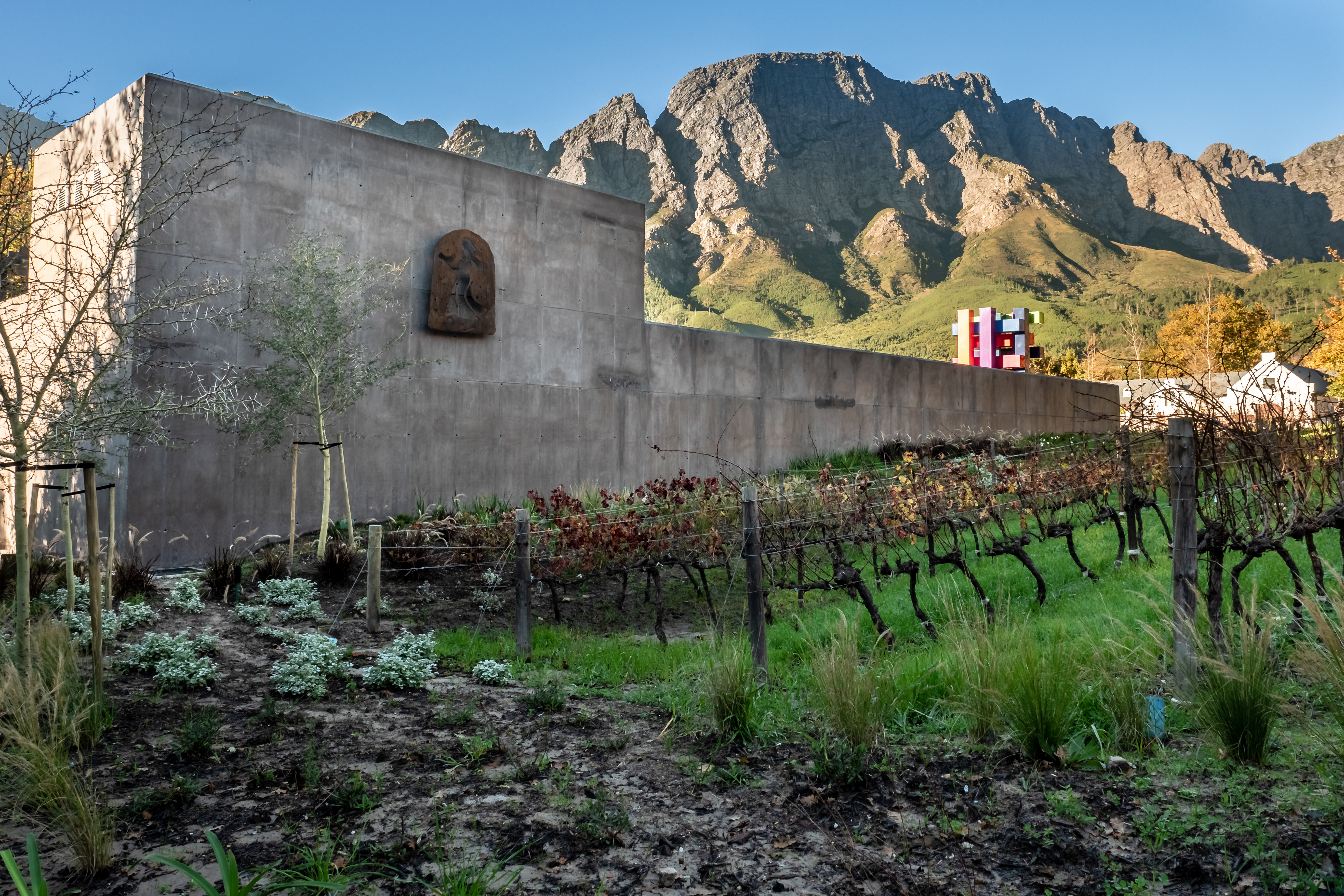
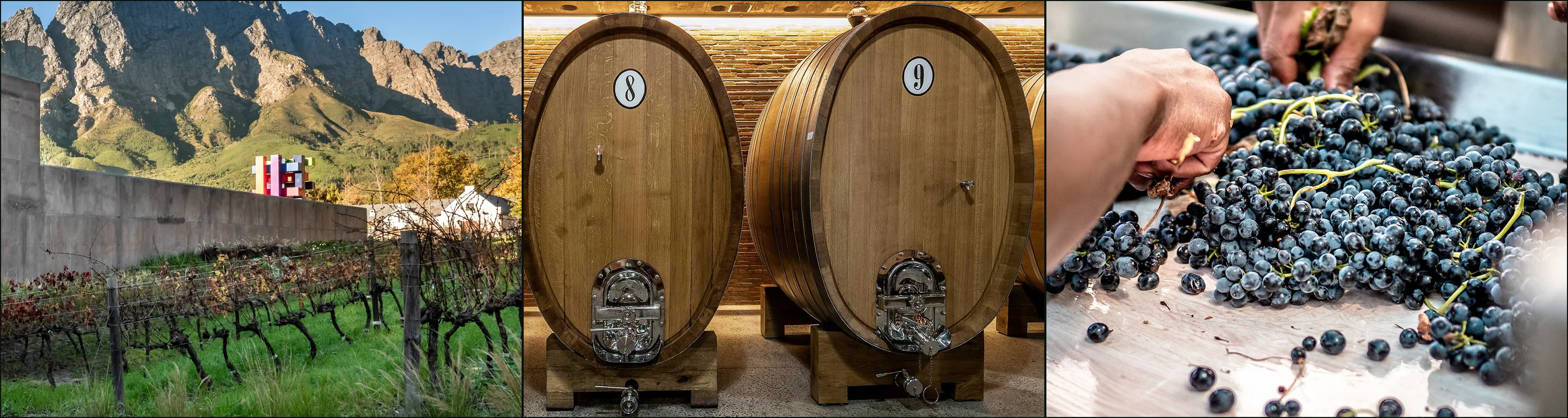
Photograph across the middle of this page: Boekenhoutskloof vineyard and barrel-maturation cellar, Franschhoek by Sandro Tasso, © Sandro Tasso, all rights reserved, via Boekenhoutskloof. Cropped and resized as one panel of a three-photograph strip for this page.