Skip to content
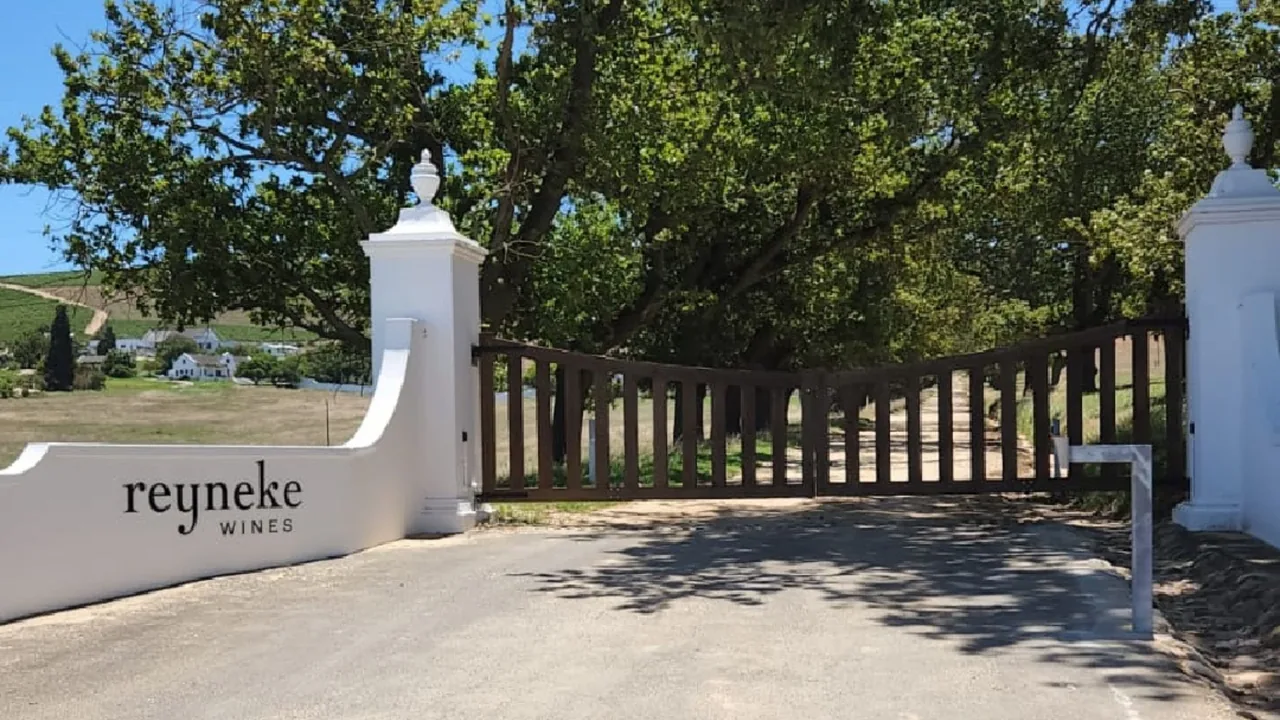
Entrance to Reyneke Wines: a white wall lettered with the name, white gateposts and a wooden gate under large trees
StellenboschSouth AfricaWine

Reyneke Wines

RAY-nuh-kuh · Stellenbosch is STEL-uhn-boss
Gold TierTypically $45–90
Last verified · August 2026

Stellenbosch built its commercial identity on technically polished Cabernet and Merlot, and it does that extremely well. Johan Reyneke started farming in the Polkadraai Hills in 1998 and took the farm to biodynamics, which placed him at a deliberate remove from his own appellation's central proposition.

Reyneke studied at Stellenbosch University, law and then philosophy, with a master's focused on environmental ethics, and worked as a farm labourer before he farmed for himself. The conversion followed from an academic position rather than a commercial one.

In 2008 the farm became the first in South Africa certified biodynamic by Demeter, and it is certified organic by Ecocert as well. The vines — Syrah, Cabernet Sauvignon and Cabernet Franc, with Chenin Blanc and Sauvignon Blanc alongside — grow on decomposed granite, and the farm runs as a closed loop: companion plants among the vines instead of herbicide, compost made on the farm, ducks against snails and Nguni cattle for the humus.
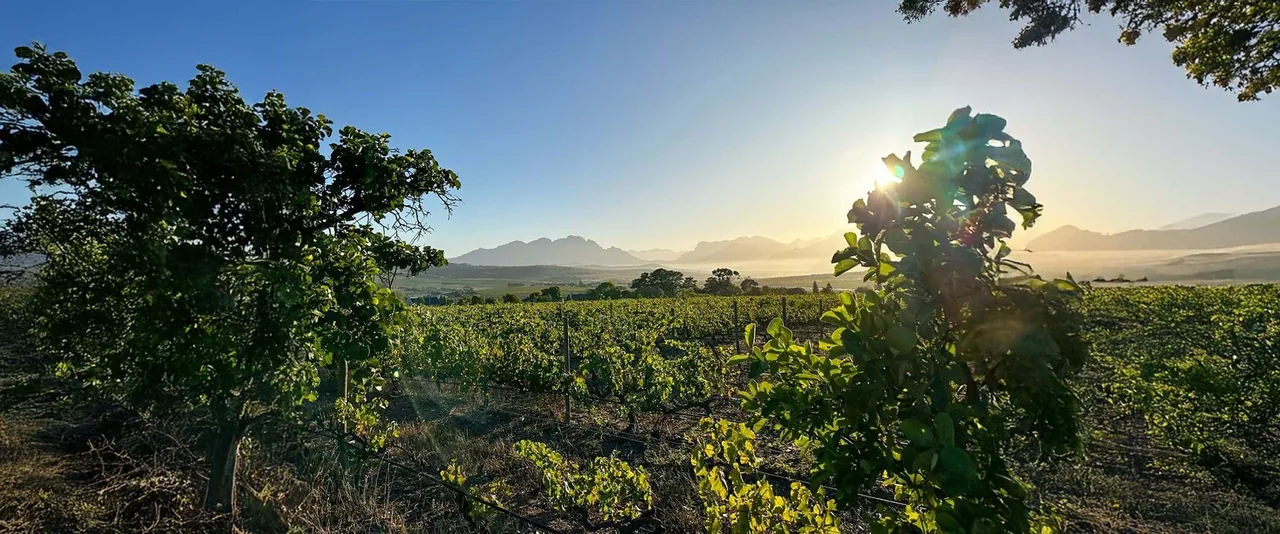
Low sun shining through leafy vine shoots over rows of vines, with a misty valley and mountains in the distance

The Reserve wines are made only in exceptional vintages: the Reserve Red is all Syrah, the Reserve White a barrel-aged Sauvignon Blanc that International Wine Review scored 94 for the 2021. The Cornerstone is the most direct statement, and it is about people rather than vines: a red blend named for the farm's workers, tied to a scheme that gives each of them a R500,000 choice after ten years' service — a house, an investment, or tertiary study for the family.

Few of his neighbours farm this way, and not unreasonably: it costs more and yields less. The wines are the argument he has chosen to make in response, which is the only kind that tends to change minds.

Why it’s remarkable

2008
the first estate in South Africa certified biodynamic by Demeter
Ten years after Johan Reyneke started farming on the Polkadraai Hills. Being first in a country means there is no local precedent to follow, no nearby example to visit, and nobody to ask when something goes wrong.
40 to 120
hectares, of which eighty are vines
The original 40-hectare farm, Uitzicht, has tripled with the purchase of a nearby farm, which is being replanted with wildlife corridors. A third of the property is not vineyard at all, which is what a biodynamic system is supposed to look like rather than a monoculture with preparations sprayed over it.
Environ­mental ethics
he came to this from a philosophy department, not a wine one
Reyneke read law and then philosophy, with a master’s focused on environmental ethics, and began farming in 1998. The conversion followed from an academic position about how land should be treated rather than from a commercial calculation about what would sell.
The people too
the estate is known for its labour policies as much as its farming
Biodynamic certification audits the soil and the inputs. How the people working the farm are treated is a separate question that most certifications do not ask. Reyneke’s answer is the Cornerstone scheme, which gives each worker a R500,000 choice after ten years’ service: a house, an investment, or tertiary study for the family.
Independently certified, and checked against the issuing body’s own register. Not a compromise on quality — see how we verify.

Free Bacchus Verification

Track A
Formal third-party certification, confirmed against the issuing body’s own register.

Demeter biodynamic · Ecocert organic, EU and USDA NOP

Certified2
  • Biodynamic: Demeter, certified through BFDI International Certification Office — Reyneke Wines Properties (DI-56524, the farm) and Reyneke Wines (DI-25154, the winery), valid to 31 March 2027
  • Organic: Ecocert, to the EU organic regulation and the USDA National Organic Program (NOP) — both companies, in Ecocert’s own client directory
Re-verified annually against the issuing body’s register. How re-verification works
The producer’s own sitereynekewines.co.za
Producers don’t pay to be here. There is no fee to be listed and no way to buy a higher tier. If the evidence doesn’t hold, the bottle isn’t here.
Flagship
Reserve Red
Best award
Silver, Vinehugger Chenin Blanc 2021 · Decanter World Wine Awards 2022

If you’re buying

Price
Around US$60 to US$80 for the Reserve Red. Approximate, and it moves with vintage and market.
Drinking now
The Reserve wines, made only in exceptional vintages from the best sites, are the ones to keep; one UK merchant lists the 2020 Reserve White to drink until 2030.
Availability
Generally obtainable through specialist retailers.
Tastes like
The Reserve Red is Syrah, peppery and savoury — black cherry, white pepper and coriander over fine, layered tannins. The Chenin Blanc is bright and dry, with quince and pear.
Pairs with
Spiced, slow-cooked lamb.
Price bands are approximate and move with vintage, market and region. They are a guide, not a quotation.

Cheat sheet

Save it to your phone. Everything you need to recognise this producer, and three things worth saying about it, at a glance in a shop or across a table.

13 verified producers in South Africa →

From the Journal

← Matetic VineyardsThe Verification StandardStefano Lubiana Wines →

More Verified Houses · South Africa

Where to go next

Three more from the cellar, chosen by what is in the glass rather than where it is from.

PolizianoRed · Italy Château Smith Haut LafitteRed · France Littorai WinesRed · United States
↑