Radford Dale
The Free Bacchus Story
On 27 April 1994, the day of the election that made Nelson Mandela president, Alex Dale handed in his resignation in Burgundy. British by birth, he had done a harvest there at 15 and was then working for Jacques Prieur in Meursault. He had decided, he says, to make the Cape his home “if South Africa could pull off a peaceful transition to democracy”, and in September he arrived. The Pinot Noir that became his company’s flagship is called Freedom for that year, and for the freedom he found in the Cape from the Burgundy rules that decide everything from how a vine is pruned to the shape of the bottle.
In 1998 he and Ben Radford, an Australian winemaker he had worked with at Longridge in Stellenbosch, made their first wine together, a Chardonnay picked on 8 February. When they made their first sale abroad, to the British wine retailer Oddbins in May 1999, it was Oddbins’ head buyer, Steve Daniel, who suggested the name. For more than twenty years the company bought most of its grapes from growers, and from 2002 it made its wines in a rented cellar on the Helderberg, outside Stellenbosch, where most of them are still made.
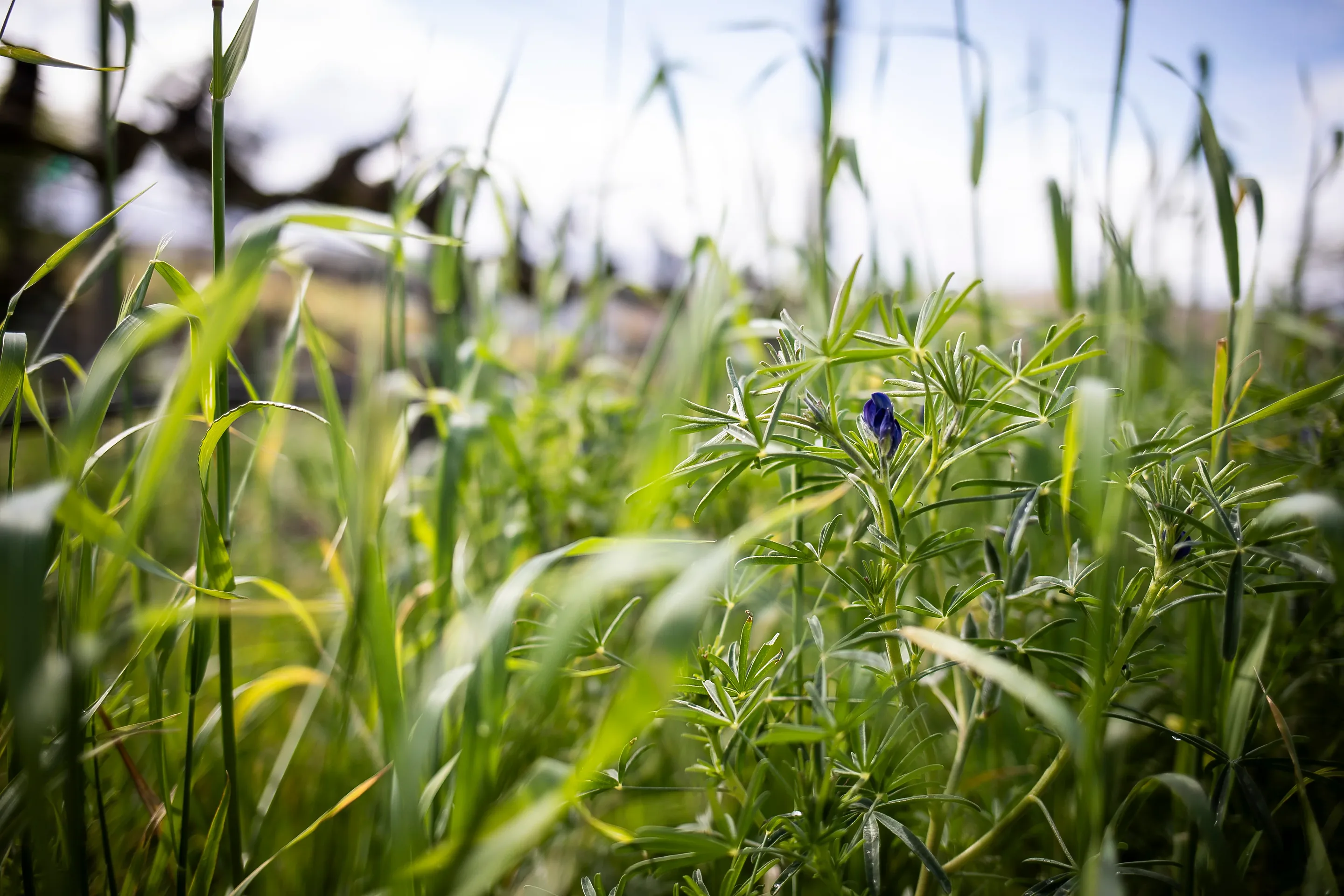
Dale began working in Elgin in 2004, with global warming on his mind. The year before, he says, his friends in Burgundy had been forced to pick in August for the first time. Elgin is apple country first. It is a high bowl about 300 metres up, ringed by mountains and entered only by passes, and when Winemag counted in 2019 it had more than 6,400 hectares of apples and fewer than 750 of vines; the first commercial vines went in only in 1986. Height and the nearness of the sea make it one of the coolest wine districts in South Africa, and Dale says he picks a month later than Stellenbosch, an hour away. Stellenbosch is judged on Cabernet Sauvignon. Elgin grows the Burgundy grapes, Pinot Noir and Chardonnay, which want a cooler place. Pinot Noir makes a lighter red than Cabernet, pale, red-fruited and savoury rather than heavy. In a place this cool, Chardonnay can be lean, bright and stony rather than rich and buttery. Christian Eedes of Winemag, who gave the estate’s Touchstone Chardonnay 2024 96 points, wrote that it was for those who like their Chardonnay “steely rather than buttery”.
The farm it bought was Elgin Ridge. Brian and Marion Smith had sold their IT business in London, bought a neglected apple farm in 2007 and planted their first vines that year, meaning to farm organically from the beginning, and by Elgin Ridge’s own account Demeter had certified its biodynamic farming since 2016. Jacques de Klerk, then Radford Dale’s cellarmaster, first went to them looking for organic Pinot Noir. Vines that had never needed converting were the attraction, and in 2021 the company bought the farm, at a time, Dale says, “when it was illegal to sell wine in South Africa”. Biodynamic farming was dropped, Tim James of Winemag reported, and the sheep and cattle went, though the ducks that keep down the snails stayed. Gerhard Joubert, who had worked with de Klerk for about eight years, now manages the farm. Petroné Thomas, who joined as assistant winemaker in October 2021, has been in charge of the wine since de Klerk left, unexpectedly, shortly after the 2024 harvest.
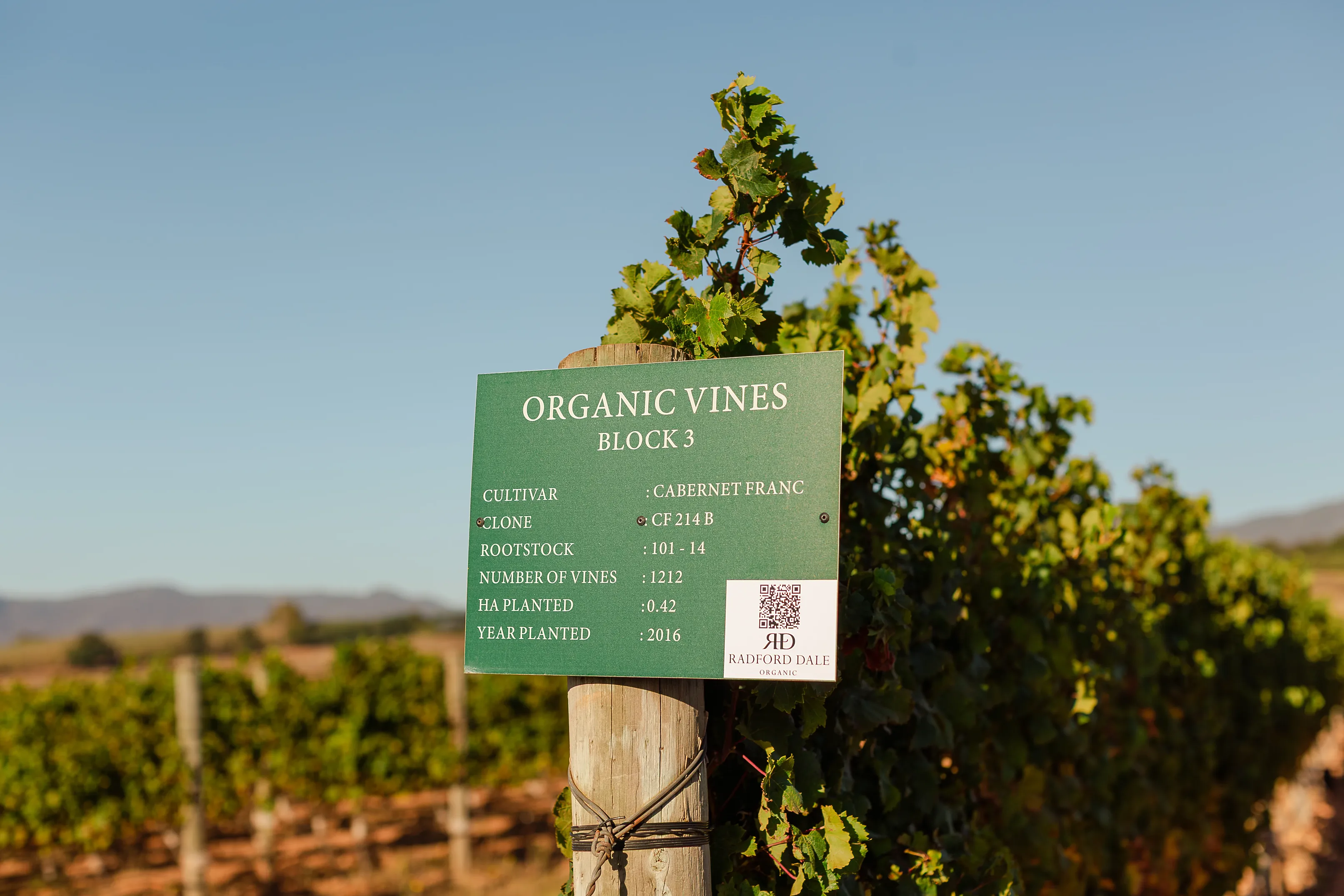
This page covers only the estate wines from Elgin. Ecocert’s EU certificate names four of them by vintage: Freedom Pinot Noir from 2021 to 2025, and Touchstone Chardonnay, Higher Purpose Cabernet Franc and Revelation Semillon from 2022 to 2025. The Semillon vines are being turned over to Cabernet Franc, so the 2025 Revelation is the last. Older Freedoms, from 2013 to 2020, are still sold at the estate at the same price, and they are not certified. Radford Dale’s other ranges, Terroir Selection, Vinum, Thirst, The Winery of Good Hope and Land of Hope, are made alongside at the Stellenbosch cellar, mostly from bought-in grapes, and are not certified organic, apart from a single Vinum Sauvignon Blanc of 2023. There is no US organic certificate. Radford Dale is not certified biodynamic.
“Being certified organic, however, removes any doubt and obliterates dogma.”
Why it’s remarkable
Free Bacchus Verification
Ecocert EU organic · Elgin estate wines only
Certified2
- EU organic, Ecocert SAS: Radford Dale (Pty) Ltd (ZA-BIO-154.710-0000003), and the Elgin farm, (Pty) Ltd Radford Dale Organic, for its grapes and winemaking (ZA-BIO-154.710-0000010); both valid to March 2027
- With Ecocert since 2020, by the company’s own account
This page covers
The estate wines from the Elgin farm, named on the certificate by vintage: Radford Dale Organic Freedom Pinot Noir 2021–2025, and Touchstone Chardonnay, Higher Purpose Cabernet Franc and Revelation Semillon 2022–2025.
Not covered2
- Freedom vintages 2013–2020, still on sale
- The Terroir Selection, Vinum, Thirst, The Winery of Good Hope and Land of Hope ranges, made at the Stellenbosch cellar mostly from bought-in grapes (the certificate’s only Vinum wine is a 2023 Sauvignon Blanc)
Also on record4
- Non-organic wine is made alongside the organic
- Since January 2026 the farm’s certificate also records production in conversion, naming no product
- No US organic (USDA NOP) certificate
- Not certified biodynamic
If you’re buying
Cheat sheet
Save it to your phone. Everything you need to recognise this producer, and three things worth saying about it, at a glance in a shop or across a table.