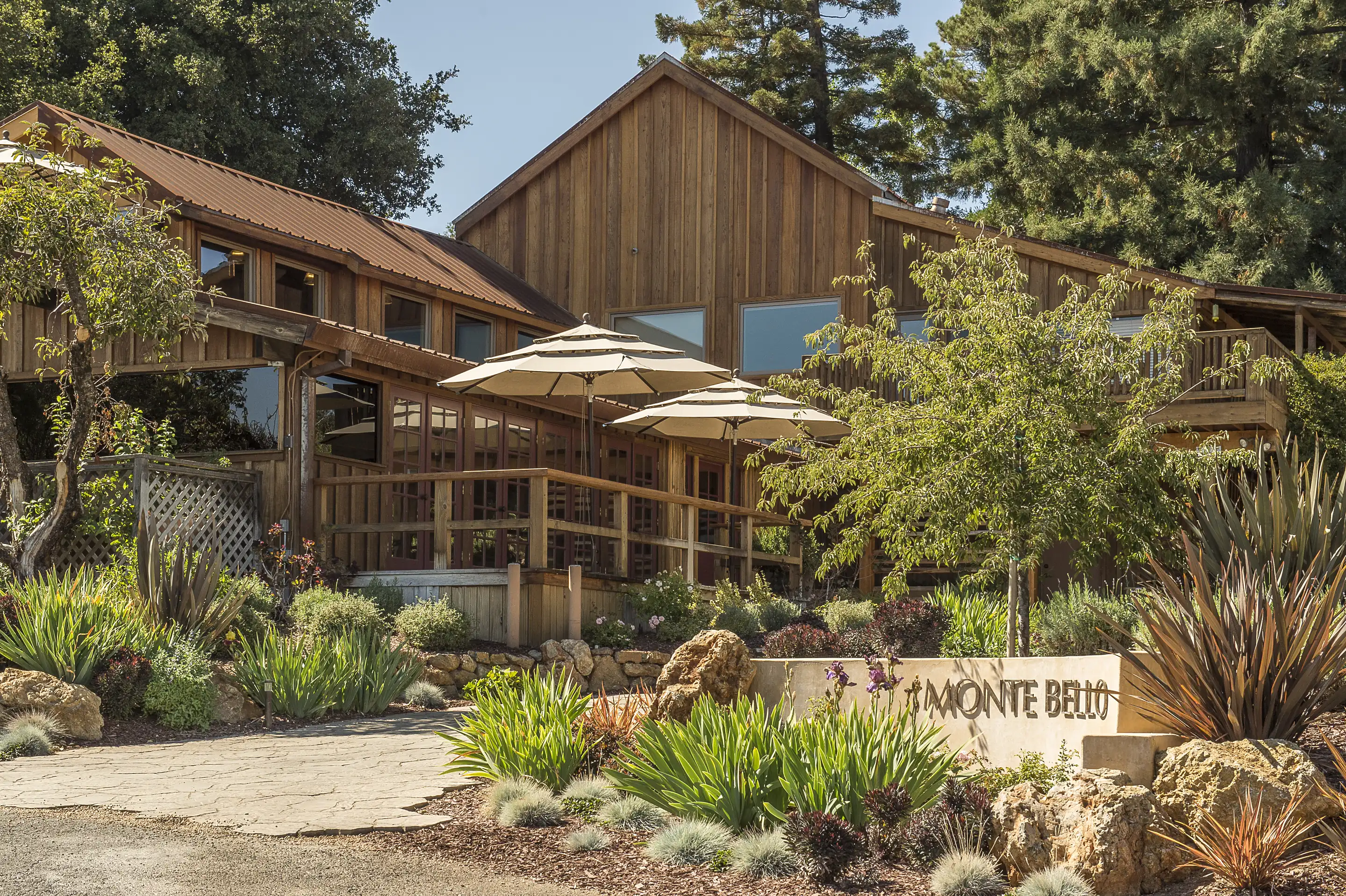
Ridge Vineyards
The Free Bacchus Story
In the early 1970s Ridge’s winemaker, Paul Draper, asked the federal agency that approves wine labels whether he could list his ingredients on the bottle. The answer was no. It wasn’t required, nobody else did it, and it would confuse consumers. Then in 2008 a neighbour in the Santa Cruz Mountains put out wines with their ingredients on the label, with federal approval, and Ridge followed. Since the 2011 vintage every Ridge wine has carried the list on its back label, and it is a short one. For the 2023 Monte Bello, Ridge’s website gives estate grapes picked by hand, native yeasts, oak from the barrels and the least sulfur that would do the job, which Ridge measures to the part per million, 35 at crush and 65 during ageing.
The winery began as a weekend project. In 1959 four engineers from the Stanford Research Institute bought a vineyard on Monte Bello Ridge, just below the one where Osea Perrone, a San Francisco doctor, had terraced the slopes in the 1880s and built a winery from the mountain’s own limestone; his first Monte Bello was the 1892. One of the engineers, Dave Bennion, made a little Cabernet from vines replanted in the late 1940s, and it was good enough that the partners re-bonded the winery as Ridge Vineyards in time for the 1962 vintage. Later they bought Perrone’s cellar, built into the mountainside on three levels, which is still Ridge’s production cellar. In 1969 they hired Draper, a Stanford philosophy graduate who had made three vintages of Cabernet from old, unirrigated vines in Chile. As he tells it, they saw wine as something real, a corrective to the virtual world they were building at work. In 1976 Steven Spurrier put Draper’s 1971 Monte Bello into his Paris tasting of California Cabernets against Bordeaux, where it came fifth of the ten reds; at the re-run thirty years later, it came first. Draper retired in 2016, at 80. Otsuka Pharmaceutical has owned Ridge since 1986, and in 2026 John Olney, who started as a cellar worker at Monte Bello in 1996, became chief executive and head winemaker.
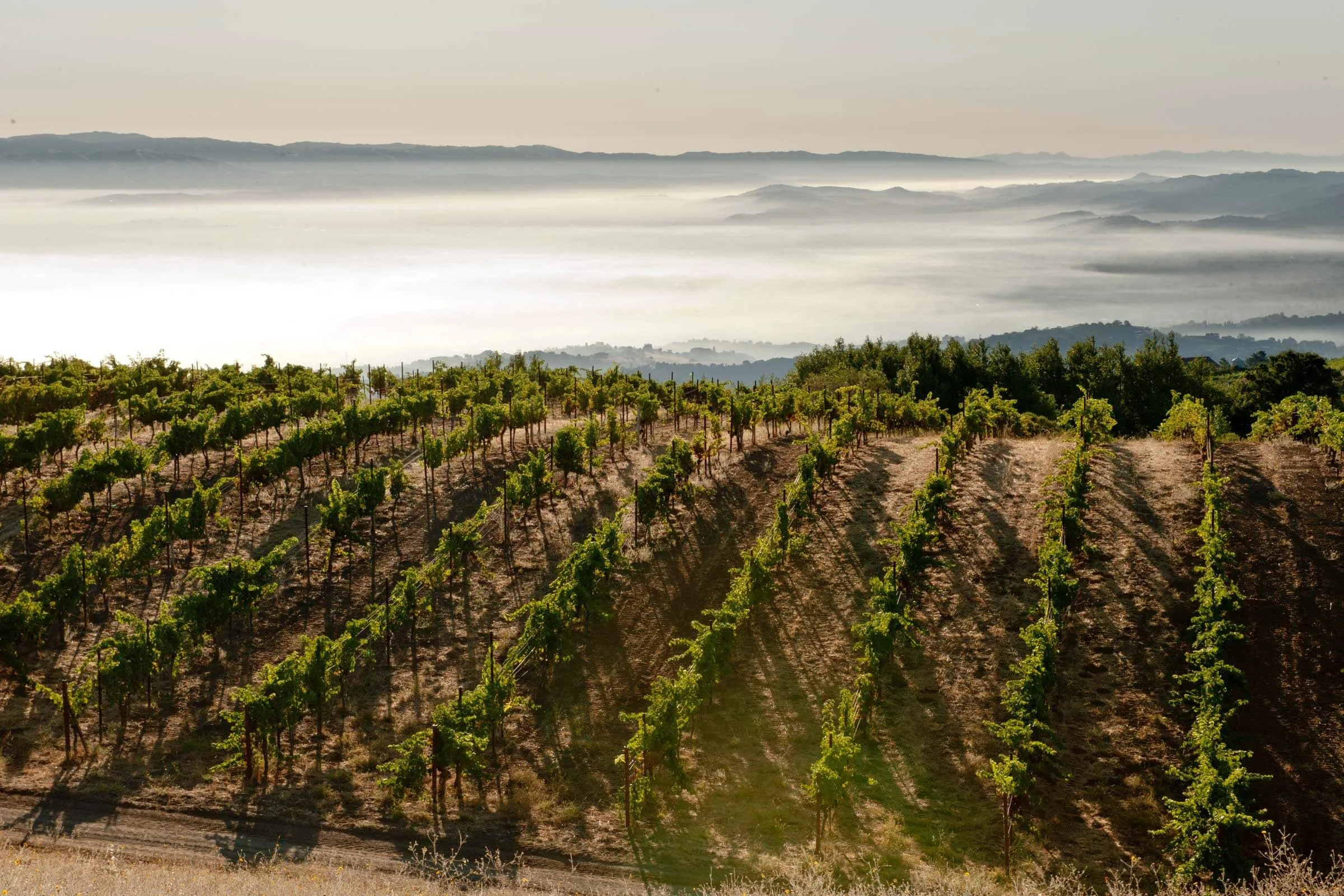
Ridge makes two very different reds. Monte Bello is Cabernet Sauvignon blended the Bordeaux way, with a little Merlot and Petit Verdot, from a vineyard 15 miles from the Pacific and between 1,300 and 2,700 feet up, on limestone that Ridge says is not found in the Napa and Sonoma valleys. Ridge calls the Santa Cruz Mountains California’s coolest Cabernet country, and Monte Bello is the leaner kind of California Cabernet. The 2023 has 13.2 per cent alcohol, and Jim Gordon of JamesSuckling.com, who scored it 98, wrote that it harks back to the lean, sinewy American Cabernets of the 1970s and 1980s. The other half of Ridge is Zinfandel, the grape California made famous, from the warm inland valleys of Sonoma County. Draper made the first Lytton Springs, in Dry Creek Valley, in 1972, from vines planted around the turn of the century, and Ridge bought the vineyard in 1991. Its old Zinfandel vines grow among Petite Sirah and Carignane, and those grapes go into the wine as well. The 2022 Lytton Springs is two-thirds Zinfandel. Ridge describes the wine as ripe boysenberry and blackberry with an earthy, rustic streak, which it puts down to the Petite Sirah and Carignane.
Ridge set out to certify its own vineyards in 2008 and decided not to convert them all at once. Doing everything together, wrote David Gates, who had joined as vineyard manager in 1989, would have stretched the company’s resources and put the grapes at risk, and organic farming takes more labour than conventional farming, above all in weeding. So the land went over in waves: 76 acres at Monte Bello and 135 at Lytton Springs and Geyserville in 2011, more in 2014, the rest of Geyserville in 2015. The steep hillside blocks were left until last, because tilling them risks erosion. Gates expected to finish by 2018 to 2020, and Ridge dates the last of the estate to the 2022 harvest. As more labels said “organically grown”, Draper wrote, Ridge began to ask what organic meant for anyone’s health if chemicals were added once the grapes reached the winery.
What is certified is the grapes. Organic Certifiers, Inc. has certified Ridge’s vineyards to the USDA organic rules since September 2011, for crops only, and Ridge has no certificate for its wineries, so its wines are not certified organic. They are made from certified organic grapes, which is what “organically grown” on a Ridge label means; by Ridge’s own account a wine may say so only if every grape is certified. From the 2022 vintage Ridge marks its estate wines, Monte Bello, the Estate Cabernet, Lytton Springs, Geyserville and East Bench among them, as organically grown, and the 2023 Monte Bello, which Wine Advocate scored 99, is one. Two estate wines are exceptions on Ridge’s own pages, which do not mark the 2022 Estate Cabernet or the 2023 Geyserville, so this page does not count them. Ridge does not mark Pagani Ranch, the Paso Robles Zinfandel, Three Valleys or the 2023 Santa Cruz Mountains Cabernet as organically grown, and this page does not cover them. The first two come from family vineyards Ridge buys from, and Ridge revived the Santa Cruz Mountains Cabernet name in 2023 to show that its grapes came from outside growers.
“I thought we should do something to show how few ingredients are needed”
Why it’s remarkable
Free Bacchus Verification
USDA organic, grapes only · estate wines from the 2022 vintage
Certified2
- USDA organic (Organic Certifiers, Inc., operation 6220005631), grapes only
- Certified since September 2011, and covering all of Ridge’s estate vineyards from the 2022 harvest
This page covers
The estate wines Ridge marks organically grown (Monte Bello, Estate Cabernet, Lytton Springs, Geyserville, East Bench), from the 2022 vintage, made from certified organic grapes.
Not covered2
- The 2022 Estate Cabernet and the 2023 Geyserville, which Ridge does not mark
- Pagani Ranch, the Paso Robles Zinfandel, Three Valleys and the 2023 Santa Cruz Mountains Cabernet, which Ridge does not mark as organically grown
Also on record1
- There is no winery certificate, so the estate wines are not certified organic wine
If you’re buying
Cheat sheet
Save it to your phone. Everything you need to recognise this producer, and three things worth saying about it, at a glance in a shop or across a table.
From the Journal
More Verified Houses · United States
Photograph at the top of this page: Ridge Vineyards at Monte Bello by Robert Holmes, © Robert Holmes. Cropped, resized and sharpened for this page.