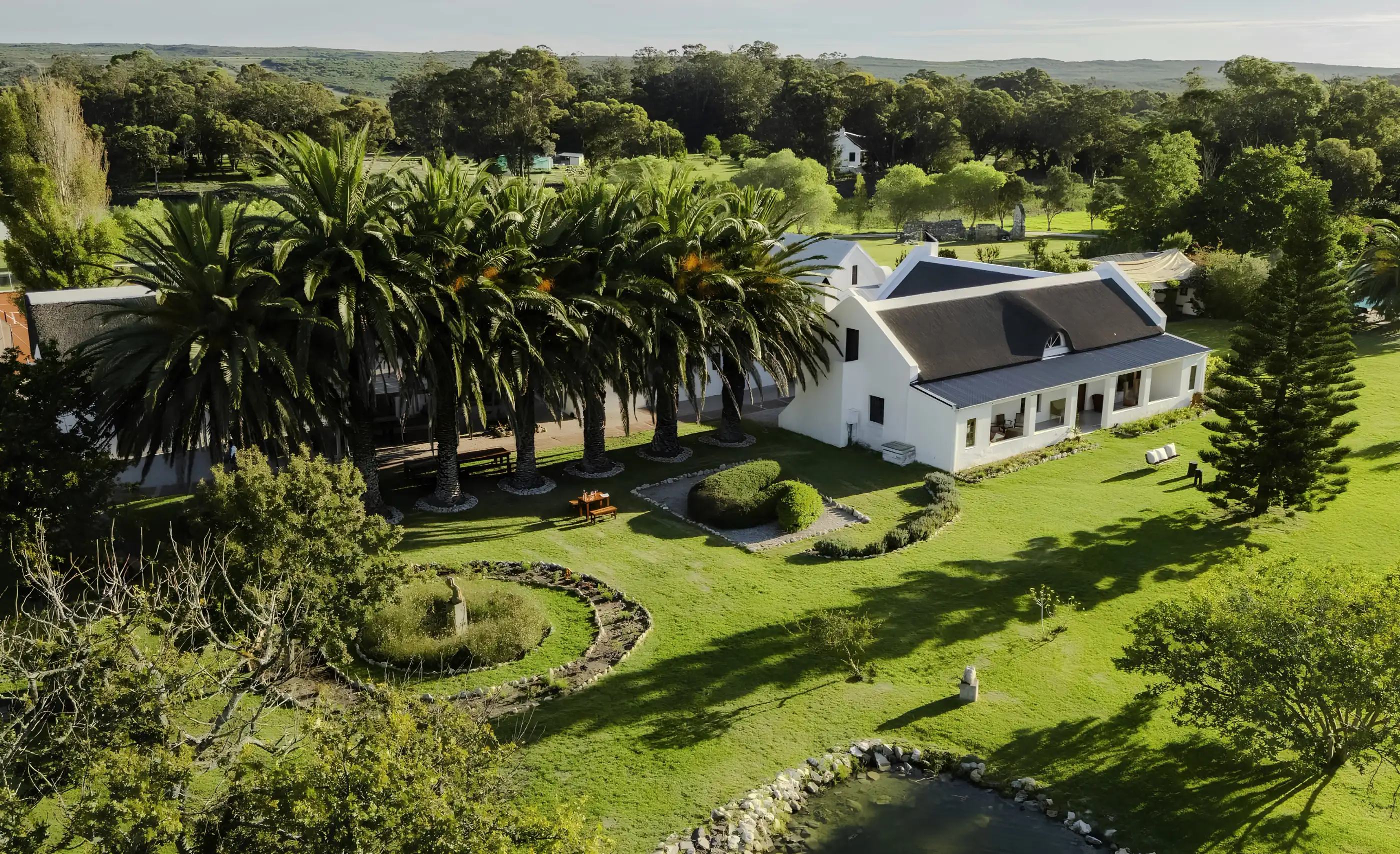
Springfontein Wine Estate
The Free Bacchus Story
In December 1995, between flights at Heathrow, the German engineer Johst Weber saw a small advertisement in Decanter that mentioned “limestone soils”. He flew out to see the farm, outside Stanford in South Africa’s Walker Bay, in March 1996, on his first trip to the country, and on his second day there he agreed to buy it with a handshake. Family and friends put money in with him. Nobody in the area had tried to grow wine grapes before, and one of the Cape’s well-known wine figures told him he would hopefully “at least be able to make good vinegar” there.
It took more than a year to get vines to plant. Nobody on hand knew anything about growing them, flocks of birds were waiting for the fruit, and fires threatened what had been built. The first grapes were picked in 2000, and the first wine was bottled in 2004, when the first part of the cellar opened. The setbacks did not stop there, and at times, the estate says, they were serious enough to make it question the whole project.
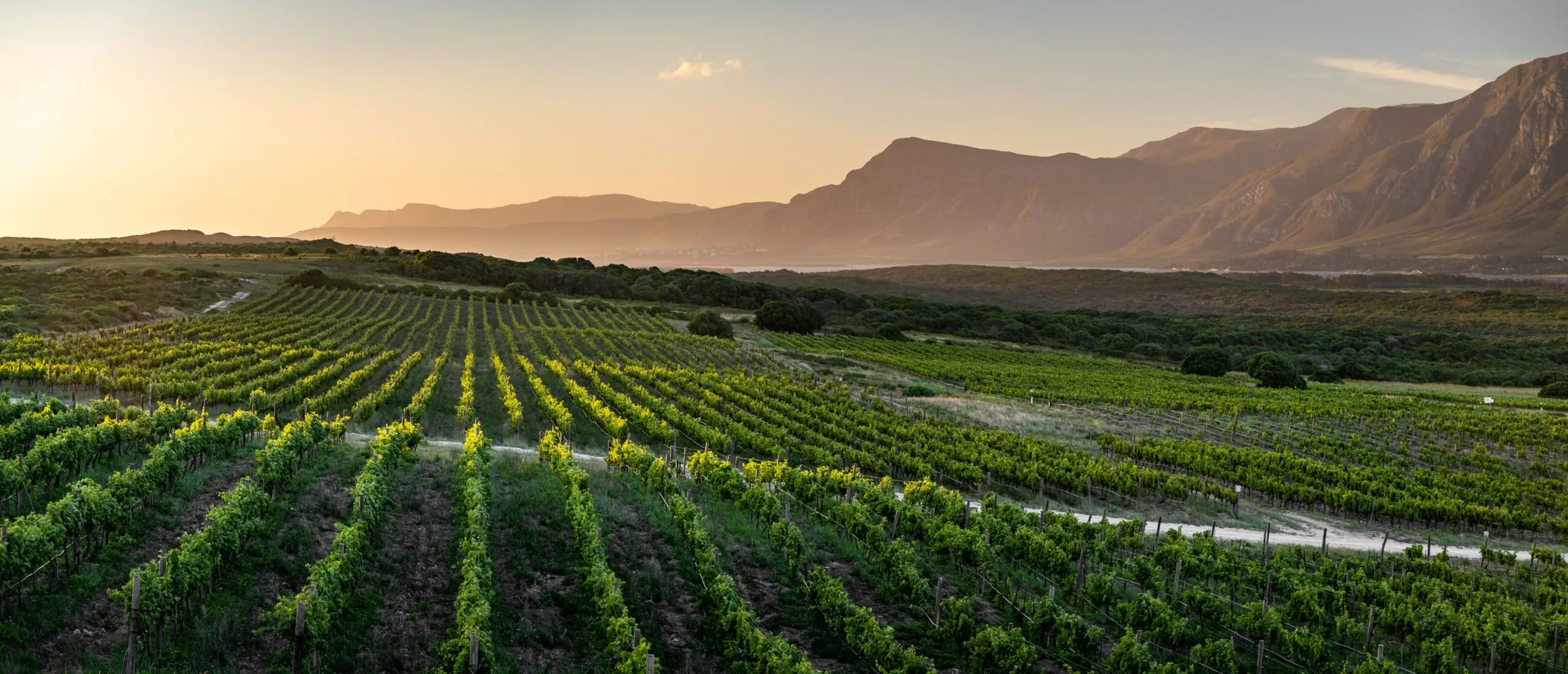
Walker Bay is the cool end of South African wine, on the coast at Hermanus, and the valley behind the town, the Hemel-en-Aarde, made its name with Pinot Noir and Chardonnay grown on clay and shale. Springfontein, outside Stanford, some 25 kilometres from Hermanus and a few kilometres from the sea, stands on something else: a small, lentil-shaped patch of limestone that runs out at the farm’s northern edge and only a few metres past its southern one. Tim James of Winemag called it, in 2021, a little limestone enclave in soils mostly of sandstone and quartz. Since 2018 the patch has been a ward of its own, Springfontein Rim. Wards, James explains, are drawn up largely by scientists around a distinct unity of soil and climate, and this one has a single winery in it, which is what Burgundy calls a monopole. The estate says the limestone holds the vines back and keeps the grapes’ acidity fresh, and that summer days rarely climb far above 26°C. Its two main grapes were both bred by professors of viticulture at Stellenbosch University. Pinotage, South Africa’s own red grape, is a 1925 cross of Pinot Noir and Cinsault. Tim James finds Springfontein’s Pinotages can be quite big, but always fresh and light-feeling, with little taste of oak. Chenel, a white grape, came almost fifty years later, a cross of Chenin Blanc, the country’s most planted grape, with Ugni Blanc, also called Trebbiano. Christian Eedes of Winemag notes that it is prized for resisting disease, which matters on a farm that sprays as little as this one.
Since February 2026 the vines and the cellar have been in the hands of four vignerons: Weber himself, his son Emil, Jeanne Vito, the head vigneronne, and Christo Versfeld, who worked there from 2007 to 2012 and came back for the 2026 harvest. In between, Tariro Masayiti made the wines for almost ten years. The estate says it has followed organic principles from the beginning, with Ecocert certification since 2019, and that a steady breeze keeps the leaves dry and fungal disease down, so it can spray very little. It adds no tartaric acid and no bought-in tannins, and keeps sulphur, the usual preservative, “far below the legal limit”. Winemag’s Pinotage Report 2025, tasted blind by a three-person panel, put the Terroir Selection Pinotage 2022 in its top six with 94 points, and Eedes gave the Terroir Selection Chenin Blanc 2022 93. The flagship, Jonathan’s Ridge Single Vineyard Pinotage, comes from three blocks planted straight into limestone; Tim James called it the top of the range.
All of Springfontein’s grapes are certified organic, and Ecocert’s EU certificate names its wines vintage by vintage, 41 lots in all from 2019 to 2024, across the Ulumbaza, Terroir Selection, Limestone Rocks, Single Vineyard and Daredevils’ Drums ranges. Not every bottle the estate sells is covered. The certificate records non-organic wine made alongside the organic, and some vintages still on sale are not on it, among them the 2017 and 2018 Limestone Rocks, from before the first certified harvest. The Cape Moby wines are not certified, and neither are the Vino Vito wines sold beside them. In the United States the certificate covers the vineyards only, and no Springfontein wine is certified organic there.
“we don’t ‘make’ wines at Springfontein”
Why it’s remarkable
Free Bacchus Verification
Ecocert EU organic · estate grapes and 41 wine lots, 2019–2024
Certified2
- EU organic, Ecocert SAS: Springfontein Wine Estate (Pty) Ltd, Stanford (ZA-BIO-154.710-0000263.2026.006), valid to 31 March 2028, for all the estate’s grapes
- Ecocert’s US organic (NOP) certification, operation 7880170640, since 6 May 2019, covers the vineyards only, so no Springfontein wine is certified organic in the US
This page covers
The 41 wine lots named on the certificate by vintage, 2019–2024, 2019 being the first certified vintage.
Not covered3
- The Cape Moby and Vino Vito wines
- The Limestone Rocks of 2017 and 2018, still on sale
- Other vintages the certificate does not name
Also on record2
- The certificate records non-organic wine made alongside the organic
- Not certified biodynamic
If you’re buying
Cheat sheet
Save it to your phone. Everything you need to recognise this producer, and three things worth saying about it, at a glance in a shop or across a table.