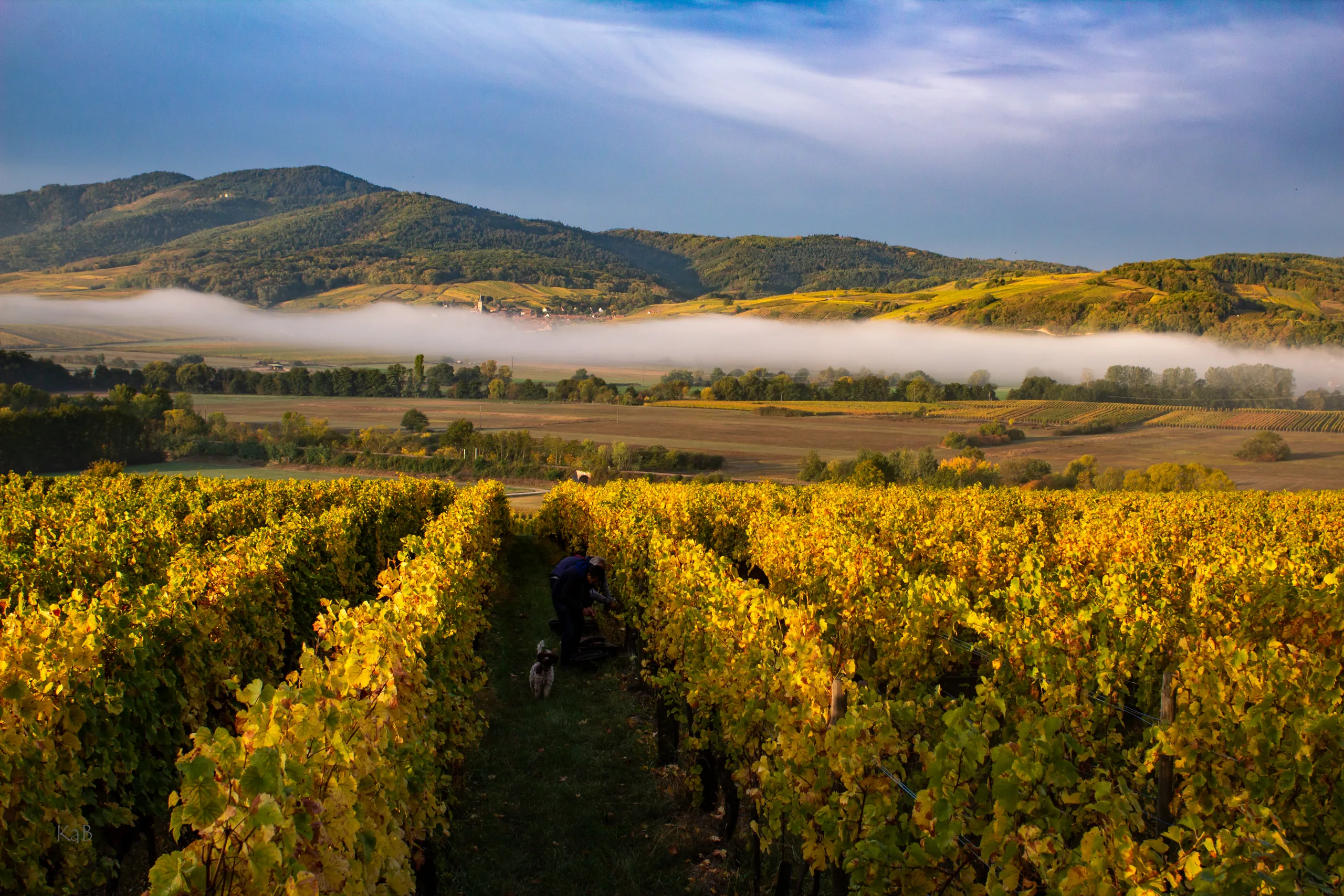
Domaine Ostertag
The Free Bacchus Story
André Ostertag divided his wines into three categories early on: vins de fruit, vins de pierre, vins de temps. Wines of fruit, of stone, of time. It's a way of saying that some bottlings are about the grape, some about the soil, and some about what happens after both.
Today it is certified organic by Ecocert, which it joined in 1999, and biodynamic by Demeter. Muenchberg, the grand cru on volcanic sandstone, is the vin de pierre — the site where the soil argument is easiest to taste.
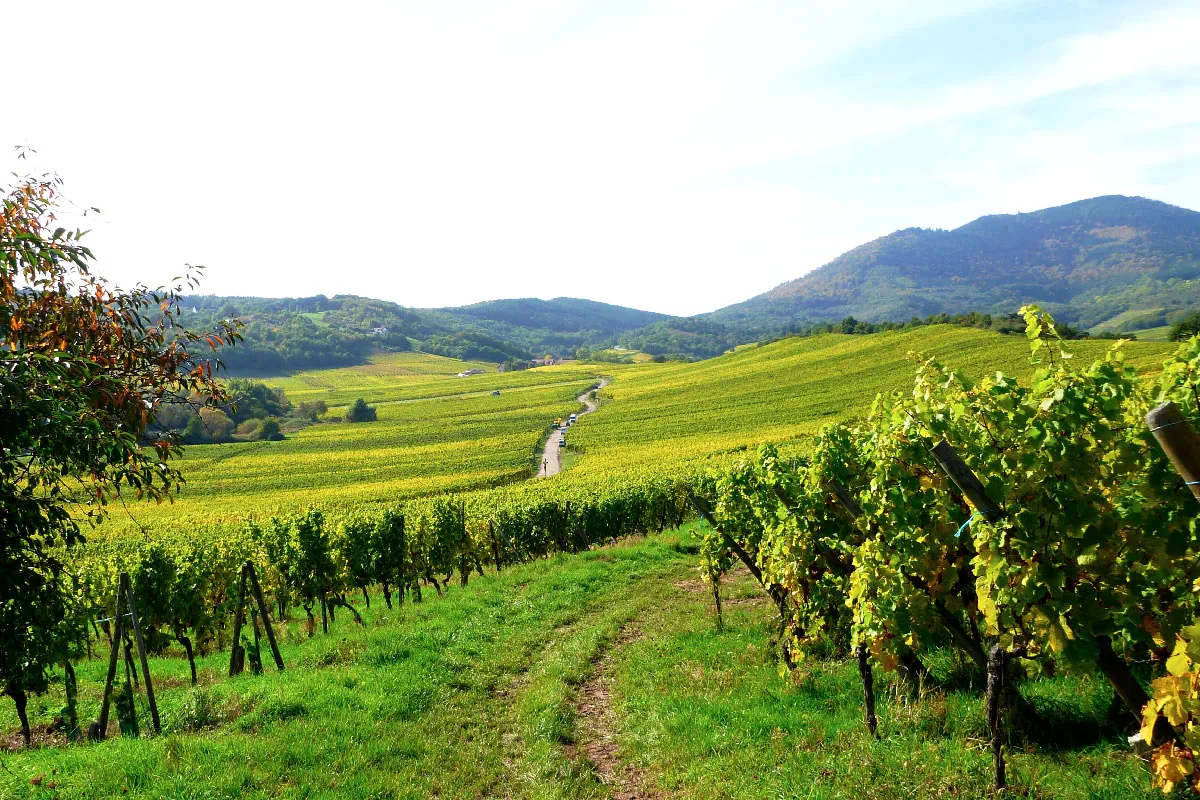
He trialled biodynamics on a single parcel before committing the estate: the 1997 trial convinced him and the whole domaine went over the following year. Testing it on one plot and then converting everything is the unglamorous version of a conversion.
Ostertag also broke with Alsace convention by using barrique for some cuvées when the region was almost exclusively neutral-vessel, which drew criticism at the time and now looks like an unremarkable choice.
If Alsace is new ground, Ostertag's own three-way split is the easiest way into it. The region's white grapes — Riesling above all, with Pinot Gris and Gewurztraminer alongside — are aromatic, which means the scent reaches you well before the glass does. A vin de fruit leans on that perfume. A vin de pierre is the one to slow down for: the fruit steps back, and what is left reads as citrus and cold wet stone, dry all the way through the finish. It is a taste people expect to find difficult, and mostly don't.
At eighty dollars for a grand cru with nearly thirty years of biodynamic farming behind it, this isn't an expensive wine by the standards of the company it keeps.
“The first wine I tasted in my life was a Sylvaner.”
Why it’s remarkable
Free Bacchus Verification
Ecocert France organic · Demeter France biodynamic
Certified2
- Ecocert France organic (FR-BIO-01) — SCEA Domaine Ostertag, Epfig, engaged 22 June 1999, growing and winemaking
- Demeter France biodynamic — operator FR-FR-BIO-01-7886, producer and processor, valid to 30 June 2027
Also on record1
- Biodynamic on one plot from 1997, the whole domaine from 1998
If you’re buying
Cheat sheet
Save it to your phone. Everything you need to recognise this producer, and three things worth saying about it, at a glance in a shop or across a table.