Skip to content
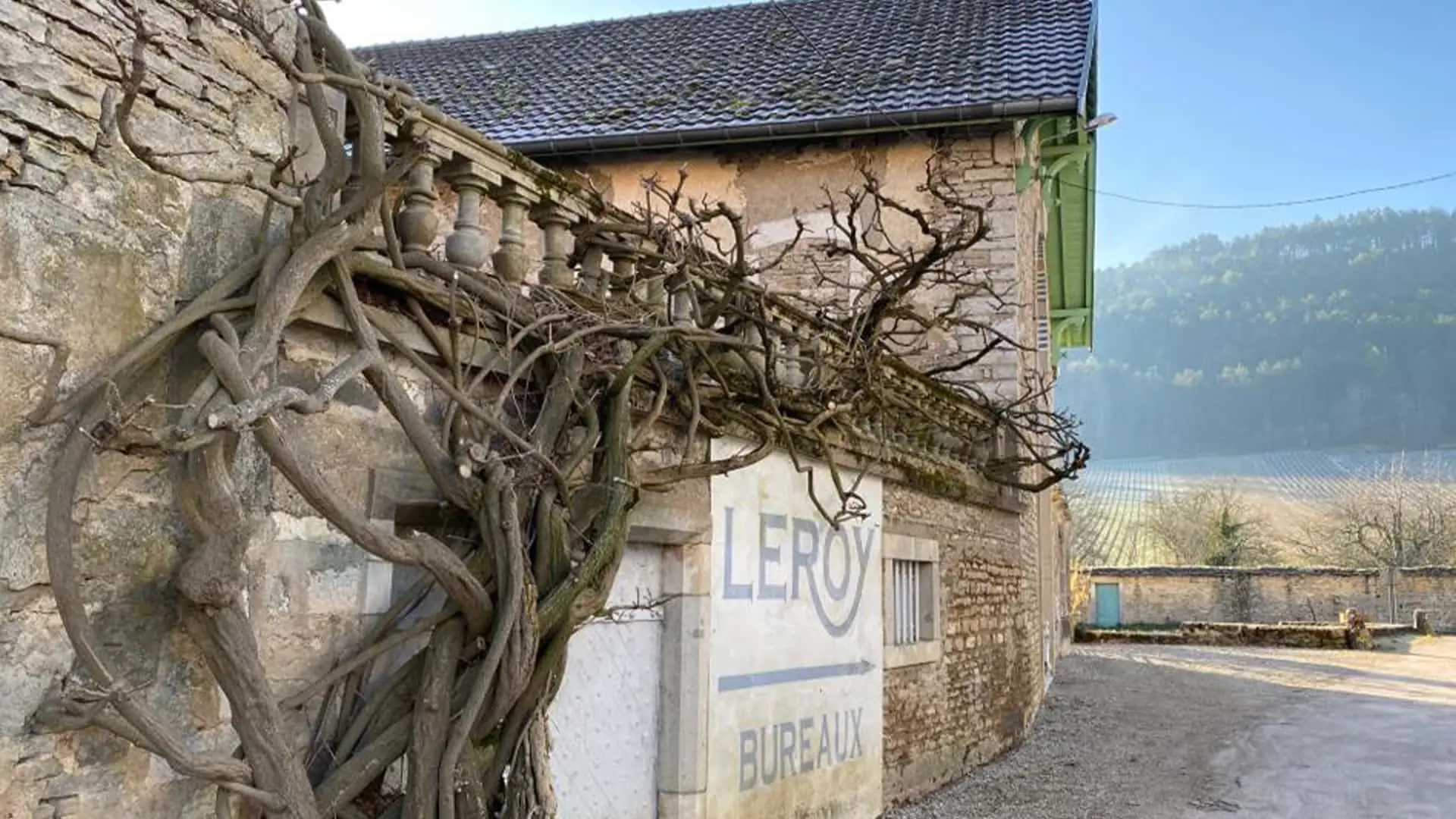
A stone building with a thick, bare climbing plant on its wall and a painted sign reading Leroy Bureaux, wooded hills beyond
Vosne-Romanée, Burgundy, FranceFranceOrganic / Biodynamic-practice Wine

Domaine Leroy

luh-RWAH · Vosne-Romanée is vone ro-ma-NAY
Gold TierTypically $200+
Last verified · August 2026

Lalou Bize-Leroy assembled the domaine from the Charles Noëllat vines in Vosne-Romanée in 1988, added the Philippe Rémy parcels in Gevrey-Chambertin a year later, and farmed it biodynamically from the start — while she was still co-director of Domaine de la Romanée-Conti. Grand cru Burgundy had almost no precedent for that at the time.

The arithmetic tells you the rest. About twenty-two hectares, most of it premier and grand cru, with production usually put at around 40,000 bottles a year. That is a very small quantity of wine off a very large amount of classified land, and the gap is yields cut far below what the appellation permits. The severity of the farming is the entire proposition here; there is no volume anywhere in the model to soften a bad decision.

Certification is Ecocert organic, held since March 1995. The biodynamics dates from 1988 and has never been certified at all.
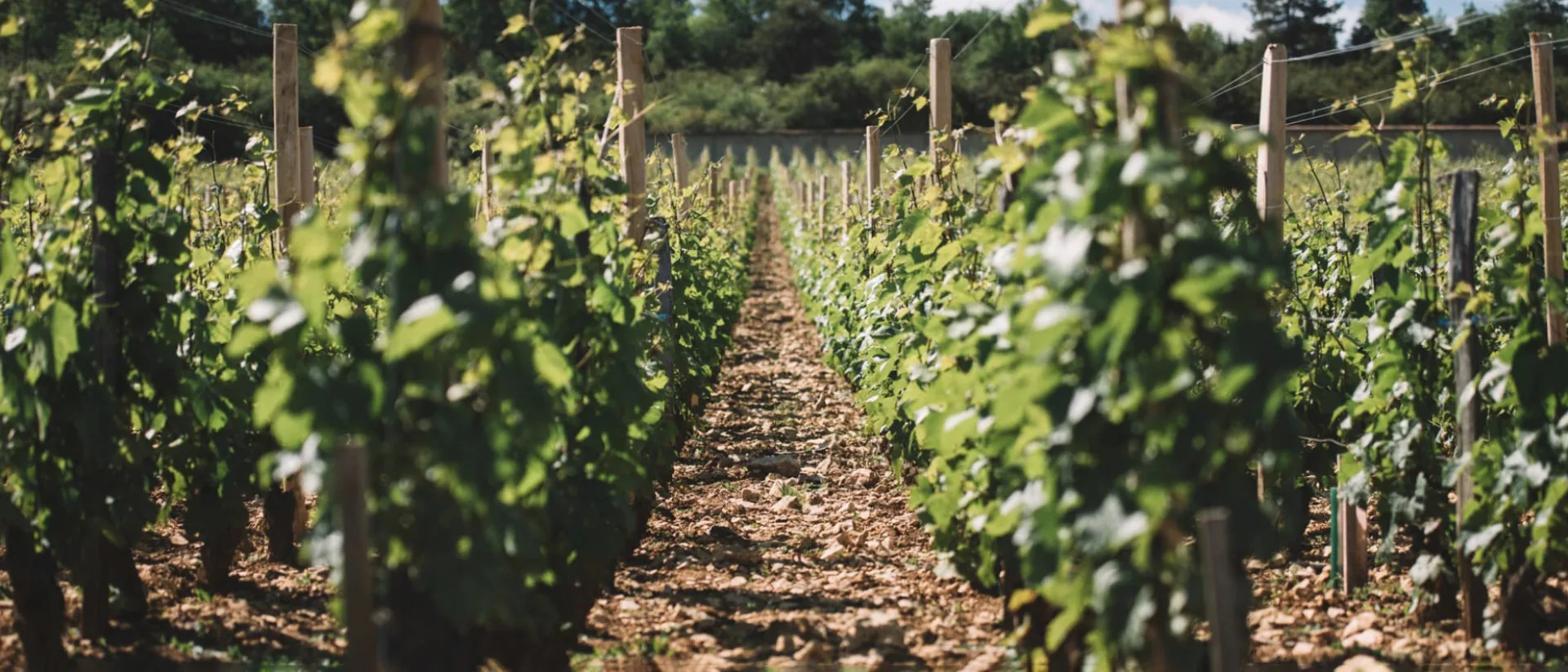
A narrow stony path between two rows of leafy vines on wooden posts, a wall and trees at the far end

There is a story about 1993, a wet vintage on the Côte d’Or, in which she watched the mildew arrive and refused to spray. She tells it differently, and has more than once. The domaine did spray, with the copper and sulphur biodynamics allows, but clay in the water blocked the sprayer’s nozzles and the treatment never properly went on.

She made seven hundred litres of Romanée-Saint-Vivant from a hectare that year. What she refused was synthetic chemistry, not treatment, and the legend had quietly swapped one for the other. A domaine with this reputation attracts stories that harden into fact by repetition.

“I knew we had to stop using chemicals in the vineyards…”
Lalou Bize-LeroyProprietor, on why she converted, 2020 · World of Fine Wine

Why it’s remarkable

1988
she converted while co-director of Domaine de la Romanée-Conti
Lalou Bize-Leroy farmed the domaine biodynamically from the start: the Charles Noëllat vines in Vosne-Romanée in 1988, the Philippe Rémy parcels in Gevrey-Chambertin a year later. She was co-director of DRC from 1974 until 1992. For grand cru Burgundy at that date it had almost no precedent.
22 hectares
mostly premier and grand cru, and production usually put at 40,000 bottles
That is a very small quantity of wine from a very large amount of classified land, which is the arithmetic of cutting yields far below what the appellation permits. The severity of the farming is the entire proposition here.
1993
the treatment failed; she did not refuse it
Legend has her watching the mildew arrive and refusing to spray. In her own account, given more than once, the domaine sprayed copper and sulphur and clay in the water blocked the nozzles, so the treatment never took. She made seven hundred litres of Romanée-Saint-Vivant from a hectare.
Independently certified, and checked against the issuing body’s own register. Not a compromise on quality — see how we verify.

Free Bacchus Verification

Track A
Formal third-party certification, confirmed against the issuing body’s own register.

Ecocert France organic

Certified1
  • Ecocert France organic, FR-BIO-01 — engaged 15 March 1995, growing and winemaking
Also on record1
  • Biodynamic practice since 1988, not certified — nil on Demeter and Biodyvin
Re-verified annually against the issuing body’s register. How re-verification works
The producer’s own siteNo public website
Producers don’t pay to be here. There is no fee to be listed and no way to buy a higher tier. If the evidence doesn’t hold, the bottle isn’t here.
Flagship
Musigny Grand Cru
Best award
100 points, Musigny 2015 · Wine Advocate

If you’re buying

Price
Around US$25,000–42,000 for the Musigny on the US secondary market; allocated on release. Approximate, and it moves with vintage and market.
Drinking now
These want fifteen years and more, and they are allocation-only in practice. Very few people buy these to open soon.
Serving
Serve at 15–16°C. Decant only if young, and not for long.
Availability
Allocated — released to a limited list, so expect to wait or hunt.
Tastes like
Red Burgundy at the extreme of intensity and precision — deep red fruit, spice and a long, mineral finish. Built for decades.
Pairs with
Roast game, truffled dishes, or an aged hard cheese.
Price bands are approximate and move with vintage, market and region. They are a guide, not a quotation.

Start here instead

Domaine Ostertag — an Alsace grand cru with nearly thirty years of certified biodynamic farming behind it, at around $80.

Cheat sheet

Save it to your phone. Everything you need to recognise this producer, and three things worth saying about it, at a glance in a shop or across a table.

67 verified producers in France →

From the Journal

← Domaine François ChidaineThe Verification StandardDomaine Marcel Deiss →

More Verified Houses · France

Where to go next

Three more from the cellar, chosen by what is in the glass rather than where it is from.

OcchipintiRed · Italy Álvaro PalaciosRed · Spain Domaine de la Romanée-ContiRed · France
↑