Skip to content
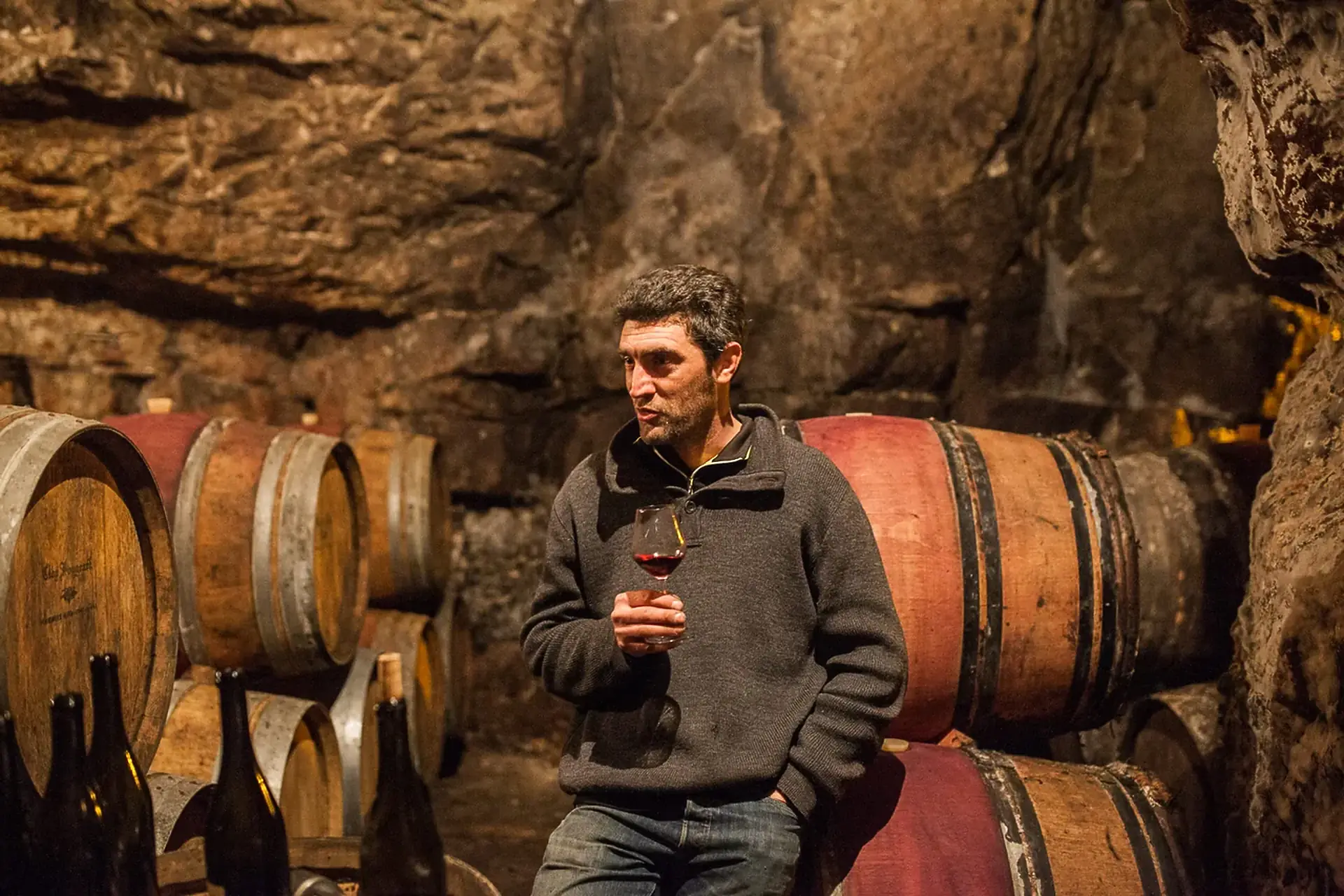
Man in a grey sweater holding a glass of red wine, leaning on barrels in a rough rock-cut cellar with bottles at lower left
Saumur-Champigny, Loire ValleyFranceOrganic Wine

Clos Rougeard

kloh roo-ZHAR · Saumur is soh-MEUR
Gold TierTypically $200+
Last verified · September 2026

The grandfather fought in one war and the father in the next, and both came home having seen what chemicals do to people. Neither would put them on the vines. That is where the farming at Clos Rougeard comes from — not a conversion, not a market position, but a refusal that predates the word organic being worth anything commercially. Wine Spectator recorded the reason plainly the year Charly Foucault died: respect for the vines, the soil and the people working in them.

Saumur-Champigny is Cabernet Franc country, on the Loire, and Cabernet Franc is a grape most people have drunk only as a junior partner in a Bordeaux blend. Here it is the entire wine. Grown on clay over tuffeau — the soft white limestone the region's cellars are cut straight into — it tends to red fruit with something savoury and leafy behind it, closer to tea and olive than to jam or oak. That is the style, and it is why the region rewards growers who resist the temptation to make it bigger.
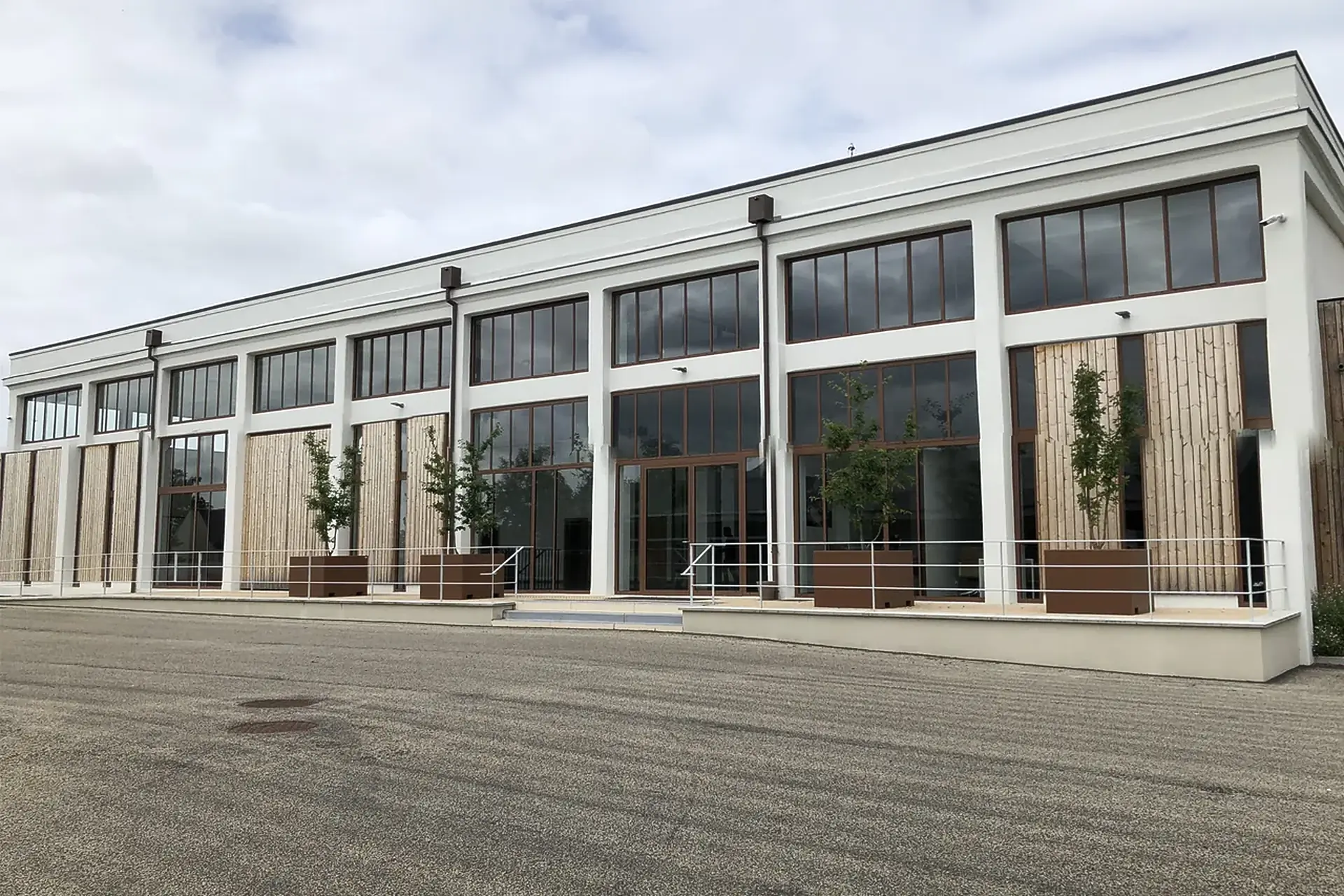
Long white two-storey building with tall brown-framed windows, timber-clad panels and small trees in planters, facing a gravel yard

The estate was created in 1664 at Chacé, just outside Saumur, and eight generations have run it since; the brothers Charly and Nady were the most recent, taking over with the 1969 vintage. Fifteen hectares across twenty-five plots. The wines spend two years in barrel and then years more in bottle in cellars cut into the tuffeau. Les Poyeux is three hectares of clay and drifted sand, Le Bourg very old vines on limestone, Brézé the Chenin.

In 2017 the Bouygues family bought the estate, and that is the question a listing has to answer: a reputation built over eight generations does not automatically survive a change of owner. The estate's own account — vines that have never seen the slightest chemical product, farmed organically for almost eight generations — is a claim rather than a finding, and we do not list on claims. What the register shows is narrower and more useful. Ecocert France certifies this estate for production and preparation, and the certificate runs across every vintage from 2017 onward. The handover year sits inside the certified run.

Two things it does not cover, and both belong on the page. Some Cabernet Franc parcels are recorded as in conversion rather than certified, so this is an estate still bringing everything under one certificate rather than one that has finished. And there is no biodynamic certification: no Biodyvin membership, nothing in the Demeter register, whatever the folklore around the Foucault years suggests. Organic is what is certified, and organic is what this listing claims.

“We were organic before it was fashionable.”
Bernard “Nady” FoucaultEighth generation, on the family’s farming, 2015 · Wine Spectator

Why it’s remarkable

Two wars, no chemicals
the reason the farming here was never a conversion
The brothers’ grandfather served in the First World War and their father in the Second, and both had seen chemical warfare. Neither would use chemicals on the vines — out of respect, as Wine Spectator put it when Charly Foucault died in 2015, for the vines, the soil and the people working in them. Most certified estates converted from something. This one had nothing to convert from.
Every vintage from 2017
the certificate spans the year the estate changed hands
A reputation built over eight generations does not automatically survive a change of owner, and the Bouygues family bought the estate in June 2017. Ecocert France certifies it for production and preparation, and the certified vintages run from 2017 onward — the handover year is inside the run, not beside it. That is the fact that turns a famous name into a listing.
Not finished yet
some Cabernet Franc parcels are in conversion, not certified
The certificate lists Cabernet Franc as both organic and in-conversion, so part of the plantings is still working through the transition. We say so rather than rounding it up: this is an estate bringing everything under one certificate, not one that has already got there. There is no biodynamic certification either — no Biodyvin membership and nothing in the Demeter register.
Fifteen hectares
across twenty-five plots, two years in barrel, cellars cut into the rock
The estate was created in 1664 at Chacé, outside Saumur. Les Poyeux is three hectares of clay and drifted sand; Le Bourg is very old vines on limestone; Brézé is the Chenin. Everything spends two years in barrel and then years more in bottle in cellars cut into the tuffeau, the soft white limestone the whole region is built on and into.
Independently certified, and checked against the issuing body’s own register. Not a compromise on quality — see how we verify.

Free Bacchus Verification

Track A
Formal third-party certification, confirmed against the issuing body’s own register.

Ecocert France organic

Certified1
  • Ecocert France (FR-BIO-01): certified organic for production and preparation, whole estate
Also on record1
  • Some Cabernet Franc parcels in conversion
Re-verified annually against the issuing body’s register. How re-verification works
The producer’s own siteclos-rougeard.com
Producers don’t pay to be here. There is no fee to be listed and no way to buy a higher tier. If the evidence doesn’t hold, the bottle isn’t here.
Flagship
Saumur-Champigny Les Poyeux

If you’re buying

Price
Around US$375 for Les Poyeux. Approximate, and allocation pricing moves more than most.
Drinking now
Les Poyeux is the approachable one and can be opened on release, though it will keep for years. Le Bourg asks for more patience.
Serving
Around 16°C — cool cellar, not fridge. A large glass, and give it an hour.
Availability
Allocation only — this is not a wine you find on a shelf. Rare Wine Co imports it to the United States; specialist Loire merchants handle it elsewhere. Expect a list rather than a stock level.
Tastes like
Red cherry and black olive with a savoury, tea-leaf grip rather than sweetness. Cabernet Franc as the whole wine, not a blending part.
Pairs with
Roast chicken, lentils, or a goat’s cheese from the same river.
Price bands are approximate and move with vintage, market and region. They are a guide, not a quotation.
Start here instead
Domaine Thierry Germain / Roches Neuves — Same appellation, a third of the price, and Germain calls Foucault his spiritual father.

Cheat sheet

Save it to your phone. Everything you need to recognise this producer, and three things worth saying about it, at a glance in a shop or across a table.

67 verified producers in France →

From the Journal

← Waterford DistilleryThe Verification StandardTroon Vineyard & Farm →

More Verified Houses · France

Where to go next

Three more from the cellar, chosen by what is in the glass rather than where it is from.

Eisele VineyardRed · United States Telmo RodríguezRed · Spain
↑