Skip to content
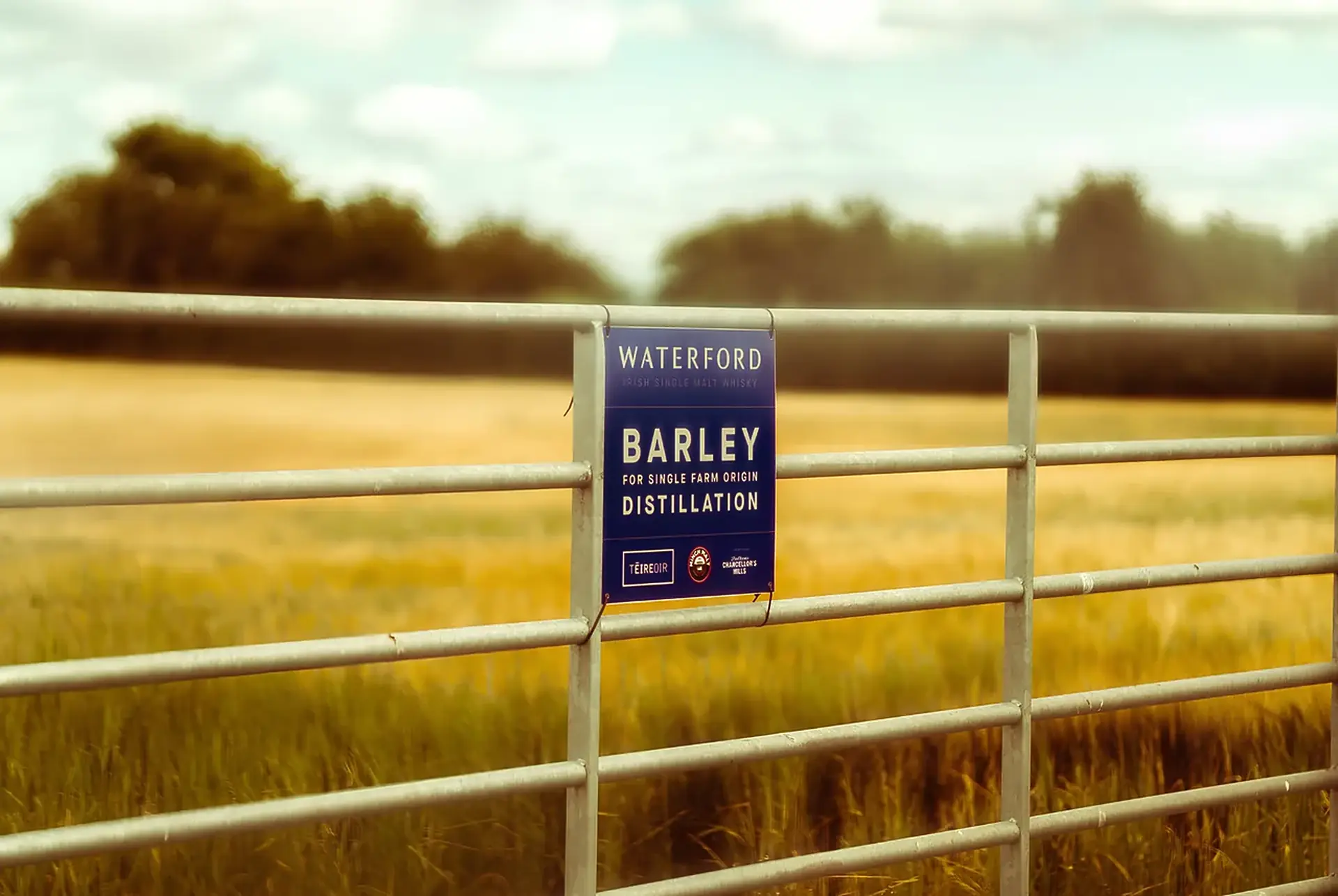
A metal farm gate with a Waterford sign for single farm origin barley, in front of a golden barley field and trees
Waterford, County WaterfordIrelandOrganic Irish Single Malt Whisky (Arcadian series)

Waterford Distillery

WAW-ter-ford
Gold TierTypically $90–200
Last verified · September 2026

Every bottle Waterford ever sold carried a code on the back. Typed into the distillery's site it returned the field the barley grew in — the farm, the soil type, the person who planted it, the weather that season. Not a region and not a county: a field. Doing that means keeping every farm's harvest separate through malting, storage, fermentation and distillation, never letting two fields meet in a tank, which is the opposite of what whisky production is built to do. By 2024 it meant barley from ninety-seven Irish farms across nineteen soil types, an agronomist on staff and a co-authored peer-reviewed paper on whether barley terroir was real at all.

Irish single malt means malted barley, pot stills, one distillery — not the blends most people picture when they hear Irish whiskey. Unpeated, the style runs lighter and more cereal-sweet than a Scotch of the same age: orchard fruit and grain rather than smoke. That is the ground Waterford chose, and it is why the barley mattered so much. With no peat and no heavy wood to hide behind, the difference between one field and the next has somewhere to show up.
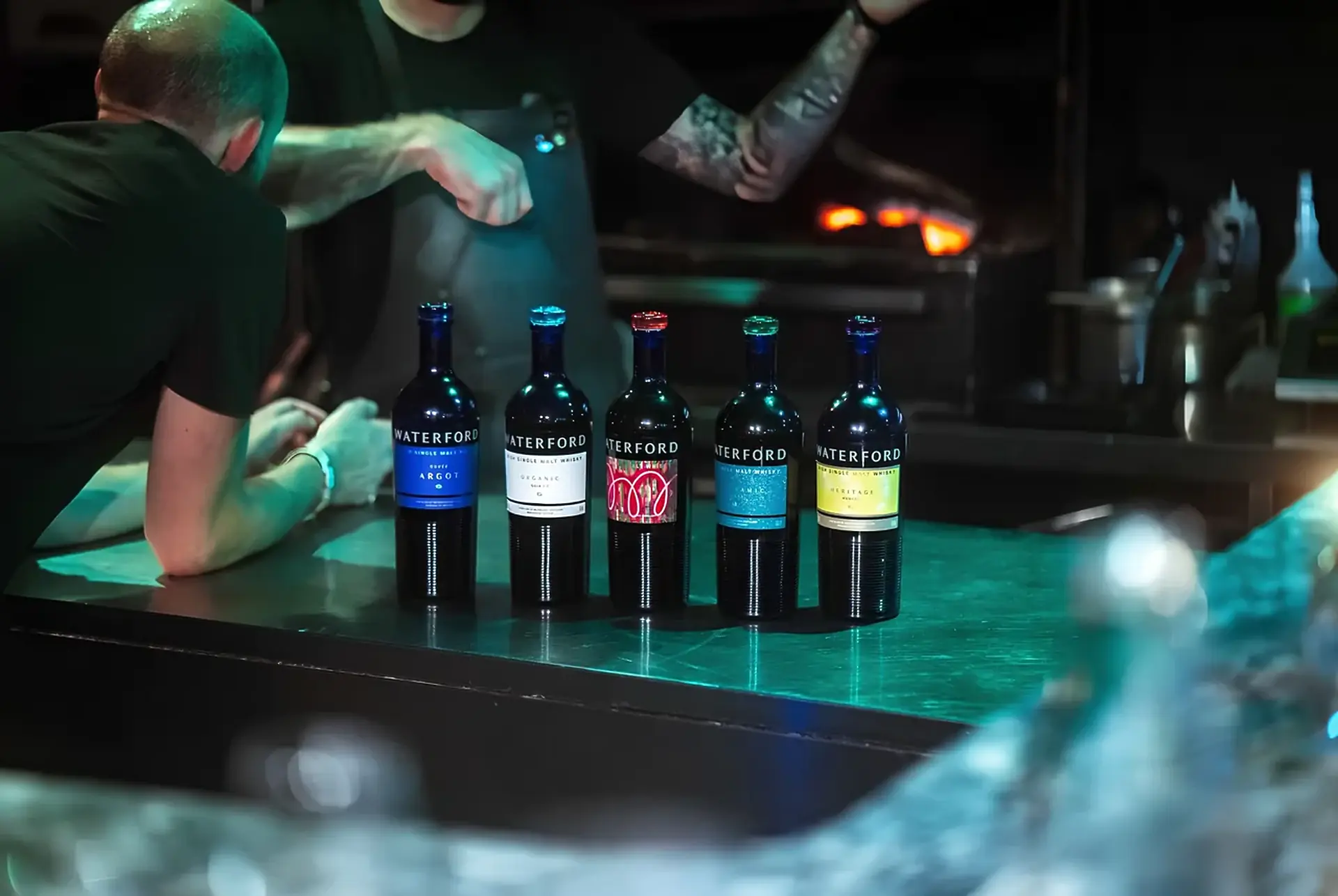
Five Waterford single malt bottles with blue, white, red, teal and yellow labels on a steel counter, two people leaning in, a fire glowing behind

The organic work sat inside that. Ireland had never had a certified organic whisky before the Organic: Gaia release of 2020, and Luna, the biodynamic bottling in the same Arcadian series, was distilled from barley grown on three Demeter-certified farms — Coilltroim at Donadea, Shalvanstown at Navan and Alan Mooney's at Kilcock. Those certificates belong to the farms rather than to the distillery, which is a distinction worth holding on to: what was verified is the barley. Mark Reynier founded the place after being outvoted on the sale of Bruichladdich, where he had run the organic barley programme; the same instinct — name the farm, publish the method, let the buyer check — is recognisable in both.

In November 2024 the distillery went into receivership. In March 2026 the receivers sold the distillery, the brand and the intellectual property to a Tennessee contract-distilling group for about six million euro. We wrote about that at length in the Journal, because the lesson is not that rigour fails but that nothing existed to reward it quickly enough.

In practical terms there is no producer channel behind this any more. What you find at retail is legacy stock, and when it is gone this listing goes with it.

“We weren’t just making whisky. We were trying to prove something.”
Neil ConwayHead brewer and production manager, on what the distillery was for, 2025 · Whisky Magazine

Why it’s remarkable

Ninety-seven farms
each one distilled separately, never blended into an average
By 2024 the barley came from ninety-seven Irish farms across nineteen soil types, and every harvest was kept apart through malting, storage, fermentation and distillation. The code on the back of the bottle resolved to the field it grew in — the farm, the soil, the season. Whisky production is built to blend and smooth out; this distillery was built to refuse to.
Two lines, two levels
organic at the distillery, Demeter at the farm — and the difference is the point
The Organic: Gaia release of 2020 was Ireland’s first certified organic whisky, and the organic certificate still covers that line. Luna, the biodynamic bottling in the same Arcadian series, is a different claim: its barley came from three Irish farms certified Demeter by BDA Certification — Coilltroim Biodynamic Farm at Donadea, Shalvanstown Organic Farm at Navan, and Alan Mooney’s farm at Kilcock. What that certifies is the barley. The distillery is not a listed Demeter operator, so its own statement that the whisky is Demeter certified is a producer claim and we do not carry it. The published validity on all three farm records runs to the end of 2025 with no 2026 status shown, which covers the harvests behind the stock on sale and says nothing about where those farms stand today.
Not the new owner
the certificate belongs to the predecessor, and it covers storing
The distillery, brand and intellectual property passed to a Tennessee contract-distilling group in March 2026. The maturing stock did not — the receivers kept it. The one organic certificate on the EU register is held by Renegade Waterford Distillery, the predecessor entity, for storing, and it covers the Arcadian bottlings on sale and nothing else. The present owner holds no organic certificate of its own.
31 December 2026
rechecked at the certificate’s expiry rather than on the annual cycle
A renewal to the predecessor, or a certificate issued to the present operator, keeps this listing. Neither, and it comes down at recheck. We are verifying what is certified and on sale today; we are claiming nothing about what the distillery becomes.
Independently certified, and checked against the issuing body’s own register. Not a compromise on quality — see how we verify.

Free Bacchus Verification

Track A
Formal third-party certification, confirmed against the issuing body’s own register.

Organic Trust CLG · Arcadian bottlings · Demeter at farm level

Certified2
  • Organic Trust CLG (IE-ORG-03): the certificate is held by the predecessor entity, for storing, to 31 December 2026
  • Demeter at farm level (BDA Certification) for the three growers behind Biodynamic Luna
This page covers

The Arcadian bottlings, to which the Organic Trust certificate is SKU-scoped.

Re-verified annually against the issuing body’s register. How re-verification works
The producer’s own sitewaterfordwhiskey.com
Producers don’t pay to be here. There is no fee to be listed and no way to buy a higher tier. If the evidence doesn’t hold, the bottle isn’t here.
Flagship
Organic Gaia 1.1 Single Malt
Best award
Gold, Organic Gaia Edition 2.1 · IWSC 2022

If you’re buying

Price
Around US$100 for Organic Gaia 1.1. Approximate, and it moves — this is a finite stock with nobody making more of it.
Drinking now
Ready now — whisky does not improve in the bottle. If the certification is what you are buying, the label has to say Organic Gaia or Biodynamic Luna.
Serving
Neat at room temperature, or a few drops of water to open it. No ice.
Availability
There is no producer channel behind this any more. What reaches retail is legacy stock — the bottlings that were in the market when the distillery stopped. Look for Organic Gaia or Biodynamic Luna by name; nothing else in the range is covered by the certificate.
Tastes like
Unpeated Irish single malt — barley sweetness, orchard fruit and a clean cereal line. The point was never a house style but the difference between one field and the next.
Pairs with
Soda bread and salted butter, or a hard sheep’s cheese.
Price bands are approximate and move with vintage, market and region. They are a guide, not a quotation.

Cheat sheet

Save it to your phone. Everything you need to recognise this producer, and three things worth saying about it, at a glance in a shop or across a table.

From the Journal

← Black EstateThe Verification StandardClos Rougeard →
↑