Skip to content
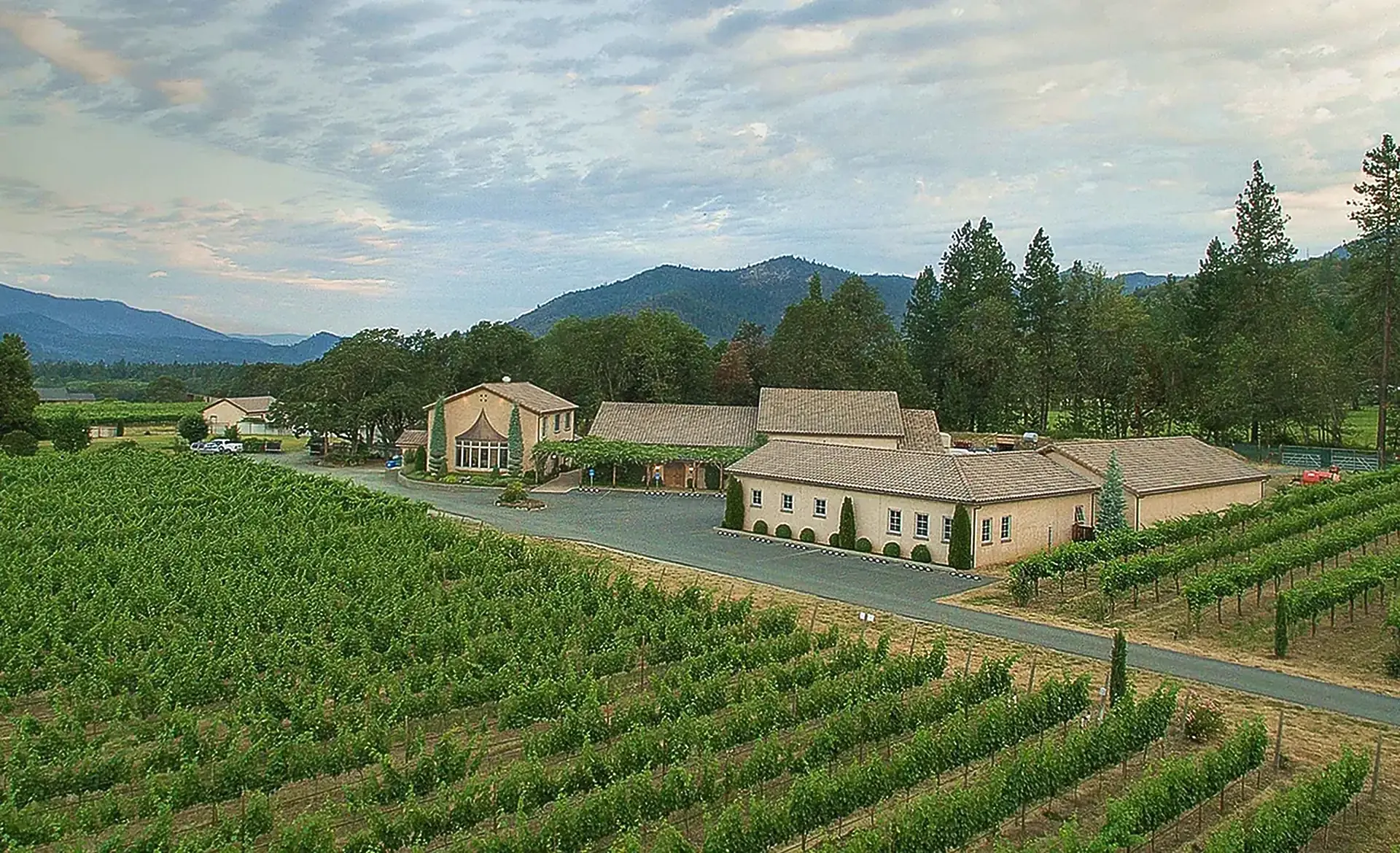
Aerial view of cream-walled, tile-roofed buildings beside a paved drive and green vine rows, with forested mountains behind
Applegate Valley, OregonUnited StatesBiodynamic / Regenerative Wine

Troon Vineyard & Farm

TROON · Applegate rhymes with apple-gate
Gold TierTypically $45–90
Last verified · September 2026

Craig Camp came to biodynamics a sceptic, and has said so in those words. He now runs the second winery in the world to be certified Regenerative Organic, after Tablas Creek. What persuaded him was compost rather than philosophy: Camp puts the farm's intake at four hundred tons of manure a year, composted for twelve months and spread at two tons an acre across the whole property, every year.

The Applegate Valley is not the Oregon most people mean. It sits in the far south-west of the state, twenty-five miles from the California border and on the other side of a mountain range from the Pinot Noir country of the Willamette. Camp describes it as cooler and wetter than Napa but warmer and drier than the Willamette, and the wines follow that: moderate alcohol, high acidity. The grapes are Rhône and Iberian rather than Burgundian — Vermentino, Viognier, Grenache, Syrah, Tannat, Mourvèdre — which is unusual enough in Oregon to be the point of the place.
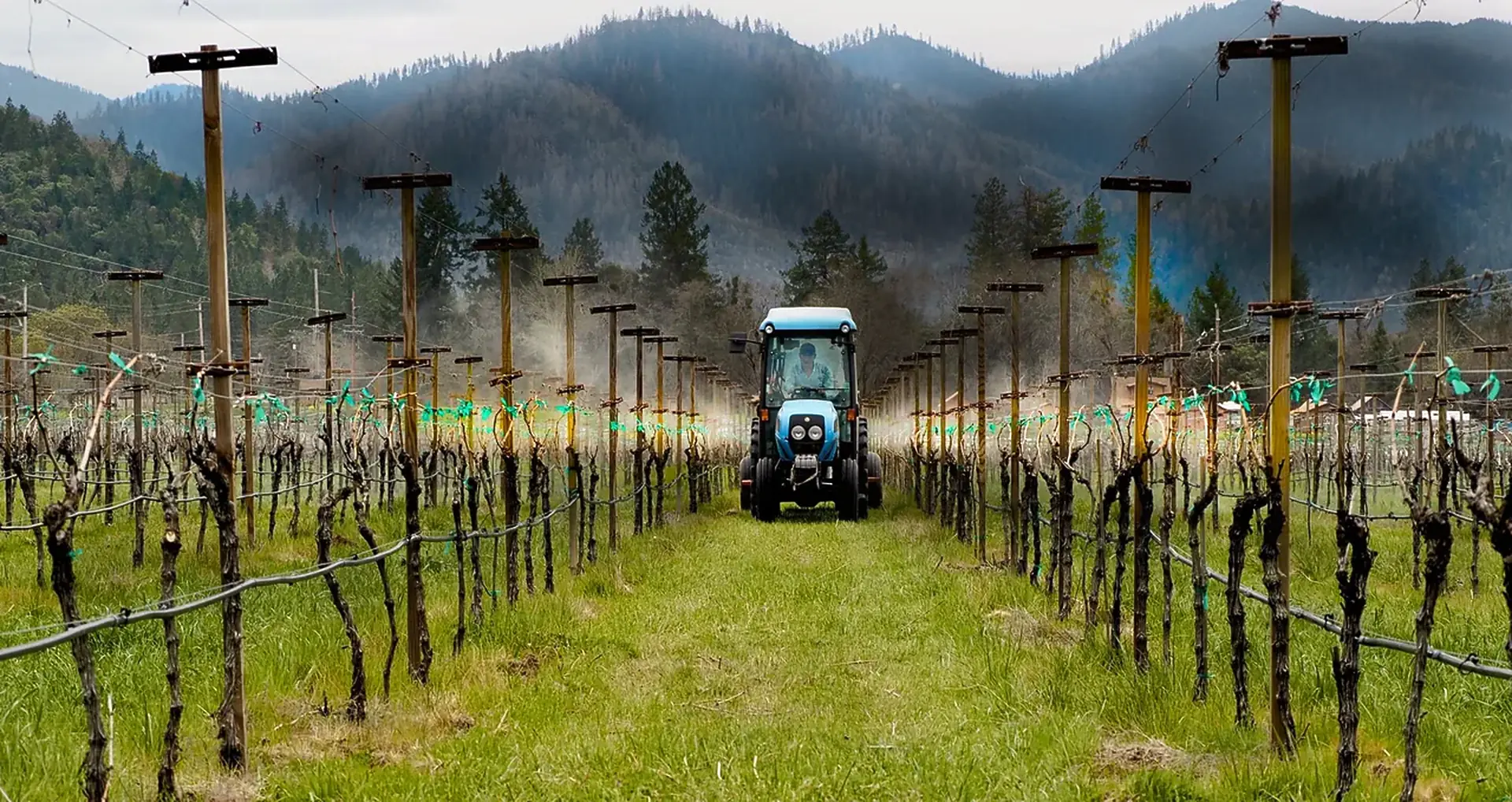
A blue tractor drives down a grassy alley between rows of bare, pruned vines on T-shaped posts, with forested mountains behind

The bottle to start with is an amber wine, and the word is worth unpicking, because it sounds like a marketing invention and is not. White grapes are normally pressed straight away and fermented off their skins. Leave them on the skins the way you would for a red, and what comes out is amber, with grip and texture where a white would have none. Troon's is Vermentino-led and ferments on skins for three to four weeks. The organic register lists it as Kubli Bench Amber up to the 2022 vintage and Ascendant Amber from 2023.

Calling this a vineyard undersells it. The USDA's organic register lists Troon Vineyard under CCOF for crops, for livestock and for winemaking, and the certified items include mixed vegetables, grape leaves, chicken eggs and red wine vinegar alongside the wines, vintage by vintage. The register puts the certified operation at fifty-nine acres, on a farm the estate describes as a hundred. The laying hens are on the certificate, and so is the vinegar.

Three certifications sit on this farm and they do different work. CCOF is the organic one, and it is the one confirmed in the USDA's own register — effective 2019 for the winery, 2020 for the crops. Demeter is the biodynamic one, taken on in 2020. Regenerative Organic Certification is the newest and the most demanding, because it asks a farm to show that its soil is improving rather than merely holding. Troon says it holds that one at Gold, the top level. That last part is the farm's own account and we could not find it in a public register, so we tell you whose claim it is.

“Regenerative means to put in more than you take out.”
Craig CampGeneral manager, writing on his own journal, 2020 · Wine Camp

Why it’s remarkable

400 tons a year
the compost that changed a sceptic’s mind
Camp has said he was sceptical of biodynamics to say the least when he first met it. What persuaded him was the ground rather than the theory. Camp puts the intake at four hundred tons of manure a year, composted for twelve months and spread at two tons an acre over the whole property, annually. Compost at that scale is a running cost with no line on the label to justify it.
Second in the world
the second winery ever certified Regenerative Organic
Tablas Creek in Paso Robles was first, in 2020; Troon followed. The standard is unusual in that it will not accept a description of good practice. It wants evidence that soil carbon, biodiversity and working conditions are moving in the right direction over time, which means a farm has to be measured twice before it can pass once.
Hens, vegetables, vinegar
what the organic certificate covers besides grapes
The USDA organic register lists Troon Vineyard under CCOF for crops, for livestock and for winemaking. The certified items run from wine through mixed vegetables and grape leaves to chicken eggs and red wine vinegar. The register puts the certified operation at fifty-nine acres, on a farm the estate describes as a hundred. Most wine estates hold one scope; this one holds three.
Gold, on the farm’s word
the single claim here we could not check in a register
Troon describes itself as Regenerative Organic Gold Certified, the top of the three levels. We found no public register that publishes the level, so that part rests on the farm’s own account rather than on a document we have read. The organic certification underneath it is confirmed in the USDA database, and the biodynamic one dates from 2020.
Independently certified, and checked against the issuing body’s own register. Not a compromise on quality — see how we verify.

Free Bacchus Verification

Track A
Formal third-party certification, confirmed against the issuing body’s own register.

CCOF Organic · Demeter Biodynamic · Regenerative Organic Certified

Certified3
  • CCOF Organic (NOP 5561005893) — crops, livestock and winemaking, confirmed in the USDA organic register
  • Demeter Biodynamic
  • Regenerative Organic Certified
Re-verified annually against the issuing body’s register. How re-verification works
The producer’s own sitetroonvineyard.com
Producers don’t pay to be here. There is no fee to be listed and no way to buy a higher tier. If the evidence doesn’t hold, the bottle isn’t here.
Flagship
Troon “Kubli Bench” Amber

If you’re buying

Price
Around US$45 for the amber; the 2023 Ascendant Amber has been seen nearer $38. Approximate, and it moves by vintage.
Drinking now
Buy the current vintage and open it. This is a wine made to be drunk rather than kept, and the amber in particular shows best young.
Serving
Cool but not cold, around 12–14°C. Use a red wine glass — a narrow white glass shuts it down.
Availability
Sold direct from the farm in Oregon and through independent merchants and specialist importers. Small production; not a supermarket bottle.
Tastes like
A white wine with the grip of a red. Citrus peel, ginger and dried flowers, dry and savoury rather than sweet or fruity.
Pairs with
Roast chicken, hard sheep’s cheese, or anything cooked with ginger or turmeric.
Price bands are approximate and move with vintage, market and region. They are a guide, not a quotation.

Cheat sheet

Save it to your phone. Everything you need to recognise this producer, and three things worth saying about it, at a glance in a shop or across a table.

32 verified producers in United States →

From the Journal

← Clos RougeardThe Verification StandardFrog's Leap Winery →

More Verified Houses · United States

Where to go next

Three more from the cellar, chosen by what is in the glass rather than where it is from.

RadikonAmber · Italy Weingut Paul AchsRed · Austria Domaine GaubyRed · France
↑