Skip to content
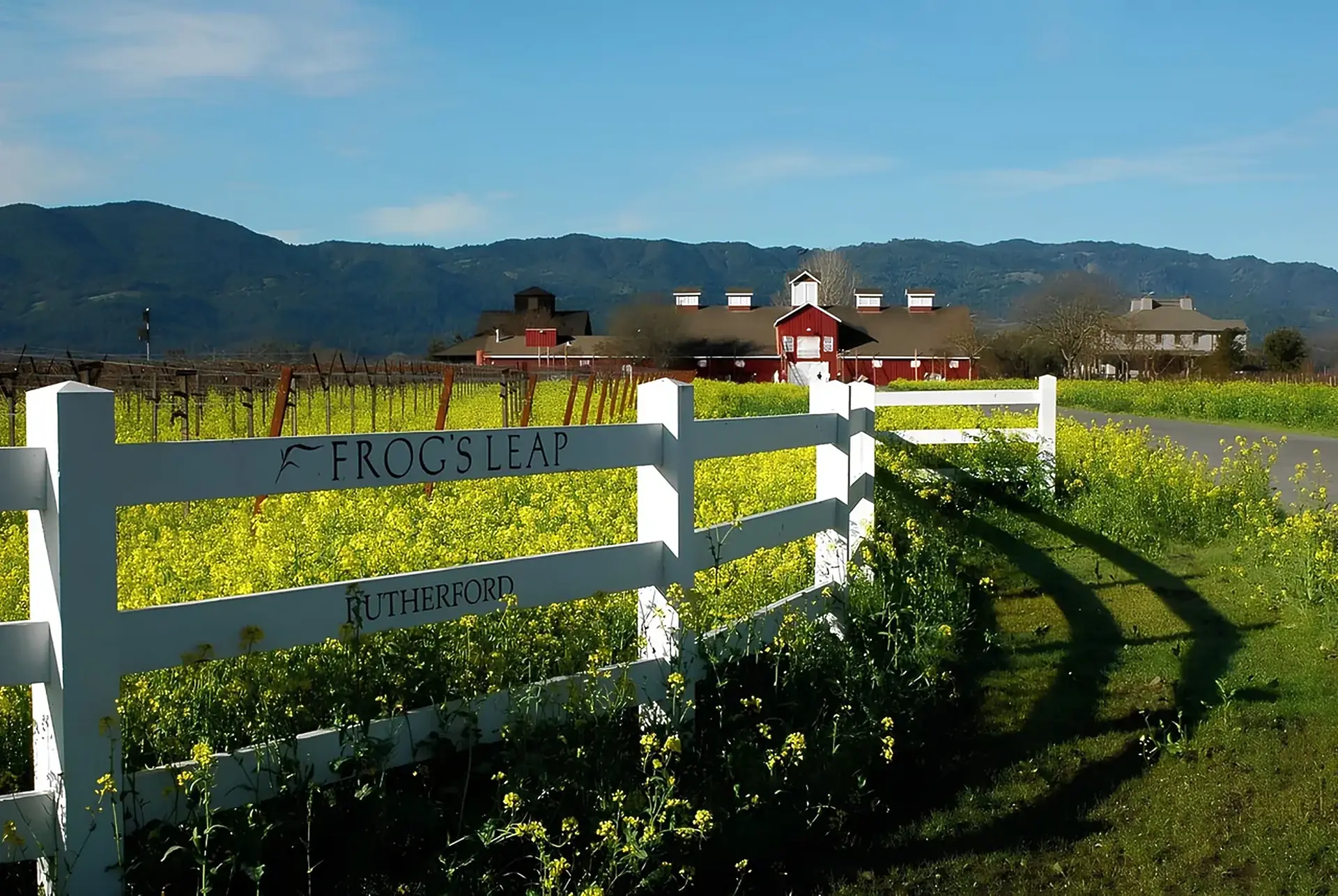
White fence lettered Frog's Leap Rutherford beside a field of yellow flowers, with a red barn-style building and hills behind
Rutherford, Napa ValleyUnited StatesOrganic Wine

Frog's Leap Winery

FROGZ leap · Rutherford is RUTH-er-ferd
Gold TierTypically $45–90
Last verified · September 2026

Napa irrigates. Nearly all of it does — drip line down every row, water on demand, vines that never have to go looking. Frog's Leap does not. Every acre it farms is dry-farmed, which means the vines are given nothing after they are planted and have to send roots down far enough to find water themselves. It costs yield and it costs sleep in a dry year, and John Williams has farmed that way since the 1980s because he is convinced the wine is better for it.

Williams grew up on a dairy farm in western New York and came to California to make wine without ever connecting the two things. He started Frog's Leap in 1981 beside Mill Creek, on a plot where someone had once raised frogs and sold them by the dozen, and the joke in the name stuck. He is drier about his own work than most owners: he told World of Fine Wine in 2023 that he considers himself a better white winemaker than a red one.
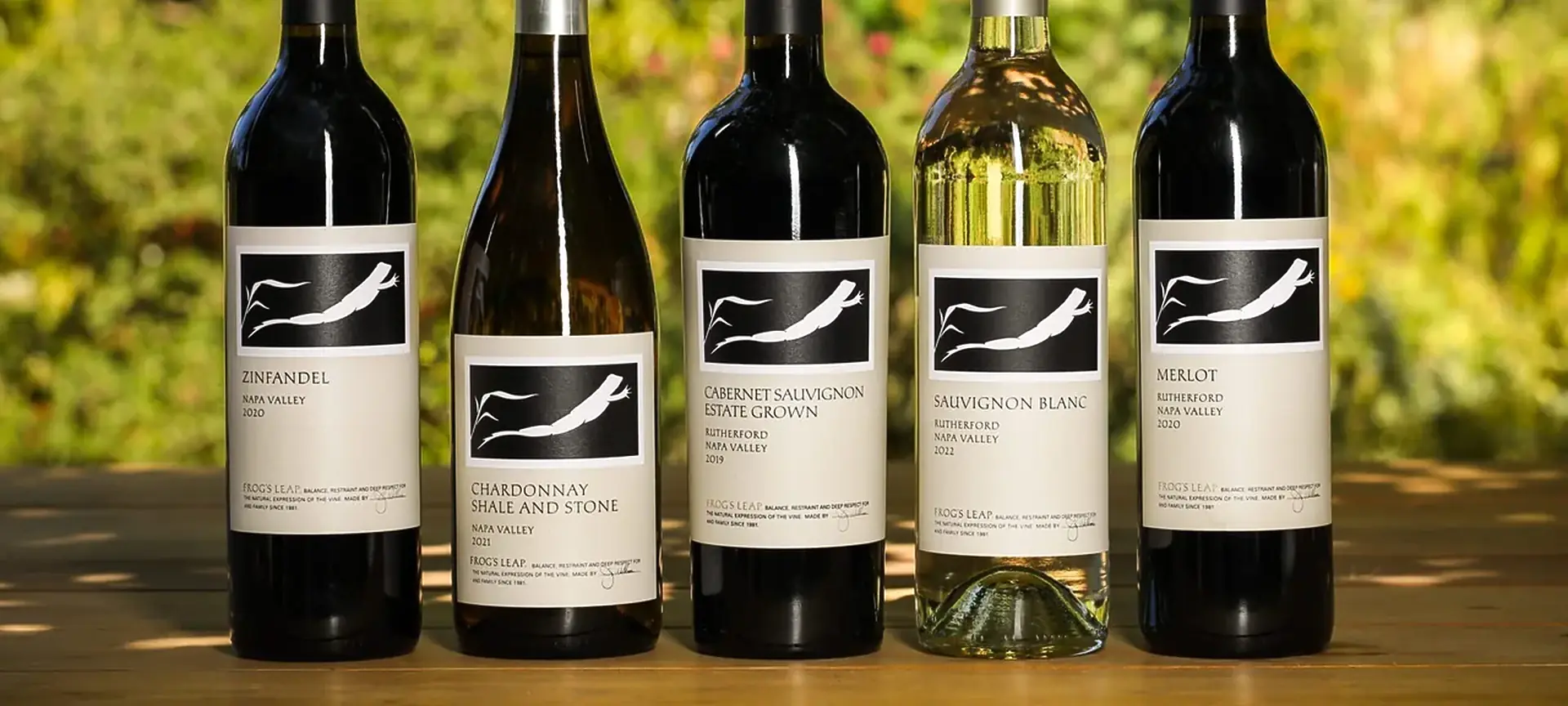
Five Frog's Leap bottles in a row on a wooden table: Zinfandel, Chardonnay, Cabernet Sauvignon, Sauvignon Blanc and Merlot

The organic side is not a recent conversion. The USDA's National Organic Program register lists Frog's Leap Winery under CCOF with an effective date of 24 July 1997 for its crops, across 151 acres — wine grapes, olives, stone fruit, vegetables. The entry has been there for twenty-nine years.

The winery holds an organic handling certificate too, and the products on it are extra virgin olive oil, dried chillies and a peach chipotle hot sauce. The wine is not on it. That is not a hole in the farming — the fruit is certified and the register says so. It means Frog's Leap does not sell its wine as certified organic wine, and neither do we. What is certified here is how the grapes are grown, and that is what this listing claims.

Rutherford is the middle of Napa Valley and its Cabernet is the valley's reference point: dark fruit with a dry, dusty edge that growers there call Rutherford dust. The Estate Grown Cabernet is the flagship and the wine behind the house's 93 points from Wine Spectator.

“As far as I knew, wine had nothing to do with farming.”
John WilliamsFounder and winemaker, on arriving in California, 2023 · World of Fine Wine

Why it’s remarkable

Not one drip line
every acre dry-farmed, in a valley that irrigates
Napa runs on drip irrigation. Frog’s Leap gives its vines nothing after planting, so the roots have to go down and find water for themselves. The bill is paid in yield and in nerve during a dry year, and Williams has farmed this way since the 1980s on the argument that the wine is better for it.
24 July 1997
the effective date on its entry in the USDA organic register
The National Organic Program lists Frog’s Leap Winery under CCOF with crops certified from that date, across 151 acres of wine grapes, olives, stone fruit and vegetables. That entry has stood for twenty-nine years, which is checkable rather than remembered.
Olive oil, chillies, hot sauce
what the winery’s organic handling certificate actually covers
The same register shows a handling certificate, and the products on it are extra virgin olive oil, dried chillies and a peach chipotle hot sauce. The wine is not on it. The fruit is certified; the wine is not sold as certified organic wine. It is a narrower claim than it first looks, and it is the one the register supports.
Independently certified, and checked against the issuing body’s own register. Not a compromise on quality — see how we verify.

Free Bacchus Verification

Track A
Formal third-party certification, confirmed against the issuing body’s own register.

CCOF Organic · the vineyards, not the wine

Certified1
  • CCOF Organic (NOP 5561001234) — vineyards certified since 24 July 1997, 151 acres
Not covered1
  • The wine: the winery's organic handling certificate covers olive oil, chillies and hot sauce
Re-verified annually against the issuing body’s register. How re-verification works
The producer’s own sitefrogsleap.com
Producers don’t pay to be here. There is no fee to be listed and no way to buy a higher tier. If the evidence doesn’t hold, the bottle isn’t here.
Flagship
Estate Grown Cabernet Sauvignon, Rutherford
Best award
Platinum, Estate Grown Cabernet Sauvignon 2013 · Decanter World Wine Awards 2016

If you’re buying

Price
Around US$69 for the Estate Grown Rutherford Cabernet. Approximate, and it varies by state.
Drinking now
The Rutherford Cabernet drinks well on release and will keep for a decade or more.
Serving
16–18°C. Half an hour open, or a decant, does more for it than years in a rack.
Availability
Widely available in the United States through Vineyard Brands, and direct from the winery in Rutherford.
Tastes like
Dark fruit with a dry, dusty edge rather than sweetness or heat. Napa Cabernet at the restrained end.
Pairs with
Roast lamb, mushrooms, or a hard cheese with some age on it.
Price bands are approximate and move with vintage, market and region. They are a guide, not a quotation.

Cheat sheet

Save it to your phone. Everything you need to recognise this producer, and three things worth saying about it, at a glance in a shop or across a table.

32 verified producers in United States →

From the Journal

← Troon Vineyard & FarmThe Verification StandardCorison Winery →

More Verified Houses · United States

Where to go next

Three more from the cellar, chosen by what is in the glass rather than where it is from.

Waterkloof WinesRed · South Africa Cullen WinesRed · Australia Weingut Paul AchsRed · Austria
↑