Skip to content
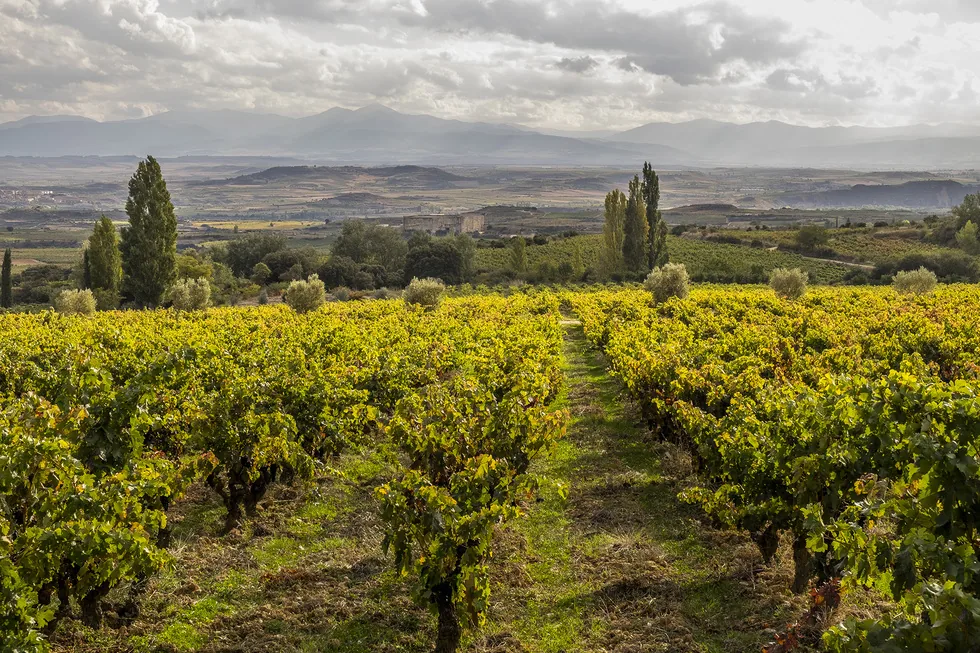
Vine rows in yellow-green autumn leaf, with poplars, a wide plain and layered blue mountains beyond under heavy cloud
Rioja, Ribera del Duero, Rías Baixas and other Spanish regionsSpainOrganic Wine

Telmo Rodríguez

TEL-mo rod-REE-geth
Gold TierTypically $200+
Last verified · August 2026

Telmo Rodríguez left his family's Rioja estate in the 1990s and spent the following decades doing something unusual: travelling Spain looking for forgotten vineyards in regions the modern industry had written off, and restarting them.

Málaga, Rueda, Toro, Cebreros, Rías Baixas — the project has been to recover old plantings and local varieties before they disappeared entirely, which in several cases happened with a few years to spare. The farming across the estates is organic and biodynamic in practice.
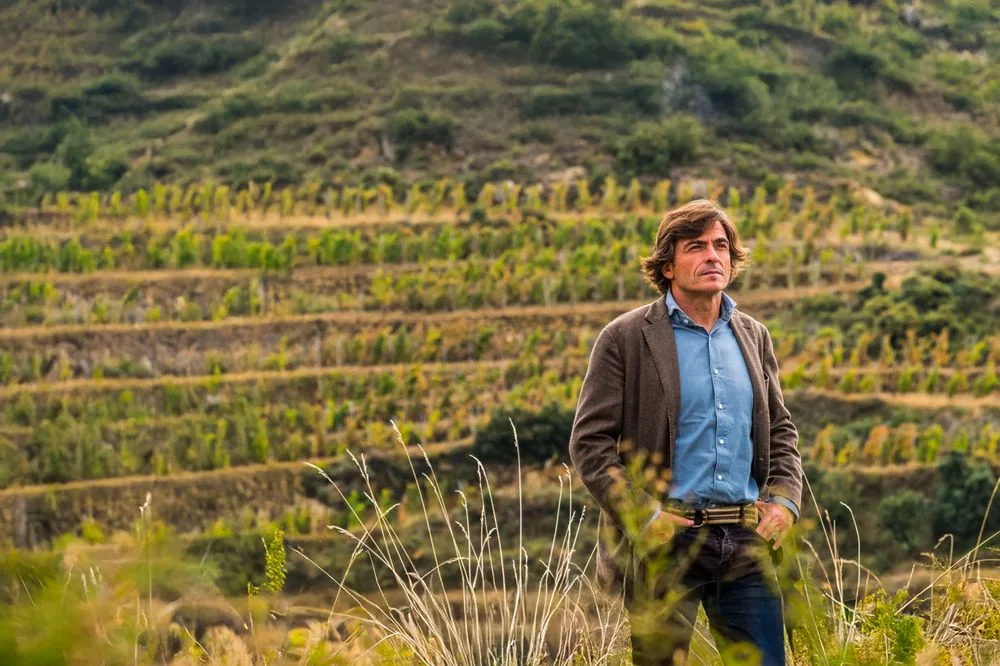
A man in a brown jacket and blue shirt stands before steep terraced vineyards, with tall grasses in the foreground

Eighty hectares, divided into three hundred and fifty-five separate plots scattered from Málaga to Valdeorras, at an average of under a quarter of a hectare each. This is the precise opposite of how a modern wine business is assembled.

Las Beatas, the recovered hillside in Rioja Alavesa, is the flagship at around three hundred and fifty dollars. Tim Atkin's Rioja Report has awarded Gold.

This was a Track B listing until August 2026, on the basis that certification was underway. It has since completed, and we checked it against the register rather than take the estate’s word. Spanish organic certification is territorial, so a producer farming five regions certifies five times: the EU register returns current certificates under four separate control bodies, each covering unprocessed plants — the farming itself — as well as wine.

“the future is in the past”
Telmo RodríguezCo-founder, on why he spends his time on abandoned vineyards, 2025 · Liberty Wines

Why it’s remarkable

355 plots
eighty hectares, divided into three hundred and fifty-five pieces
An average of under a quarter of a hectare each, scattered from Málaga to Valdeorras. This is the precise opposite of how a modern wine business is assembled, and every one of those parcels has to be visited, worked and picked separately.
1994, one plot
the whole thing started with a single parcel in Navarra
Rodríguez left his family’s Rioja estate and began Compañía de Vinos with Pablo Eguzkiza on one piece of ground. The project since has been to find vineyards the modern industry had written off and restart them.
A few years to spare
some of these plantings were close to gone
The recoveries include Moscatel in Málaga’s Axarquía and Garnacha at Cebreros north of Madrid — old vineyards and local varieties that in several cases would have disappeared entirely within a few more seasons. Nobody was going to replant them.
Now certified
Certification completed, and re-checked against the register rather than taken on trust
The farming was organic and biodynamic in practice for years before the paperwork caught up. It has now been certified, and we confirmed it against the EU register rather than the estate’s own material. That is a different position from the producers elsewhere on this list who have decided against certifying on principle, and we would rather distinguish the two than let one word cover both.
Independently certified, and checked against the issuing body’s own register. Not a compromise on quality — see how we verify.

Free Bacchus Verification

Track A
Formal third-party certification, confirmed against the issuing body’s own register.

Certified organic, four Spanish control bodies (TRACES)

Certified1
  • Certified organic, registry-verified in TRACES under four Spanish control bodies — ES-ECO-001-AN, ES-ECO-016-CL, ES-ECO-022-GA and ES-ECO-026-VAS — each covering unprocessed plants as well as wine
Re-verified annually against the issuing body’s register. How re-verification works
The producer’s own sitetelmorodriguez.com
Producers don’t pay to be here. There is no fee to be listed and no way to buy a higher tier. If the evidence doesn’t hold, the bottle isn’t here.
Flagship
Las Beatas
Best award
Gold · Tim Atkin Rioja Report

If you’re buying

Price
Around US$350 for the flagship bottling. Approximate, and it moves with vintage and market.
Drinking now
The regional bottlings are ready on release and improve for several years. Las Beatas is made in tiny quantity and rewards a decade.
Serving
Reds at 16–17°C, whites at 11–12°C. Decant a young Las Beatas for an hour.
Availability
Generally obtainable through specialist retailers.
Tastes like
Spanish reds and whites made without the oak signature — red fruit, herbs and a savoury, transparent structure that varies by region.
Pairs with
Roast lamb, grilled vegetables, or a hard sheep’s cheese.
Price bands are approximate and move with vintage, market and region. They are a guide, not a quotation.

Cheat sheet

Save it to your phone. Everything you need to recognise this producer, and three things worth saying about it, at a glance in a shop or across a table.

20 verified producers in Spain →

From the Journal

← Bodegas Lanzaga (Las Beatas)The Verification StandardThe Botanist →

More Verified Houses · Spain

Where to go next

Three more from the cellar, chosen by what is in the glass rather than where it is from.

Seresin EstateRed · New Zealand Eisele VineyardRed · United States Domaine DujacRed · France
↑