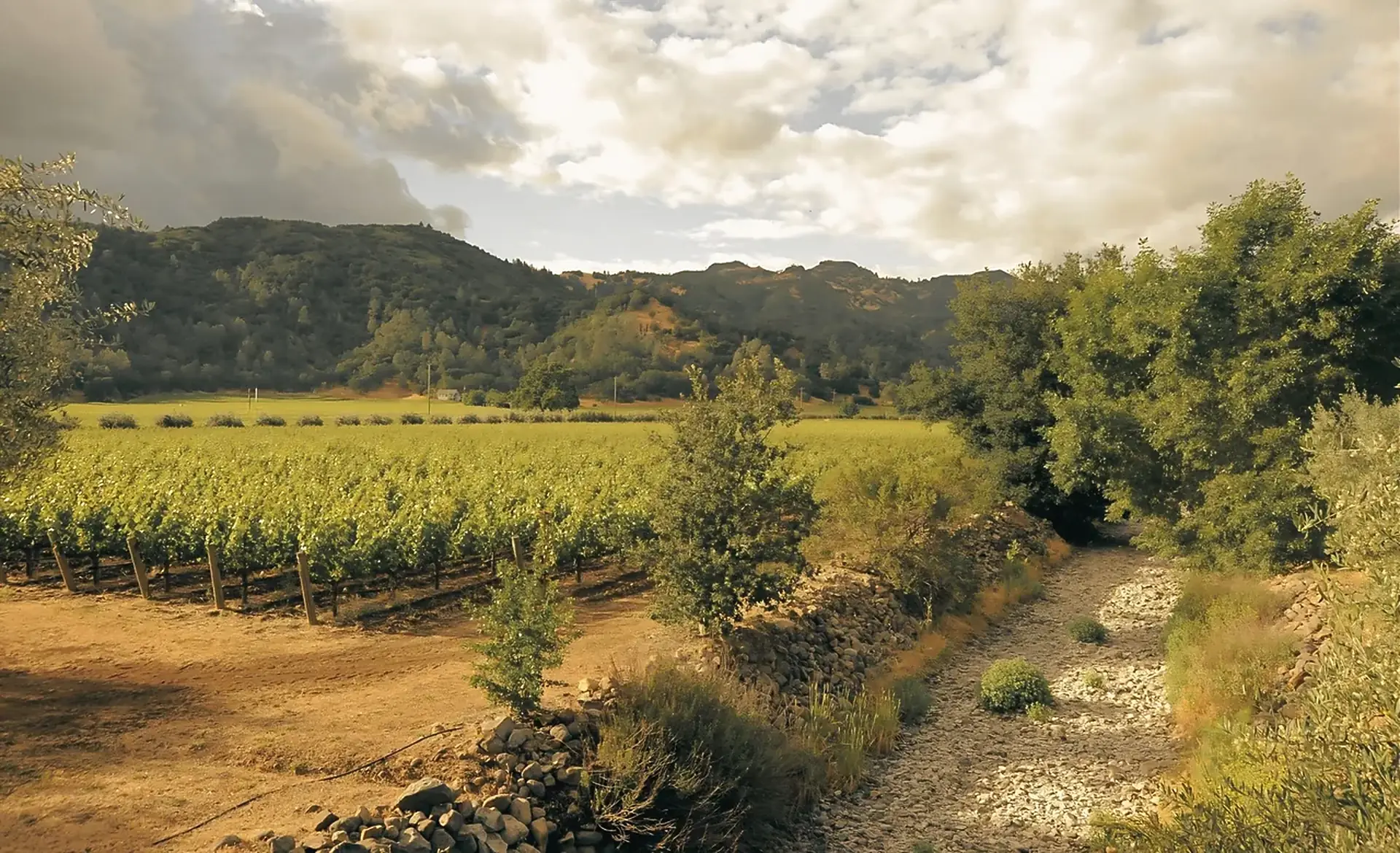
Eisele Vineyard
The Free Bacchus Story
Milton and Barbara Eisele bought the property in 1969, in their sixties, which is not the age at which most people start a farming career. They did not make wine. They grew fruit and sold it, and in 1971 Paul Draper at Ridge put the vineyard's name on a bottle, one of California's earliest vineyard-designated wines. Draper made a single vintage from it. The estate's reputation is older than its winery by about twenty years.
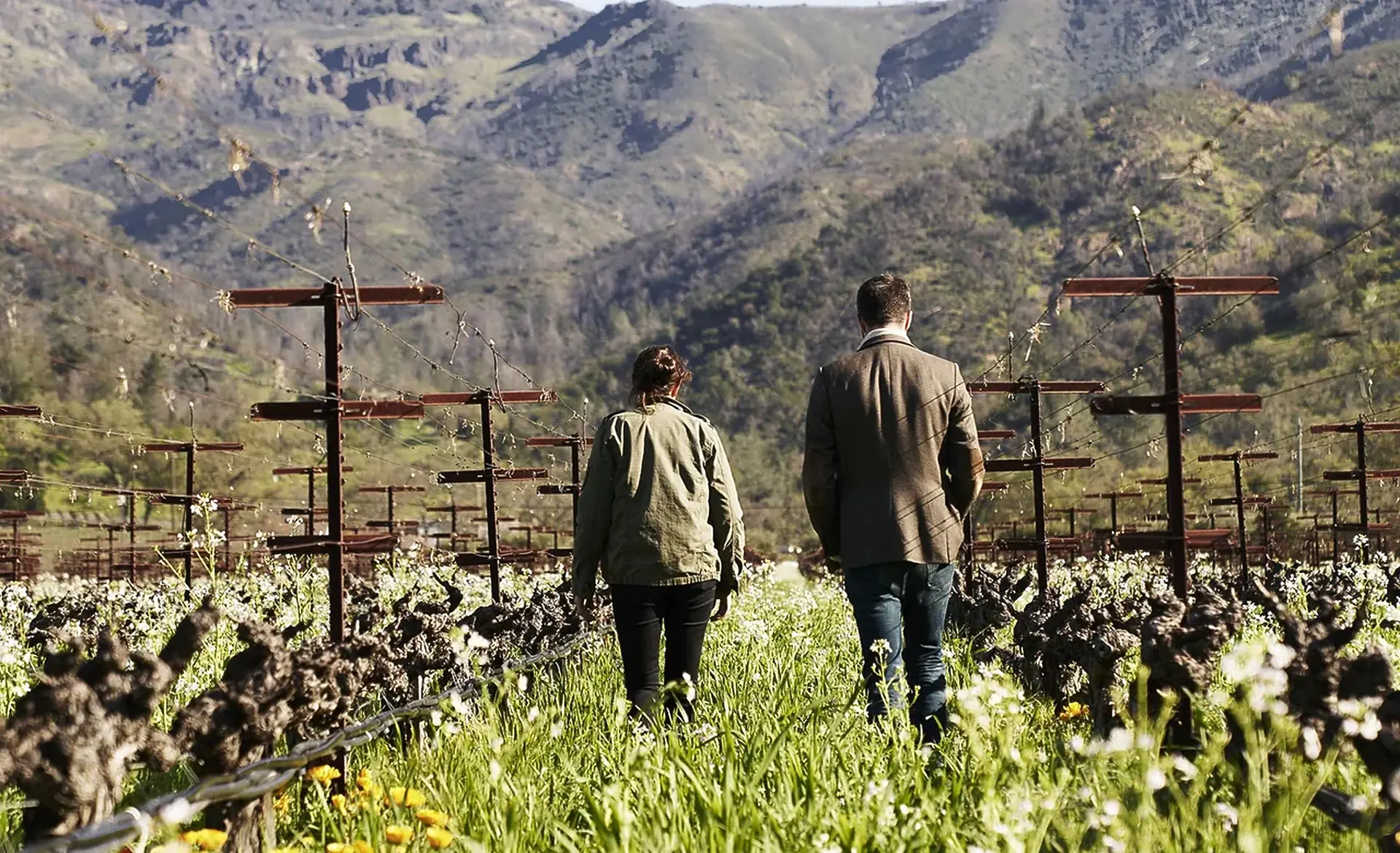
Daphne and Bart Araujo bought it in 1990 and kept it for twenty-three. They went organic in 1998 and biodynamic in 2000, at a point in Napa when that invited ridicule rather than interest. Araujo is dry about it: he told Club Oenologique in 2021 that they were attacked for farming biodynamically on the grounds that none of it can be proved scientifically. His own evidence was the kind a farmer collects rather than a laboratory — within a year of converting, he said, the sunburn on the fruit stopped, and a mite problem in the Petit Verdot went away.
In 2013 they sold to François-Henri Pinault. Araujo's account of why is the most revealing thing he has said about the place: they could not hand it to a buyer who would treat it as an asset, and the deciding qualification was that the buyer already owned Château Latour — a house with the history, and with its own biodynamic farming. Latour is listed a few pages away in this cellar, on an Ecocert certificate.
What the register holds today is narrower than the folklore and more useful. The USDA's organic database lists the operation as Eisele Vineyard Estate, formerly Araujo Estate, certified by CCOF with an effective date of 2 September 2004 and still Certified in the current snapshot — an entry that has now outlasted two changes of ownership. The certified handling items are olive oil. Not wine. So the fruit here is certified organic and the wine is not sold as organic wine, which is the same shape of claim as its neighbours at Corison and Frog's Leap.
The biodynamic half needs stating precisely, because it is the part most likely to be repeated wrongly. The vineyard was certified Biodynamic by Demeter in 2002, under the Araujos. The present estate publishes that it has been farmed biodynamically since 2000 and names no certifying body, and we could not confirm a current Demeter certificate. So this listing rests on the organic certificate, which the register confirms, and records the biodynamic certification as the historical fact it is.
The wine comes off thirty-eight acres of vines, about three quarters of them Cabernet Sauvignon, on an alluvial fan of volcanic cobble below the Palisades; roughly two thousand cases, and it is one of the most sought-after bottles in California. The 2019 took 100 points from Wine Advocate; so did the 2013 and the 2021. It is sold by allocation and it is priced accordingly.
“You can’t scientifically prove any of this.”
Why it’s remarkable
Free Bacchus Verification
CCOF Organic
Certified1
- CCOF Organic (NOP 5561001274) — listed as Eisele Vineyard Estate, formerly Araujo Estate; certified 2 September 2004 and still current
Also on record2
- The handling certificate covers olive oil rather than wine
- Demeter Biodynamic certification dates from 2002 under the previous owners; no current certificate was found and the estate publishes practice rather than a body
If you’re buying
Cheat sheet
Save it to your phone. Everything you need to recognise this producer, and three things worth saying about it, at a glance in a shop or across a table.