Skip to content
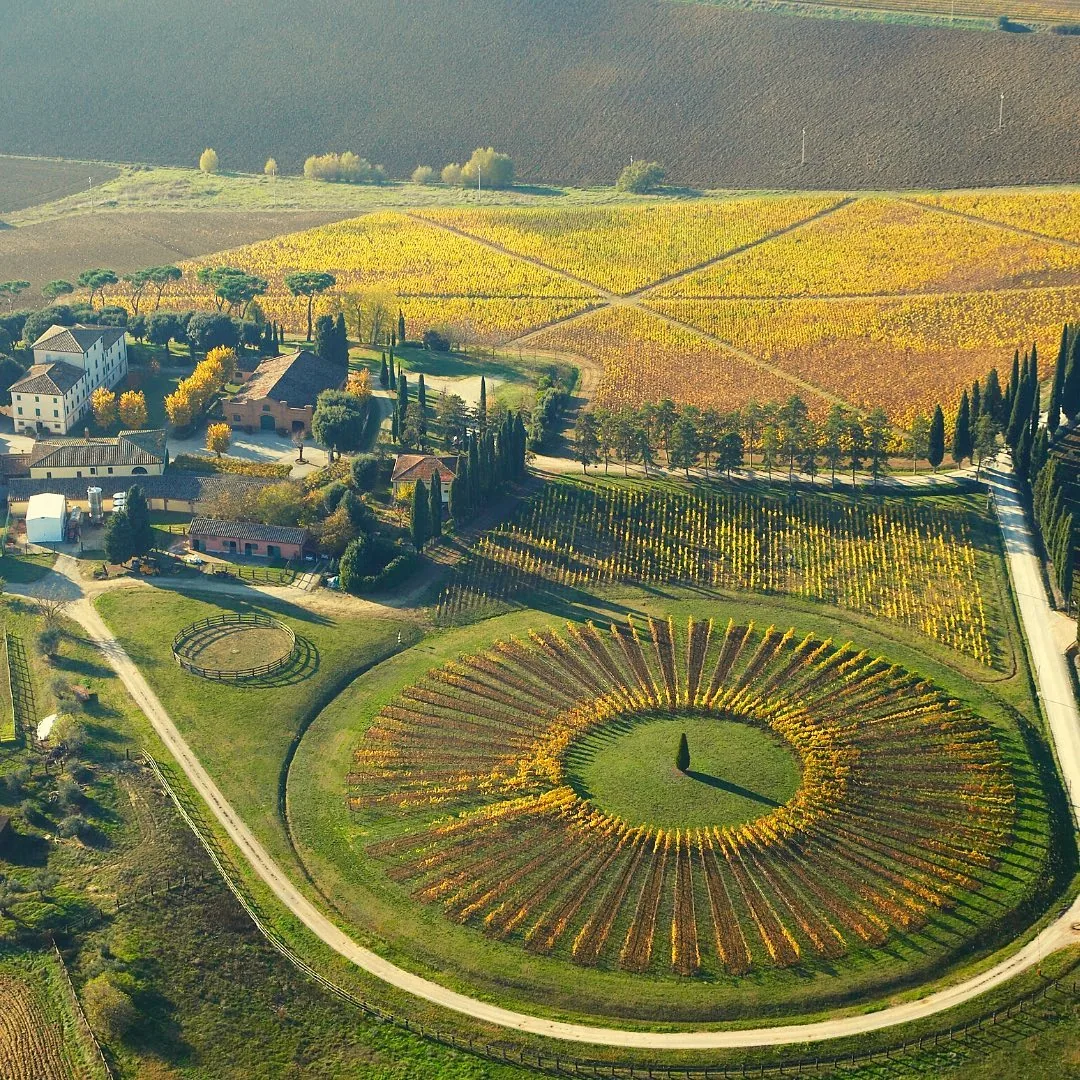
Aerial view of farm buildings beside a vineyard planted in a circle of radiating rows around one cypress, in autumn
Montepulciano, Tuscany, ItalyItalyBiodynamic Wine

Avignonesi

ah-veen-yo-NAY-zee · Montepulciano is mon-te-pul-CHAH-no
Gold TierTypically Under $45
Last verified · August 2026

The Vin Santo goes into fifty-litre caratelli, is sealed, and is left in an unheated loft for about ten years. No temperature control, no topping up, no intervention of any kind — just the full swing of Tuscan summers and winters working on it. The yield off the dried grapes is minute.

Virginie Saverys came to the estate from shipping law rather than from wine. She took an initial thirty per cent in 2007 to help the previous owners out, bought the property outright in 2009, and had a biodynamic team in place inside a year. The conversion was not a marketing decision taken after the fact; it started almost immediately.

The scale is the interesting part. 175 hectares across eleven vineyards, ten in Montepulciano and one in Cortona, described in circulation as the largest certified biodynamic estate in Italy. We record that description as one we have not checked. The size itself is not in doubt.
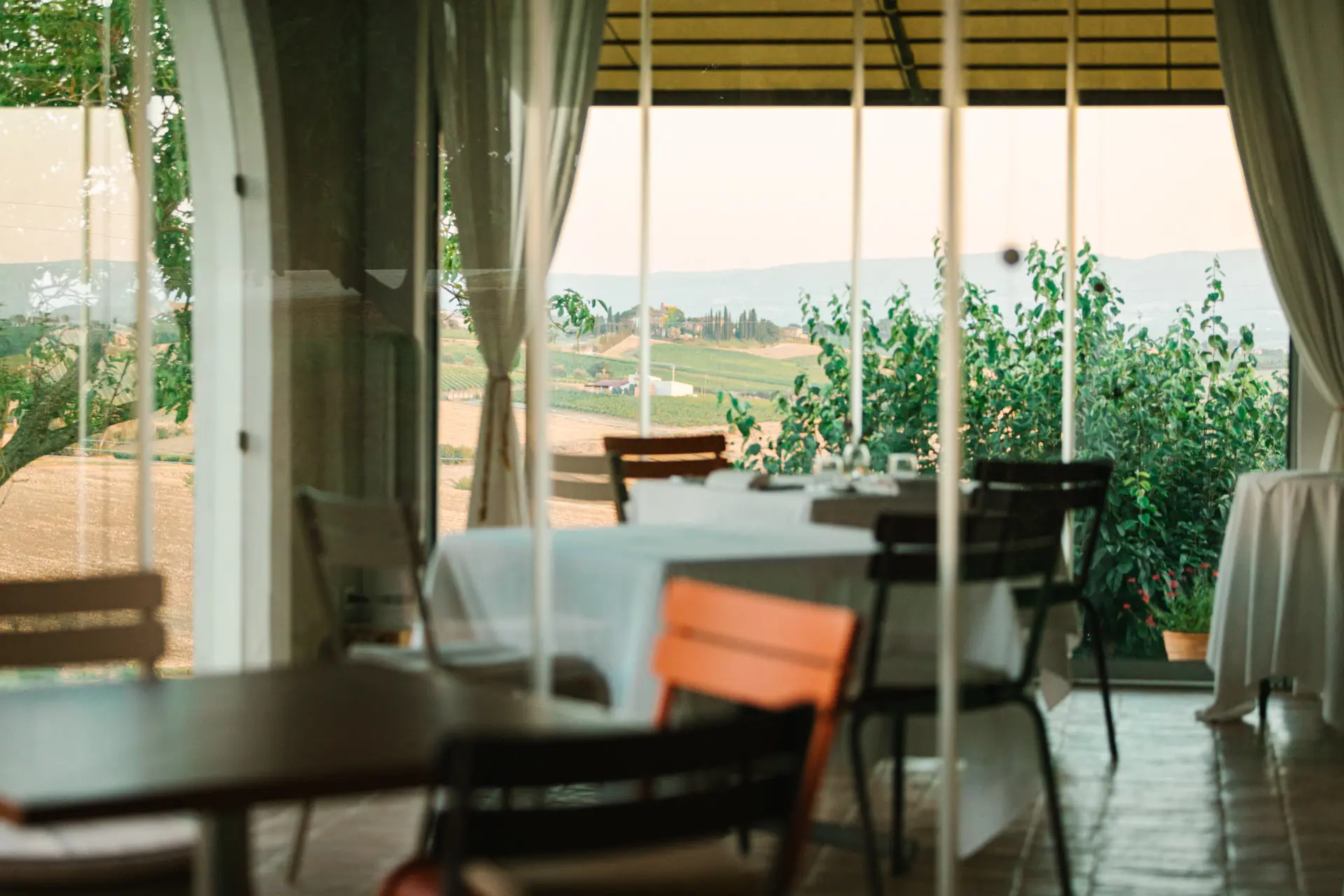
Dining room with white-clothed tables and orange and black chairs, glass doors opening onto farmland and a distant hill

Three certifications sit on the estate, and each audits something different: organic for the farming, Biodyvin in 2019 for the whole-estate system, B Corp in 2022 for the company itself. Very few wine producers hold all three.

Published sources disagree about which body certified the organic farming, and in which year, so we print neither. On an estate carrying three marks, the one we cannot source is the one that stays blank.

“I couldn’t look at myself in the mirror if I didn’t try.”
Virginie SaverysOwner, on converting the estate, 2021 · A Must Read Blog

Why it’s remarkable

A decade in a loft
the Vin Santo is sealed in and left through every season
Around ten years in 50-litre caratelli in an unheated loft, through the full swing of Tuscan summers and winters, with no intervention and no temperature control. The yield from the dried grapes is minute. It is one of the strangest sweet wines in Italy and nothing about it is convenient.
175 hectares
described as the largest certified biodynamic estate in Italy
Eleven vineyards, ten in Montepulciano and one in Cortona. We record the ‘largest’ description as one in circulation rather than as a first we have checked, but the scale itself is not in doubt, and scale is the interesting part.
2007, 2009, 2010
a minority stake, then the whole estate, then a new team
Virginie Saverys took an initial thirty per cent in 2007 to help the previous owners, bought the estate outright in 2009, and had a biodynamic team in place inside a year. She came to this from shipping law rather than from wine.
Three audits
farming, whole-estate system, and the company itself
Organic certification first, then biodynamic through Biodyvin in 2019, then B Corp in 2022 — three marks checking three different things, which very few wine producers hold together. Published sources disagree on which body certified the organic farming and in which year, so we print neither.
Independently certified, and checked against the issuing body’s own register. Not a compromise on quality — see how we verify.

Free Bacchus Verification

Track A
Formal third-party certification, confirmed against the issuing body’s own register.

Suolo e Salute organic · Biodyvin biodynamic

Certified2
  • Organic (Suolo e Salute, 2016)
  • Biodynamic (Biodyvin, 2019)
Also on record1
  • B Corp (2022)
Re-verified annually against the issuing body’s register. How re-verification works
The producer’s own siteavignonesi.it
Producers don’t pay to be here. There is no fee to be listed and no way to buy a higher tier. If the evidence doesn’t hold, the bottle isn’t here.
Flagship
Vino Nobile di Montepulciano DOCG
Best award
Gold · Decanter World Wine Awards

If you’re buying

Price
About US$30 for the 2022 Vino Nobile di Montepulciano at Flatiron Wines & Spirits, San Francisco, in October 2026. Approximate, and it moves with vintage and market.
Drinking now
Vino Nobile drinks well from about four years and holds for twelve. The Vin Santo needs nothing and lasts decades.
Serving
Reds at 16–18°C, decanted an hour when young. Vin Santo cold, at about 12°C, in a small glass.
Availability
Generally obtainable through specialist retailers.
Tastes like
Sangiovese from Montepulciano — sour cherry, dried herbs and firm acidity. Savoury rather than plush.
Pairs with
Roast pork, pasta with ragù, or a hard sheep’s cheese.
Price bands are approximate and move with vintage, market and region. They are a guide, not a quotation.

Cheat sheet

Save it to your phone. Everything you need to recognise this producer, and three things worth saying about it, at a glance in a shop or across a table.

37 verified producers in Italy →

From the Journal

← Clairin Vaval / Clairin SajousThe Verification StandardManincor →

More Verified Houses · Italy

Where to go next

Three more from the cellar, chosen by what is in the glass rather than where it is from.

AntiyalRed · Chile Reyneke WinesRed · South Africa Weingut Hans & Anita NittnausRed · Austria
↑