Skip to content
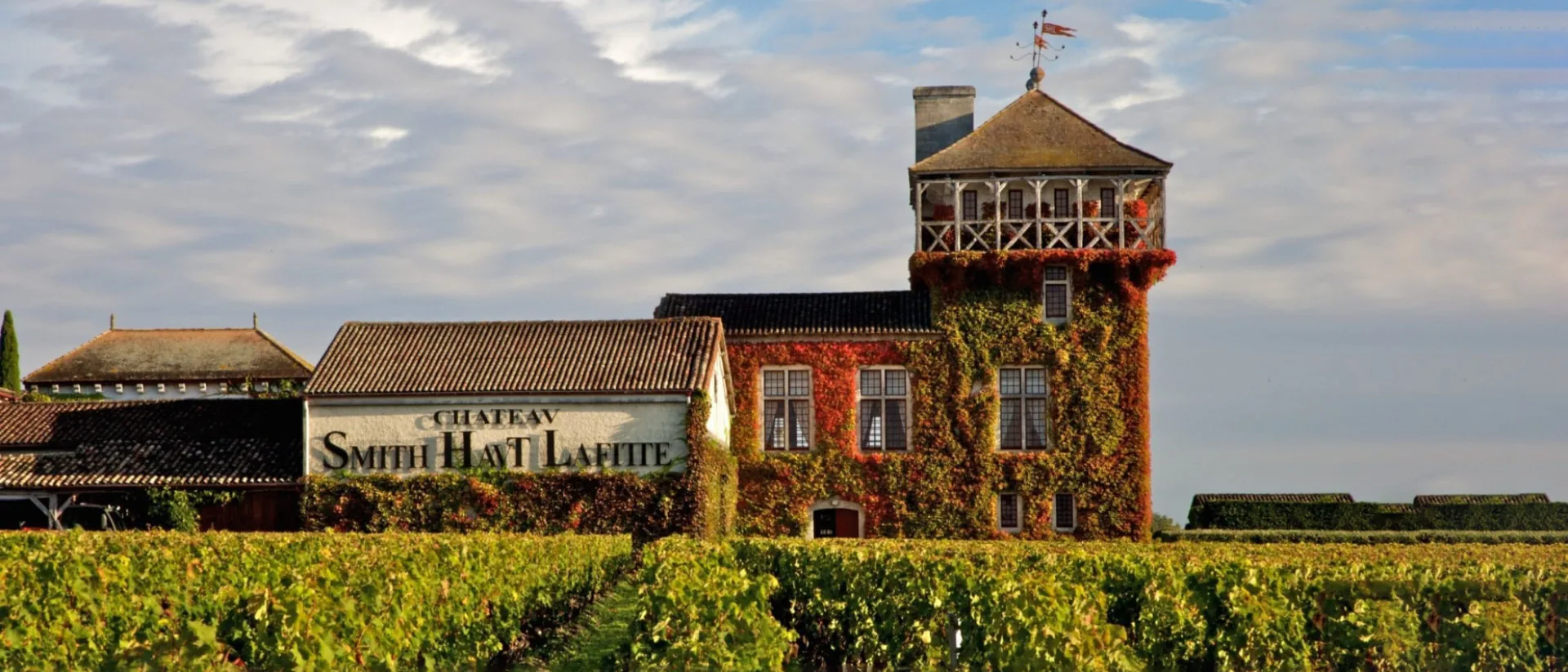
White building lettered Château Smith Haut Lafitte beside an ivy-covered tower with a timber balcony, above green vine rows
Martillac, Pessac-Léognan, Bordeaux, FranceFranceRed and white Bordeaux

Château Smith Haut Lafitte

smeeth oh la-FEET · Pessac-Léognan is peh-SAK lay-oh-NYAHN
Gold TierTypically $90–200
Last verified · August 2026

In 1993 the estate hired a cooper and stopped buying barrels. Almost every barrel for the red is now made on site, from oak the property selects and seasons itself. Coopering is a trade most châteaux are content to buy in, because buying is easier and very nearly as good.

Daniel and Florence Cathiard bought Smith Haut Lafitte in 1990, when it was run down and neglected. They also built Les Sources de Caudalie on the estate, a hotel and spa using grape-skin extract, which turned a Pessac-Léognan Grand Cru Classé into a destination as well as a producer — and gave it a second business to carry the vineyard through the years the vineyard could not carry itself.

Organic certification came in 2019, after converting all eighty hectares at once. The vineyard is a single unbroken block, so the conversion put the disease risk across the entire property in the same season, with no unconverted rows to fall back on.
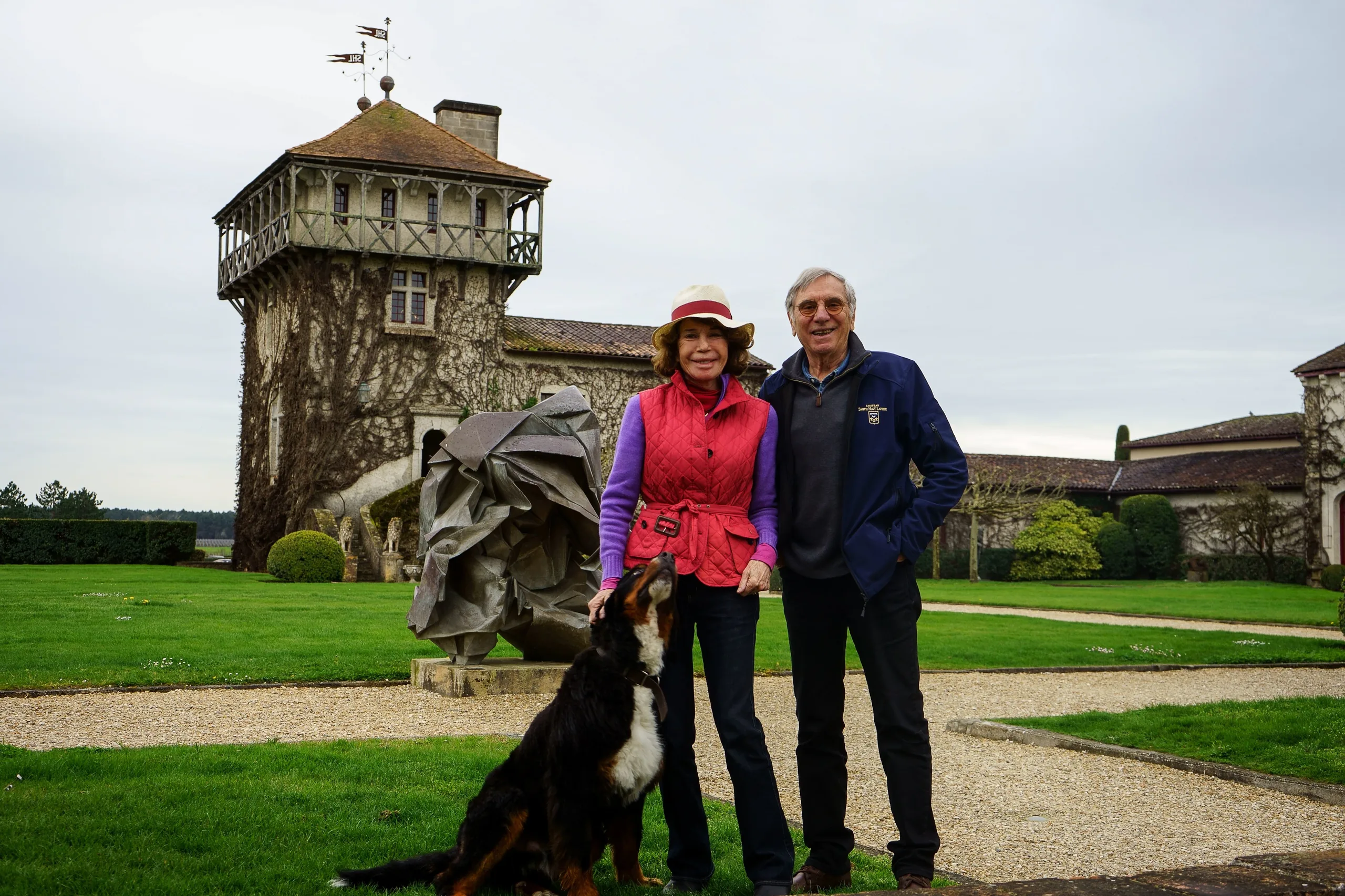
A man and a woman with a dog on a lawn before an ivy-covered tower and a crumpled-metal sculpture at Château Smith Haut Lafitte

Horses have worked the white-wine plots since 1998, spraying decoctions of yarrow, horsetail and tansy grown on the property. Biodynamic methods have been used for around a decade without the estate seeking biodynamic certification.

In 2014 it began capturing the carbon dioxide fermentation gives off and converting it into sodium bicarbonate, describing the installation as the first of its kind anywhere. We record the first-ever part as the estate’s claim. The system itself is not in doubt.

Why it’s remarkable

2019
organic certification, after a three-year conversion of the whole block
Eighty hectares in a single unbroken block, converted together rather than parcel by parcel. On a Pessac-Léognan Grand Cru Classé that means carrying the disease risk across the entire property at once, with no unconverted rows to fall back on.
1993
the year they hired a cooper and stopped buying barrels
Almost every barrel for the red is now made on the estate from oak it selects and seasons itself. Barrel-making is a trade most châteaux are content to buy in, because buying is easier and very nearly as good.
2014
they started catching the CO2 the fermentation gives off
The estate describes it as the first system anywhere to recycle carbon dioxide from fermentation, converting it into sodium bicarbonate. We record that as their claim; the installation itself is not in doubt.
1998
horses went back into the white-wine plots
Horses have worked the white plots since 1998 and are used to spray decoctions of yarrow, horsetail and tansy, all grown on the property. The estate has used biodynamic methods for around a decade without seeking biodynamic certification.
Independently certified, and checked against the issuing body’s own register. Not a compromise on quality — see how we verify.

Free Bacchus Verification

Track A
Formal third-party certification, confirmed against the issuing body’s own register.

Ecocert Organic

Certified1
  • Ecocert Organic
Re-verified annually against the issuing body’s register. How re-verification works
The producer’s own sitesmith-haut-lafitte.com
Producers don’t pay to be here. There is no fee to be listed and no way to buy a higher tier. If the evidence doesn’t hold, the bottle isn’t here.
Flagship
Château Smith Haut Lafitte Rouge (Pessac-Léognan GCC)

If you’re buying

Price
Around US$120 for the flagship bottling. Approximate, and it moves with vintage and market.
Drinking now
The red rewards eight to fifteen years. The white holds for twenty or more and is worth seeking out.
Serving
Red at 16–18°C, decanted an hour. White at 12°C, in a large glass.
Availability
Generally obtainable through specialist retailers.
Tastes like
The red is classic Pessac — cassis, graphite and cedar, firm without being heavy. The dry white is the more unusual wine.
Pairs with
Roast beef, grilled duck, or the white with scallops and shellfish.
Price bands are approximate and move with vintage, market and region. They are a guide, not a quotation.

Cheat sheet

Save it to your phone. Everything you need to recognise this producer, and three things worth saying about it, at a glance in a shop or across a table.

67 verified producers in France →

From the Journal

← Château Grand Corbin-DespagneThe Verification StandardDomaine Dujac →

More Verified Houses · France

Where to go next

Three more from the cellar, chosen by what is in the glass rather than where it is from.

FèlsinaRed · Italy LapostolleRed · Chile Reyneke WinesRed · South Africa
↑