Skip to content
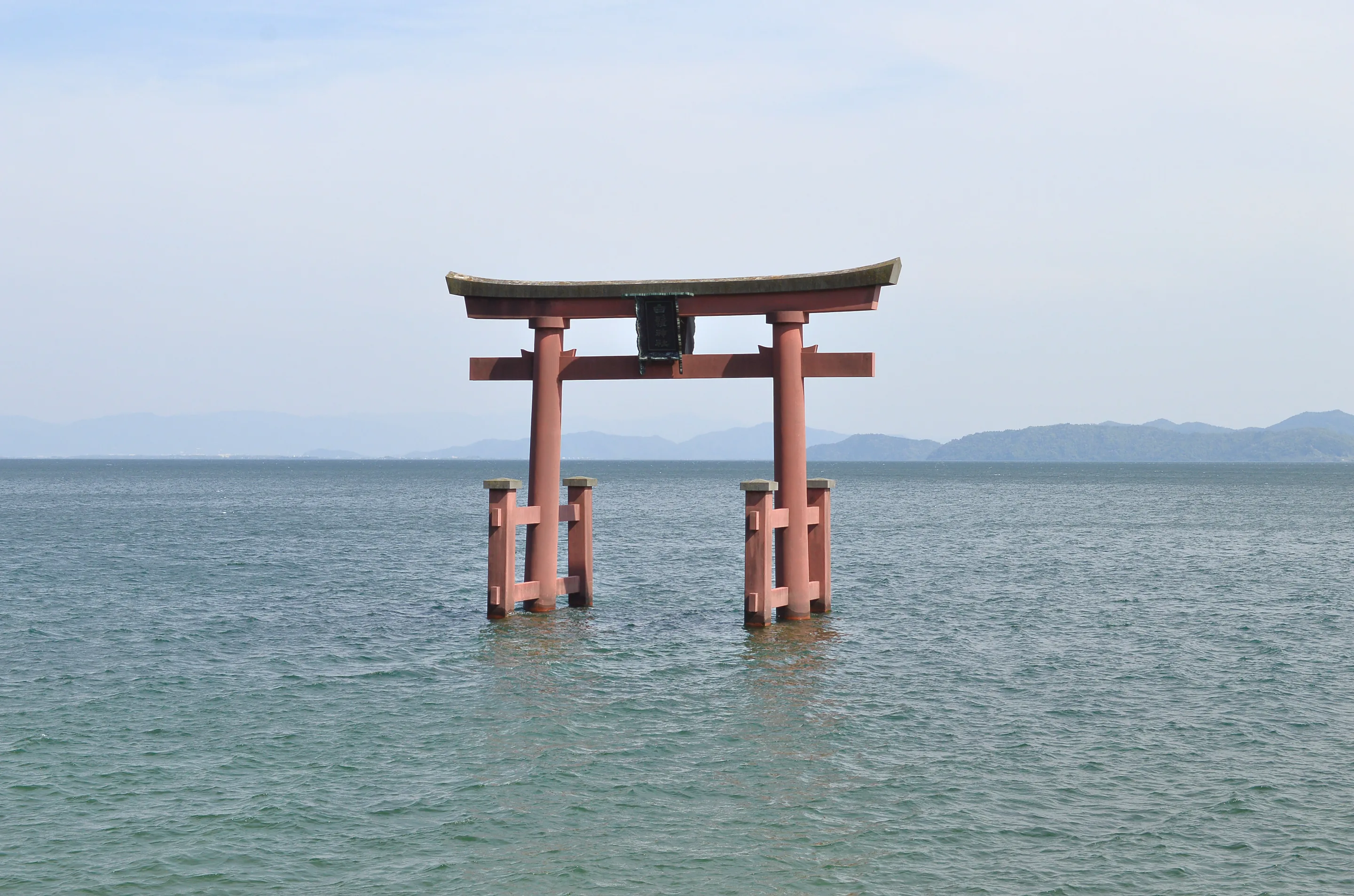
The red torii of Shirahige Shrine standing in the water of Lake Biwa, Shiga, with hazy mountains on the far shore
Ryuo, ShigaJapanOrganic Sake

Matsu no Tsukasa (Matsuse Shuzo)

MAH-tsoo no tsoo-KAH-sah · Matsuse is mah-TSOO-seh
Silver TierTypically Under $45
Last verified · September 2026

Matsuse Shuzo has brewed in Ryuo, a farming town between Lake Biwa and the Suzuka Mountains, since 1860, and sells everything as Matsu no Tsukasa. In 1988 it asked local farmers who had only grown rice for eating to try Yamada Nishiki, the benchmark sake rice, and by 1992 all its rice was grown under contract. Matsuse Tadayuki has run the brewery since 2005.

Junmai means rice, koji and water only, with no distilled alcohol added; koji is the mould grown on steamed rice to turn its starch into sugar for the yeast. The organic bottle is also kimoto, the old way of starting a ferment, in which lactic bacteria sour the yeast starter for several weeks before the yeast takes over, and that is where kimoto’s tang comes from. For this one Matsuse adds no yeast and lets the yeasts living in the brewery do the work. Shiga is a quiet sake prefecture of more than thirty breweries, and most of its rivers run into Lake Biwa; the brewery says the wish to protect the lake runs deep there.
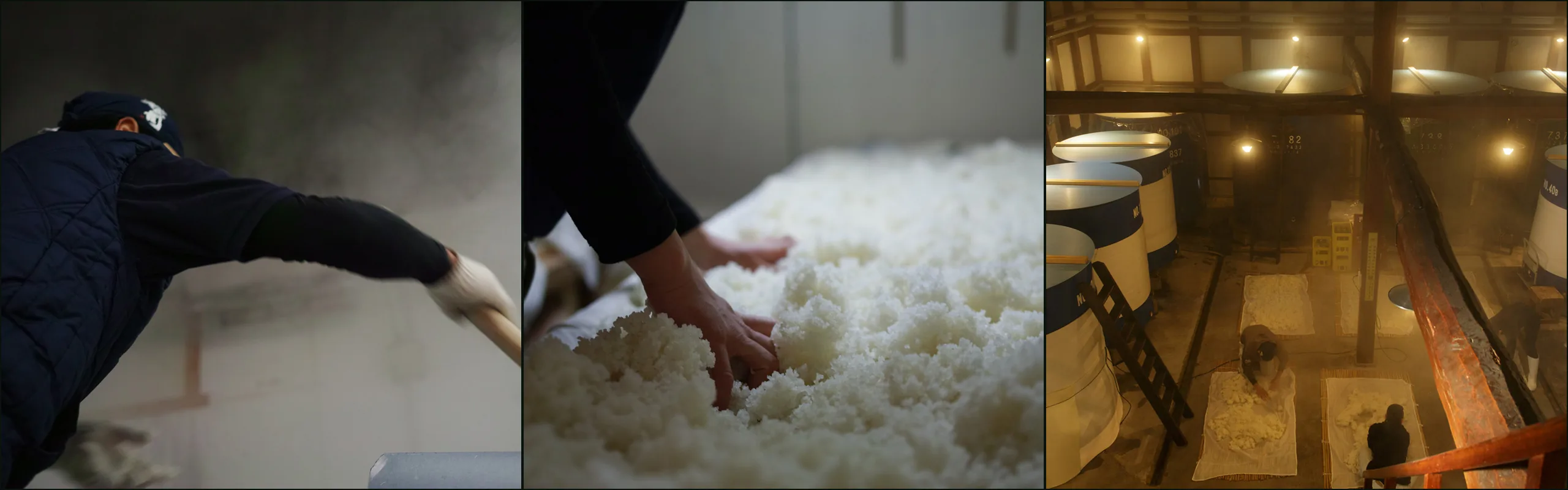
Three photographs at Matsu no Tsukasa: a worker in a navy cap reaching through steam, hands working steamed rice, workers on cloths beside large tanks

Organic Junmai Wataribune is made from Wataribune, a Shiga rice that is one of the parents of Yamada Nishiki, grown organically in Ryuo by Wakai Nōen, a family that has farmed there for generations as Komeshi Matahachi, Matahachi the rice master. The brewery mills it to 65 per cent. Ishida Keizō, the tōji or head brewer, knows wine well, and it was his idea to brew Ryuo’s Yamada Nishiki separately by soil.

Zenkoku Ainōkai certifies Matsuse under Organic JAS, certificate 25-15, for processed foods including alcoholic drinks, since January 2024. Only Organic Junmai Wataribune is sold as organic. The Junmai Daiginjo Yuge Ryuo uses organic Yamada Nishiki but is not, and the AZOLLA rice, grown without pesticides, is not certified. The rice is bought in; no farm of the brewery’s own is on the register.

田んぼも造り手も分かっている米を買いたかった。

“I wanted to buy rice where I knew the field and the grower.”

Matsuse TadayukiPresident, Matsuse Shuzo, 2025 · Sake World

Why it’s remarkable

1988
the first Yamada Nishiki in Ryuo
The farmers had only grown rice for eating. They and the brewery went to Hyogo together to learn the benchmark sake rice, and by 1992 every grain Matsuse used was grown under contract.
No yeast added
to the organic sake
Organic Junmai Wataribune is made the kimoto way, and Matsuse adds no yeast, waiting instead for the yeasts that live in the brewery to start the ferment.
2003
the year some of its rice went pesticide-free
From the 2003 crop some contract growers stopped using pesticides and chemical fertiliser for the AZOLLA sakes. That rice is not certified organic, and the brewery does not sell AZOLLA as organic.
One bottle
carries the organic certificate
Organic Junmai Wataribune is the only sake Matsuse sells as organic. The Junmai Daiginjo Yuge Ryuo uses organic Yamada Nishiki but is not sold as organic, and the rest of the range is not certified.
Independently certified, and checked against the issuing body’s own register. Not a compromise on quality — see how we verify.

Free Bacchus Verification

Track A
Formal third-party certification, confirmed against the issuing body’s own register.

Organic JAS, Zenkoku Ainōkai · organic sake only, not the range

Certified1
  • Organic JAS, Zenkoku Ainōkai: 25-15
This page covers

The organic sake.

Not covered1
  • The rest of the range
Also on record1
  • Rice bought in
Re-verified annually against the issuing body’s register. How re-verification works
The producer’s own sitematsunotsukasa.com
Producers don’t pay to be here. There is no fee to be listed and no way to buy a higher tier. If the evidence doesn’t hold, the bottle isn’t here.
Flagship
Organic Junmai Wataribune
Best award
Gold and Shiga Junmai Trophy, Organic Junmai Wataribune · IWC 2026

If you’re buying

Price
About US$15 (¥2,420 for 720ml of Organic Junmai Wataribune at Nishimura Saketen, Kyoto, converted at the ECB rate of 2 October 2026); no US retail yet. Kimijimaya in Yokohama lists it at ¥2,464. Approximate.
Availability
Matsuse does not sell direct, so the bottle comes through its appointed sake merchants in Japan, several of which sell online. It sells out, and Kimijimaya and Hasegawa Saketen both listed it as sold out in September 2026.
Tastes like
IWC judges found herbs, banana and steamed rice on the nose of Organic Junmai Wataribune, then ripe melon, soft and rounded, and a mineral finish.
Price bands are approximate and move with vintage, market and region. They are a guide, not a quotation.

Cheat sheet

Save it to your phone. Everything you need to recognise this producer, and three things worth saying about it, at a glance in a shop or across a table.

10 verified producers in Japan →

From the Journal

← TamanohikariThe Verification StandardChiyomusubi →

More Verified Houses · Japan

Photograph at the top of this page: Shirahige-jinja (Takashima) otorii by Saigen Jiro, CC0, via Wikimedia Commons. Cropped and resized for this page.

↑