Skip to content
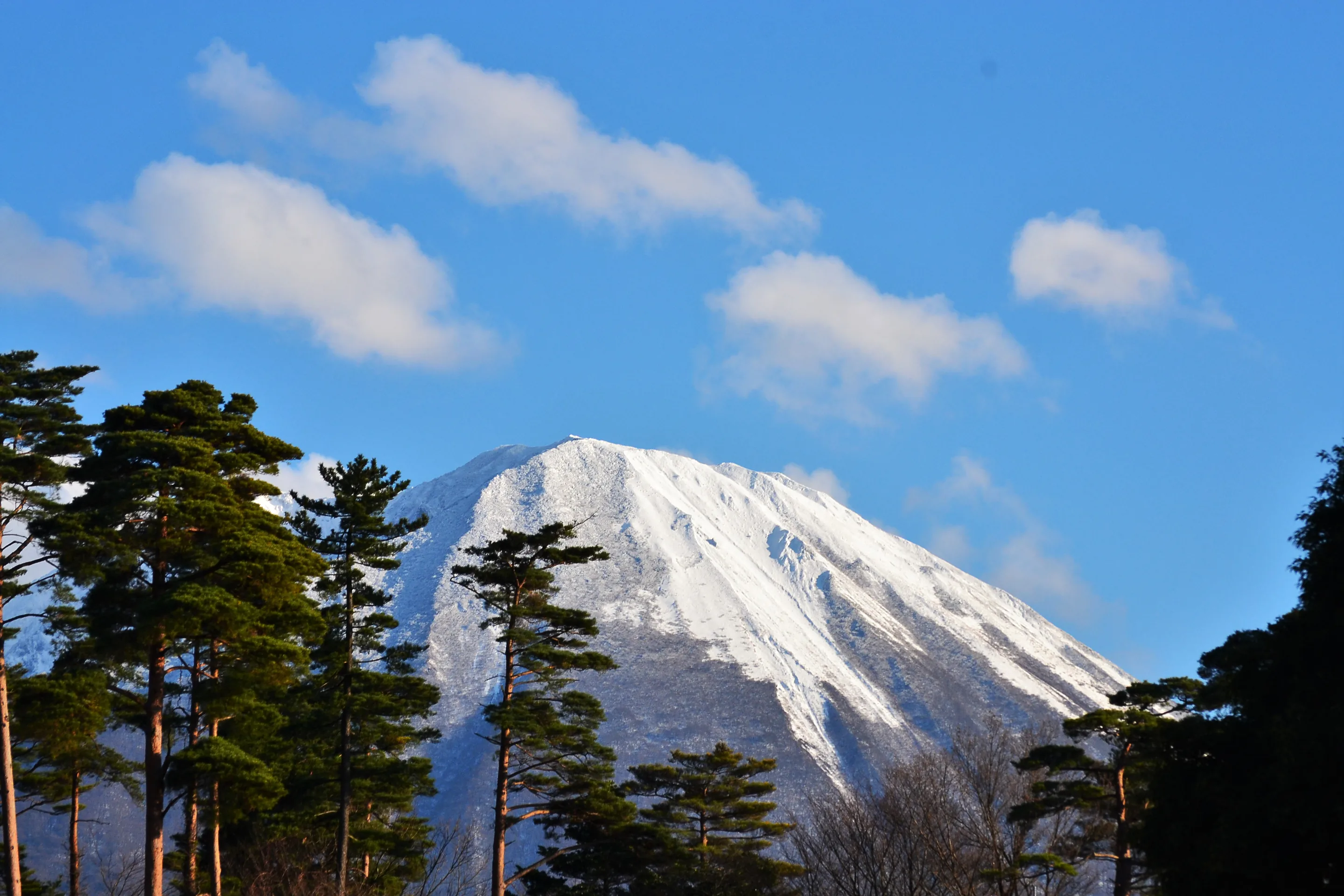
Snow-covered Mount Daisen in Tottori seen between pine trees under a blue sky with scattered clouds
Sakaiminato, TottoriJapanOrganic Sake

Chiyomusubi

chee-yoh-MOO-soo-bee
Silver TierTypically Under $45
Last verified · September 2026

Chiyomusubi has brewed in Sakaiminato, in Tottori, since 1865, and the Okasora family still runs it; the name wishes for happiness bound together for a thousand generations. In 1945 the Gyokuei Maru explosion destroyed the brewery, and rebuilding began that same year. Okasora Sō, the sixth generation, became president in 2025. Its flagship sakes are made from Goriki, a Tottori sake rice that had vanished by about 1955 and was brought back in 1989.

A sake label often gives a polishing ratio, the share of each rice grain left after milling. The outer layers carry protein and fat that make a heavier sake, so polishing them away gives the lighter, more fragrant styles; ginjo keeps 60 per cent or less, daiginjo 50 or less. Chiyomusubi works at both ends. Its Junmai Daiginjo Yamada Nishiki 15 keeps just 15 per cent. Four of its five organic junmai keep 88 per cent, which the brewery calls unusual for sake, to hold on to the flavour of the rice. Junmai means rice, koji and water only, with no distilled alcohol added.
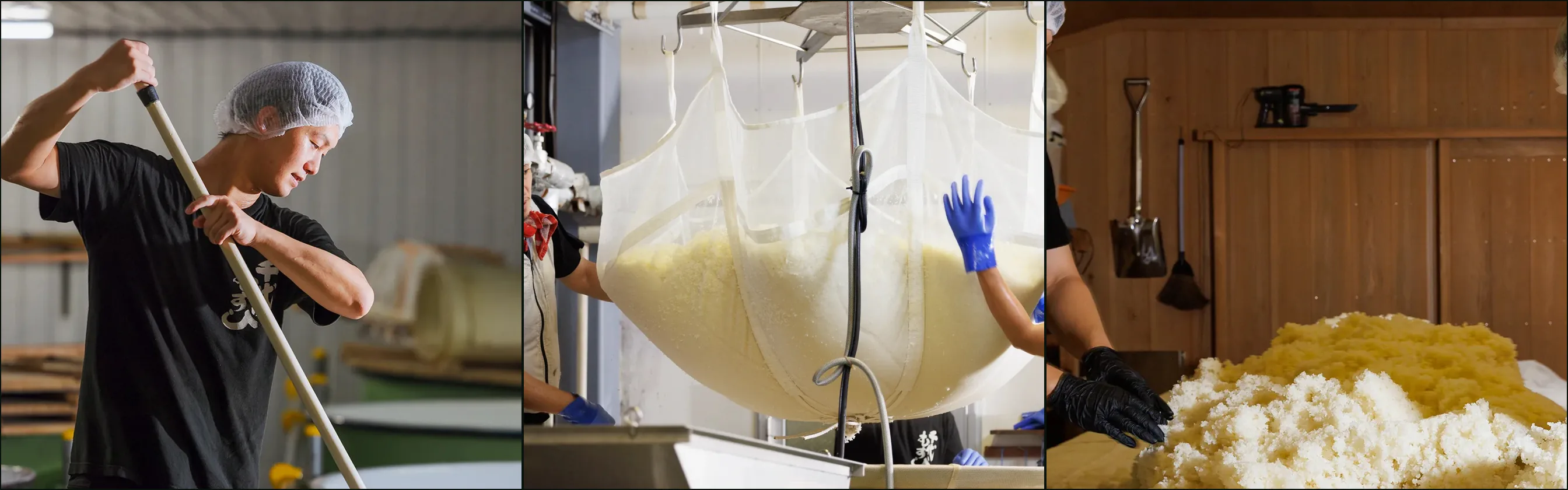
Three photographs at Chiyomusubi: a worker in a hairnet stirring with a long paddle, pale grain in a hanging cloth sack, gloved hands in heaped grain

The organic rice comes from five farms under direct contract, and each organic sake is named after its farm: Maeda Farm by the Ibo River in Tatsuno and Watanabe Farm below Mount Takamikura in Kakogawa, both in Hyogo, Hiyori Farm in Anan, Tokushima, Ōshima Farm in Chikusei, Ibaraki, and Eco Rice Niigata in Nagaoka, organic for more than thirty years. In the brewing season the brewery fetches its water every day from Daitō, in Shimane.

The certifying body is Tottori Prefecture itself, which registered the brewery under Organic JAS in January 2024, certificate No. B23-0024, for processed foods including alcoholic drinks. It covers the organic bottles, the five farm-named sakes and the Junmai Ginjo Organic NATURE, not the Goriki range or the rest of the house. The rice is bought in; no farm of the brewery’s own is on the register.

この160周年を、私たちは次の200年に向けた「スタートライン」と捉えています。

“We see this 160th anniversary as the starting line for the next 200 years.”

Okasora SōPresident, sixth-generation head of Chiyomusubi, 2025 · Chiyomusubi, company greeting

Why it’s remarkable

88%
of each grain kept in four organic sakes
Premium sake usually polishes far more of the rice away. Chiyomusubi keeps 88 per cent in four of its organic junmai, which it calls unusual, while its Junmai Daiginjo Yamada Nishiki 15 keeps just 15 per cent.
Five farms
and a bottle named for each
Maeda, Watanabe, Hiyori, Ōshima and Eco Rice Niigata grow the organic rice in Hyogo, Tokushima, Ibaraki and Niigata. Ōshima Farm says organic fields take more hands than anything else, from sowing to weeding to harvest.
1,223 kg
of Goriki rice for the first batch
Goriki, a Tottori sake rice, had disappeared by about 1955 and was revived in 1989 from seed kept at Tottori University. Chiyomusubi brewed its first Goriki sake in 1998 from under 1,223 kg of rice. The Goriki range is not organic.
Organic bottles only
what the certificate covers
Tottori Prefecture certifies the brewery to make organic sake. That covers the five farm-named organic sakes and the Junmai Ginjo Organic NATURE, not the Goriki range or the rest of what the house makes.
Independently certified, and checked against the issuing body’s own register. Not a compromise on quality — see how we verify.

Free Bacchus Verification

Track A
Formal third-party certification, confirmed against the issuing body’s own register.

Organic JAS · its organic sakes only, not the range

Certified1
  • Organic JAS, Tottori Prefecture: B23-0024
This page covers

The organic sakes only.

Not covered1
  • The rest of the range
Also on record1
  • Rice bought in
Re-verified annually against the issuing body’s register. How re-verification works
The producer’s own sitechiyomusubi.co.jp
Producers don’t pay to be here. There is no fee to be listed and no way to buy a higher tier. If the evidence doesn’t hold, the bottle isn’t here.
Flagship
Organic Junmai Ginjo Eco Rice Niigata 60

If you’re buying

Price
About US$28 (¥4,400 for 720ml of the Organic Junmai Ginjo Eco Rice Niigata 60 at the brewery’s online shop, converted at the ECB rate of 2 October 2026); no US retail yet. Each of the four 88 per cent organic junmai is ¥2,200. Approximate.
Availability
Sold through the brewery’s online shop in Japan; the Junmai Ginjo Organic NATURE was out of stock there in September 2026.
Tastes like
The brewery’s tōji finds ripe pineapple and apple on the nose of Eco Rice Niigata 60, some sweetness and a smooth finish, and the brewery suggests it for a toast.
Price bands are approximate and move with vintage, market and region. They are a guide, not a quotation.

Cheat sheet

Save it to your phone. Everything you need to recognise this producer, and three things worth saying about it, at a glance in a shop or across a table.

10 verified producers in Japan →

From the Journal

← Matsu no Tsukasa (Matsuse Shuzo)The Verification StandardAizu Musume (Takahashi Shosaku Brewery) →

More Verified Houses · Japan

Photograph at the top of this page: 森の国大山フィールドアスレチックから見た大山 - panoramio by KUNIO MIURA, CC BY 3.0, via Wikimedia Commons. Cropped and resized for this page.

↑