Skip to content
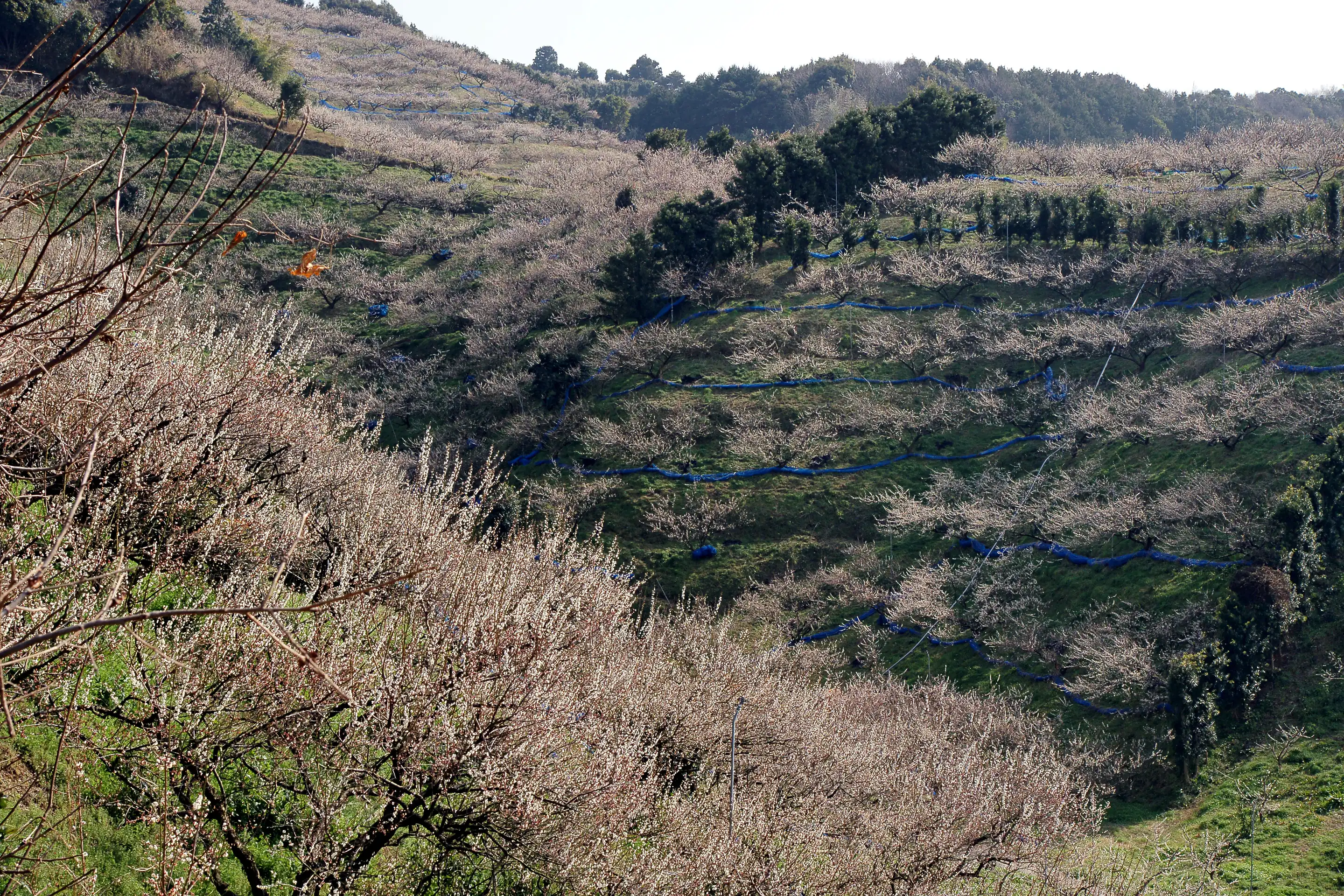
Hillside orchards of ume trees in pale blossom, with blue nets rolled along the terraces, at Minabe Bairin in Wakayama
Minabe, WakayamaJapanOrganic Umeshu

Kishu Takada Kaen

KEE-shoo tah-KAH-dah KAH-en · umeshu is oo-MEH-shoo
Silver TierTypically $90–200
Last verified · September 2026

In 1902 Sadagusu Takada turned a mulberry field in Minabe into an ume orchard of sixty saplings. One tree stood out, heavy with big fruit blushed red, and he raised it as a mother tree. In 1965 the variety grafted from it was registered as Nanko, and Minabe grows more of it than anywhere in Japan. The tree still flowers on the farm, now run by his grandson Satoshi Takada.

Umeshu is ume, the tart fruit of the tree often called the Japanese apricot, steeped in alcohol with sugar until the fruit gives up its flavour. Green ume make it fresh and bright, ripe ones mellow and fruity. The alcohol counts too: neutral spirit lets the fruit speak, brandy adds richness, and shochu, Japan’s own distilled spirit, tastes of the rice, barley or sweet potato it came from. Since 2015 the makers’ rules let only umeshu of ume, sugar and alcohol alone, with no added acid, colour or flavouring, call itself honkaku, or authentic. Takada Bio, the farm’s organic bottle, uses shochu distilled from organic rice and organic beet sugar.
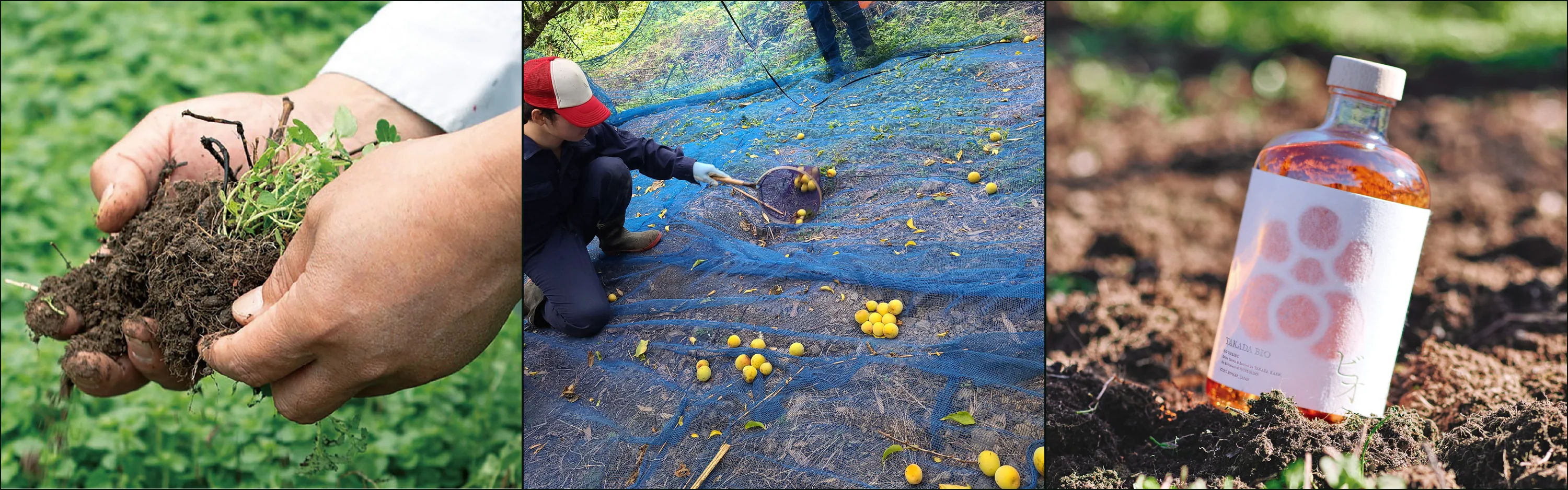
Three photographs: a hand holding soil and green ground cover, a worker gathering fallen yellow fruit on blue netting, a Takada Bio bottle in orchard soil

Satoshi Takada farmed with reduced pesticides for years, until a man who grew roses organically became his teacher. Now the trees get homemade compost, with legumes sown between them to put nitrogen back into the soil. From mid-June the ripe fruit is gathered by hand once it has fallen and washed the same day, and each vintage uses only that year’s crop.

The Wakayama Organic Certification Association certifies both halves: the ume and shiso the farm grows (certificate 1104-01A, since 2011) and its processing, umeshu included (1104-01B, since 2012). By the farm’s count about 80 per cent of the orchard is organic; the rest is farmed with reduced pesticides. Takada Bio is the bottle sold as organic; the aged Takada and Sadagusu pair the same fruit with brandy and rock sugar not listed as organic.

良質な梅、有機栽培には土が一番大事と考えています。

“For good ume and organic farming, we believe the soil matters most.”

Satoshi TakadaThird-generation owner, Kishu Takada Kaen, 2022 · Kishu Takada Kaen website

Why it’s remarkable

1902
the year the Nanko mother tree was planted
Sadagusu Takada planted sixty ume saplings on about 3,000 square metres of old mulberry field. One of them became the tree the farm calls the start of every Nanko ume, and it still flowers there.
About 80%
of the orchard farmed organically, by the farm’s own count
Satoshi Takada says some plots cannot meet the conditions organic growing needs, so those are farmed with reduced pesticides. He plans to bring more of the orchard over.
Minimum wage
the floor for everyone on its supported-work team
The farm runs a supported-employment workplace for people with disabilities or chronic illness who find it hard to get work elsewhere, and guarantees at least the legal minimum wage. Everyone on it, staff included, is called a member.
Independently certified, and checked against the issuing body’s own register. Not a compromise on quality — see how we verify.

Free Bacchus Verification

Track A
Formal third-party certification, confirmed against the issuing body’s own register.

Organic JAS, Wakayama Organic Certification Association

Certified1
  • Organic JAS, Wakayama Organic Certification Association: 1104-01A ume (about 80% of orchard), 1104-01B umeshu
Re-verified annually against the issuing body’s register. How re-verification works
The producer’s own sitetakadakaen.jp
Producers don’t pay to be here. There is no fee to be listed and no way to buy a higher tier. If the evidence doesn’t hold, the bottle isn’t here.
Flagship
Organic Umeshu Takada Bio
Best award
Gold, Organic Umeshu Takada Bio · Kura Master 2025

If you’re buying

Price
About US$140 (¥22,000 for the 700ml Takada Bio, the price given with its 2025 Kura Master entry, converted at the ECB rate of 2 October 2026); no US retail yet. Approximate.
Drinking now
Made to be drunk fresh. The farm bottles Takada Bio young, after about two years, where its aged bottles wait eight or more.
Serving
Well chilled, neat in a wine glass or over ice, as the farm recommends.
Availability
Sold by the farm through its own online shop in Japan, which lists the 2023 vintage.
Tastes like
Pale gold, with fresh stone fruit and apricot, a mineral edge from the ume, gentle acidity and a texture almost like fruit purée, as the farm describes Takada Bio.
Pairs with
Chicken dishes and simple organic cooking, as the farm suggests.
Price bands are approximate and move with vintage, market and region. They are a guide, not a quotation.

Cheat sheet

Save it to your phone. Everything you need to recognise this producer, and three things worth saying about it, at a glance in a shop or across a table.

10 verified producers in Japan →

From the Journal

← Niida HonkeThe Verification StandardYokohama Winery →

More Verified Houses · Japan

Photograph at the top of this page: Minabe-Bairin Minabe Wakayama02n4272 by 663highland, CC BY 2.5, via Wikimedia Commons. Cropped, resized and colour-adjusted (levels and contrast lifted to reduce haze) for this page.

↑