Feudo Maccari
The Free Bacchus Story
Antonio Moretti Cuseri knew Sicily’s south-eastern corner from summers spent sailing, and the cherry tomatoes and melons of nearby Pachino suggested to him that the farming there was good. A fashion and footwear entrepreneur from Arezzo who already owned Tenuta Sette Ponti in Tuscany, he began buying land near Noto in 2000 and found it cut into pieces. He had to buy from more than fifty landowners, one tumulo at a time, and joked afterwards that being a notary in Sicily is not the worst trade going. The contrada he ended up in had always, by coincidence, been called Feudo Maccari.
Nero d’Avola is Sicily’s most important red grape, and it takes its name from Avola, a town near the estate. For most of the twentieth century it was a blending grape, prized for its deep colour, and its name rarely appeared on a label. On its own it is often compared to Syrah: dark, full-bodied and tannic, ripened by a hot climate. It comes in two broad styles, one young and fresh with red fruit and light tannins, the other deeper and darker, heavier and aged in oak. At Vittoria, elsewhere in the south-east, it is blended with pale Frappato into something light and floral. Feudo Maccari makes both styles, each from Nero d’Avola alone: Neré, kept in steel tanks, and Saia, its oak-aged selection.
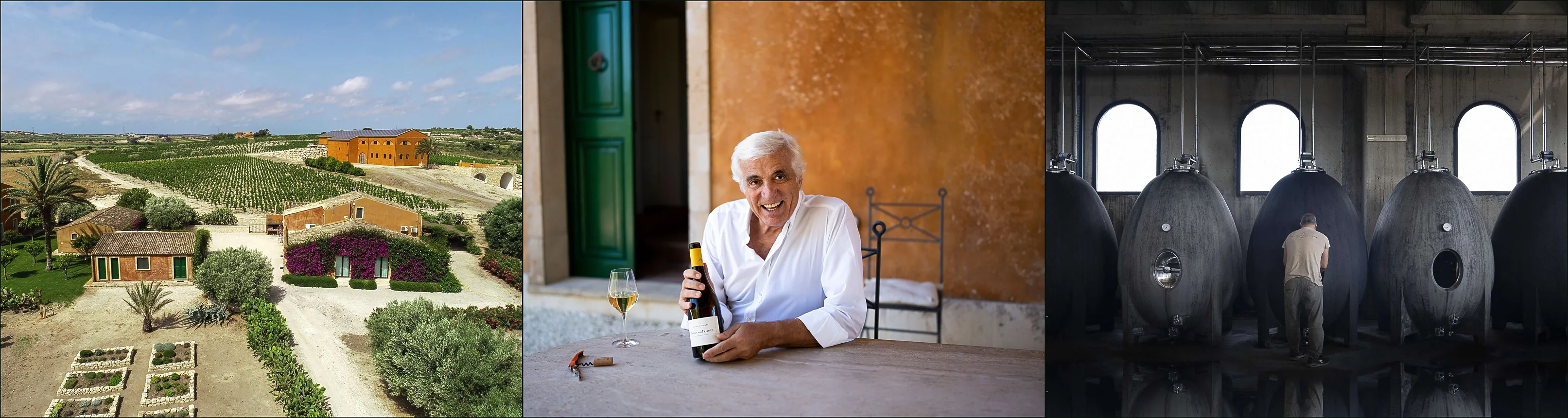
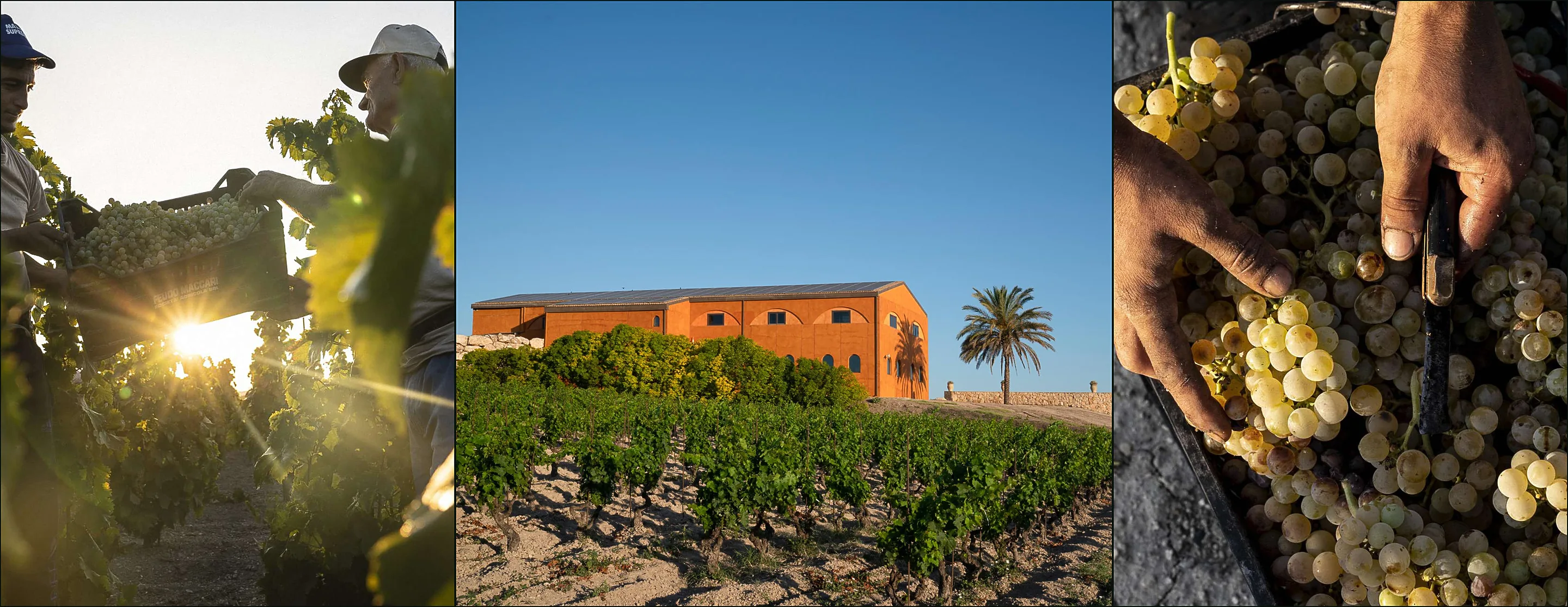
About 60 hectares are vines, in three blocks on low hills that look out over the Vendicari nature reserve and the Ionian Sea. Every vine, Moretti said in 2017, was a bush vine, or alberello, pruned low with no wires or posts, the way Sicily grew grapes long before trellises existed; he called it almost an obligation. The estate’s French adviser, Gilbert Bouvet, credits the constant sea breezes with keeping the bunches healthy. The grapes for Saia come from an old bush-vine parcel Moretti found when he bought the land, and the wine is named for the channels the Arabs built centuries ago to catch rainwater.
For a certified organic estate, Feudo Maccari is oddly quiet about it. Its website calls the olive oil organic and none of the wines. Bioagricert, which began checking the company in September 2019, certifies its grapes and its wine, but records that it also makes wine that is not organic, without listing which is which. The way to tell is the label: wine sold as organic in the EU carries the green leaf logo, with the certifier’s code beside it, here IT-BIO-007.
Saia is the wine the guides know. Gambero Rosso’s Vini d’Italia has given it Tre Bicchieri, the guide’s top award, in five editions since 2019, though only one of those wines, the 2022, was grown after the estate entered the organic system. Neré costs about half as much and is the easier way in.
“our forebears were not all fools”
Why it’s remarkable
Free Bacchus Verification
Bioagricert EU organic
Certified1
- EU organic, Bioagricert (IT-BIO-007.380-0004960, valid to July 2029): the company’s grapes and wine
Also on record2
- The certificate records that the company also makes wine that is not organic
- The certificate names no wines
If you’re buying
Cheat sheet
Save it to your phone. Everything you need to recognise this producer, and three things worth saying about it, at a glance in a shop or across a table.