Dario Princic
The Free Bacchus Story
In 2008 downy mildew took about 90 per cent of Dario Princic’s harvest. He would not spray chemicals to save it. Instead he gathered what was left of every variety, Chardonnay, Sauvignon, Pinot Grigio, Tocai and Ribolla Gialla, into one wine and called it Favola, the fable. There were some 2,800 bottles.
Oslavia is a hamlet above Gorizia on the Slovenian border, and it is where Josko Gravner and Stanko Radikon started the modern skin-contact movement. White grapes left on their skins for weeks come out amber and tannic, structurally closer to old Sherry than to a crisp white, and the style has come to be called orange wine. Behind Princic’s house stands a memorial where some 60,000 soldiers of the First World War are buried, and he has said his village was razed in that war.
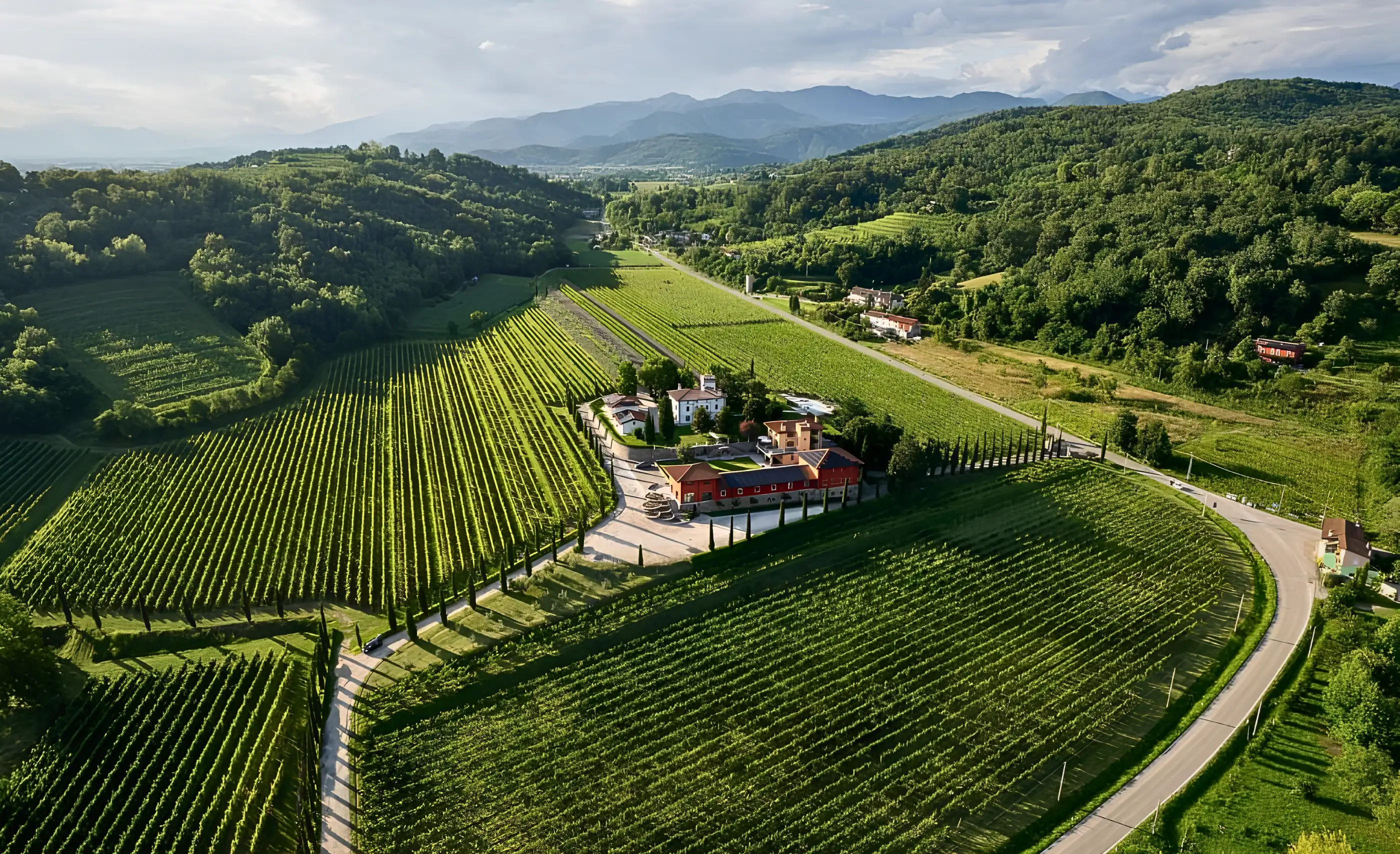
He sold his grapes to local wineries until 1993, when he began bottling his own, and he stopped using chemicals in the vineyard in 1988, farming with manure, copper and sulphur. In the cellar the macerations run with no temperature control and no added yeast, and no sulphur goes in until bottling. Since 2015 some of the barrels have been made from wood grown on the family’s own land. About eleven hectares carry some 70,000 vines, which works out, by one local writer’s arithmetic, at about two vines for every bottle.
What the certificate covers is narrower than the reputation. The EU organic register lists Princic Dario under CEVIQ for production of unprocessed plant products, which here means the grapes. It has no preparation scope, so the winemaking is not certified and the wines are not sold as organic. Some importer pages still describe the farming as having no official certification at all; the register has shown one since 2023.
Jakot, a Friulano left on its skins for 22 days and aged two years in old oak, is the wine critics have scored highest. There is no estate website or shop, and one importer advises opening the bottles six to eight hours ahead.
“This wine is proof that I make Natural wine”
Why it’s remarkable
Free Bacchus Verification
CEVIQ EU organic · the grapes, not the winemaking
Certified1
- EU organic, CEVIQ (IT-BIO-017.380-0036247): production of unprocessed plant products, the grapes
Not covered1
- The winemaking: the certificate has no preparation scope, so the winemaking is not certified
Also on record1
- The wines are not sold as organic
If you’re buying
Cheat sheet
Save it to your phone. Everything you need to recognise this producer, and three things worth saying about it, at a glance in a shop or across a table.