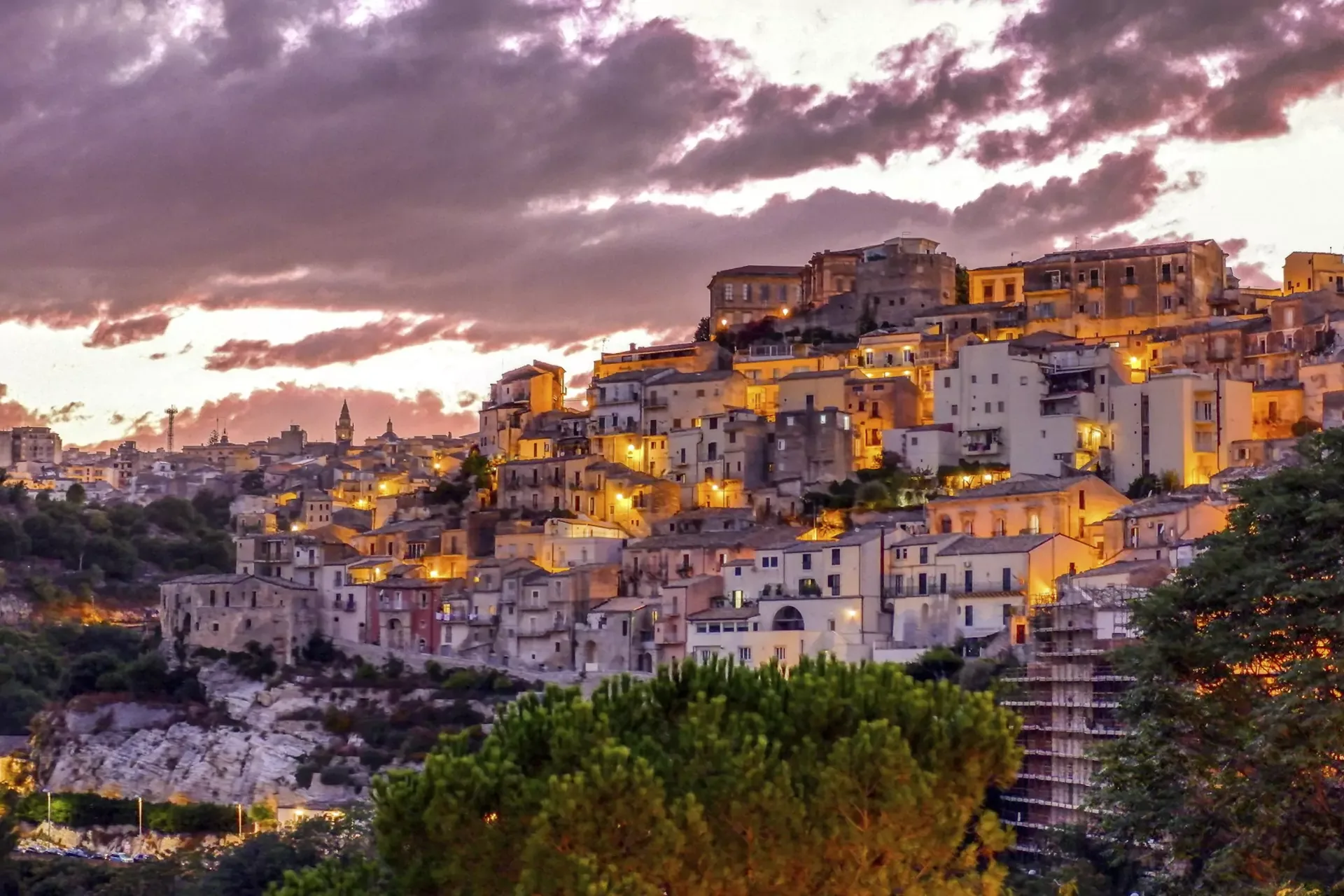
Skip to content
Two men in the COS cellar, one crouching with a handful of pulp over a clay basin, painted amphorae on the wall behind
VittoriaSicilyItalyWine

COS

COS · Cerasuolo di Vittoria is che-ra-SWO-lo dee vit-TOR-ya
Silver TierTypically Under $45
Last verified · October 2026

In 1980 three school friends, Giambattista Cilia, Cirino Strano and Giusto Occhipinti, had a few months to fill before university. Cilia's father let them have an old, half-ruined winery and three and a half hectares of old bush vines near Vittoria, and they set out to make wine without any particular idea of what they were doing. Their initials are the name.

What they found over the following forty years is that Cerasuolo di Vittoria, Sicily's only DOCG, and its two permitted grapes were capable of far more than the region assumed. The farm is certified organic, checked by the same certifier, Suolo e Salute, since 2010. It also follows biodynamic ideas and brews some of its own preparations, but holds no biodynamic certificate. In 2000 COS began making wine in clay amphorae. Occhipinti had decided new oak was not the way to show what Vittoria had to offer, and went looking for a vessel that would add nothing of its own. He found his model in Georgia, where wine has long been made in clay jars.
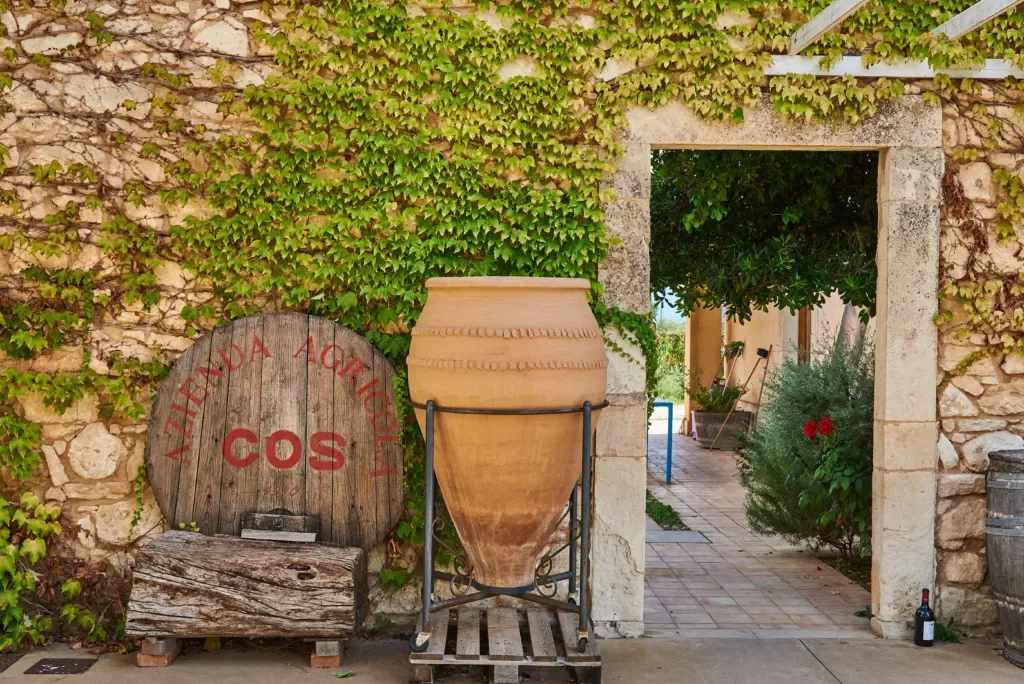
A large terracotta jar on an iron stand beside a round wooden sign reading Azienda Agricola COS, on an ivy-covered stone wall

Occhipinti's account of 1991 is that talking about skin-macerated whites got you written off as a crank. White wine made that way now has a name of its own, orange wine, and in 1991 almost nobody had heard of it.

Pithos Rosso, the red they make in those amphorae, earned 93+ points from Wine Advocate for its 2017 vintage. Rami, a white, spends about a week on its skins, the way COS has made its whites since 1991. The Cerasuolo di Vittoria Classico is the more structured expression of the same farming.

Cerasuolo di Vittoria is a blend, and it is easier to enjoy once you know what each half is doing. Nero d'Avola is the darker, firmer grape and gives the wine its body. Frappato is pale and perfumed and gives it lift. Together they make a red that is light on its feet in a way Sicilian wine is not supposed to be: red cherry and orange peel, a savoury turn at the end, and enough acidity to cut straight through tomato and oil. It is the island's only DOCG, Italy's strictest tier, and when COS began in 1980 its founders knew of only one producer still making it.

Polaner Selections, its American importer, calls COS one of the most influential producers in all of Sicily, and some of that influence stayed in the family. In 1998 Giusto brought his niece Arianna Occhipinti, then sixteen, to help at Vinitaly, Italy's big wine fair. She now makes her own wine nearby.

“We were students, and we didn’t know anything about agriculture.”
Giusto OcchipintiCo-founder, on starting the estate in 1980, 2023 · Vinography

Why it’s remarkable

1980
three friends with no farming knowledge and a borrowed cellar
Giambattista Cilia, Giusto Occhipinti and Cirino Strano started COS in an old winery belonging to Cilia’s father, to fill the months before university. Strano later left to become a doctor. Cilia and Occhipinti, both trained as architects, still run it together more than forty years on.
1991
they macerated white wine and were thought mad for it
Occhipinti’s account is that talking about skin-macerated whites in 1991 got you written off as a crank. Wine made that way had no popular name until a British importer coined ‘orange wine’ in 2004.
2000
clay jars in place of oak
The founders say no chemical fertiliser, weedkiller or pesticide has ever touched their vines, which now cover thirty to forty hectares. The Pithos wines, made in clay amphorae first buried to their necks the Georgian way, followed from 2000.
Sicily’s only DOCG
and COS is credited with saving it
Cerasuolo di Vittoria became Sicily’s first and still only DOCG in 2005. The blend of Nero d’Avola and Frappato had fallen close to irrelevance before a handful of producers, COS foremost among them, made the case for it again.
Independently certified, and checked against the issuing body’s own register. Not a compromise on quality — see how we verify.

Free Bacchus Verification

Track A
Formal third-party certification, confirmed against the issuing body’s own register.

Suolo e Salute organic

Certified1
  • Suolo e Salute organic (IT-BIO-004) — Azienda Agricola COS di Cilia G. e Occhipinti G., Vittoria, grapes and wine, valid to 25 August 2029
Also on record3
  • Under Suolo e Salute's control since February 2010
  • The certificate lists wine as organic production alongside non-organic production
  • No biodynamic certificate: the Demeter register has no record
Re-verified annually against the issuing body’s register. How re-verification works
The producer’s own sitecosvittoria.it
Producers don’t pay to be here. There is no fee to be listed and no way to buy a higher tier. If the evidence doesn’t hold, the bottle isn’t here.
Flagship
Pithos Rosso

If you’re buying

Price
Around US$40 for Pithos Rosso. Approximate, and it moves with vintage and market.
Drinking now
Pithos Rosso is good on release and improves for about five years.
Serving
Serve slightly cool, around 16°C. Decanting is optional.
Availability
Generally obtainable through specialist retailers.
Tastes like
Sour cherry, orange peel and a wisp of smoke, with a savoury edge. Light on its feet for a Sicilian red.
Pairs with
Pasta alla Norma, grilled lamb or arancini.
Price bands are approximate and move with vintage, market and region. They are a guide, not a quotation.

Cheat sheet

Save it to your phone. Everything you need to recognise this producer, and three things worth saying about it, at a glance in a shop or across a table.

37 verified producers in Italy →

From the Journal

← Yangarra Estate VineyardThe Verification StandardCowhorn Vineyard & Garden →

More Verified Houses · Italy

Where to go next

Three more from the cellar, chosen by what is in the glass rather than where it is from.

Domaine GaubyRed · France Domaine Thierry Germain / Roches NeuvesRed · France Stefano Lubiana WinesRed · Australia
↑