Skip to content
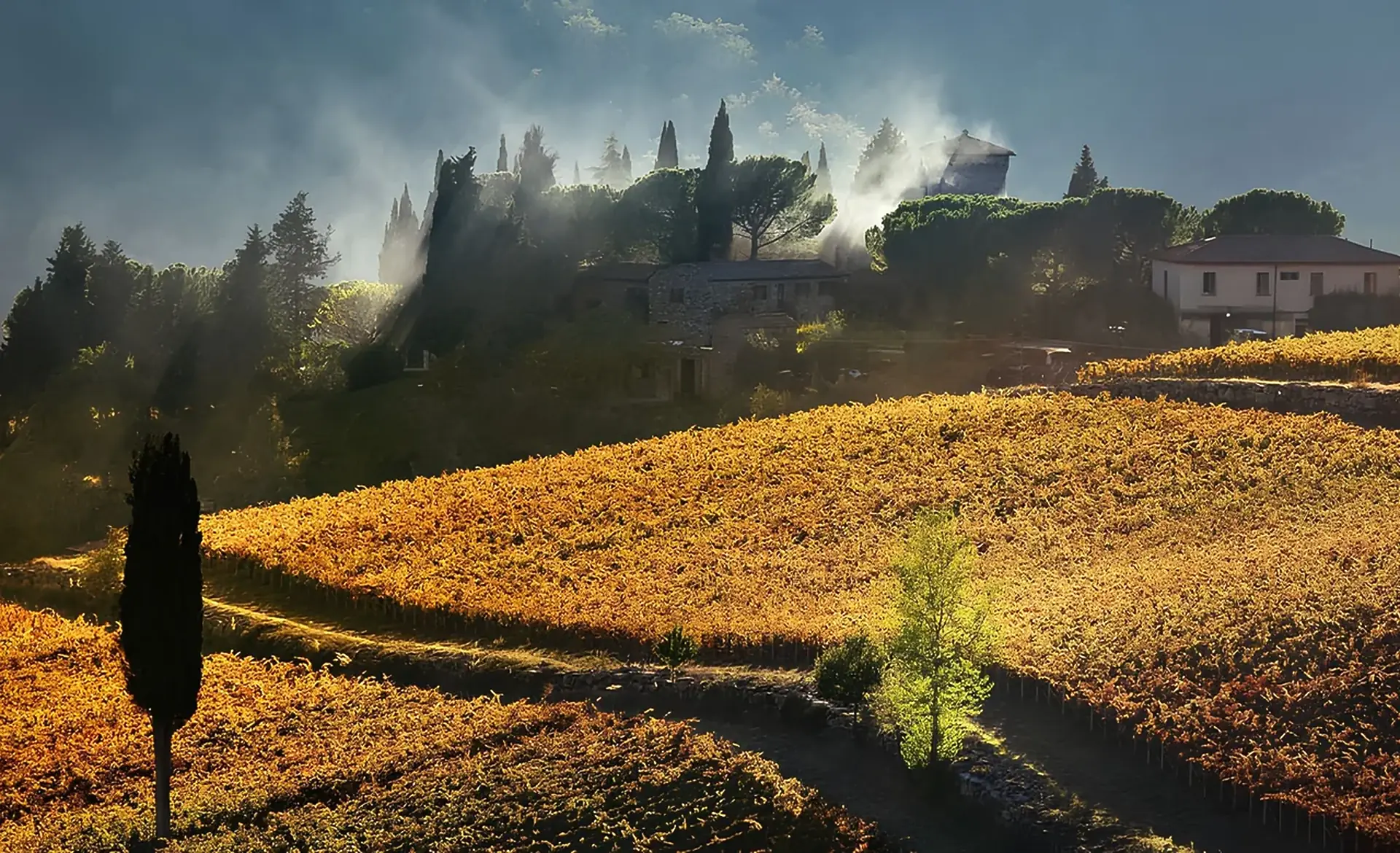
Stone buildings on a ridge among cypress and umbrella pines above gold autumn vines in misty light
Panzano, Chianti Classico, TuscanyItalyBiodynamic-practice Wine

Castello dei Rampolla

ram-POL-lah · Sammarco is sam-MAR-koh
Gold TierTypically $90–200
Last verified · September 2026

Castello dei Rampolla has farmed biodynamically since 1994 and refuses to be certified for it. That is not an oversight and it is not a saving. The di Napoli family, whose land this has been since 1739, treat certification as somebody else's category and have simply declined to enter it.

What they will tell you is what goes on the vines. The estate's own vineyard page puts it in a single sentence: the only treatments we use are based on copper, sulphur and propolis. The biodynamic preparations are stirred in flow forms, a run of partly overlapping basins the water passes through on its way down. Rampolla sits in the Conca d'Oro at Panzano, a valley named for the gold of the wheat that grew there before the vines, and its growers' association calls the place Italy's first wine biodistrict, so the neighbours are doing versions of the same thing.
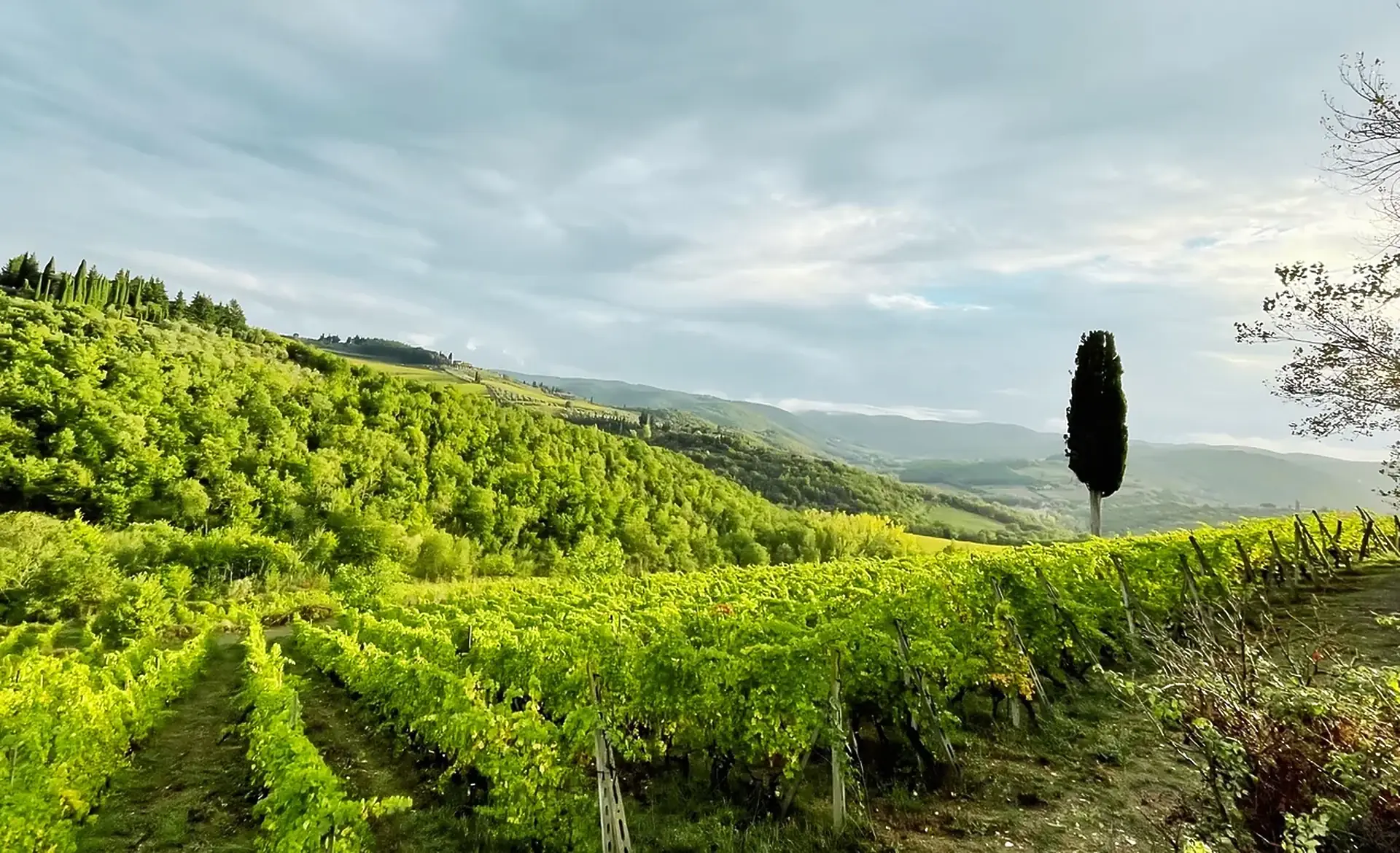
Bright green vine rows on a hillside with a lone cypress and wooded hills receding under a cloudy sky

Sammarco is the wine the estate is known for, and it broke a rule when it arrived: Cabernet Sauvignon with Sangiovese and a little Merlot, made in the middle of Chianti Classico at a time when Chianti was supposed to be Sangiovese and very little else. Wines like it had to go out under the humblest label available, and the world started calling them Super-Tuscans. It is named for Marco di Napoli, brother of Maurizia and Luca, who run the estate today.

We list Rampolla under Track B, the route for a house whose farming can be documented but whose certificate does not exist, and the standard asks that the reason be the producer's own and stated out loud. Theirs is. What ends up in the bottle is a dense, structured Tuscan red that wants a decade lying down and repays every year of it.

“In Italy, it’s a sort of mafia: You pay and they certify you.”
Maurizia di Napoli RampollaCo-owner, on why the estate will not be certified, 2020 · Wine Spectator

Why it’s remarkable

1994, and no certificate
thirty years of biodynamics the estate has never been paid for
Rampolla has farmed biodynamically since 1994 and declines organic and biodynamic certification alike. That is a straightforward loss: the work is done and the premium is left on the table. It is also why we list the house under Track B, which asks that the reason for not certifying be the producer's own and be stated. Theirs is.
Copper, sulphur, propolis
the only treatments, in the estate’s own words
The estate’s vineyard page names the only treatments it uses: copper, sulphur and propolis. The biodynamic preparations are stirred in flow forms — a run of partly overlapping basins the water passes through — rather than in a tank with a paddle.
Panzano
the neighbours are doing it too, which is rarer than it sounds
The estate sits in the Conca d’Oro above Panzano, named for the wheat that grew there before the vines. Its growers’ association, founded in 1995, calls it Italy’s first wine biodistrict. Spray drift does not respect a boundary line, so a grower surrounded by conventional neighbours is fighting a different battle from one who is not.
Verified on documented practice rather than a certificate. Not a compromise on quality — see how we verify.

Free Bacchus Verification

Track B
Verified chemical-free practice, corroborated independently where formal certification is not held.

Biodynamic practice, uncertified

Verified practice1
  • Biodynamic conversion from 1994, documented on the estate's own history page, with the treatments on its vineyard page
Also on record3
  • No certificate, by the estate's own choice, stated on the record by co-owner Maurizia di Napoli Rampolla
  • The family declines organic and biodynamic certification alike
  • Track B is capped at Gold
Re-confirmed annually against the three conditions for Track B listing. How re-verification works
The producer’s own sitecastellodeirampolla.it
Producers don’t pay to be here. There is no fee to be listed and no way to buy a higher tier. If the evidence doesn’t hold, the bottle isn’t here.
Flagship
Sammarco

If you’re buying

Price
Around US$100 for Sammarco. Approximate, and it moves with vintage and market.
Drinking now
Sammarco is built for the long haul. Under five years it is still closed; a decade in and it starts to show what it is.
Serving
16–18°C, and give it a couple of hours open if it is young.
Availability
Imported to the United States by VIAS Imports and Michael R. Downey Selections. Made in small quantities and usually allocated.
Tastes like
Cabernet with Sangiovese alongside it: blackcurrant, iron and dried herb, firm and dry rather than plush.
Pairs with
Bistecca alla fiorentina, roast lamb, or an aged pecorino.
Price bands are approximate and move with vintage, market and region. They are a guide, not a quotation.

Cheat sheet

Save it to your phone. Everything you need to recognise this producer, and three things worth saying about it, at a glance in a shop or across a table.

37 verified producers in Italy →

From the Journal

← Comando GThe Verification StandardWeingut Gernot & Heike Heinrich →

More Verified Houses · Italy

Where to go next

Three more from the cellar, chosen by what is in the glass rather than where it is from.

Château Pontet-CanetRed · France Albet i NoyaRed · Spain Waterkloof WinesRed · South Africa
↑