Cascina Iuli
The Free Bacchus Story
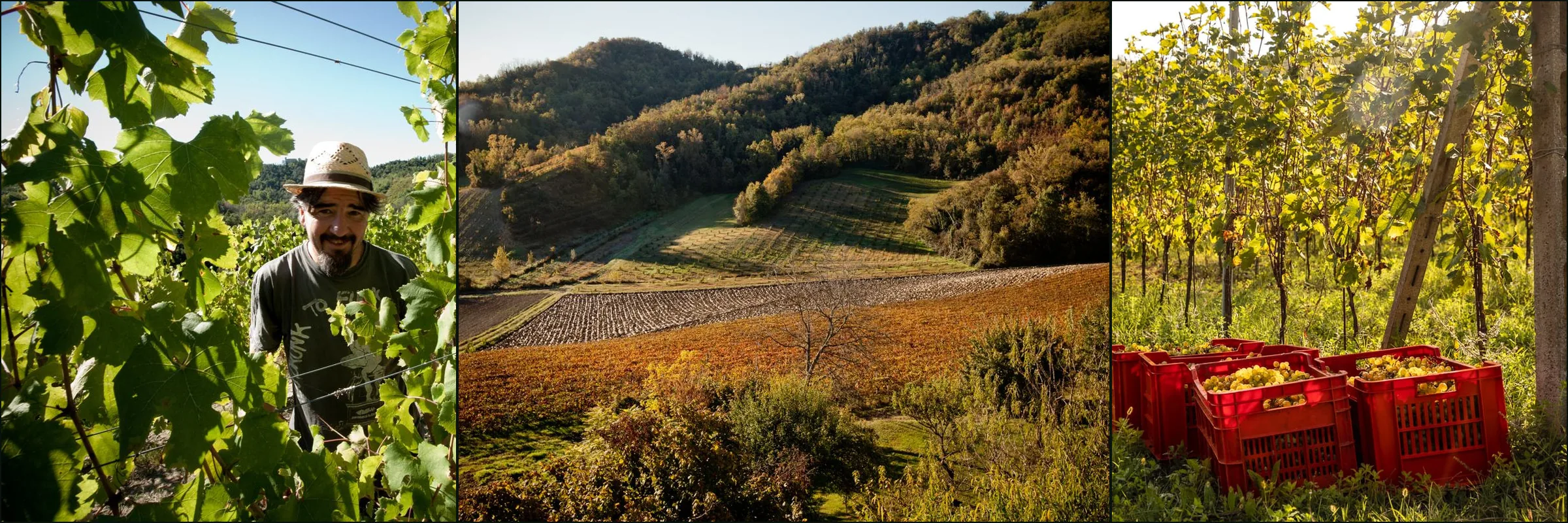
In 2016 Fabrizio Iuli reluctantly pulled out the Barbera vines his grandfather had planted. They had stood on the slopes at Montaldo since 1930. His grandfather, Gioacchino Natale, whom everyone called Natalin, had given up a good office job in Biella to come home, play in the village’s newly formed band and make wine from the family vineyard. Fabrizio was born on the farm and has lived there all his life. Barabba, the Barbera those old vines used to make, now comes from a rented plot of vines 80 to 90 years old, and in some years it is not made at all.
Monferrato is the hill country east of Turin. Piedmont’s famous names, Barolo and Barbaresco, are made from Nebbiolo in the Langhe, but Barbera, one of Monferrato’s traditional grapes, is the most widespread and popular in the region. Where Nebbiolo is pale in the glass, Barbera is deep purple, with plenty of acidity and little tannin, the drying grip that makes a young Barolo hard work, and it is an easy wine to drink with food. It is an everyday red, yet it can keep for five to ten years. Half a century ago Monferrato’s grapes sold for far more than the Langhe’s. Then the Fiat works in Turin and several seasons of hail drew the farmers away. Iuli named his top Barbera Barabba, a play on the grape’s name and on Barabbas, who was given a second chance in the Bible, because he felt Monferrato deserved one too.
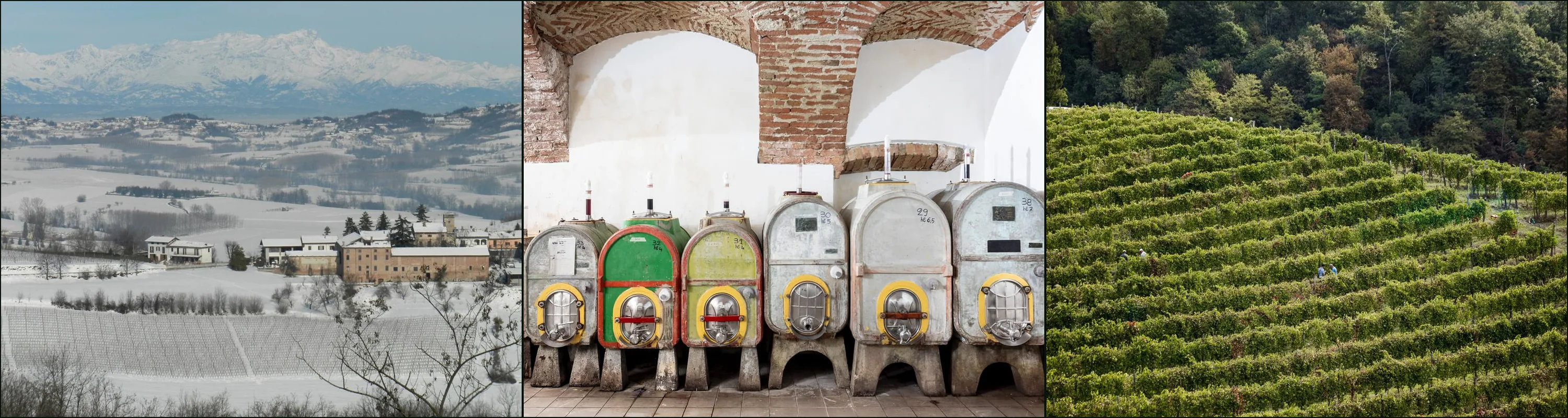
Fabrizio’s first commercial vintage was 1998, a Barbera he called Rossore, for the flush it puts in your cheeks. He began, he has said, when his grandparents’ way of growing grapes was thought inadequate and only modern winemaking counted, and it led him into some mistakes. The early vintages were big, muscular wines aged in small oak barrels, and his idea of wine was very different then. Today every wine ferments with the grapes’ own yeasts, the Barberas in cement, and none is fined or filtered. In 1999, a Burgundy lover in Barbera country, he challenged himself to make something like it in Monferrato and planted a hectare of Pinot Nero, as Italians call Pinot Noir, on a north-facing slope; the wine is Nino. Later he looked further back, to Slarina and Baratuciat, two old Piedmontese grapes that had been all but abandoned.
The farm is certified organic, and the wine is not. The EU organic register lists Fabrizio Iuli’s farm under the certifier Valoritalia for what it grows, from the vines to the woods and pasture, but the certificate stops at the farm gate and does not cover the winemaking. Iuli has also refused, as the writer Fabio Pracchia put it in 2021, any kind of official seal on his bottles, which are labelled simply Vino Rosso or Vino Bianco.
Montaldo has shrunk to about 70 people, and Fabrizio is the only winegrower in it. Slow Wine, the Slow Food guide, has given the estate its Chiocciola, the snail it awards to about one in ten of the wineries it reviews, for work in tune with its values, in 2018, 2019 and every edition since 2023. Gambero Rosso gave the 2010 Barabba Tre Bicchieri, its highest rating, in the 2015 edition of Vini d’Italia. And since 2020 the farm has had a school, the Village Forest School, with classrooms in yurts in a meadow overlooking the vines.
“il bosco è fondamentale per preservare la biodiversità nelle nostre vigne”
Why it’s remarkable
Free Bacchus Verification
Valoritalia EU organic · the farming, not the winemaking
Certified1
- EU organic, Valoritalia (IT-BIO-015.380-0052052): the farm is certified organic for its vines and other crops
Not covered1
- The winemaking: the certificate does not cover winemaking, so the wine is not certified organic
Also on record1
- Iuli has refused official seals on his bottles
If you’re buying
Cheat sheet
Save it to your phone. Everything you need to recognise this producer, and three things worth saying about it, at a glance in a shop or across a table.